The Ladies Football Club, a new production from Sheffield Theatres, tells the story of the city’s factory women during the first world war and how a kickabout during wartime grew into something far bigger. Keira Manning caught up with Jessica Baglow, who plays Rosalyn, to talk football, physical theatre and why this story still hits home.
What drew you to the role of Rosalyn in the production? Was there something particular about her story or personality that resonated with you?
It was really Elizabeth Newman who drew me to the production. I’ve loved working with her before and the prospect of doing it here in this iconic Yorkshire theatre was exciting. Rosalyn’s cool – she’s a supportive part of the team and eager to get stuck in. She’s a goalkeeper and comes from a family of brothers, like me.
One of her lines is: “I come from a family of brothers who, when I asked to play football, they’d always put me in goal, because they didn’t want to be in goal cause the goalies never get to score.” That resonated with me because I remember playing cricket with my brothers and my dad as a kid and they’d always put me as wicketkeeper. I was young and didn’t understand the game, but I was like, I don’t want to be wicketkeeper!
What was your first impression when you read the script?
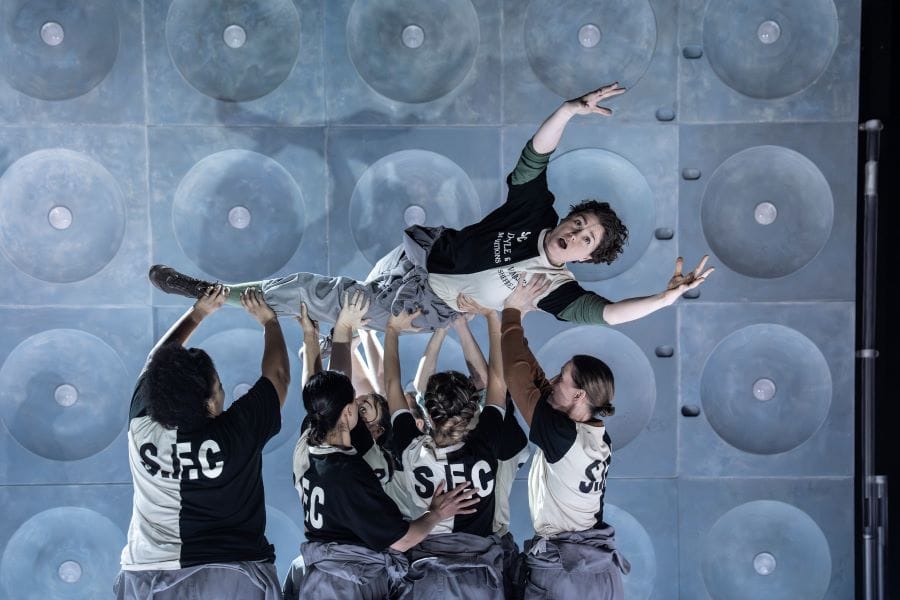
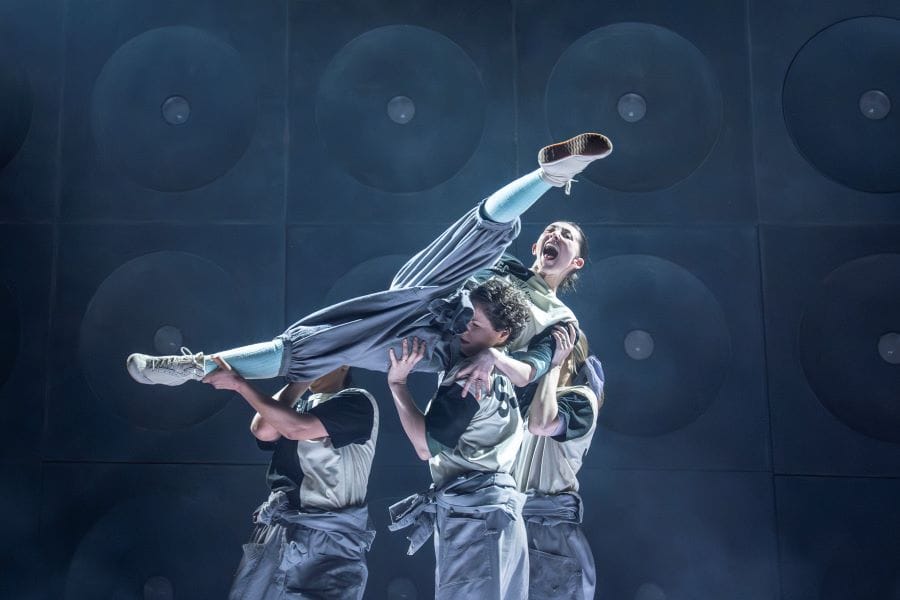
It was an interesting read because there’s so much physicality in it. It’s a really intense piece and it only really makes sense once you see that side of things. We’re working with Frantic Assembly, who are amazing, looking at movement and storytelling with bodies, and Scott creates these incredible pictures.
The lyricism of the script is interesting because it moves from being quite literal to something slightly exaggerated – like heightened realism. Combined with light and sound, when all these elements come together it’s going to look great.
How would you describe Rosalyn’s journey? What challenges or moments of growth does she experience on and off the pitch?
They all go through a similar journey of growth as a team. At the beginning they’re amateur, unsure of their skill and just having a laugh, but by the end they realise the power they hold.
Physically that will come across in how we handle the ball at the start – it grows and becomes more assured throughout the play.
Did you have to train or learn any football skills for the stage?
We’ve had a good kickabout in rehearsals and Scott, our movement director, has a strong understanding of football to build on. However, on stage it all translates through movement. It’s not literal but more of a metaphor for football. We’re lifting each other up, with aerial kicks and time-bending movements, so not necessarily traditional football skills.
The production is rooted in the region’s wartime history. As a South Yorkshire local, what has it meant to you to perform this story in the very city where it’s set?
It’s so nice to be back in Yorkshire. I was born in Doncaster but left when I was two, so I haven’t really grown up here. That said, the majority of the jobs I’ve done as an actor have been in Yorkshire, so I keep getting pulled back, which I think speaks to its creativity as a county. It means a lot – it’s my heart’s home.
How do you personally relate to the production? Have any experiences aided your performance?
At the time the play is set, these women were defying stereotypes and rules that prevented them from being athletic and involved. I think sport, especially women’s football, draws in women who are non-conforming and creates a space where people can feel accepted. The focus is centred on physicality rather than image.
As a queer person, the number of queer athletes in women’s sport is really inspiring. And the theme of being brave, taking on a challenge where you might lose – that’s the life of an actor.
At the beginning they’re amateur, unsure of their skill and just having a laugh, but by the end they realise the power they hold.
Football is central to the play – but it’s also about community, resilience and identity. How do those themes come through?
We don’t start out as a perfect team. There are squabbles, bickering and tension within our community as women in the factory, and the love of the game brings us together. And as a goalkeeper, if you let a goal in, you’ve got to keep going.
There’s a quote from a book by an adventurer that goes, “When you think you’re screwed, you’re probably only 70 percent screwed.”
How do you think the story will be received by audiences? What messages are you hoping will come across in the performance?
The main thing I’ve learnt is that women’s football was massive during the first world war. There were more than 100 teams playing across the country and then, as soon as the war ended and the men came home, it was banned for 50 years.
I really hope people understand that where we are now hasn’t been easily achieved. The women playing today are standing on the shoulders of giants. I hope audiences see how fragile rights are, the things we take for granted and how easily they could be taken away again.
Does that feel particularly relevant today?
I really think so, especially with political changes happening across the world. Roe v Wade, for example, where something thought permanent was taken from us. It’s very relevant and there’s still a long way to go to close the gender gap, in sport and beyond.
The play’s run will coincide with International Women’s Day – do you think the story will inspire young women?
That’s definitely the intention. The final image of the play, which I won’t give away, is hopefully going to do that. Seeing yourself reflected is a really powerful thing and if you go through life not being reflected, you feel like you don’t exist.
The Ladies Football Club runs at the Crucible Theatre 28 Feb-28 Mar. Tickets (£15-£44) are available from sheffieldtheatres.co.uk.