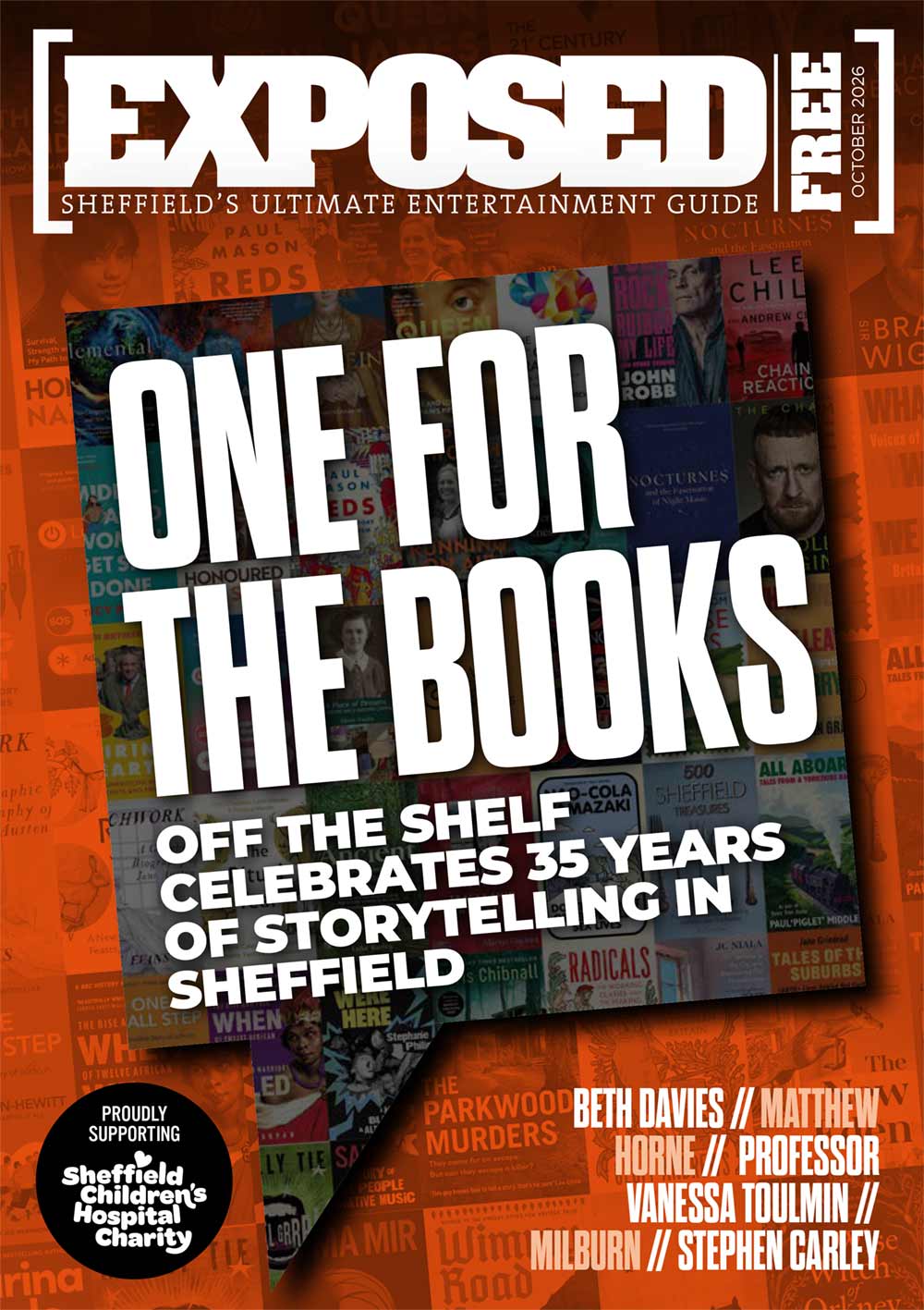
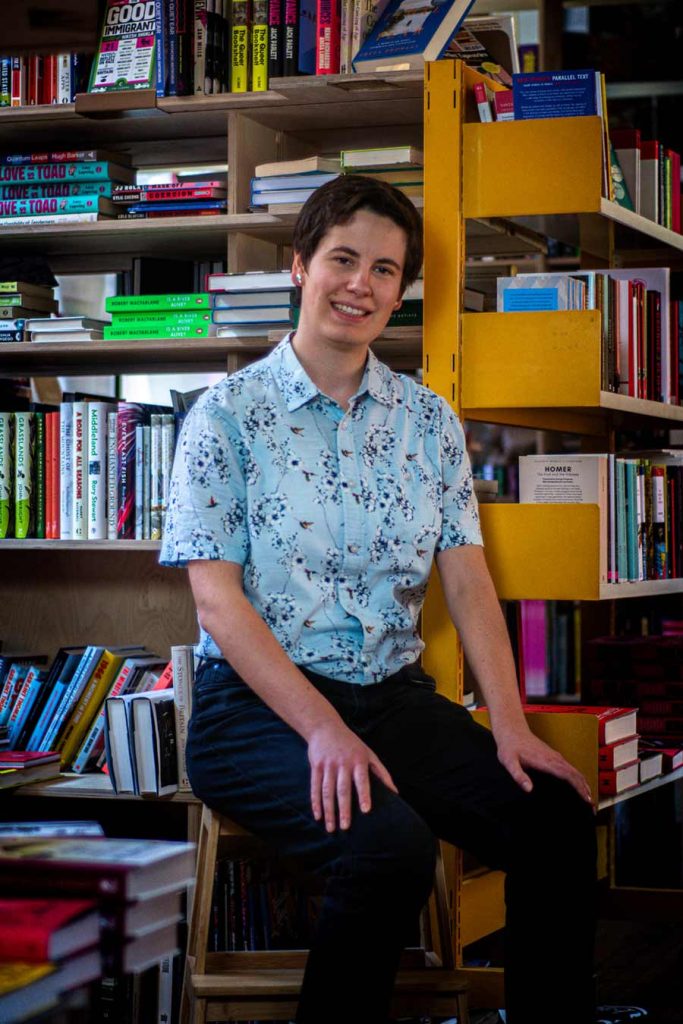
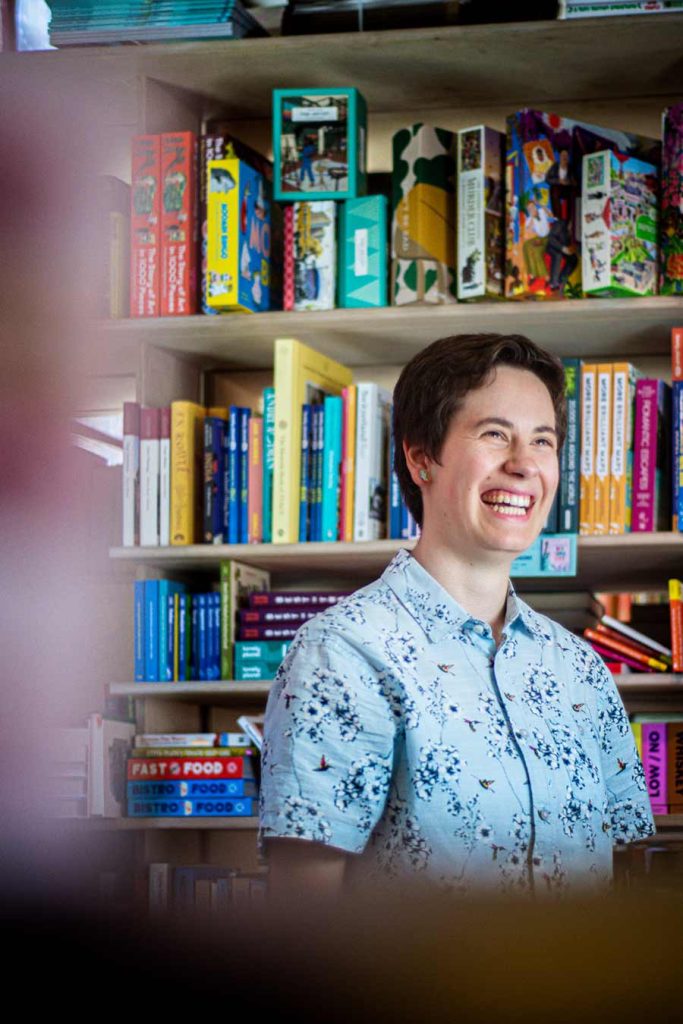
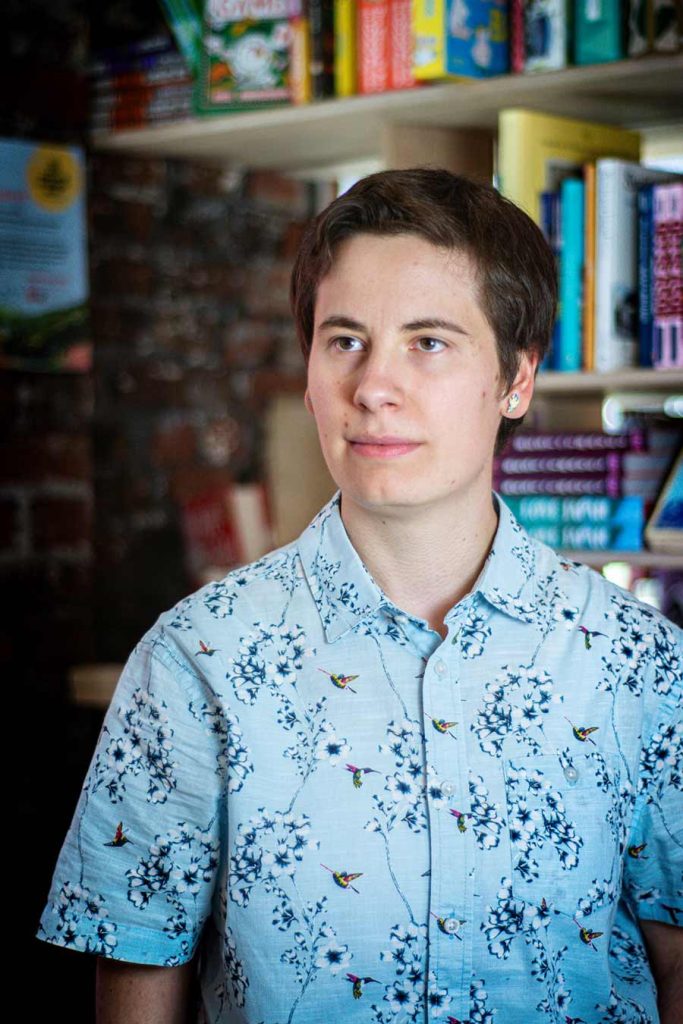
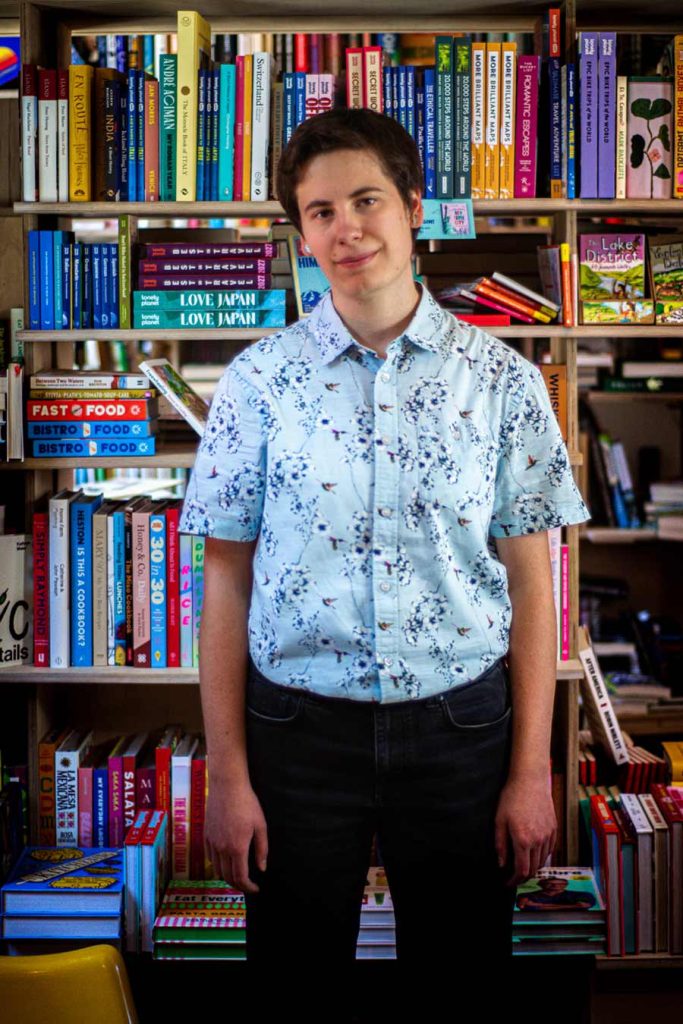
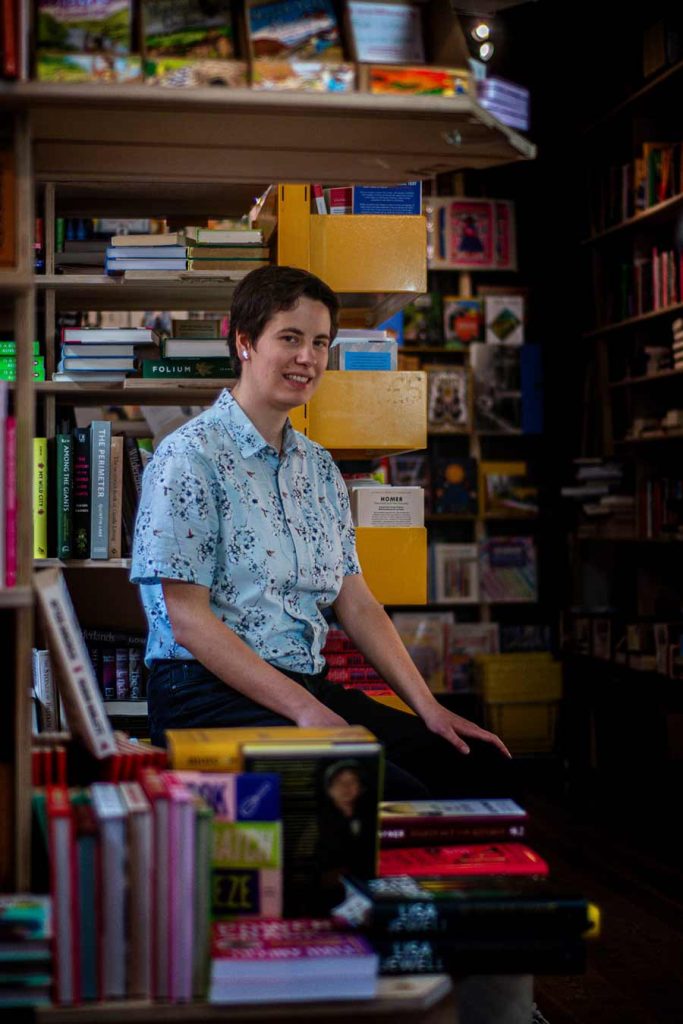
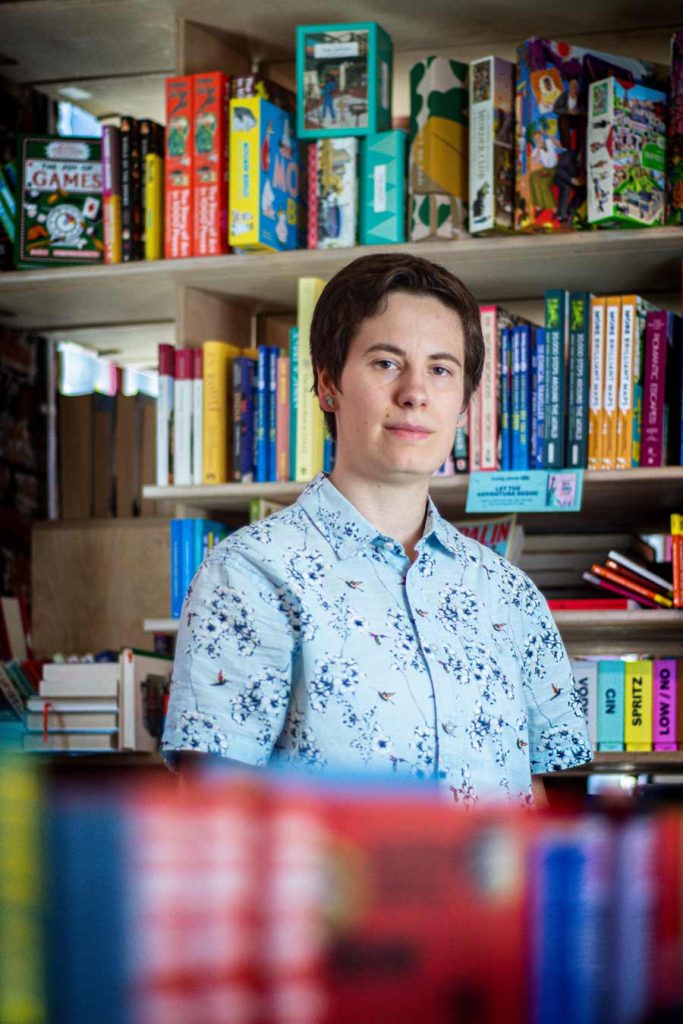
As Beth Davies prepares to pass on the title of Sheffield poet laureate, she speaks to Exposed about representing the city, the creative communities that shaped her and a special new poem celebrating 35 years of Off the Shelf.
You’re coming towards the end of your stint as Sheffield’s poet laureate. How have you found the experience?
I think when I took it on, I wasn’t quite sure what to expect, and in some ways, it felt like quite a heavy mantle, following in the steps of my predecessors. Otis Mensah, Warda Yassin, Danaé Wellington – they’re all fabulous poets. But it’s been really interesting exploring the opportunities that have come up and feeling the honour of the role as well.
What have the highlights been for you?
I’d have to say performing at Off the Shelf a couple of years ago with Jackie Kay. She’s an icon, and it was such a lovely, warm event. She was so positive about the Sheffield poet laureate role, and then Danaé handed over to me, and there was this really nice sense of the legacy in Sheffield poetry. I like that idea of passing the torch, as it were.
Another of my highlights was competing in the One Mic Stand slam in Manchester last year, and it was really nice to have that sense of representing Sheffield. And in April, I did an event with Sheffield Libraries around queer poets, which gave me an opportunity to explore areas of my work that I’ve not massively platformed before.
Do you think there’s something particularly distinctive about Sheffield as a place to write poetry?
I think it’s an interesting question, and I’m not sure I have a solid answer because what initially came to mind are things that are distinct about Sheffield, but I don’t know if they’ve played a role in my work. Obviously, the landscapes in the Peak District, for some poets, are such a key source of inspiration. However, I’m not a landscape poet, so that would maybe be a disingenuous answer from my perspective.
A key part of my thinking around poetry is this idea that everything has potential for poetry, and so there is so much that’s distinctive about Sheffield, but in a way that maybe everywhere is distinctive.
On a more personal note, my writing life, as well as my personal life, has always been rooted here. I value the sense of openness that I associate with the city and the opportunities I’ve had through various organisations connected with Sheffield. My debut pamphlet was also published by Poetry Business, which is a Sheffield-based press. So, in the way that everything seeps into poetry, Sheffield seeps into my poetry as well.
How does it work in terms of choosing your successor?
This year, Culture Sheffield, the arm of the council that’s involved in the poet laureate role, have introduced a more formal process, which I think is a great idea. I’ve nominated several candidates who I thought would all do a great job, who had a strong poetic voice and relevant skills and experience, and could bring different things to it. They were then asked if they wanted to apply.
We had a meeting with representatives from Off the Shelf and Culture Sheffield to discuss selecting the next poet laureate – I can’t say who it is because that’s going to be revealed at the Off the Shelf event on 9 October.
It was a really difficult decision. We talked about the idea of it being a role for someone who has had plenty of relevant experience but is still somewhat in an emerging stage, as opposed to being fully established.
You’ve been commissioned to write a special poem for the 35th edition of Off the Shelf and put a callout asking local people to share their experiences. Could you talk about the idea and process behind the piece?
Off the Shelf were quite generous in giving me a flexible brief. They said they’d be interested if I could do something based around 2026 being the National Year of Reading. I thought, well, I could write something about my experiences around reading, my feelings and opinions. But with it being a commission for Off the Shelf and one of my final things as poet laureate, I wanted it to have a broader base and not just be my personal perspective.
So that’s where the idea came from of asking other people to share their experiences and perspectives around reading, so I can incorporate some of those into the poem. Obviously, it’s still filtered through my voice, but I’m hoping it gives it a sense of being something communal and shared.
It’s been really nice reading people’s responses to the survey and seeing the range there, but also the common things that come up.
Is it more challenging working that way, drawing on other people’s experiences rather than writing from your own?
I think it’s both more challenging and less challenging. I’ve got all of the ingredients already provided because normally in a poem, that’s the first stage for me – gathering the ideas, phrases and concepts, then figuring out what to do with them.
But there is a challenge to weaving those together because I don’t want to misrepresent other people’s experiences or ideas. Of course, they’re all anonymous and I don’t know their life story. So, at first it was: where do I start with all of this?
Picking out those common themes and ideas, and the images that stood out to me, has been a good starting point. I’ve really enjoyed the process.
How important are festivals like Off the Shelf, both for audiences and in giving local and emerging writers the chance to appear alongside internationally established authors?
I think it is really valuable to have spaces to celebrate different kinds and stages of writing, and to emphasise that there are so many amazing writers who come from Sheffield. I’ve been lucky enough to be part of a few Off the Shelf events both during my time as poet laureate and previously. It’s always very special to be in that programme.
But particularly with poetry, there’s very much a place for the more grassroots side of things as well. A city needs all sides of it. It needs the regular open mics in the back room of a pub, and it needs the stuff that is more formally established and has those wider connections. I think this is a good point to mention that Susie Wilson also has a Sheffield poetry what’s-on mailing list that I’d recommend to anyone wanting to engage with poetry in the city all year round.
All ways that spaces can be made in Sheffield for writing, books and poetry are valuable and exciting.
A natural segue there into Hive, which is celebrating its 10th anniversary this year and has been a big part of your development. What does Hive offer young and emerging writers, and how important is that support?
Maybe I’ll talk about the things that I’ve engaged with through Hive, because I think I’ve experienced every stage of what they offer, at least in terms of poetry. I went to Sheffield Young Writers for the first time when I was 16. This was before Hive was called Hive, but what became Hive ran that, and it played a key role in me beginning to take myself seriously as a writer.
There are groups in Rotherham, Doncaster and Barnsley too, for young writers and teenagers writing different kinds of stories and poems. Hive provides a really valuable platform through events showcasing writers. Some of my first experiences performing poetry were through Hive. They’ve also produced various anthologies of people’s work.
They run projects on a theme too, which gave me some of my first experience of writing in a commission-type way. They did a wild poetry project around plants native to the UK, and it was really interesting to see all the different directions people went in.
That’s a really important part of a writer’s development, right? Most people begin by writing what’s in their heads, and there’s a freedom there. But it’s a different ball game when somebody goes, ‘Right, here’s what I’d like you to write about.’
Yeah, exactly. A couple of years ago, they did a project around Wentworth House. We all wrote things inspired by the history of the house, and it was really interesting to see all the different directions people went with it.
In terms of my involvement with Hive now, there is the Sunday Poetry Collective, which is a video-call workshop programme for slightly older writers. People often graduate from that young writers context into something like the Sunday Poetry Collective, and those sessions are really lovely for coming together and writing.
While we’re on the theme of creative communities and support networks, I’d also want to mention The Writing Squad, which is another organisation that’s played a really valuable role in my development as a writer. It’s a programme or network that you can apply to when you’re, I think, 16-22 and then you get mentoring, workshops and support, and lots of valuable opportunities, similar to what Hive offers.
I definitely would not be the writer I am today without the creative communities that I’ve been lucky enough to have access to.
Do you remember the first time you performed poetry in a live setting?
I’m trying to remember. I used to go to a festival with my family, and I think they had an open mic there a few times. I do remember an open mic in the Winter Gardens that may have been connected to Hive. That could have been one of my first times performing in Sheffield.
I have a very strong memory of a random person saying something nice about what I’d read afterwards, and that was so special to me. I was probably about 16. That idea that you can move someone you don’t know with writing was – and still is – incredibly special to me. Any time I hear that someone’s connected with my work, it’s special.
So, once the poet laureate handover is done, what’s next for you?
That’s something to figure out. I think it might be nice to take some time to play with some more personal stuff that I’ve not decided whether it’s going to see the light of day. It’s important to allow yourself that sense of experimentation and not always feel that everything you write has to go out there.
Sometimes being in this role, I’ve felt that I ought to focus more on the stuff that is public-facing. So it will be nice to have that space, but also hopefully continue to be involved in different creative opportunities in Sheffield and beyond. I’m hoping I can play a supportive role to the next laureate if that’s something they would benefit from.
And just see where the writing takes me, I suppose, and what that could spark in terms of future possibilities.
What would you say to someone who wants to start writing but isn’t sure how to take that first step?
One thing I’d say is to seek creative communities where possible, whether that’s an organised group or just a friend who also writes, which is something I’ve been very grateful to have.
Something I found really valuable to learn – and maybe I’m still learning – is that everybody has imposter syndrome and sometimes has that feeling of, ‘Oh, am I writing enough? Am I writing the right stuff? Will I ever write a good poem again?’
I’ve had so many moments where I’ve looked at people and thought, well, they’re incredibly impressive and talented, and obviously they’re fully secure in their creative work. When I’ve actually got to know them more, they also have those moments of being unsure.
Being afraid does not mean that you can’t write. It doesn’t mean that you can’t be part of those creative spaces and communities. It certainly does not mean that what you’re writing doesn’t have value.
Beth will premiere her newly commissioned poem alongside performances from fellow Hive poets Nathan Graham, Molly Knox and Safa Maryam at Firth Hall on Friday 9 October, from 7pm. The evening will also see Sheffield’s next poet laureate revealed. Tickets (£10/£12) available from offtheshelf.org.