Just ahead of International Women’s Day, we spoke to visual media artist Sara Prinsloo about identity, pigeonholing and her experience as a female artist – and why she’s reclaiming ‘trashy’ as a badge of power.
Hi Sara, for those who don’t know, could you introduce yourself and what you’re all about to the Exposed readers?
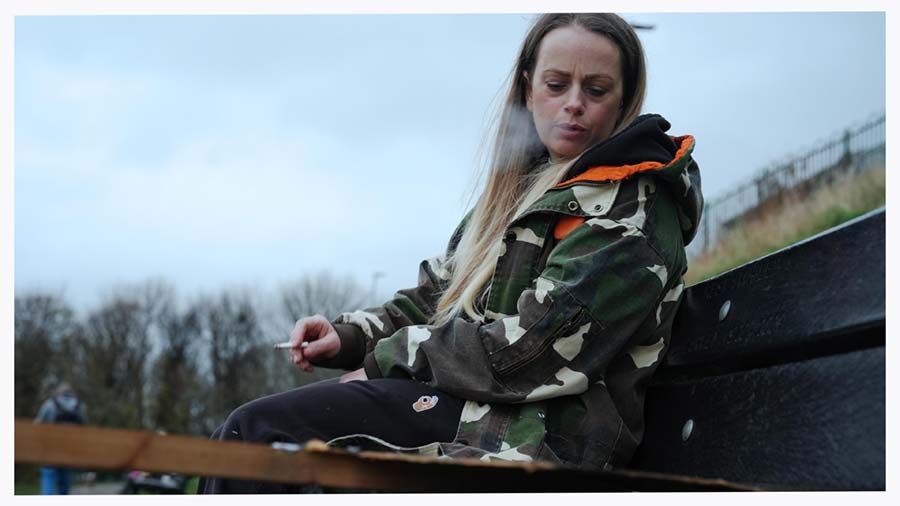
Yo, thanks for having me! I’ve been practising art and working creatively for a while now. My work covers all sorts of subjects, but at its core it’s about identity and different kinds of struggles – personal, social and cultural. There’s also a lot of humour in there. That’s usually how I deal with difficult situations, so it naturally finds its way into my work too.
What have you been up to since the last time we caught up?
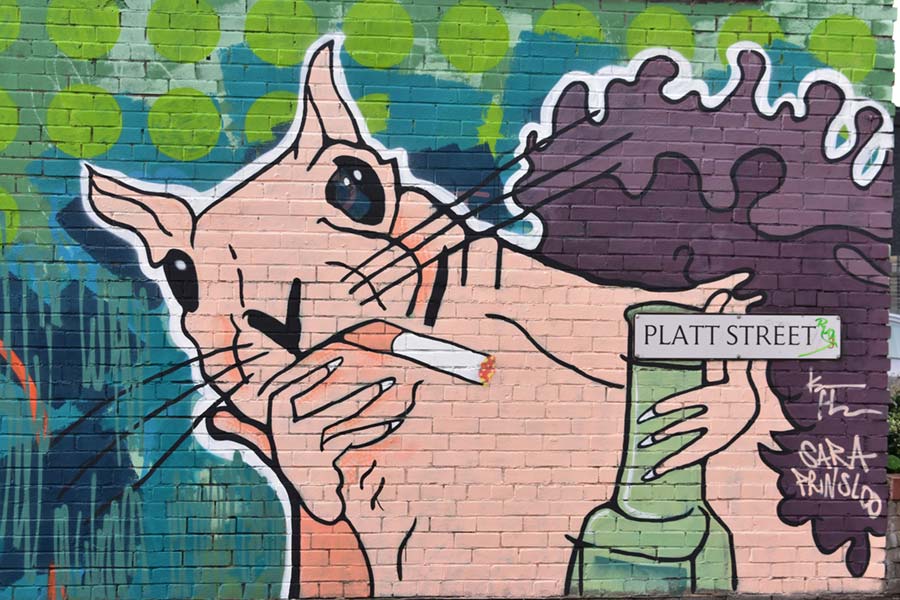
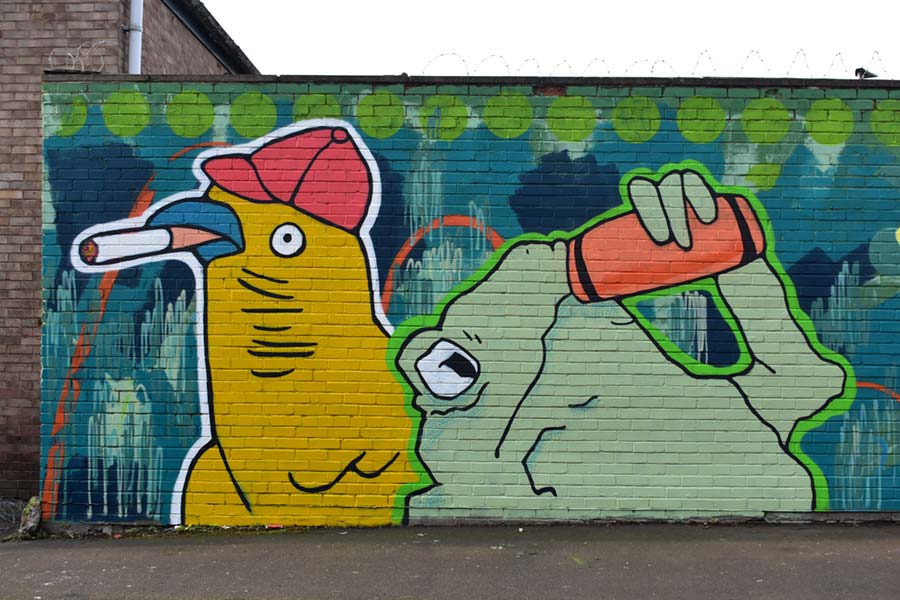
Last year was a big one for me. I won a mentorship programme with Lick of Paint Festival, which was super exciting, so you might’ve spotted some of my new murals popping up around the city. Alastair and Meg at Lick of Paint have been incredible. They’ve really welcomed me into a new way of working that’s allowed me to paint at a much bigger scale and in public spaces. There’s something special about creating work that’s free to see and accessible to everyone – that’s something I care about a lot.
You recently collaborated with Manchester rockers Nihilists. How do you think your art intersects with music?
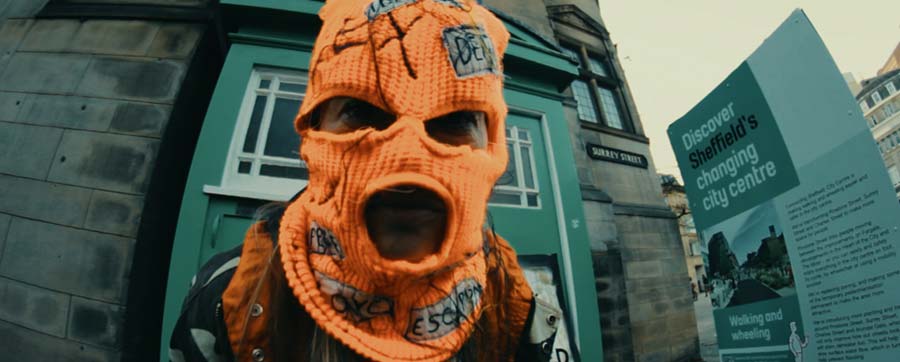
Ah, music is life! I’ve always been a bit of a music obsessive. I honestly couldn’t live or paint without it. Art and music are both massive creative outlets. They let you explore who you are in different but equally exciting ways. And when you bring the two together, something bigger can happen. When Alleged Productions requested my art for the Nihilists music video, it felt like a natural meeting point. Kelli from Alleged selected my picket art and hand-stitched balaclava for the video ‘Climbing Over Bodies’ because she wanted to create something that encouraged thought against the current media landscape, which is hell-bent on fostering hatred and divide. Musically, John Patterson builds compositions in layers, almost the way I construct visual work – adding texture, tension and contrast until something emotionally honest emerges. James Mudriczki’s lyricism, rooted in lived experience, late-night thoughts and what he calls ‘brain fondue’, mirrors the way I draw from personal history and internal dialogue. I’d say the intersection is in the layering and the honesty. We’re using different mediums, but we’re both trying to make sense of the same emotional and social noise. That’s why art and music work so well together – they’re different languages, but both deeply emotional.
Your work draws heavily on lived experience – how do those memories continue to shape your artistic voice today?
There have always been parts of my life that have made me angry. I get frustrated by how the world operates, especially for people who don’t have money or privilege behind them. A lot of my experiences have been shaped by two things – being a woman and being skint. Both come with their own vulnerabilities. I’ve found myself in some dark or uncomfortable situations because of that, and those moments have taught me a lot about how society views you, what people think they’re entitled to and what assumptions they make. But they’ve also taught me about resilience, love and solidarity. I think a lot of working-class women will recognise that duality. Even recently, a man drove past me late at night, stopped and asked me, “How much?” That kind of moment lingers. It makes you question how you’re seen and valued. I’m still processing it – and that’s usually when the work begins.
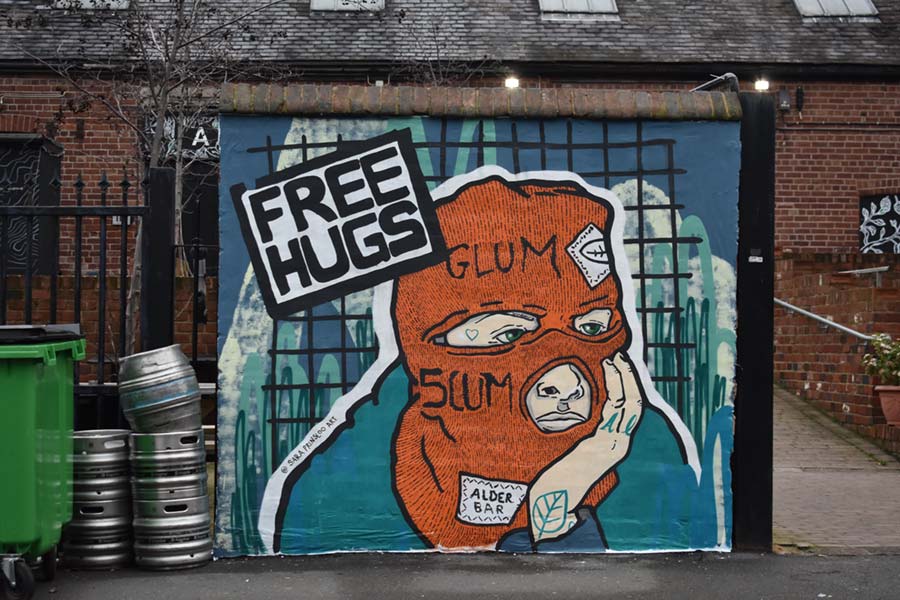
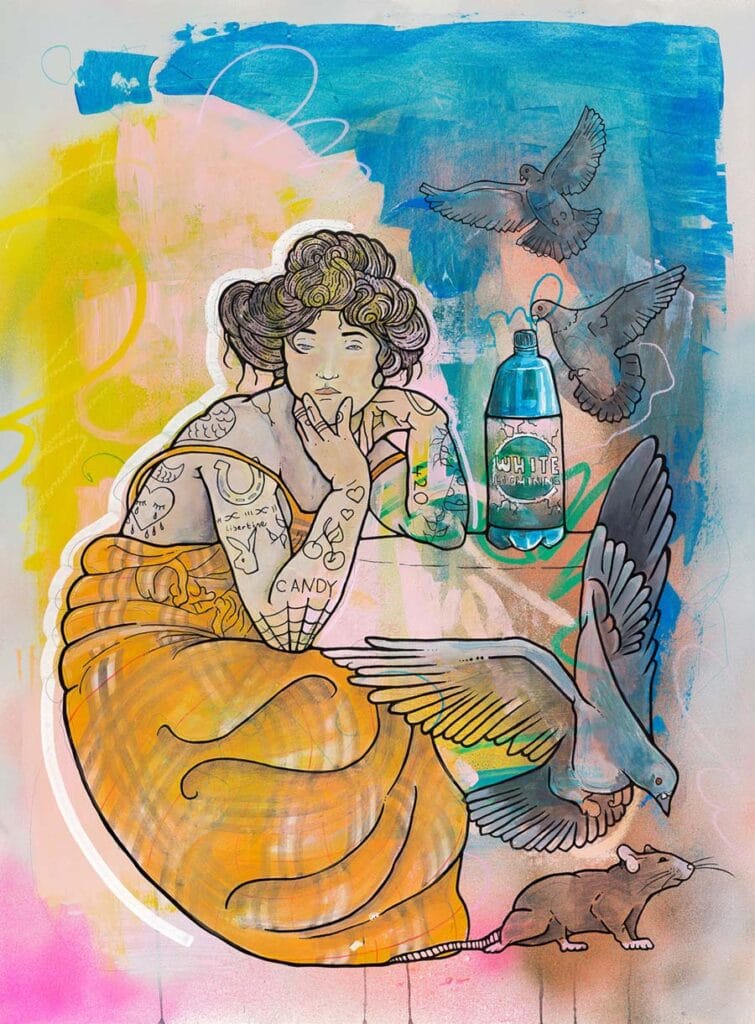
With International Women’s Day coming up, some of your work – such as the Trashy Ladies series – feels particularly resonant. How do you think society’s expectations shape the way female artists are perceived or pigeon-holed?
I’ve been called chavvy, trashy, loutish – all the labels society throws at women who don’t fit the mould. But I play with that. I lean into it, for myself and for other women like me. It becomes a kind of armour. And when you push ‘trashy’ to the edge, it turns into something powerful – about authenticity and ownership. Female artists are often pigeon-holed as decorative, ‘crafty’ or only talking about ‘women’s issues’. We need to push against that. Society still filters women through expectations around beauty, sexiness and softness – to be visually appealing, quiet and digestible. That’s not me, and it shouldn’t define anyone’s work. Maybe my work sells less than something more palatable, but those are exactly the conversations that matter.
How do you think contemporary art can contribute to conversations about women’s voices and stories?
Contemporary art has an incredible ability to give people a voice and share perspectives others might not have considered. It allows women to tell their own stories without being filtered through someone else’s idea of what being a woman means. It’s about honesty. About pushing back against expectations. Art creates space for those voices to exist, to be heard and to spark change. Great, innit!
Are there any Sheffield-based women creatives you feel are doing particularly exciting work right now?
Photographers @lili_takesflicks and @proper.skint are my go-tos – both are producing work that really grabs my attention for different reasons. Ruby Fox, who’s also a resident at my studio KIAC, is creating incredible installations, transforming spaces into entirely new worlds with her set design. There’s also loads happening with New Wave at House Skatepark – a minority-genders skate night that’s building a proper community. From 28 Feb to 14 March they’re hosting a queer history of skateboarding exhibition, which is definitely worth checking out.
Finally, how can people support what you do?
Take a look at my website and socials!