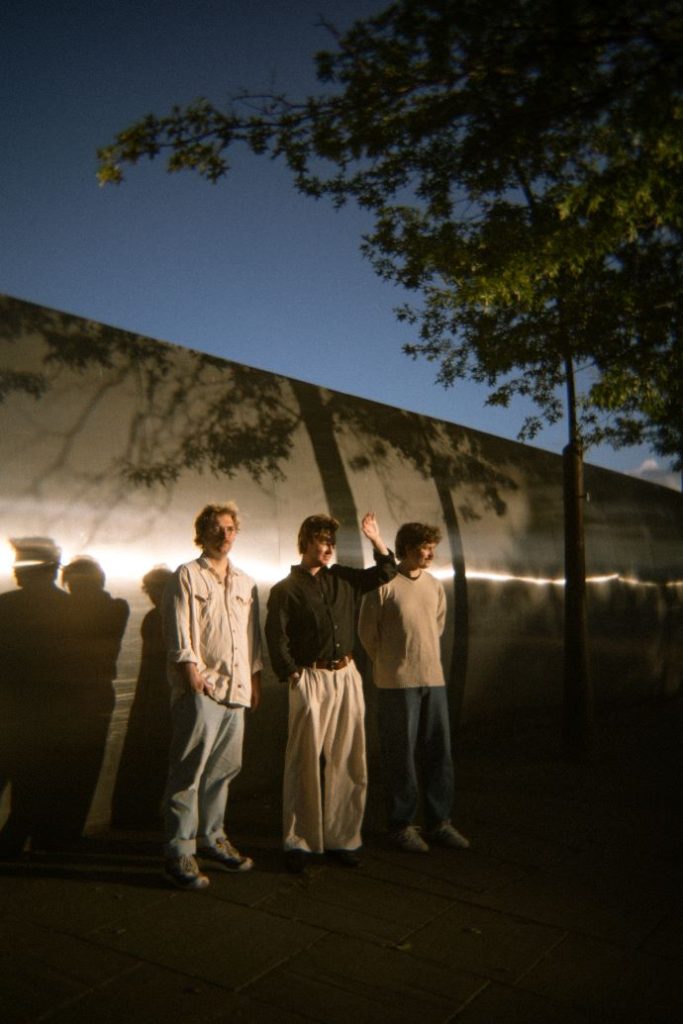
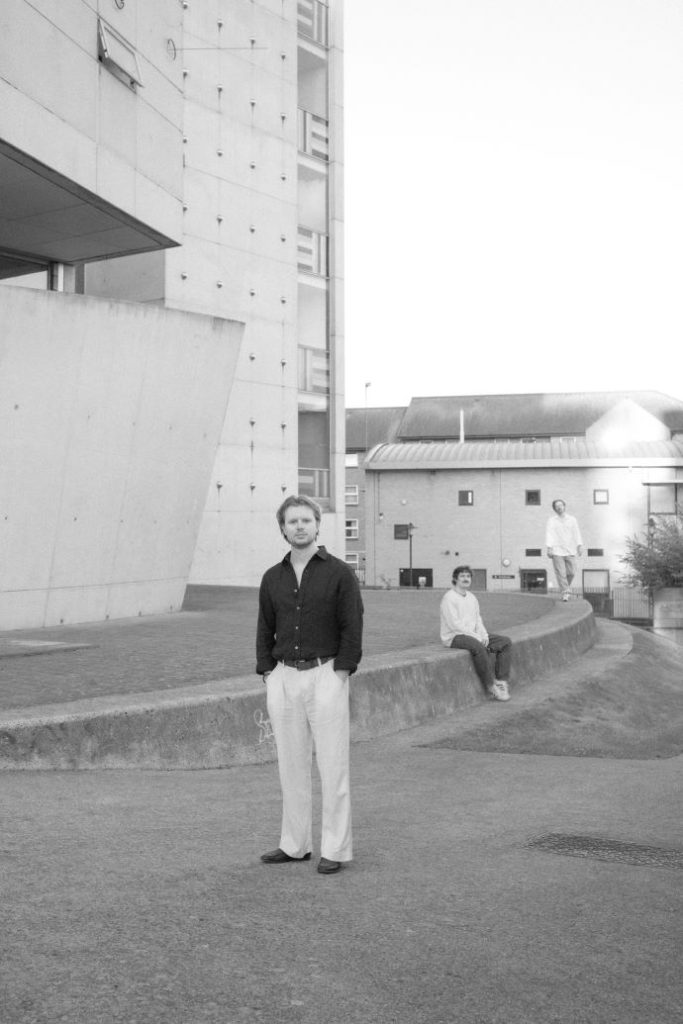
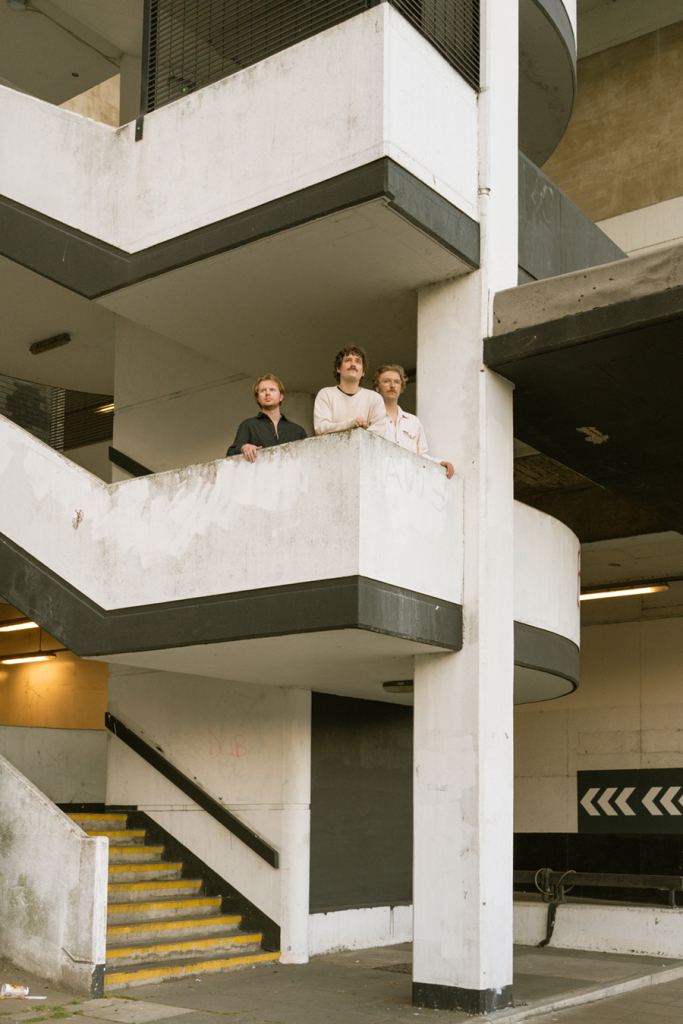
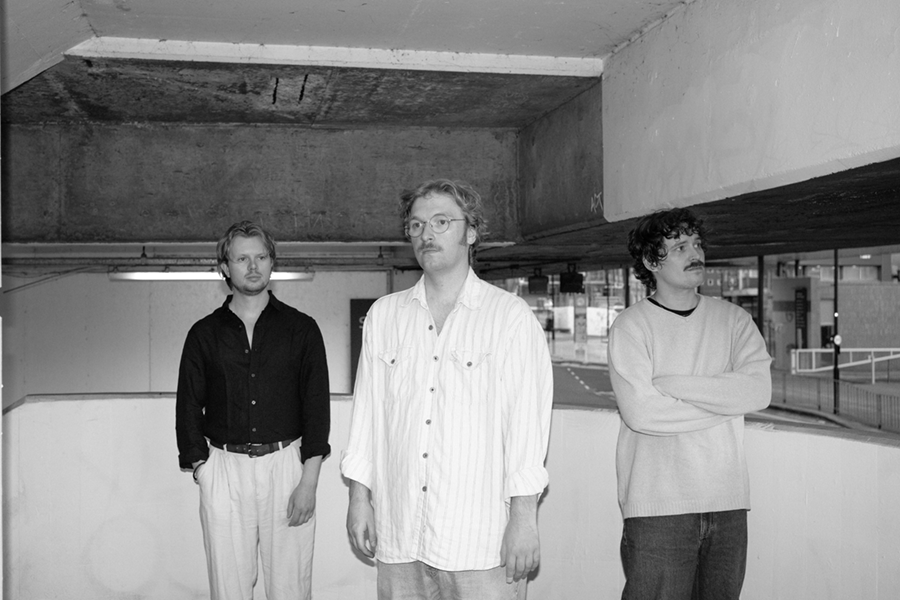
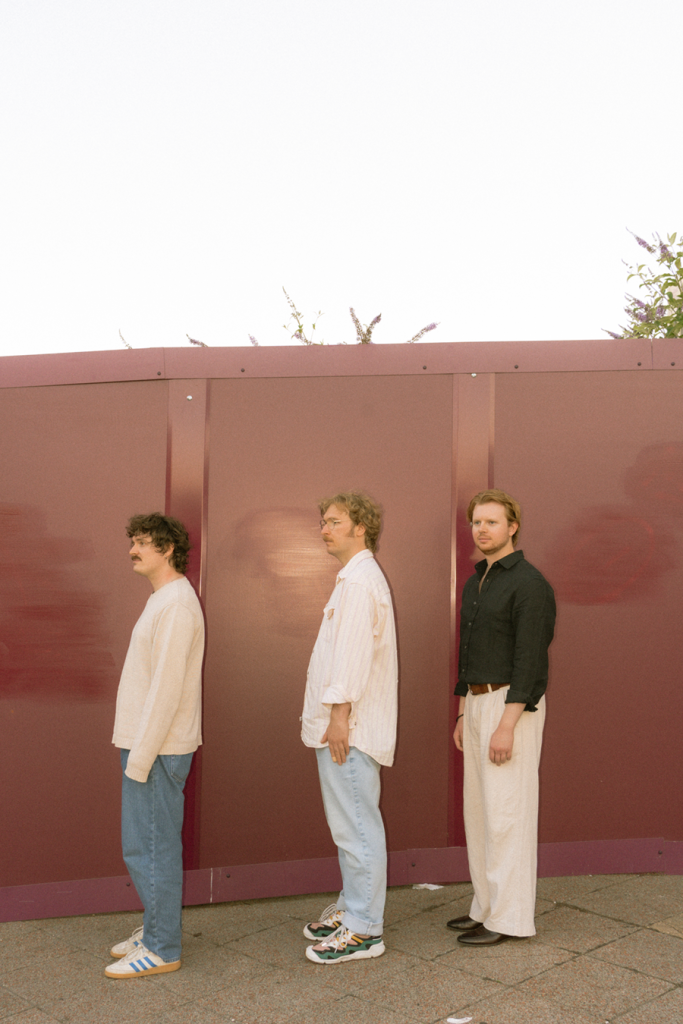
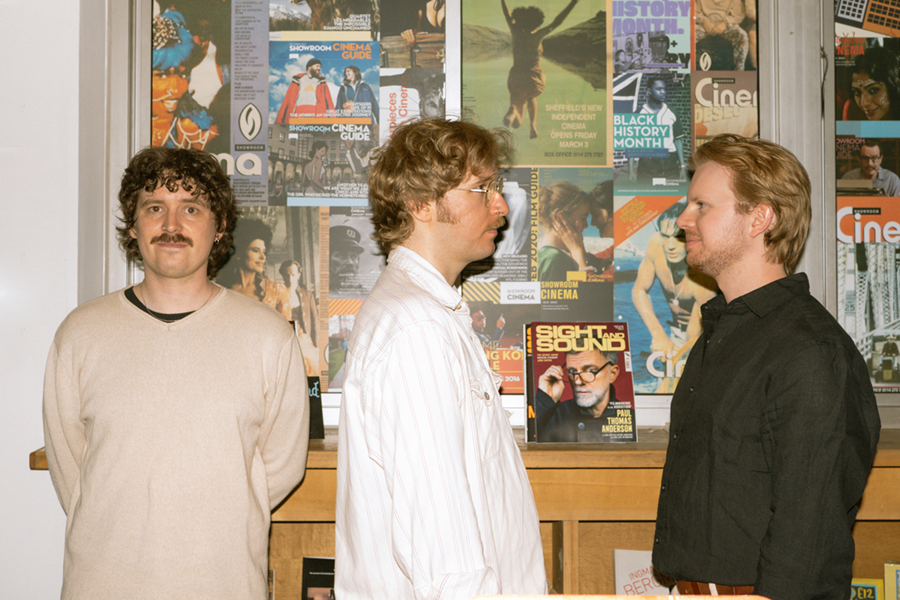
The final stop in our Red Light Competition winners’ series are since torino – a Sheffield three-piece blending the warmth of midwest emo with the rougher edges of lo-fi folk, indie rock and plenty more besides.
Made up of Ben, Luke and Alex, the band are taking an increasingly DIY approach to recording, production and everything that surrounds their music.
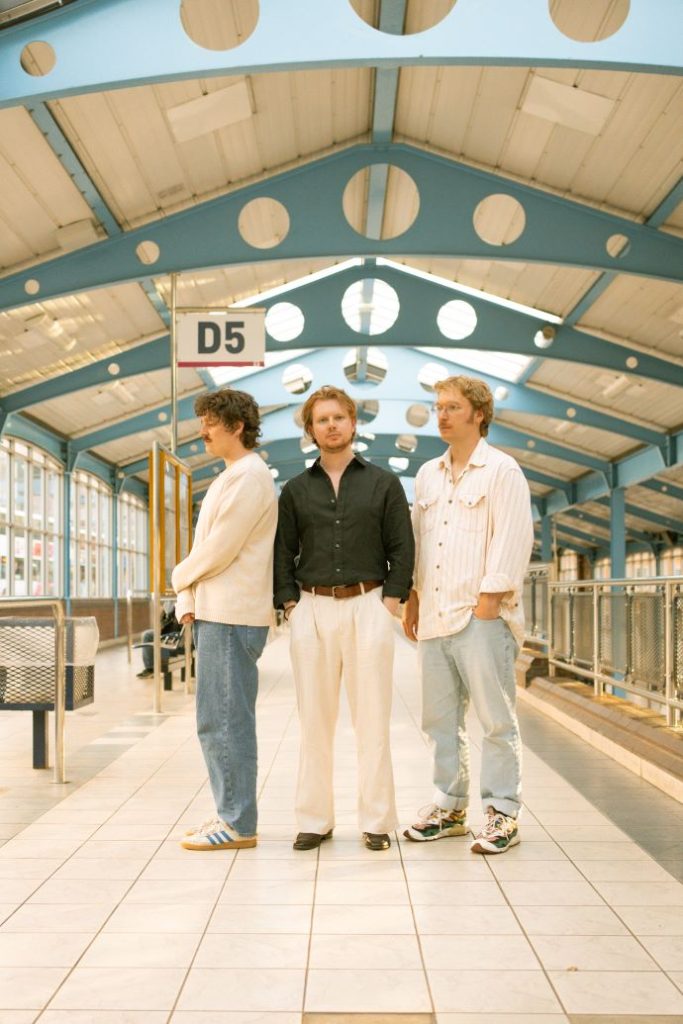
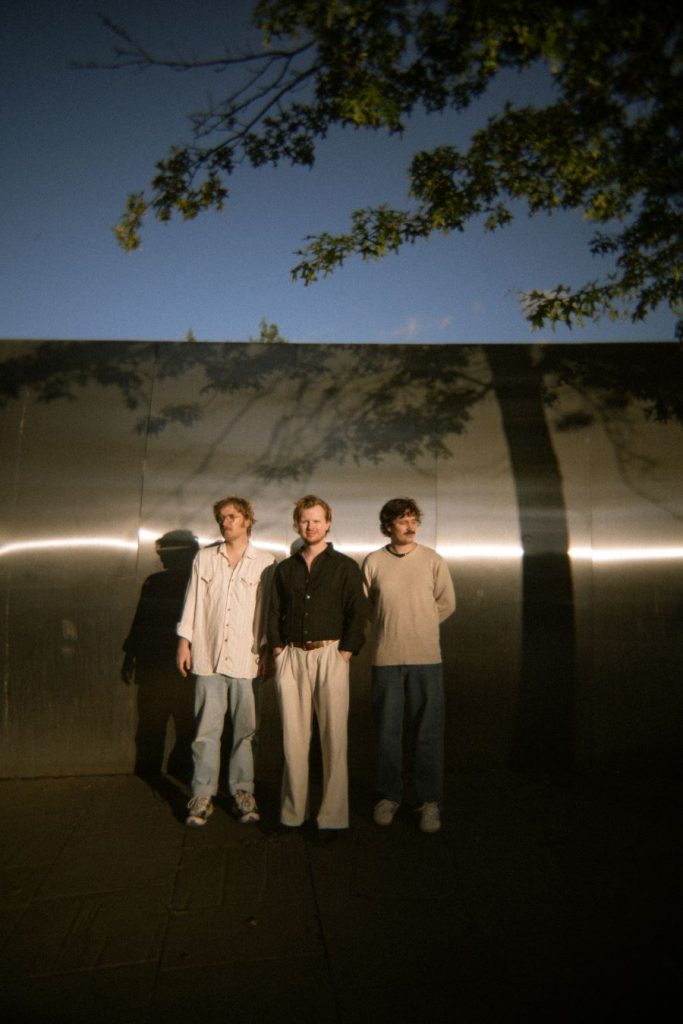
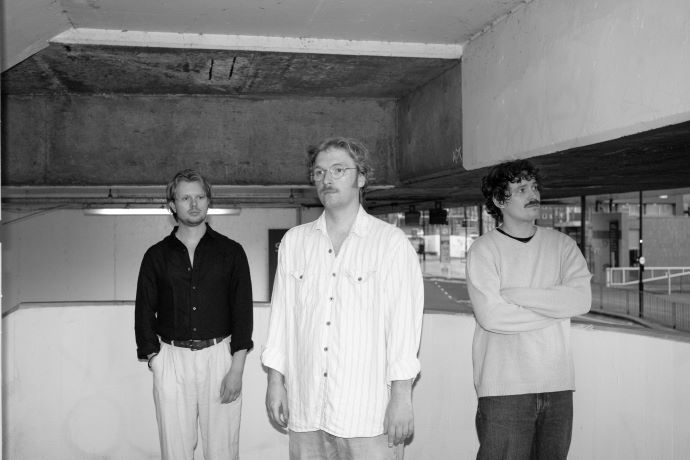
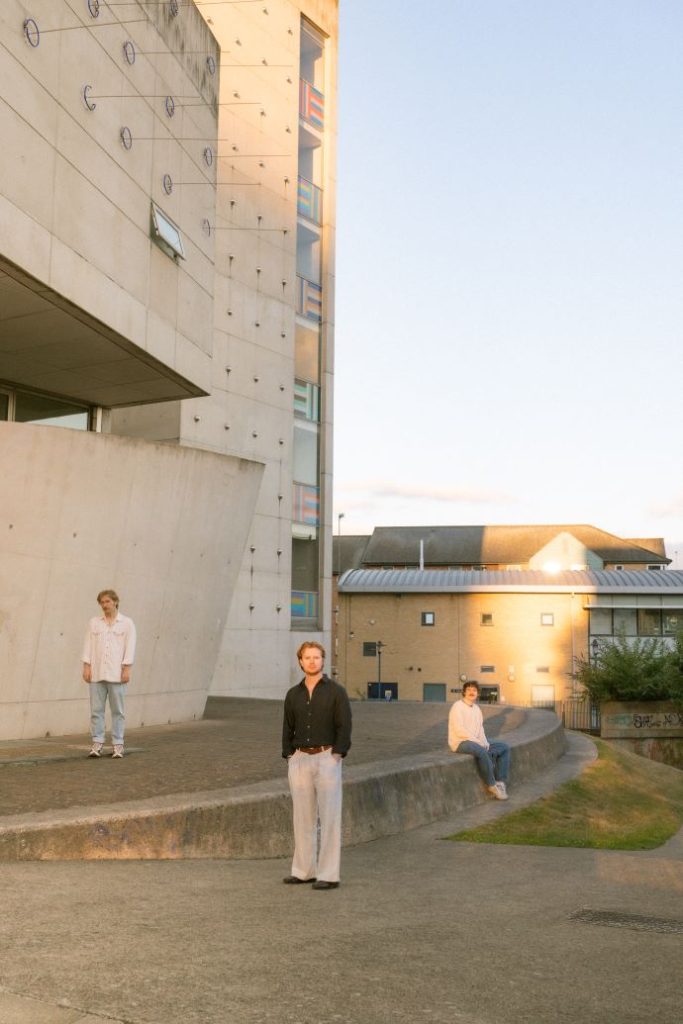
After being selected as one of three winners from hundreds of entries, since torino headed to Electric Studios for a professionally filmed live session with Dan Booth, a photoshoot with Emma Ledwith and a Red Light Podcast appearance with us.
We chatted about meeting through Reddit, making a three-piece sound bigger than the sum of its parts, taking production into their own hands and becoming a Pavement and Silver Jews karaoke backing band.
First things first, introduce yourselves and tell us a little bit about since torino.
Luke: I’m Luke. I play bass and do a little bit of singing.
Ben: I’m Ben. I play guitar and do more singing.
Alex: I’m Alex. I play drums and a few little weird things.
For someone hearing you for the first time, how would you describe the band?
Ben: It’s loosely indie rock, I would say, but it’s blended with a lot of the genres that we all collectively like. There’s definitely some emo in there, some shoegaze, some alt-country, occasionally folk, some electronic influences and some post-punk in there as well. It’s basically just a mash of stuff we like. Indie rock is probably the best term.
Who brings what to the table influence-wise?
Ben: I like classic weird songwriters like Matt Berninger from The National and David Berman from Silver Jews, and Leonard Cohen – people where the songs are quite sad, but you listen to it and you’re like, oh, that’s pretty clever. That’s what I want people to feel from our songs. I don’t know if we’re quite there yet, but that’s the goal.
Guitar-wise, I really like Stephen Malkmus and J Mascis, and folky stuff like David Rawlings, who plays with Gillian Welch, and Mike Kinsella from American Football. A lot of quite restrained but still interesting guitar playing.
Luke: I don’t necessarily have influences for bass in the same way you might have as a songwriter. A lot of what I tend to refer back to is very twinkly emo and stuff like that. The first proper bands that I played in were twinkly emo bands, so there’s a lot of silly noodling on bass.
So how did you all actually meet?
Ben: Luke and I have been playing music together since about 2019. The actual band properly started in probably 2023 when we met Alex.
When me and Luke were doing it, we were just making rubbish songs in our rooms. We both liked the same music, we’d hang out, have beers, and we’d played in other bands. This band’s probably been going about three years, and we’ve probably been good – or good enough – for maybe a year and a half. I think we kind of figured it out about that far in.
And you and Luke met through university?
Luke: We met on Reddit, actually.
Really?
Ben: On the emo subreddit. I put something up saying, does anyone want to start a band in Sheffield?
Luke: I was in the Netherlands at the time.
Ben: And he probably messaged me in about a minute.
That’s impressively quick. How did Alex then come into the picture?
Luke: We met Alex quite a long time later through the Facebook Marketplace for music people.
There are just a lot of people in there and it’s very difficult to find like-minded people. I messaged Alex, and the only reason it went through to him, and why he paid a bit of interest, was because we had random mutual friends that I’d known from being in bands before. They were just four or five random people that I knew from music.
Alex: We used to be near each other in our previous band lives. I think we kind of almost touched, musically speaking.
You’ve settled into being a three-piece. Has that shaped how you write and play?
Ben: We solidified this line-up about a year ago, and I feel like that informed how we all play our own instruments as well. Having one guitar and one bass, you have to do more interesting things in order to make the sound fill out.
You kind of give them both equal weight in the live mix. Maybe if you see three bands and two of them are traditional four-pieces where one guy’s playing all the chords along with the bass notes, maybe you remember the other band more.
You started out mainly gigging around Sheffield. Has that begun to expand?
Alex: We definitely started in Sheffield, but we’ve moved out a little bit into the Midlands and the North.
Luke: This year we may have actually played more shows outside Sheffield. Just luck of the draw, but we didn’t start playing outside Sheffield until fairly recently.
Any particular highlights?
Ben: There’s a day festival in Leeds called Regtown. That was sick. There were loads of great bands there.
We played a good show in Liverpool as well.
And you went fairly hard on Tramlines Fringe this year?
Luke: First time this year – every day.
Ben: We did Jet Ski’s festival at Yellow Arch, JetFest, on the Saturday. Sidney & Matilda on the Friday, and then this thing at the Harlequin on the Sunday.
What made you apply for the Red Light Competition in the first place?
Ben: I saw it on Instagram and thought it would be fun to get a live video of this song. It just looked sort of fun and cool.
We had hundreds of entries and you were one of just three bands selected. How did that feel?
Ben: Pretty awesome!
Luke: It’s a bit weird, to be honest. I first played in a band about 10 years ago – more than that, probably 12 years ago – and even then it was just screaming into the void trying to get anyone to pay attention.
So it feels kind of weird to have anyone, at any point, no matter what it is that you’re doing – whether it’s a live show or you apply for something like this – decide to pay attention.
What did you choose to play for the session?
Ben: We’re doing the song that’s always best received live. We’ve got our friend who plays trumpet joining us.
It’s probably the first good song we put out. It’s off our first EP, which we DIY recorded and then got mixed by a guy who used to play in Trash called Evan Martin. So, yeah, firstly the song I’d pick, with added trumpet.
You’ve also been working on an album. How are you approaching that?
Alex: We’re in progress with that, which is taking up a lot more time.
Is there a release date in mind?
Alex: I’d like to think next year.
Are you thinking about it as a full album rather than simply a collection of songs?
Alex: I think we have kind of an old-school ethos with it. I think we’re acting as if it’s 20 years ago or something.
Luke: It wouldn’t seem right to just do a random collection of 10 or 12 songs. It doesn’t have to be a full-on concept, but it would be weird to not have some kind of underlying theme that connects them.
Does it matter that people perhaps don’t consume albums in the same way any more?
Luke: We’re doing it because we want to do it, which is the best reason.
I’ve never made an album before. In everything I’ve done before, it felt like this really insurmountable goal because it’s like, how on earth do you afford to do it? How do you even get all those songs together? It just feels like a very cool, fun thing to do.
And you’re keeping the production in-house this time?
Alex: I did all the production, mixing and mastering for the last EP that we put out in October, so I’m trying to do the same for this album as well.
It’s all very DIY. I love the control that gives you. You can be weirder and more creative rather than being at the whim of someone else.
Luke: Everyone we’ve worked with before has been great, but there’s still a level of perfection that other people try and add, whereas when you’re doing it yourself, things can just be a bit rough around the edges and you leave it because it’s cool.
Alex: The releases we’ve done where we’ve worked with external people have been great, but it felt like a natural step for us to say, let’s bring this in-house and be in control of that part of it as well.
Is that control important beyond just the music?
Alex: I think it’s the whole thing. I feel like that’s what turbocharged things when I joined the band, because I was like, we should do this, and I will do it.
It was, hey, we need artwork for this, and I will do the artwork. Then we need merch, and I’ll design the merch and make the merch. Then it was, we could get something out way quicker if we just produced it ourselves.
Does recording yourselves change the way you experiment as well?
Ben: If you record it yourself in your own house, you can mess around for two days with stupid guitar sounds or synths or whatever, and if you get nothing out of it, you’ve not spent £400 or £800 on two days in the studio. There’s a lot less pressure.
Luke: On our last EP, we had lots of silly snippets of samples that we just happened to have. It would feel incredibly ridiculous and forced to try and shoehorn them in if you were working with someone else.
Ben: There’s freedom to try a lot of stuff, and if it’s bad, it’s bad.
And finally, you’ve got a particularly unusual gig coming up in Leeds?
Ben: We’re doing something where we’re the Pavement and Silver Jews backing band. It’s basically band karaoke.
People who love those bands buy a ticket and get up, and we’re the house band while they do karaoke really badly.
So you’ve had to learn Pavement and Silver Jews songs purely so strangers can get up and sing them?
Ben: Yeah. We all learned a load of songs.