There aren’t many occasions when centuries-old drinks recipes, Roman glassmaking and a live performance by ambient electronica pioneers The Black Dog share a programme. But Festival of the Mind has always enjoyed making unusual connections – particularly between Sheffield’s academic minds and the artists who can help bring their research to life.
Delivered by the University of Sheffield, the free festival returns to city centre venues from 6–15 November, with 43 projects spanning exhibitions, performances, films, talks and interactive activities. You could find yourself stepping inside an immersive star-birth installation or sampling a historical tipple, with opportunities to explore everything from fusion energy to sustainable futures along the way.
Now in its eighth edition, the festival has attracted more than 200,000 visitors since launching in 2012. This year also marks a farewell: co-founder and director Prof Vanessa Toulmin is stepping down after 15 years at the helm, having first developed the idea following a conversation with friend and local sculptor Anthony Bennett.
Ahead of this edition, Exposed caught up with Vanessa and fellow organiser Greg Oldfield, head of public engagement at the University of Sheffield, to discuss memorable collaborations, the joy of taking research beyond campus and what comes next for a festival rooted in the city’s creativity.
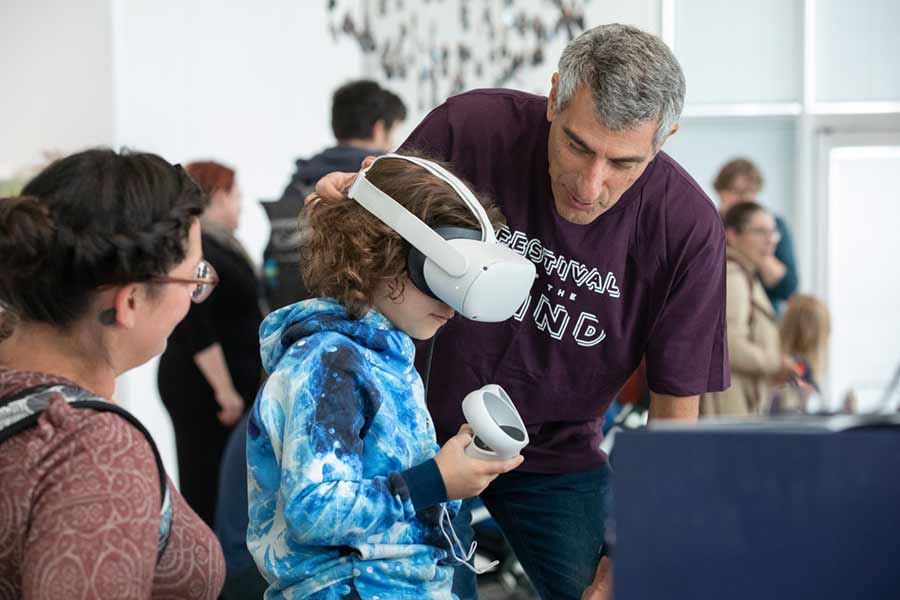
Vanessa, take us back to that first conversation with Anthony Bennett over 15 years ago. What did Festival of the Mind need to bring to Sheffield that was missing at the time?
VT: Festival of the Mind grew out of two things happening simultaneously: a push for greater public engagement with and awareness of higher education research, and my return from Blackpool after being asked to serve as a co-investigator on a major public engagement funding bid to UKRI.
The seeds were planted, funding was available to bid for and all we needed was a programme that was innovative and distinctly different from what other universities were doing. Having attended various academic festivals as a researcher, I often found their approach to engagement a bit amateurish, formulaic and lacking in production value – keep in mind, my background is as a circus and outdoor events producer!
That was the core concept and the underlying need. Anthony Bennett had already worked with me for five years on projects such as Ohmy, Barnum and my 2012 Roundhouse show Professor Vanessa’s Performing Wonders. When we spoke, he expressed a desire for a mechanism that would foster broader partnerships across academic disciplines.
With those core principles set, it was up to me to devise and produce a full programme, securing venues, funding, production teams and participants. I brought in key partners from the production world, such as Scott Barton from Yellow Bus, to make the external aspects of the festival work.
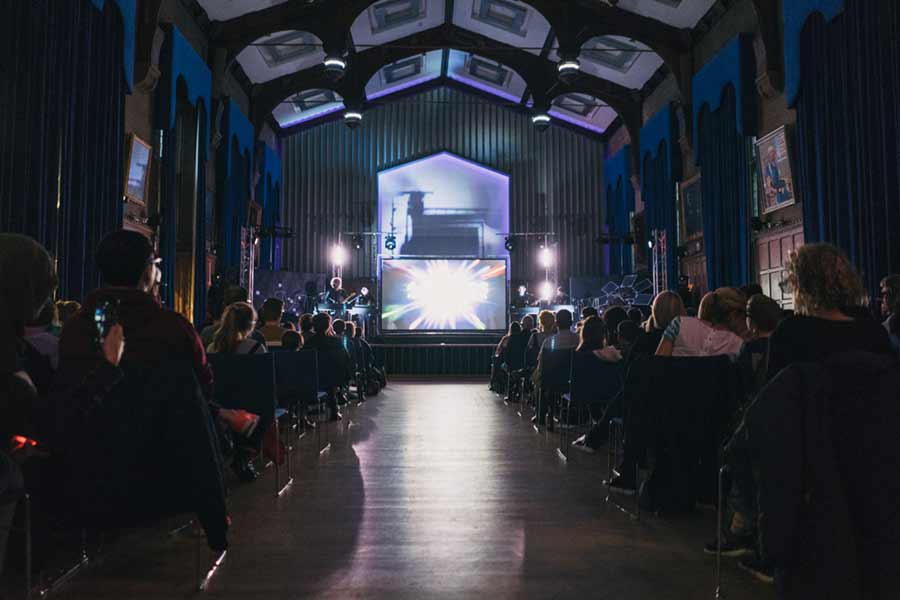
Greg, for anyone who’s never been, how would you describe the festival?
GO: Festival of the Mind is the University of Sheffield’s flagship public engagement festival, designed to firmly place world-class academic research at the heart of the city. It’s where researchers and creatives collaborate to build something unique, captivating and fun for everyone. What I love most is that there really is something for everybody: whatever your background or interests, you’ll find something that sparks curiosity or encourages you to view a topic through a fresh lens.
Pairing academics with local artists can produce some unexpected results. Is there a collaboration over the years that particularly sticks in your mind?
VT: My favourite collaboration was between Prof Sharron Hinchliff and artist Pete McKee, exploring the sex lives of people over 50. Maybe that’s because I’m over 50 myself now! But joking aside, it was such an important project, delivered with real humour, subtlety and a fantastic partnership.
Beyond individual pairings, another highlight was bringing in the Spiegeltent, devising Futurecade and taking over Castle House and Castlegate alongside John Moreland and Human Studio. The work we did around Castlegate helped unlock substantial funding for Sheffield city council, making a huge impact on the city and playing a vital role in the broader work on Sheffield Castle.
GO: One of my personal favourites was Resurrection, a collaboration between Dr Tori Herridge and artist Paul Evans featuring life-size charcoal drawings and projections of two extinct elephant species: a massive four-metre-tall steppe mammoth, depicted in a drawing measuring 5 metres by 5 metres, and a one-metre-tall Sicilian dwarf elephant. By using charcoal, an ancient cave art medium, the exhibition drew striking contrasts between scale, emotion and humanity’s urge to imitate nature through technology.
As a big science fiction fan, I also loved Prof Ed Daw’s partnership with the musical theatre company Leo & Hyde to create Inside Out: A Dark Matter Musical. It took audiences directly into the quantum realm to explain how physicists search for hidden particles – and Ed even played the piano!
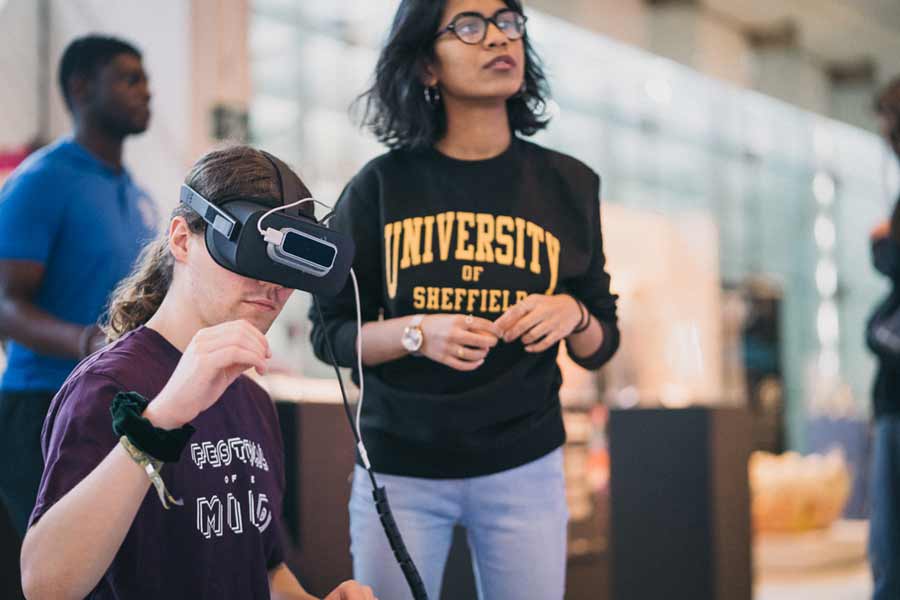
This year’s programme covers everything from star formation to centuries-old drinks recipes. How do you turn such varied research into something people can connect with and enjoy?
GO: In reality, preparations begin a year in advance with the Ideas Bazaar, where academics exchange ideas with local creative partners, artists, film-makers, musicians, digital creators and performers. Matching academic expertise with regional creative talent ensures that complex research is reimagined through compelling storytelling, visual media and hands-on interaction.
We also ensure that even the most complex subjects connect back to everyday life. By framing research around shared human themes – such as health, local heritage, climate change and sustainability – we help audiences feel a direct personal connection to the topics.
Finally, it comes down to the variety of formats. Rather than relying on traditional academic lectures, projects are co-produced with creatives using media such as virtual reality, mixed reality and interactive digital exhibits that allow audiences to physically or visually experience topics such as astrophysics or environmental science. Historical narratives and health research are brought to life through performance, music, botanical illustrations and interactive workshops that invite active public participation.
Vanessa, with this being your final festival as director, what will you miss most – and what would you most like to see carried forward?
VT: The festival will naturally continue to evolve. I shaped much of its direction, venue choices and production style over the first decade, but things have matured significantly and there are far more venues available now. I was a bit disappointed we couldn’t use the old Cole Brothers building, but then again, having done a full department store takeover in 2014, we didn’t necessarily need to repeat it!
What I’ll miss most is learning about my academic colleagues’ incredible research. For six months every two years, I become a walking Wikipedia of fascinating and complex insights into our world-leading research, which is a rare gift and a privilege. As long as that spirit carries forward – and as long as it never becomes amateur or boring – I’ll be delighted with whatever comes next.
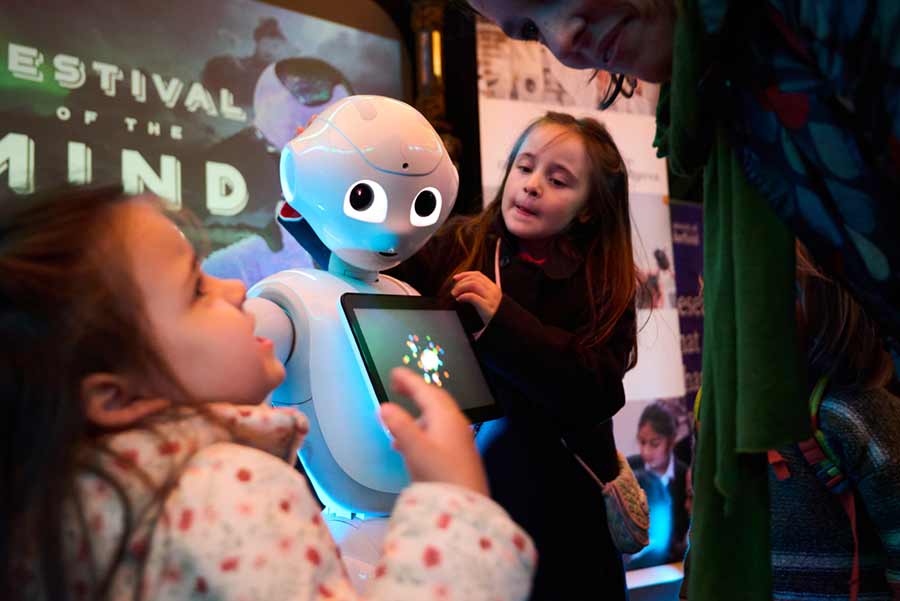
Looking beyond this edition, how will the university build on what Vanessa and the team have created, and what might the festival’s next chapter look like?
GO: We fully intend to build on Vanessa’s phenomenal legacy by continuing the successful model of pairing academics with creative partners to deliver an ambitious, engaging programme that deeply resonates with the public. We will always champion cutting-edge research that showcases our university’s excellence, while exploring new ways to reach different communities, including taking Festival of the Mind directly out into neighbourhood spaces across the region.
When someone heads home after a day at Festival of the Mind, what do you hope they’ll have experienced or discovered?
VT: Engaging, fascinating and complex research that makes them think, inspires them and explains the world around them – and that it was fun!
My all-time favourite piece of feedback came during our very first festival in 2012. Someone left a Post-it note on one of the exhibition tables that read: “I could never afford to go to the University of Sheffield, but this week the University of Sheffield came to me.” Honestly, I cried. That note has stayed with me through all 14 years since. I will miss the festival dearly, but I know it’s in wonderful hands.
Festival of the Mind runs from 6–15 November at venues across Sheffield city centre, with all events free to attend. For the full programme and more information, visit festivalofthemind.sheffield.ac.uk.