Max Scotford’s craft chocolate business has grown from small-batch beginnings to sites in London, with York and Nottingham next – but it’s Sheffield where the idea took hold.
It’s clear, sitting inside Chocolate Bar at Leah’s Yard, this isn’t just another run-of-the-mill city centre café. The age range is far more varied than your usual hipster spot, it’s got a sense of playfulness running through it, and everything revolves around one thing that you might associate more with Brussels than Sheffield – chocolate.
For Max Scotford, that’s exactly the point.

What started as a hobby – roasting cocoa beans by hand, figuring things out batch by batch – has grown into something much bigger. Bullion Chocolate runs out of a factory in Kelham Island, and Chocolate Bar now has a growing footprint that stretches from Sheffield to London’s Tower Bridge and, soon, York and Nottingham. But the core idea hasn’t shifted: make proper bean-to-bar chocolate, and get more people to care about it.
We meet in the Leah’s Yard site, a space that feels intentionally different. It’s not trying to compete with the city’s coffee heavyweights even though the flat white I’m drinking more than hits the spot. Instead, it leans into chocolate as an experience – something Scotford admits was a bit of a gamble.
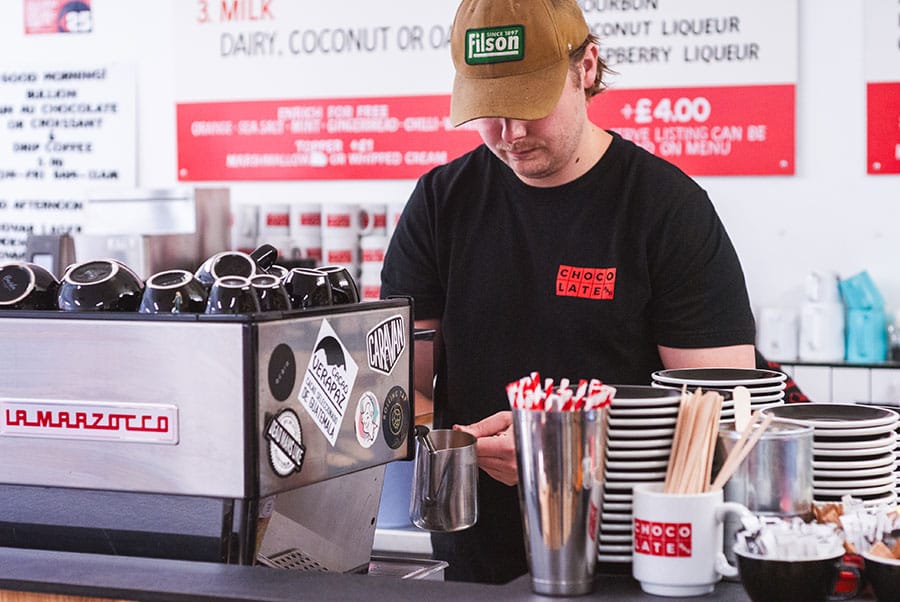
“There was no market research. It was just like, let’s have a go and see if it works,” he says. “But we were confident in what we could offer as a café-bar.”
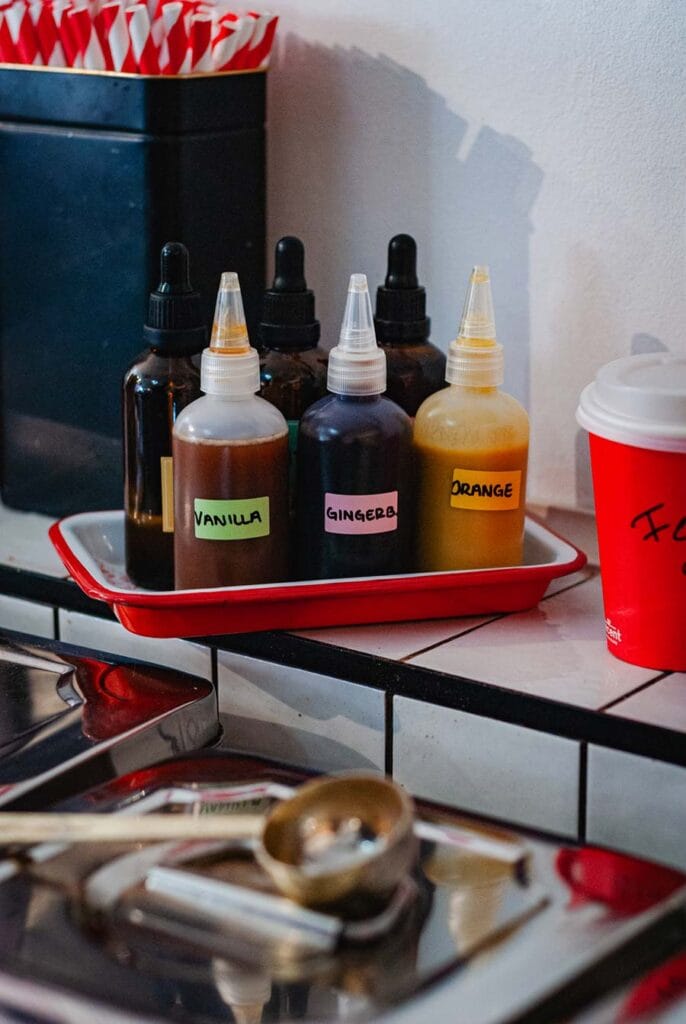
That instinct has paid off. The concept here – build-your-own hot chocolates, theatrical toppings, boozy additions, a menu that shifts with the seasons – has been refined over time, and it’s now the blueprint for expansion. London came next, followed by plans for York and Nottingham, each site slightly adapted to its surroundings but rooted in the same idea: make craft chocolate accessible.
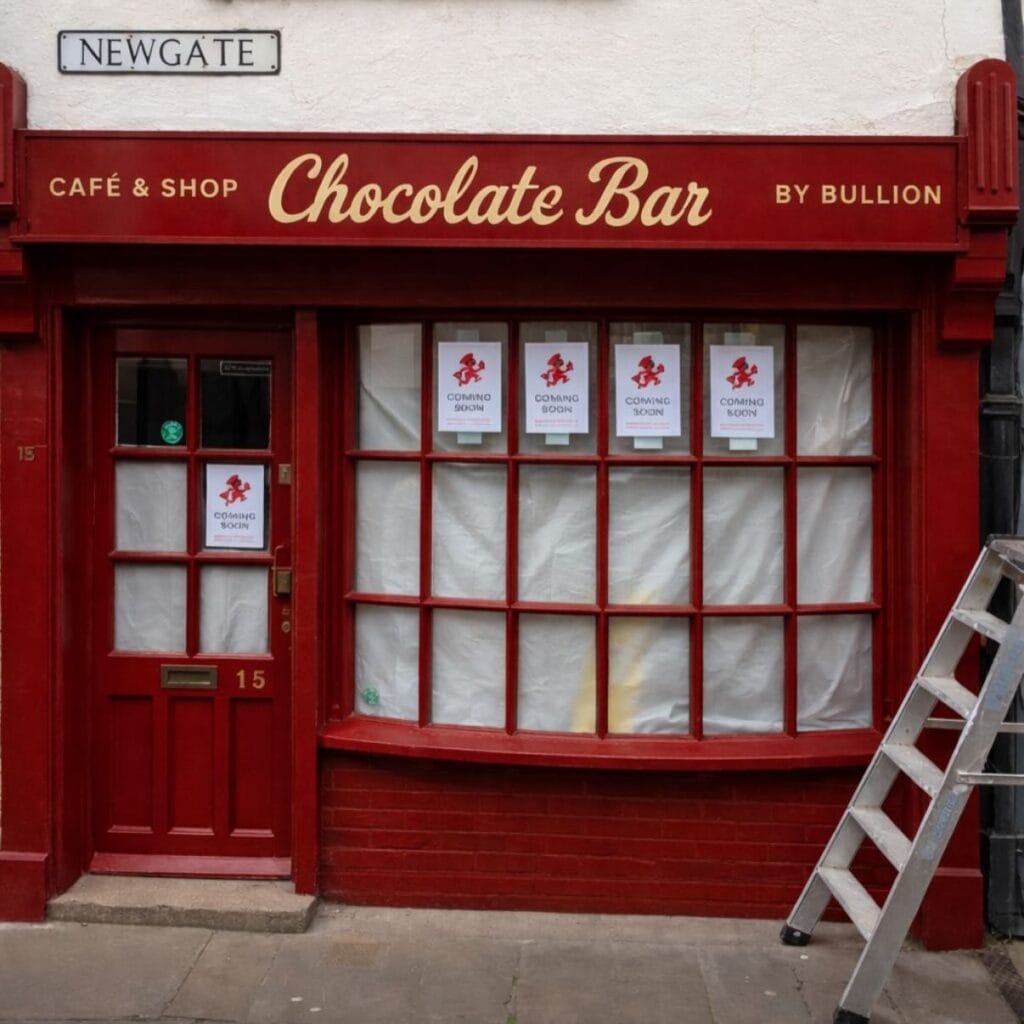
It hasn’t all been smooth. Max is candid about the early risk. Funding the Leah’s Yard opening meant pulling together Kickstarter money, savings and even Bitcoin – all in, with wages to cover and no guarantee it would land.
“It was like an all or nothing,” he says. “But Sheffield backed us from the off and we now feel part of the furniture in this hub of independents.”
That pressure still informs how the business grows. There’s a clear sense that each new site has to earn its place. Nottingham, for example, made sense not just because of the space, but because the city centre has the busy footfall. York, meanwhile, taps into tourism and its historic links to chocolate. These aren’t random pins on a map – they’re calculated steps.
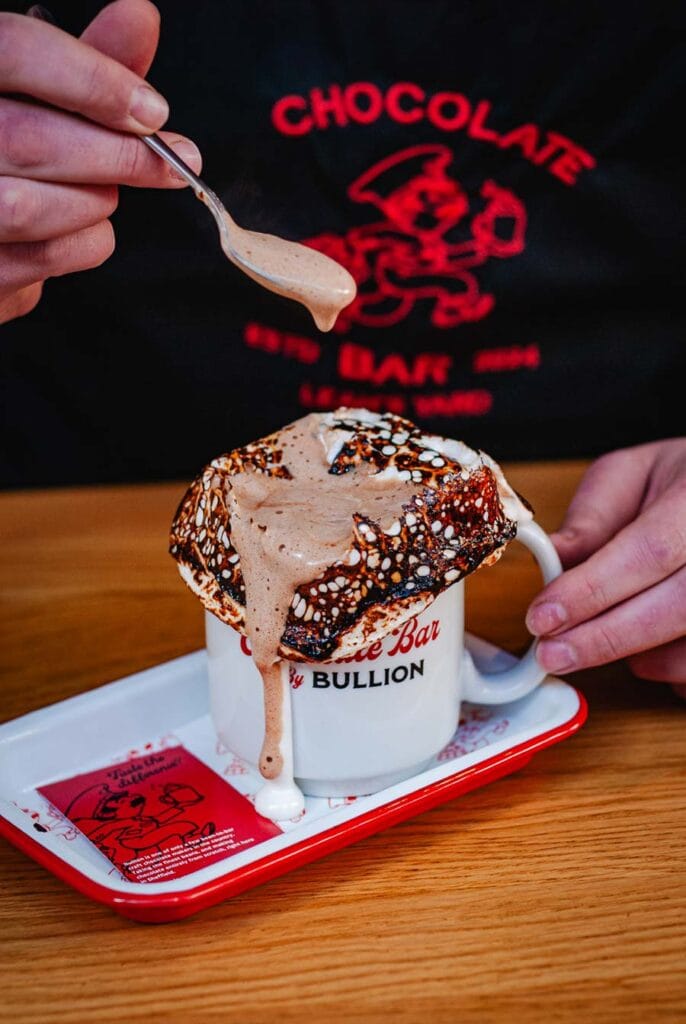
If Sheffield was about building a loyal base, London forced a rethink. There, Bullion couldn’t rely on brand reputation. It needed something visual, something immediate. Enter the now-viral marshmallow topping – torched, oversized and tailor-made for TikTok.
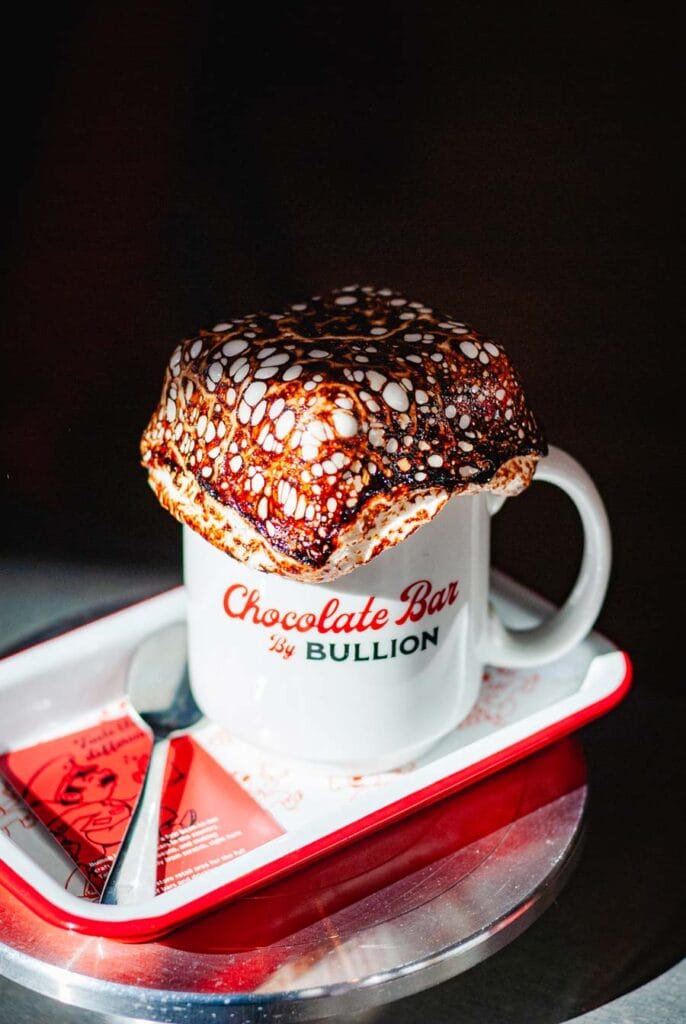
One influencer video racked up hundreds of thousands of views in a day, and suddenly queues followed. Weekly takings jumped dramatically, and the Chocolate Bar concept evolved again – more theatre, more customisation, more reasons to stop scrolling and step inside.
But underneath the spectacle is something more grounded, and Max is quick to bring it back to the product itself.
Everything is made from bean to bar in Sheffield. No palm oil, no unnecessary additives – just cocoa beans and cane sugar. It’s a level of control and transparency that’s still rare in the UK, where most high street chocolate leans heavily on mass production.
That gap between perception and reality is something he’s constantly working against.
“I think the undervaluing of the product,” he says, when asked about misconceptions. “People see £6.50 for a chocolate bar and think it’s expensive, but they don’t always see everything that goes into it – where the beans are from, the people growing them, the weeks it takes to make. If you compared it to something like wine or coffee, where people are happy to spend more for quality, it starts to make more sense. It’s just about getting people to understand what they’re actually paying for.”
That’s where Chocolate Bar plays a different role to Bullion itself. If Bullion is the product – black and gold packaging, high-end gifting – then Chocolate Bar is the gateway, a way of “drip feeding” the craft chocolate story without overwhelming people.
It’s also why the space works so well in the evening. Open late, alcohol optional, it’s become a kind of middle ground – somewhere to meet, read, work, or just enjoy a delicious drinking chocolate and soft serve combo in peace.

“Accessible is probably the best word,” he says. “If we can get people through the door, then over time they start to understand what goes into it. That’s the aim really.”
And that accessibility is what underpins the next phase. More sites, yes, but also something bigger back home.
The long-term ambition isn’t just expansion for expansion’s sake. It’s about Sheffield itself.
Max talks about creating a proper visitor attraction – an interactive chocolate space in the city centre where people can see the process, take part in workshops, understand what goes into making chocolate from scratch in a fun way. Something part museum, part factory, part experience.
“I’d like to put Sheffield on the map for craft chocolate,” he says simply. “We’re one of a small number of companies in the UK actually making chocolate from scratch, and it’s such an incredible, visual process. We’re hugely proud of what we do, where we’re from and going to continue shouting about it.”