Tucked away inside one of Sheffield’s most storied industrial buildings, Locksley Distilling has spent more than a decade experimenting with botanicals, booze and bold new flavours. We headed down to Portland Works to meet owners Cynthia King and John Cherry, take a peek behind the scenes and hear why making your own bottle is probably best attempted before your fourth G&T…
Arriving at Portland Works on Randall Street, you’re greeted by a map that offers a neat snapshot of the building’s enduring Sheffield spirit. Spread around its courtyards and workshops are more than 30 craftspeople, artists, makers and small businesses, working across everything from metalwork and jewellery to woodwork and music.
Built in the 1870s and now Grade II* listed, Portland Works is one of the city’s last surviving purpose-built integrated metal trades factories. It also has a hefty claim to some local history: in 1913, stainless steel was first used to manufacture cutlery here. Saved from residential conversion by a community-led campaign, the building was bought by more than 500 not-for-profit shareholders and remains a working home for independent makers today.
And, among all that clanking, cutting, shaping and making, there’s some delicious gin being distilled and bottled.
Locksley Distilling has called Portland Works home for much of its 13-year history. Founded by Sheffield-born John Cherry in 2013 after years spent working in hospitality in France and the drinks trade in New York, the business began life in considerably less glamorous surroundings: his parents’ attic. John and his wife, New Yorker Cynthia King, had returned to Sheffield at a time when the craft gin scene was still relatively sparse. Their breakthrough product was Sir Robin of Locksley, the gin that remains at the heart of the business today.
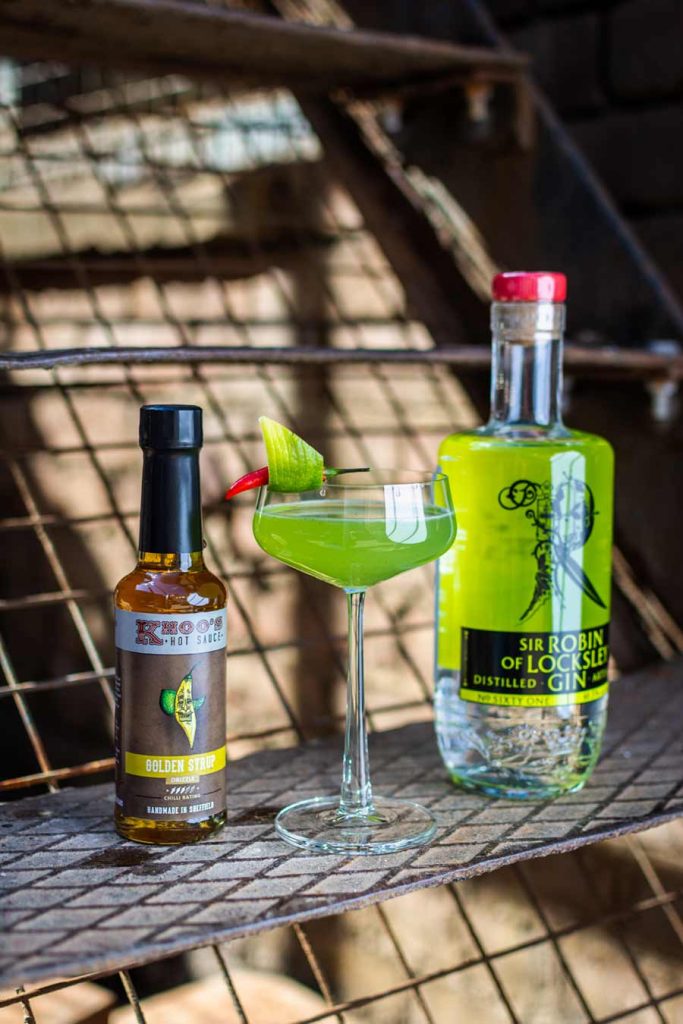
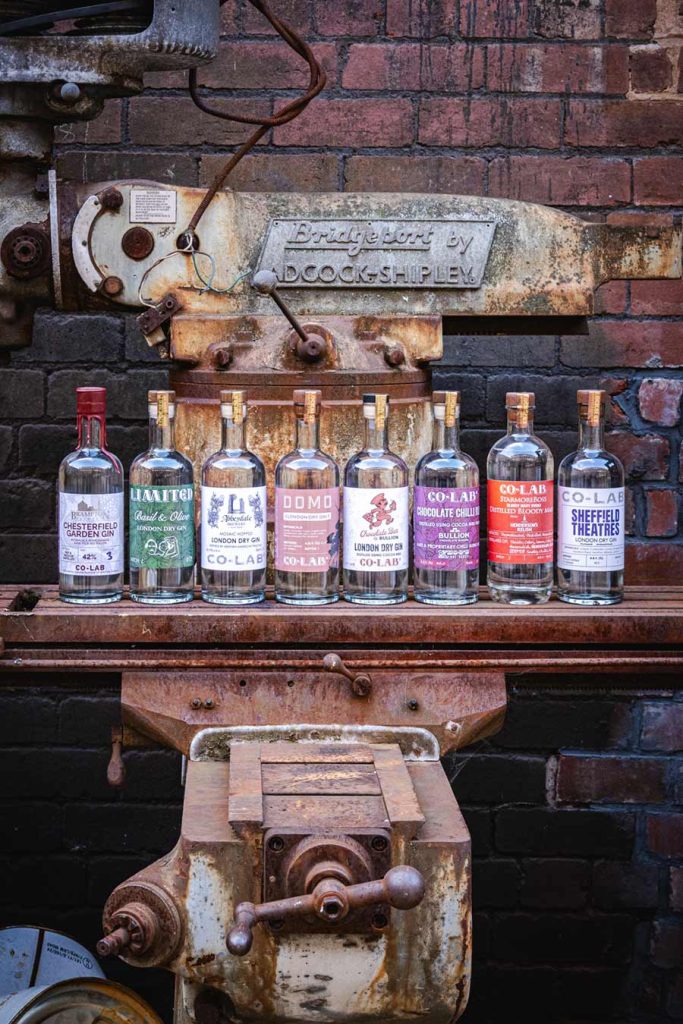
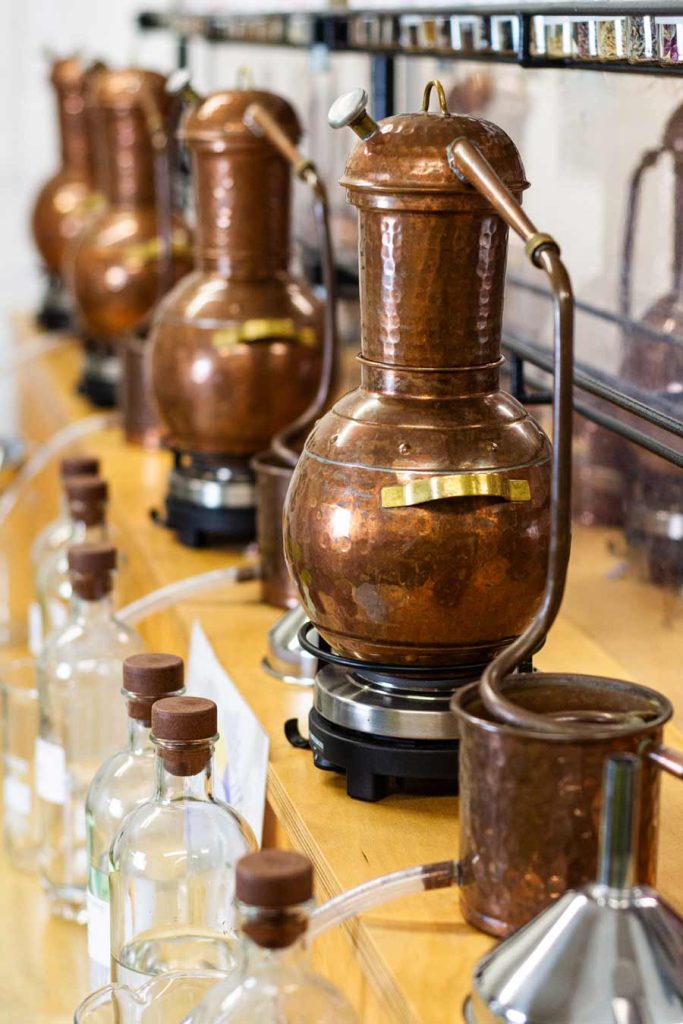
When we arrive, Cynthia meets us in the tasting room just off the main courtyard. Small copper stills sit on tables while shelves behind them offer a whistle-stop tour through Locksley’s back catalogue: the aforementioned Sir Robin stands proudly alongside more experimental concoctions ranging from Bloody Mary vodkas to raspberry, chocolate & fig negronis.
It’s also the home of Locksley’s gin-making school, which started in summer 2019, not long before Covid temporarily put the brakes on proceedings. Since returning, it’s attracted a pleasingly broad church of amateur distillers.
“It’s a real range. We’ve had an 80-year-old man come to a cocktail class with his grandsons,” Cynthia tells us. “His grandsons brought him for his birthday and he had a incredible time!”
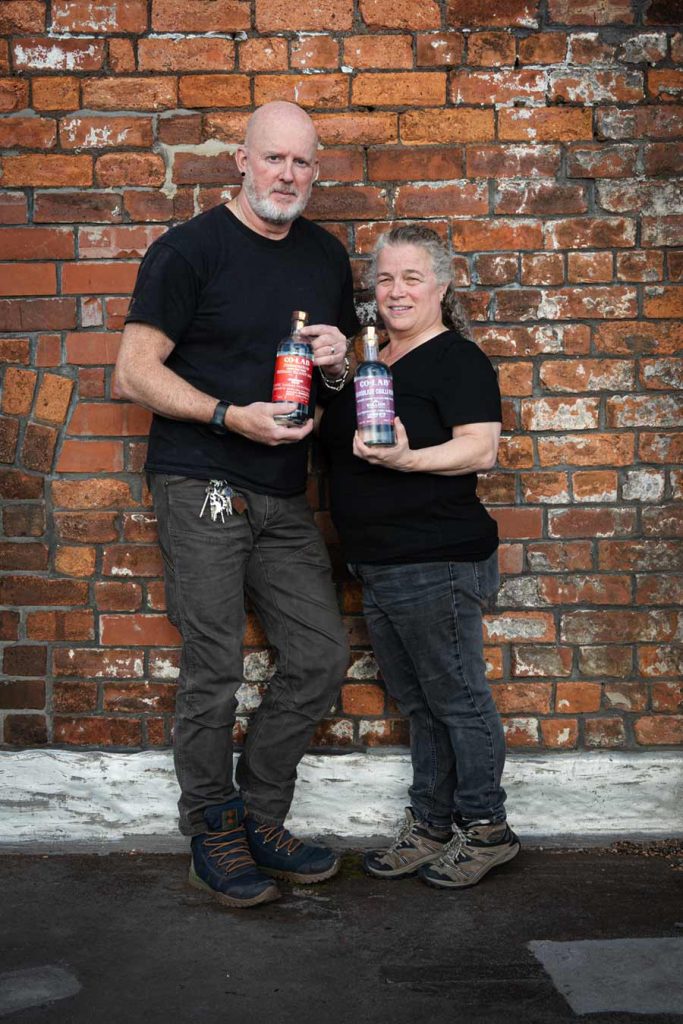
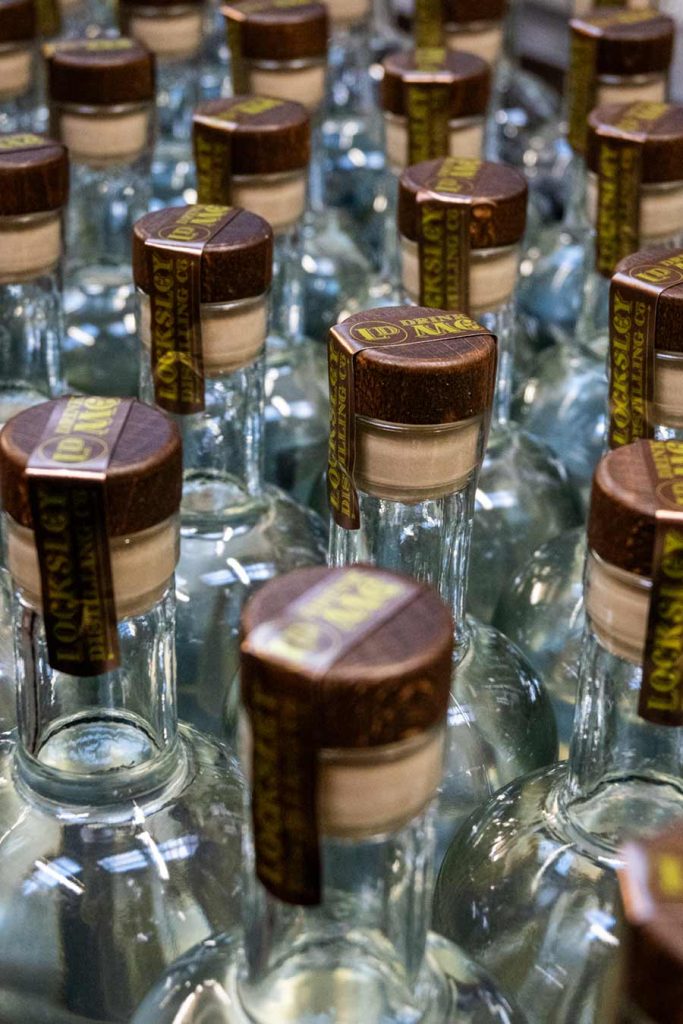
From octogenarians to engaged couples who visit to create a gin together, then return to recreate the recipe for bottles on their wedding tables, it’s also indicative of how Locksley has changed over the years. While bottles remain the core product – they currently produce around 35,000 a year – getting people through the door has become an increasingly important part of the business.
The gin-making session lasts around two and a half hours, with up to eight people generally taking a still each. Guests begin with a welcome G&T – it would be rude not to – before getting into recipe development. There’s a list of botanicals sent out beforehand for those who fancy doing their homework, though turning up and winging it is perfectly acceptable too.
Which is probably reassuring when you’re confronted with a wall of around 100 ingredients.
“We pre-weigh five ingredients that go into a lot of our gins,” explains John. “They’re very traditional gin-type ingredients, so whether they add a little bit or a lot on top of that, they’re all going to go away with a decent bottle of gin.”
Interestingly, the tour used to come before the gin-making. There was, however, a small problem.
“By the time we did a tour and got stuck into the gin-making, they were usually about four gin and tonics into it,” says John. “The quality of the finished gins now that we’ve done it the other way around has got substantially better.”
Once recipes have started taking shape, guests head around the distillery, taking in the bottling room and production spaces before returning with the chance to tweak things further. The actual distillation takes only around 25 minutes, at the end of which everyone leaves with a full bottle of their own unique, self-made gin.
Things get interesting when we head upstairs to the Co-Lab®, Locksley’s experimental playground. This is where some of the stranger ideas get thrown around and, crucially, where they work out how to make them taste good.
On one side is the main 250-litre stainless steel still. Copper might be the more romantic image associated with traditional distilling, but there was a very Sheffield reason for choosing this particular bit of kit: in a Grade II* listed building, it was the one they could actually get through the door.
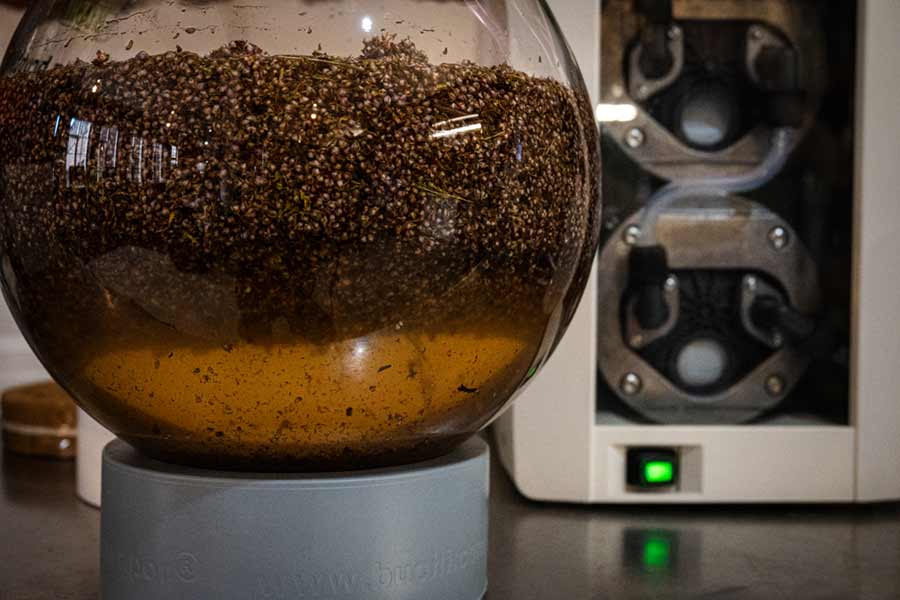
Nearby, futuristic rotary evaporators – or rotovaps for the gin boffs – hypnotically turn glass flasks. Cynthia explains how they create a vacuum, lowering the atmospheric pressure and allowing alcohol to boil at close to room temperature. That means delicate ingredients can be distilled without cooking them for hours, preserving fresher flavours.
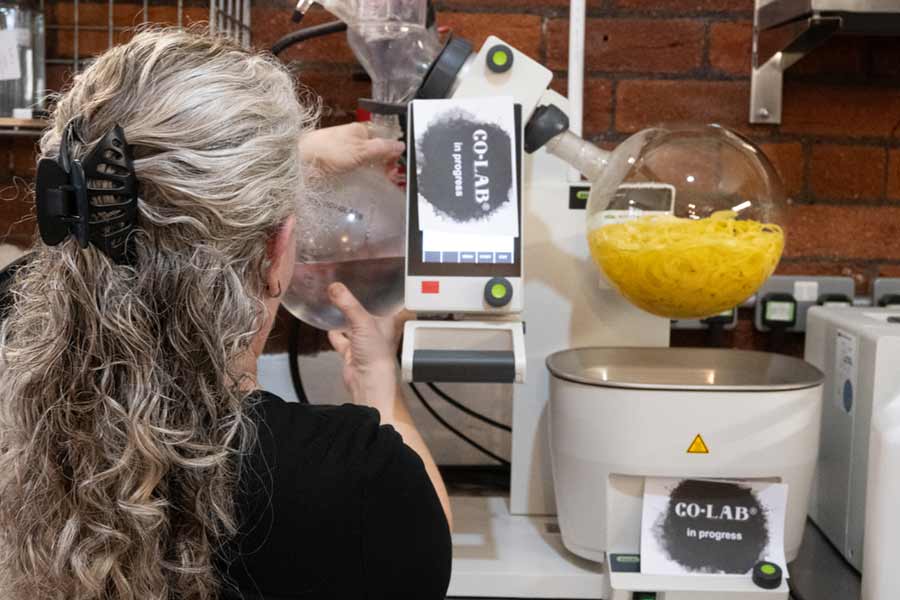
It’s been central to Locksley’s Co-Lab® range, which officially began in 2018 and has seen them work with businesses and organisations to build spirits around specific ideas rather than simply sticking another logo on a bottle.
During our visit, they’re working on a Sheffield Theatres’ gin, built around lemon, heather and bilberry. The latter two were chosen partly as Peak District botanicals and partly, Cynthia admits, because they’re purple and matched the project’s colour palette. There’s something reassuringly Locksley about developing a drink from the starting point of: well, these things are the right colour.
On the same table, another batch of mulled wine with Barks Wine is in the works following two hugely popular previous runs. Then comes the experiment that really grabs our attention: Henderson’s Relish in a vodka.
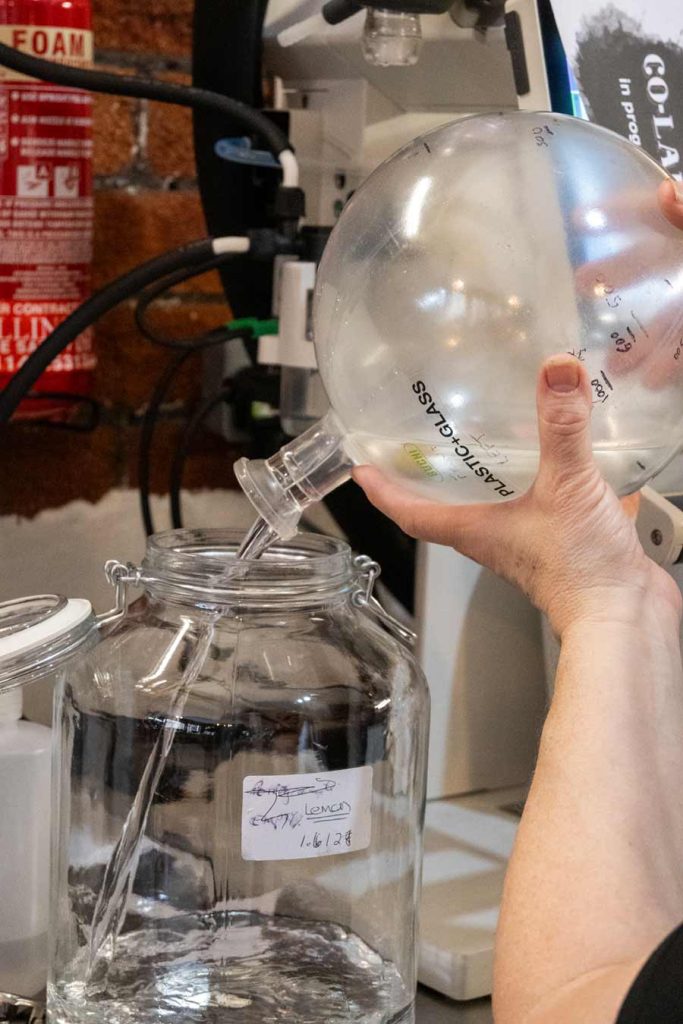
It’s a collaboration with Sharrow Vale booze merchants StarmoreBoss and, yes, we’re immediately given some to try. At this stage it’s an intensely concentrated distillate sitting somewhere around 80% ABV, so only a tiny dab hits the back of the hand before tasting. Somehow, through the blast of alcohol, unmistakable Hendo’s flavours emerge.
Even though it sounds like something devised during a particularly ambitious pub conversation, it works. For Cynthia, that willingness to mess around with flavours is fundamental to gin itself.
“Gin basically is all about the flavour. It’s made in a very similar way to vodka, but you put flavours into it. You’re taking alcohol that already exists and you’re re-distilling it with flavours.”

Locksley arrived early enough to watch the British gin landscape transform around them. The business was England’s 15th registered distillery, before the mid-2010s boom sent that number soaring. They responded by expanding their own range, creating products for other brands and leaning into collaborations and limited editions. These days there are around ten individual brands for which they contract distil alongside the core, collaborative and limited ranges.
There are also, Cynthia teases, “a couple of top secret ones” in development, some of which could be “game-changing” for the company. But she’s giving nothing else away.
Back downstairs, the other side of modern Locksley becomes clear. As retail habits changed, the distillery began putting more emphasis on experiences and selling directly to customers. Today there are tasting visits, gin-making sessions and monthly cocktail classes alongside the day-to-day business of producing and bottling spirits.
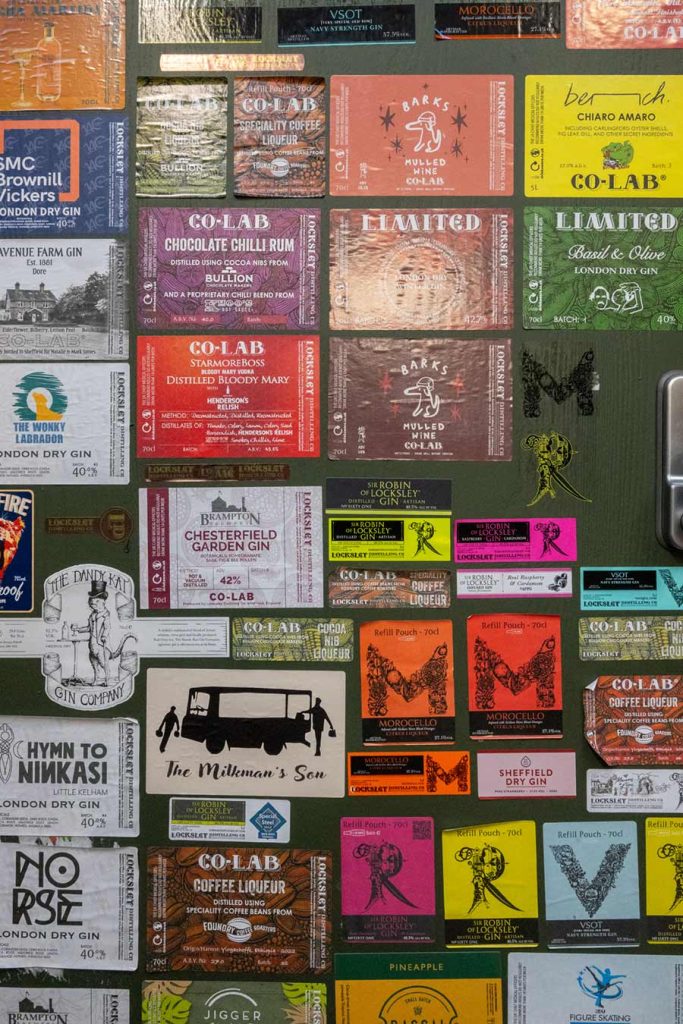
The cocktail sessions are Cynthia’s domain. Groups of ten get a G&T on arrival before making three drinks, deliberately arranged in descending order of physical coordination: shaken first, stirred next and finally something built directly in the glass.
The tasting tours, meanwhile, last around 90 minutes, taking visitors through the building and production process with a G&T and six spirit samples along the way. Importantly, they’re intentionally not delivered from a rigid script that you might find at some of the bigger distilleries and brewhouses; certain points will be made but each member of staff taking the tour will apply their own slant.
That looseness seems appropriate for an independent business where everyone chips in. Locksley currently has three full-time and five part-time staff, and John admits that “no two days are the same”. On the day of our visit, distilling and showing us around will be followed by bottling a large order ready to go out the next morning.
We make our way out and leave them to it. What’s clear is that, like a well-chosen botanical, this friendly, family-run firm blends perfectly into its surroundings – a place built around small-scale industry and creative people making things. Locksley might swap steel for spirits, but the approach feels familiar: experimentation, specialist kit, hands-on production and a willingness to make something slightly unusual just to see if it works.
With cosy gin season just around the corner, consider that your cue to pop in and see what they’re cooking up next.
locksleydistilling.com
@locksleydistilling
Unit 20C-1, Portland Works
Randall Street
S2 4SJ