Disclaimer: This article is not intended to be a recommendation. The author is not responsible for any resulting actions of the company during your trading experience. The information provided in this article may not be accurate or up-to-date. Any trading or financial decision you make is your sole responsibility, and you must not rely on any information provided here. We do not provide any warranties regarding the information on this website and are not responsible for any losses or damages incurred as a result of trading or investing.
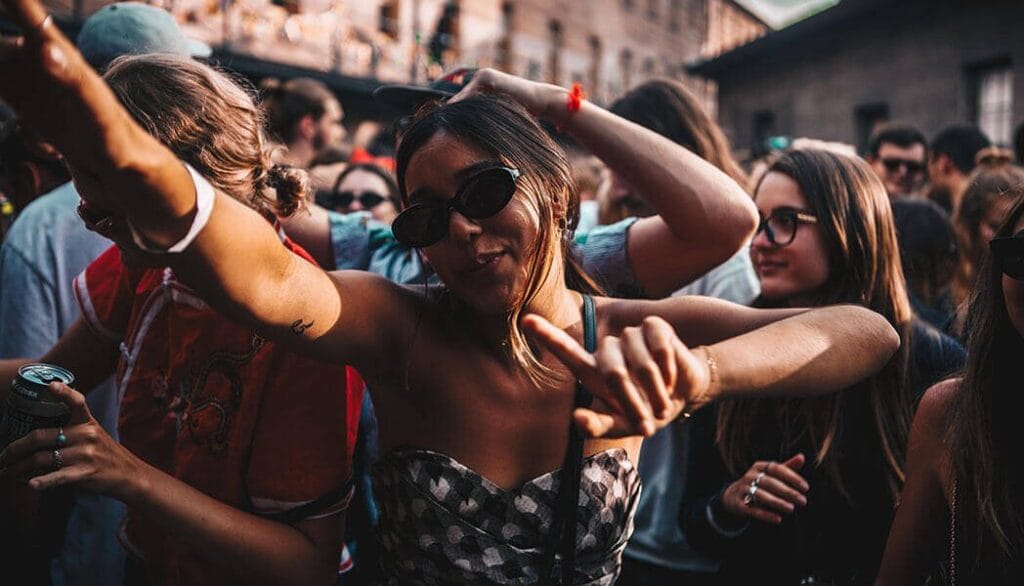
There is a version of any large celebration that looks effortless from the outside. Guests arrive, the lighting shifts perfectly on cue, the food lands at the right moment, and the whole evening feels choreographed without ever feeling stiff. What most guests never see is the production logic running underneath it all.
Britain’s biggest milestone celebrations, from landmark birthdays to multi-generational family gatherings, are increasingly being planned the way theatrical productions are staged. According to an integrated model of service and experience factors, the quality of an event experience depends far more on invisible systems than on visible décor. Guest flow, lighting cues, supplier timing, and backstage coordination shape how an evening feels long before a single centrepiece is chosen.
The visible styling gets the attention, but it is the structural thinking behind it that determines whether an event holds together under pressure. That distinction is exactly what separates a well-decorated party from something that genuinely works as a luxury event planning company would define it: a timed, coordinated live experience where every moving part answers to the same plan.
The Difference Is in the Production Logic
Once a celebration involves multiple suppliers, cue-based moments, and high guest expectations, the person running it stops thinking like a stylist and starts thinking like a producer. Their job looks much closer to that of a luxury event planning company than a venue coordinator. It is not just that there are more moving parts. It is that every part has to answer to the same plan, at the right time, with ownership and backup options if something shifts.
Guest flow, lighting cues, supplier timing, and backstage coordination are the systems that decide whether the night feels intentional or accidental. Décor is what guests photograph. Coordination is what keeps the room relaxed, the energy building, and the transitions smooth. You feel it when dinner arrives exactly as speeches end, when music lifts a lull, and when people naturally end up where they are meant to be. That hidden structure is the production logic at work, and the sections below unpack it.
What Gets Choreographed Behind the Scenes
As guest counts rise and expectations grow, the invisible systems underpinning an event become more consequential, not less. A small gathering can absorb a delayed course or an overrunning speech without much damage. A large milestone celebration cannot afford the same margin, which is why coordinated movement and timing are treated as disciplines in their own right.
Guest Movement Shapes the Mood

Most guests experience an event as a series of moments: the arrival, the welcome drink, the transition to dinner, the first dance. What they rarely notice is that each of those moments has been deliberately sequenced as part of a run of show, a document that maps every movement against a timeline.
The arrival sequence alone involves more decisions than it appears to. Where guests are directed when they first walk in, how long they stay in a reception area, and when they are moved through to the main space all influence how energy builds in a room. Rushed transitions flatten the atmosphere; drawn-out ones let momentum stall.
Room transitions are particularly telling. The moment a crowd moves from one space to another is when the mood is most fragile, and experienced producers treat it as a choreographic moment in its own right, not simply a logistical gap between segments.
Timing Keeps the Night from Stalling
Supplier coordination is where timing becomes structural. Caterers, lighting technicians, AV teams, photographers, and entertainers all work to their own rhythms, and those rhythms rarely match up on their own. Unless everyone is locked to the same run of show, tiny delays start stacking: a band finishes late, the MC fills the gap, the kitchen waits to plate, the photographer misses the entrance, and suddenly the room feels slightly out of sync.
Even a small overrun has consequences. A speech that runs three minutes long can push a kitchen past its service window, which affects food temperature and service pace. A delayed room transition can shift a lighting cue, leave the dancefloor flat, or force the AV team to improvise audio levels on the fly. These ripple effects are exactly why carefully choreographed public celebrations depend on one shared, supplier-facing timeline, not separate briefings that each team manages alone.
Why Milestone Parties Now Feel More Cinematic
Guest expectations have shifted considerably over the past decade. People arrive at milestone events having attended festivals, stayed in design-led hotels, and watched live entertainment that builds deliberately toward emotional peaks. That exposure changes what feels ordinary and what feels memorable.
Social media has accelerated this shift in a specific way. When moments from a celebration circulate afterwards, the images and clips that travel furthest tend to be ones with visual payoff and clear emotional pacing: the reveal, the reaction, the transition that lands at exactly the right beat. Hosts have noticed, and planning decisions increasingly reflect that awareness.
The result is that milestone celebrations now borrow techniques from experience design in ways that would have seemed excessive for a private party a generation ago. Staged entertainment across multiple venues, narrative structure, and deliberate emotional arcs are no longer exclusive to live entertainment. They have quietly moved into how people plan significant personal occasions.
The Best Celebrations Hide the Hard Work
The events that guests remember longest tend to be the ones where nothing seemed to require effort. No visible scramble, no awkward gaps, no moment that pulled attention toward the machinery keeping things moving. That quality is never accidental.
What the earlier sections make clear is that the distinction between decoration and coordination is the defining one. Styling creates atmosphere, but production discipline determines whether that atmosphere holds from the first arrival to the final hour.
The shift toward treating milestone celebrations like theatrical productions reflects something honest about how memory works. Guests recall how an evening felt, not how it was assembled. The craft lies in keeping those two things entirely separate, which is precisely what the best events quietly achieve.