Disclaimer: This article is not intended to be a recommendation. The author is not responsible for any resulting actions of the company during your trading experience. The information provided in this article may not be accurate or up-to-date. Any trading or financial decision you make is your sole responsibility, and you must not rely on any information provided here. We do not provide any warranties regarding the information on this website and are not responsible for any losses or damages incurred as a result of trading or investing.
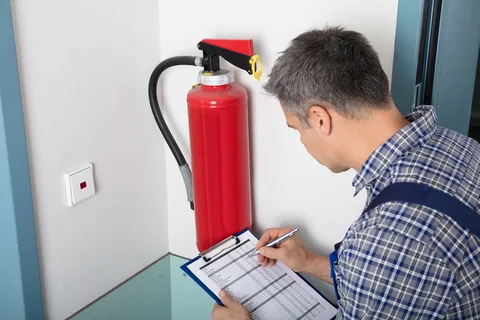
Image Source: Yandex.com
Every multi-occupied residential building in the UK legally requires an up-to-date Fire Risk Assessment. Following recent legislative overhauls under the Fire Safety Act 2021, the Fire Safety (England) Regulations 2022, and the Building Safety Act 2022, fire authorities actively enforce strict compliance across all property portfolios. If you manage a block of flats, an HMO, or a residential conversion, holding a documented assessment is your primary statutory obligation.
This blog discusses the legal triggers, the expanded structural scope of assessments, procedural requirements across different building types, and how duty holders can maintain full regulatory compliance for residential properties.
The Legal Baseline: The Regulatory Reform (Fire Safety) Order 2005
Under Article 9 of the Regulatory Reform (Fire Safety) Order 2005 (FSO), a Fire Risk Assessment (FRA) is a mandatory legal requirement for all multi-occupied residential buildings across England and Wales.
If a premises contains two or more domestic units, the law mandates that a suitable and sufficient Fire Risk Assessments in London must be conducted, documented, and regularly reviewed.
Who Holds Statutory Liability?
The law places ultimate legal responsibility on the designated “Responsible Person” (RP) or “Accountable Person” (AP). Statutory liability applies to:
Property Management Companies (PMCs): Managing agents overseeing communal hallways, stairwells, and shared infrastructure on behalf of freeholders.
Freeholders and Building Owners: Individuals or corporate entities holding the legal title of the building structure.
Right to Manage (RTM) Companies and RMCs: Resident-led management corporate bodies that have taken over operational control of building services.
HMO Landlords: Owners operating licensed or unlicensed Houses in Multiple Occupation where individuals share amenities or common entrance zones.
Key Triggers: When Must an FRA Be Conducted or Updated?
A Fire Risk Assessment is a living safety management plan that must be initiated, reviewed, or completely re-assessed under specific operational and legal triggers.
1. New Building Occupancy or Property Conversions
Before any newly constructed block of flats, converted Victorian house, or commercial-to-residential development receives its first residents, a full Fire Risk Assessment must be completed. Occupying a multi-residential building without a valid, pre-existing FRA is an immediate breach of UK fire safety law.
2. Physical, Structural, or Utility Modifications
Any physical alteration to the building structure requires an immediate review of the existing FRA. Key modifications that trigger an assessment include:
- Partitioning shared corridors or altering communal escape paths.
- Penetrating compartment walls or floor slabs to install new utility risers, electrical cabling, broadband fibers, or plumbing pipes.
- Replacing flat entrance doors, communal fire doors, or upgrading main exit hardware.
- Carrying out major repairs or alterations to external cladding, render, or insulation systems.
3. Changes in Tenancy Dynamics or Building Occupancy
In Houses in Multiple Occupation (HMOs) or supported living accommodation, shifts in tenant demographics can introduce new risk factors. If a flat block transitions to house vulnerable individuals, elderly residents, or occupants with mobility impairments, the existing fire strategy must be updated immediately to reflect modified evacuation needs.
4. Following a Fire Incident or “Near Miss”
If a fire event, localized electrical burn, or significant smoke contamination occurs within a flat or communal area, the Responsible Person must immediately commission a fresh FRA. The review determines whether passive compartmentation performed correctly, whether active systems activated as designed, and whether procedural failures occurred.
5. Annual Review Cycles and Re-Assessment Schedules
As a standard compliance benchmark, common-area Fire Risk Assessments should undergo a formal review every 12 months. A complete, top-to-bottom re-assessment should generally be commissioned every three to five years, depending on the building’s age, height, construction materials, and historical risk profile.
The Four Tiers of Residential Fire Risk Assessments
Fire risk assessors utilize four distinct tiers of assessment depending on the complexity, structural history, and observed defects of a residential flat block.
Type 1: Common Parts Only (Non-Intrusive)
Type 1 is the standard statutory baseline for most residential flat blocks. It involves a non-destructive visual inspection of communal escape routes, stairwells, service risers, electrical intake cupboards, and active systems such as emergency lighting and fire alarm panels. It does not involve entering private flat dwellings.
Type 2: Common Parts Only (Intrusive)
A Type 2 assessment covers the same geographic scope as Type 1 but includes minor intrusive sampling. The assessor may open inspection hatches, remove ceiling tiles, or drill sample core holes in common areas to check the quality of structural compartmentation and fire-stopping around utility penetrations.
Type 3: Common Parts & Flats (Non-Intrusive)
A Type 3 assessment expands the scope of a Type 1 survey by taking a representative sample of individual flat interiors. The assessor checks internal flat fire doors, checks for unauthorized structural modifications, and verifies that internal compartment walls remain intact, all without destructive sampling.
Type 4: Common Parts & Flats (Intrusive)
Type 4 is the most comprehensive and complex assessment tier. It involves destructive opening of structural elements, such as cutting into wall linings, floor voids, and ceiling cavities within both communal areas and sample flat interiors, to evaluate hidden structural fire resistance and passive fire barriers.
High-Rise Residential Flat Requirements (18m+ / 7+ Storeys)
The Building Safety Act 2022 and the Fire Safety (England) Regulations 2022 establish additional statutory duties for Higher-Risk Buildings (HRBs), defined as residential buildings measuring at least 18 meters in height or containing 7 or more storeys.
For these high-rise flat blocks, the Responsible Person or Accountable Person must implement specific high-rise safety measures alongside their standard FRA:
The Digital Golden Thread
Accountable Persons must compile and maintain a digital “Golden Thread” of building safety information. This auditable digital record houses structural drawings, fire risk assessments, material specifications, and ongoing maintenance logs, ensuring accurate safety data is available throughout the building’s operational life.
Secure Information Boxes (SIB)
High-rise residential blocks must feature a heavy-duty, vandal-proof Secure Information Box installed at ground level. This box must contain updated building floor plans, flat layout schematics, keyholder contacts, and structural risk details specifically formatted for attending fire and rescue crews.
Wayfinding and Emergency Signage
Stairwells and landing zones must feature photo-luminescent wayfinding signage. This includes prominent floor number markings and individual flat indicator signs positioned at specified heights to ensure emergency personnel can navigate effectively in dense smoke conditions.
Statutory Inspection Intervals
High-rise regulation mandates strict inspection cycles for key fire protection assets:
Communal Fire Doors: Must undergo formal operational checks at least quarterly.
Flat Entrance Doors: Self-closing devices on all flat entrance doors must be inspected at least annually.
Firefighting Lifts and Risers: Operational checks on firefighting lifts, dry risers, wet risers, and automatic smoke control systems must be conducted and logged monthly.
Mandatory Documentation and the Section 156 Shift
Section 156 of the Building Safety Act 2022 enacted a major procedural change that impacts every property manager and landlord in England and Wales.
Previously, smaller properties with fewer than five employees were exempt from recording their Fire Risk Assessment in writing. Under current law, all Fire Risk Assessments must be fully documented in writing, regardless of the size of the business, the number of employees, or the number of units within the property.
Furthermore, the Responsible Person must record their name, UK address, and the extent of their legal liability, making this information readily available to all building residents and enforcement authorities.
Penalties for Non-Compliance
Failing to hold a valid, compliant Fire Risk Assessment for a residential flat building carries severe legal, financial, and operational penalties under UK law.
Statutory Enforcement Notices
Local Fire and Rescue Authorities hold broad powers to enforce compliance:
Enforcement Notices: Served when inspectors identify significant compliance failures, detailing required works and imposing strict timelines for completion.
Prohibition Notices (Article 31): Issued when an inspector discovers an immediate threat to human life, such as compromised escape routes, missing fire detection, or non-functional fire doors. A Prohibition Notice can immediately restrict or prohibit access to the building, effectively closing the property until remedies are executed.
Financial and Criminal Liability
Unlimited Court Fines: Serious breaches prosecuted in Crown Court carry unlimited financial fines for corporate entities and managing agents.
Direct Civil Penalties: Local housing authorities can issue direct financial penalties up to £30,000 per offense under the Housing Act 2004 for non-compliant HMO properties.
Criminal Prosecution: Directors, property managers, and individual Responsible Persons face custodial sentences for severe negligence resulting in life safety failures.
Insurance Invalidation: Commercial insurers routinely deny claims following a fire incident if the duty holder fails to produce up-to-date FRA documentation and statutory maintenance logs.
Maintaining an Audit-Ready Compliance Program
A Fire Risk Assessment is the foundational pillar of residential property management. It protects building occupants, preserves capital assets, and shields property managers from severe legal enforcement.
Whether managing a purpose-built block of flats, a converted property, or a high-rise residential tower, ensuring your safety documentation is compiled by competent, certified professionals is essential.
To secure professional support or book a certified assessment for your property portfolio, explore the Fire Risk Assessments resources provided by FRA London or contact their technical team directly to review your statutory requirements.