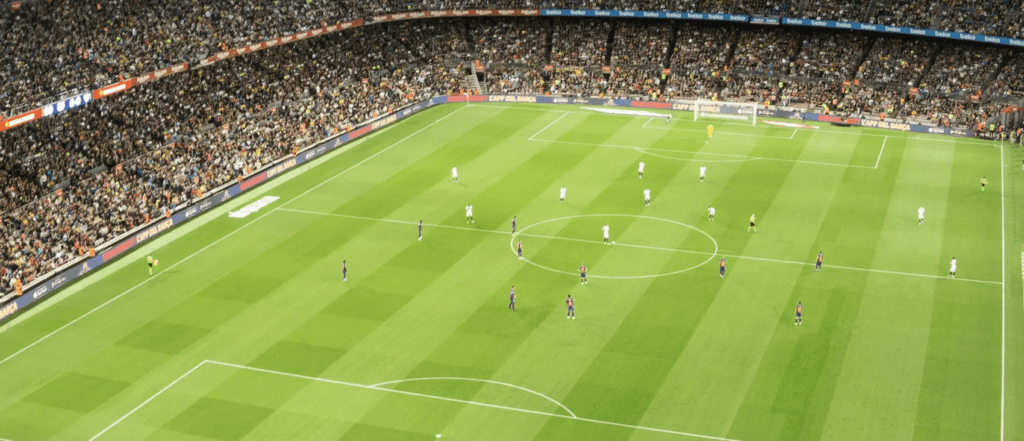
Highlights tell you who scored. They tell you almost nothing about why. A two-minute package is a sequence of outcomes — goals, near-misses, a red card — stripped of the ninety minutes of cause that produced them. For a growing number of British football fans, that gap has quietly changed how they watch the game entirely.
Because the meaning of a match rarely lives on the ball. It lives in the shape a side holds when it hasn’t got possession, in the runs that never receive a pass, in the exact moment a pressing trigger is pulled, in where the full-backs stand when the first pass leaves the goalkeeper’s feet. None of that survives the edit. You simply cannot see a low block bend and hold, or a build-up pattern unlock it, in a clip.
The rise of the tactical viewer
Something has shifted in how the audience engages. The spread of expected-goals thinking, the boom in tactics writing, and analysis-led sites like this one have trained a generation of supporters to read a game rather than merely watch it. They want to know how a result happened, not just that it did — which back-three cover the wide overload, which midfielder drops to make the third-man run work, why a high line survives against one opponent and gets carved open by another.
That kind of understanding has a cost, and the cost is time. You do not learn a team from a montage. You learn it by watching the full match, often more than once, and by watching widely — because good tactical ideas travel across borders. A pressing structure that catches your eye in the Bundesliga shows up, refined, in a Premier League side eighteen months later. To follow those threads, the analytical fan wants full matches across several competitions, and many now keep up with that breadth through a UK TV service such as WizTV, rather than piecing a season together from clips.
What to actually watch for
If you want to start watching this way, the trick is to stop following the ball. It sounds counterintuitive, but the ball is the one thing your eye tracks automatically; everything instructive is happening around it.
Try watching one full phase with your attention fixed on the defensive line — how it steps, when it drops, who holds the offside trap and who gambles. Watch the same team’s build-up and ask a single question: where is the free man supposed to be? Watch the full-backs when their side is defending, and again when it is attacking, and you will learn more about a manager’s intentions than any pundit’s summary will give you. The picture only assembles itself over the whole 90, and it deepens across a run of games.
Reading the pattern, not the scoreline
This is the quiet reward of watching in full: a match stops being a result and becomes a text. You start to anticipate the substitution before it comes, to see the tactical tweak at half-time land or fail, to recognise a pattern from one league surfacing in another. The scoreline becomes almost incidental to the thing you actually came for.
The tactical fan, in the end, isn’t really watching to find out who won. They are watching to understand how football works — and that understanding is only ever available to those willing to sit through the parts the highlights leave out.