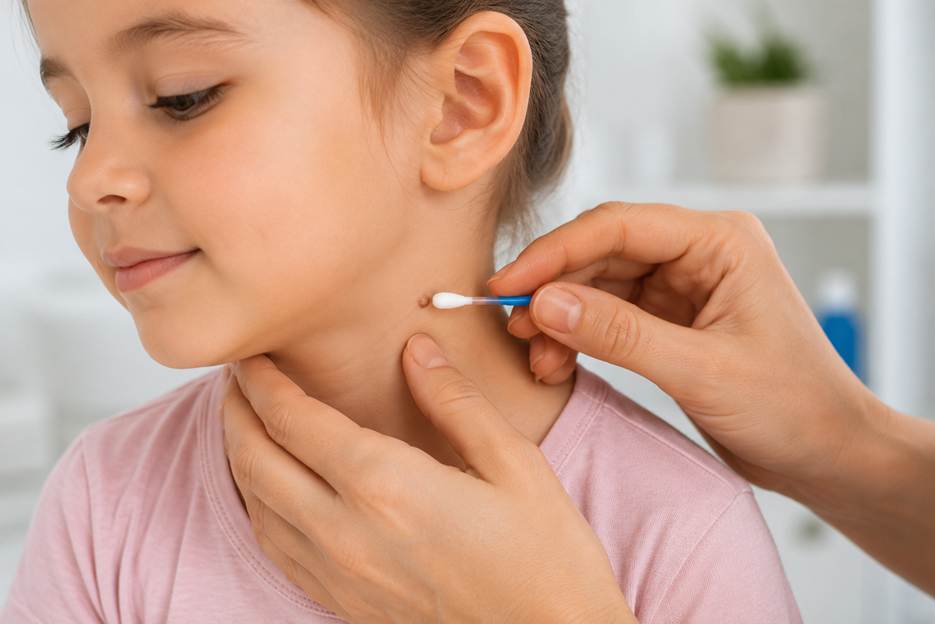
Skin tags are common in adults, but they can occasionally appear in children as well. While they are generally harmless, many parents become concerned when they notice a small, soft growth on their child’s skin. In most cases, skin tags do not require treatment unless they become irritated, rub against clothing, or a healthcare professional recommends removal.
Parents often look for gentle ways to manage skin tags while avoiding harsh treatments that may not be suitable for young skin. Understanding the available options, how they work, and when medical advice is appropriate can help families make informed decisions. The comparison below explains several commonly discussed approaches without suggesting that one method is right for every child.
| Skin Tag Removal Option | How It Works | Suitable Considerations |
| Observation | Monitor without treatment | Small, painless skin tags |
| Homeopathic oils | Plant-based topical application | Used by some families after medical advice |
| Cryotherapy | Freezing performed by a healthcare provider | Selected clinical cases |
| Ligation | Cuts blood supply to the tag | Usually performed professionally |
| Minor surgical removal | Quick clinical removal | Larger or irritated skin tags |
Skin Tags in Children
Skin tags are soft, flesh-colored growths that usually develop where skin rubs against skin or clothing. Although they are much more common in adults, children can occasionally develop them around the neck, underarms, eyelids, or other skin folds. Because many other harmless skin conditions can resemble skin tags, proper identification is important before considering any treatment.
Parents should avoid assuming every small bump is a skin tag. Warts, molluscum contagiosum, and certain birthmarks can appear similar at first glance. A healthcare professional can usually identify the difference during a routine examination. This simple step helps prevent unnecessary treatments and ensures that any unusual growth receives appropriate attention.
Comparing Common Skin Tag Removal Options
Many parents prefer to monitor a skin tag rather than remove it immediately, especially if it is painless and does not interfere with daily activities. Observation is often appropriate because skin tags are benign and may never cause discomfort. However, if irritation develops or the appearance changes, professional evaluation becomes more important.
Some families explore topical products made with botanical ingredients. Options such as skin tag remover safe for kids are often researched by parents looking for gentle alternatives, although any product should only be considered after consulting a qualified healthcare provider for children. Other parents may also read about approaches described as homeopathic skin tag removal particularly when looking for non-invasive care. While experiences vary, clinical guidance remains valuable before beginning any home treatment.
Medical Removal Methods and Safety Considerations
Healthcare providers may recommend cryotherapy, ligation, or minor surgical skin tags removal when a skin tag causes repeated irritation, bleeding, or discomfort. These procedures are generally quick and are selected based on the child’s age, the location of the skin tag, and overall health. Medical supervision also helps reduce the risk of infection or unnecessary skin damage.
Parents should avoid using over-the-counter freezing products designed for adults unless specifically advised by a medical professional. Children’s skin is typically more delicate, making safety an important factor in treatment decisions. The American Academy of Dermatology explains that proper diagnosis is essential because other skin conditions can resemble skin tags and may require different care.
Choosing an Approach That Fits Your Child’s Needs
Every child is different, which means there is rarely a single solution suitable for everyone. Factors such as the child’s age, the location of the skin tag, symptoms, and personal comfort all influence the decision-making process. Some parents are comfortable observing the area, while others prefer discussing available treatment options with their pediatrician or dermatologist.
During their research, families often compare products from a trusted seller or a top brand alongside information from healthcare organizations. Reading balanced information helps parents understand what each option offers without relying on exaggerated claims. Products from companies such as Healing Natural Oils are commonly included in these comparisons because they represent one of several approaches available in the market, rather than serving as a universal solution.
Final Thoughts
Skin tags in children are usually harmless, but understanding the available removal options helps parents make thoughtful decisions. Observation, topical botanical products, and medically supervised procedures each have situations where they may be considered, depending on professional advice and the child’s individual needs.
Rather than focusing only on one product or treatment, it is helpful to compare safety, convenience, and medical guidance. Many families naturally explore information from healthcare organizations, compare products from a trusted seller, and look at what other parents describe as a best buyer choice before speaking with their healthcare provider. A balanced approach allows parents to make informed decisions while keeping their child’s comfort and wellbeing as the priority.


