There is something satisfying about finding a piece of furniture that feels as though it was made for your home. The right proportions, the right fabric, the right colour and, ideally, a design that works with everything else in the room.
For a long time, achieving that meant visiting a showroom, speaking to a specialist and choosing from a limited selection of materials and configurations.
Today, the experience is becoming much more flexible.
Technology is giving furniture shoppers new ways to explore designs, compare options and customise pieces before making a purchase. At the same time, changing lifestyles are creating a greater demand for furniture that feels personal rather than mass-produced.
The result is a new relationship between furniture and technology — one where digital tools can help turn an initial idea into something much closer to a finished design.
The End of One-Size-Fits-All?
Every home has its own character.
A sofa that looks perfectly proportioned in a spacious showroom may dominate a smaller living room. A dining table that works beautifully in one home may leave another feeling cramped.
This is why customisation has become increasingly appealing.
Instead of choosing a piece and adapting the room around it, homeowners can look for furniture that adapts to their space. Dimensions, materials, colours and configurations can be selected to create something that feels more appropriate to the individual home.
Modular furniture takes this idea even further. Components can be arranged in different ways, giving homeowners the ability to change their setup as their needs evolve.
It is furniture designed with flexibility in mind.
More Choice Can Also Mean More Confusion
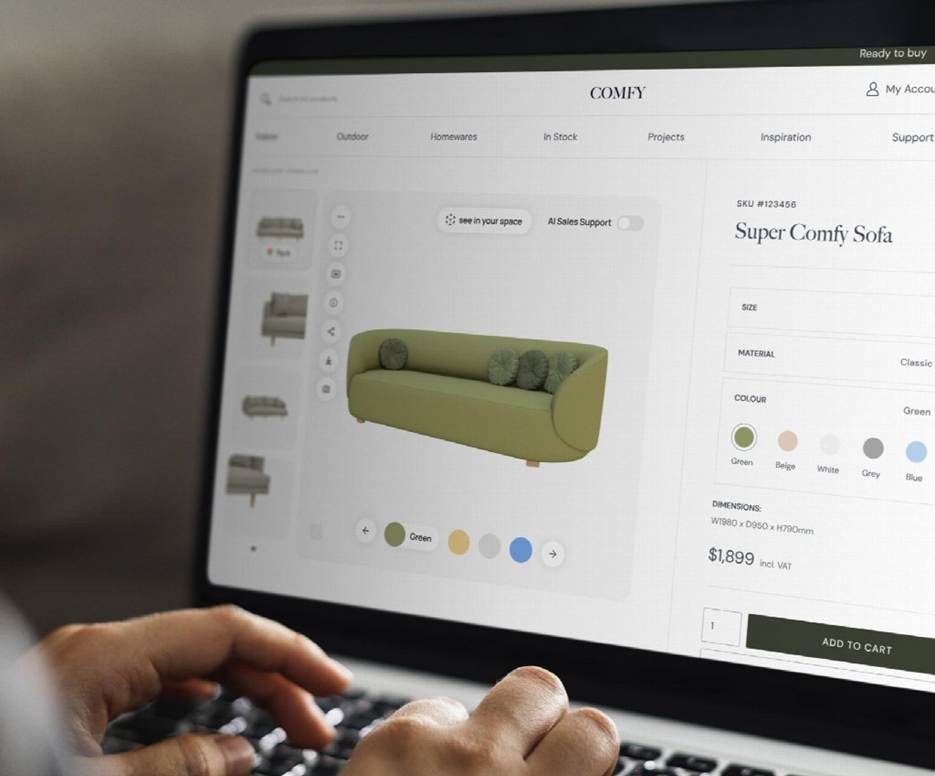
The appeal of customisation is obvious, but there is a downside.
The more options available, the more decisions a customer has to make.
Should the sofa be three metres wide or slightly smaller? Which fabric works best with the flooring? Would a darker colour make the room feel too heavy? Is a particular configuration going to leave enough space to move around?
These questions can be difficult to answer from a product page alone.
A photograph can show what a particular sofa looks like, but it cannot show every possible combination. A list of measurements tells you the dimensions, but not necessarily how the furniture will feel within your room.
This is where technology starts to become useful.
Turning Inspiration Into Something You Can Explore
Most interior projects begin with inspiration.
A saved Pinterest image, a photograph in a magazine or a piece of furniture spotted in a showroom can provide the starting point.
But inspiration and execution are two different things.
Digital design tools can help bridge that gap by allowing customers to move beyond simply looking at ideas and start experimenting with them.
Instead of asking what a particular piece might look like in a different colour or configuration, shoppers can explore those possibilities directly.
That can make the design process feel more creative and less restrictive.
Why 3D Is Changing the Experience
Three-dimensional technology has the potential to make furniture shopping much more visual.
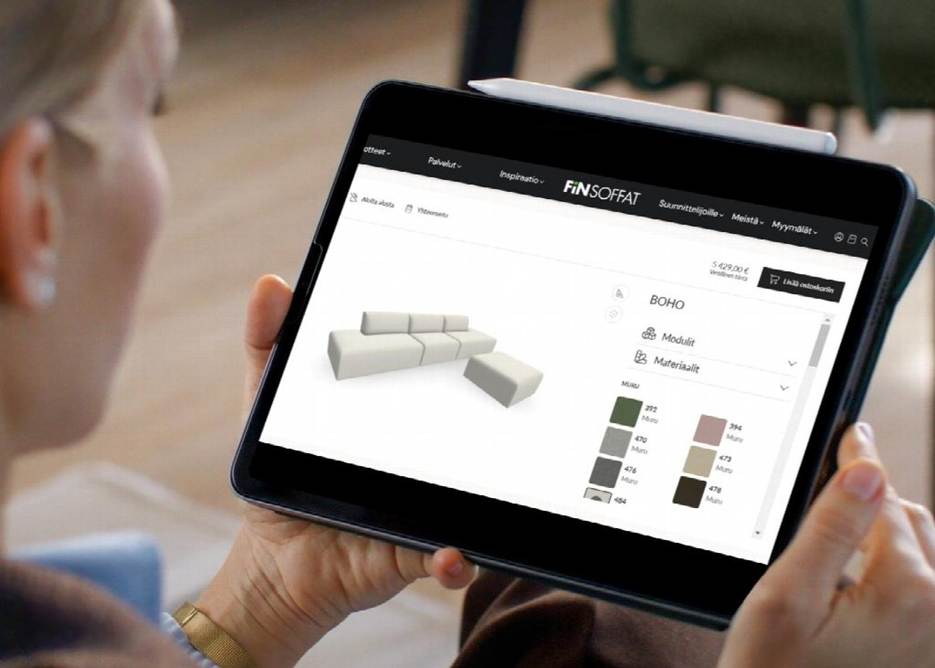
A 3D representation allows customers to examine furniture from different angles and, depending on the platform, make changes to the design itself.
A sofa can become longer. A different fabric can be applied. A sectional can be rearranged. A finish can be changed.
The important part is that the customer can see the effect of those decisions.
For furniture, this is particularly valuable because scale and proportion are so important. A design may look appealing in isolation but work very differently once it is considered alongside the rest of a room.
Where the 3D Configurator Fits In
A 3D configurator takes this idea a step further by making customisation interactive.
Instead of selecting options from a long list and trying to picture the outcome, shoppers can build up a product visually.
Imagine designing a modular sofa online. You could begin with a basic arrangement, add another section, change the upholstery and experiment with different finishes. Each decision changes the visual representation of the product.
That makes the relationship between the choices and the finished piece much easier to understand.
For furniture brands, it can also be a practical way of presenting products that have a large number of possible combinations.
Bringing Some of the Showroom Home
Furniture showrooms have always offered something that online shopping has struggled to replicate: the opportunity to explore.
You can walk around a sofa, compare finishes and see how different pieces work together.
Digital technology cannot replace the experience of physically touching a material or sitting on a chair, but it can offer a different kind of exploration.
Customers can experiment from home, take their time and revisit different designs without having to make repeated showroom visits.
For people buying bespoke or high-value furniture, that extra time to consider the options can be particularly valuable.
Designing Around Real Life
Good furniture design is not just about aesthetics.
It is about how a piece works in everyday life.
A family might need a generous sofa that can accommodate everyone. Someone working from home might need furniture that helps separate work and relaxation. A smaller flat might require a modular solution that makes better use of limited floor space.
Customisation allows these practical considerations to become part of the design.
And when customers can visualise different possibilities, they have a better opportunity to find a solution that works for both their lifestyle and their interior.
A More Confident Way to Buy
One of the biggest advantages of visualisation is confidence.
Buying furniture online can involve a degree of uncertainty, particularly when the product is expensive or customised.
Will the colour look right? Will the dimensions work? Will the configuration feel too large? Will it complement the rest of the room?
There will always be some uncertainty when buying online, but interactive visualisation can help reduce the guesswork.
Instead of relying entirely on imagination, customers can explore the design before making the commitment.
What This Means for Furniture Brands
For furniture businesses, this shift creates an interesting opportunity.
Offering customisation can help a brand stand apart, but presenting dozens of choices can quickly become complicated.
The challenge is therefore not simply offering more options. It is making those options easy for customers to understand.
Digital configuration and visualisation can help create a smoother journey from product discovery to purchase.
Customers can see what is possible, explore combinations and make decisions with a clearer understanding of the final result.
This could become increasingly important as more furniture businesses sell directly to consumers online.
The Future Could Be Even More Interactive
The technology behind digital furniture experiences is continuing to evolve.
3D visualisation is one part of the picture. Augmented reality could allow shoppers to see furniture within their own homes, while increasingly sophisticated digital tools could make customisation even more intuitive.
The aim is not necessarily to make furniture shopping more complicated.
Quite the opposite.
The most useful technology will be the technology that makes complicated choices feel simple.
A customer should not need to understand how a digital system works. They simply need to be able to explore a design, make changes and understand what they are getting.
From Choosing Furniture to Creating It
Perhaps the biggest change is the shift from simply choosing furniture to participating in its design.
Rather than selecting one of several finished products, customers can increasingly have a role in shaping the final result.
That can make furniture feel more personal and more connected to the space it occupies.
Technology is helping make that possible, but the underlying idea is a very traditional one: furniture should work for the people who live with it.
The difference is that today’s tools give homeowners more ways to explore what that could look like before the finished piece ever arrives at the door.
The future of furniture may therefore not be about choosing between what is available. It may be about having the freedom to create something that feels right for your home.