Commuting advice for cyclists tends to assume a city that exists mostly in planning documents: continuous bike lanes, swept pavement, smooth transitions, predictable surfaces from door to door. The American commuting reality is different. It is the lane that vanishes for two blocks, the shoulder paved sometime in the last century, the railroad crossing at a bad angle, the detour through a park path that is half gravel and half mud after rain.
For that reality, the conventional wisdom about what a commuter bike should look like deserves a second look. The narrow-tired, lightweight commuter is optimized for the route as designed. The wide-tired alternative is optimized for the route as it actually is.
Where Fat Tires Help on Real Commutes
Municipal bike infrastructure in the US has improved dramatically, but it remains a patchwork rather than a continuous network in many places. Protected lanes may cover part of a route, while painted lanes, shoulders, or streets with no dedicated cycling space fill the gaps between them. Many real commutes cross at least one of those transitions.
Those transitions are where narrow tires can demand more attention. Cracked asphalt with raised joints. Shoulder debris pushed to exactly the line a bike occupies. Storm grates, potholes patched with loose fill, brick crosswalks slick with morning condensation. None of these are dramatic obstacles; they are constant low-grade negotiations, and they are one reason some commutes feel tense rather than restorative.
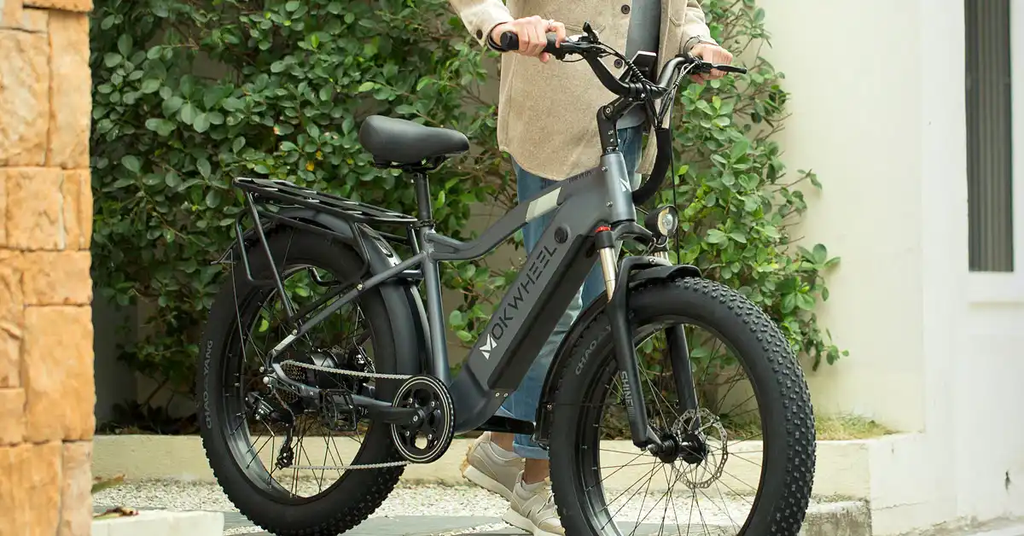
A fat tire ebike does not eliminate bad infrastructure, but wider, lower-pressure tires can make uneven or loose surfaces easier to manage. Conditions that demand more steering attention on narrow tires may feel less disruptive on a wider setup, allowing the rider to spend less time reacting to every small change in the road.
The Trade-Offs of Commuting on Fat Tires
Honesty requires naming the costs. Wide tires roll slower on clean pavement. A heavier bike is harder to carry up a flight of stairs and takes more room on a train rack. Acceleration from a stoplight can feel more deliberate. Riders whose commutes involve mixed-mode segments, folding the bike onto transit, carrying it into an elevator, feel these penalties daily, and for them the conventional commuter remains the right tool.
For everyone else, the penalties may be smaller than assumed. Electric assistance offsets much of the extra rolling resistance in practice, so the rider often notices the difference more in battery consumption than in physical effort. The weight matters most when lifting or storing the bike rather than while riding it. On routes where rough pavement, gravel, or construction detours are common, the added surface tolerance can also offset some of the efficiency lost on ideal pavement.
Why Route Reliability Matters
Commuting is a logistics problem before it is a fitness or environmental choice. The bike has to work the morning after an overnight rain, the day a crew tore up the usual route, and the afternoon when a shortcut across an unpaved path saves time. Reliability across those variations can matter more than optimization for any one of them.
This is where the comparison with purpose-built commuter e-bikes gets interesting. On a clean, fixed route, the dedicated commuter wins: lighter, quicker, more efficient, and easier to store. The wide-tire bike becomes more compelling when the route is less consistent, especially where broken pavement, loose surfaces, or seasonal conditions are part of normal riding. Brands like Mokwheel have built much of their lineup around this kind of all-terrain versatility, giving riders options that can serve daily transportation as well as recreational riding.
How Fat Tires Handle Everyday Road Conditions
None of this is abstract. It shows up in specific, everyday moments.
Falling leaves in the fall pack into the gutter and over the painted lane line. Wet leaves remain slippery for any bicycle, but a wider tire can provide a larger contact patch and a more planted feel when the surface becomes loose or uneven. The difference is not immunity from slipping; it is having a setup that may feel more stable when road conditions deteriorate.
A stretch of chip-seal road or a shoulder scattered with loose gravel can also make narrow tires feel nervous. Wider tires generally handle these rough or loose surfaces with less deflection, helping the rider maintain a steadier line without treating every patch as a major interruption.
Then there is the intersection where the bike lane simply ends. Tire width does not make merging into traffic safer, but it can make the rough shoulder, curb cut, gravel patch, or broken pavement that follows easier to manage. That matters when the safest available route forces the rider across more than one type of surface.
The commuter’s case for wide tires is not that they let you go somewhere you could not otherwise go. It is that they can reduce a constant background layer of caution on a ride you repeat five days a week. That reduction, day after day, is a large part of the appeal.
Rethinking Efficiency for Daily Commuting
The deeper shift is conceptual. Efficiency in commuting is usually measured in speed and effort, but experienced commuters also measure it in friction: how many decisions, adjustments, and small recoveries does the route demand? A ride that requires constant micro-decisions can be tiring even when it is fast. A ride that absorbs more of its own surface changes can feel easier even when it is slightly slower.
Wide tires can reduce friction in exactly this sense. They widen the range of surfaces and conditions a rider can handle comfortably and make changing road conditions less disruptive. Among the categories of electric bikes competing for the commuting dollar, the fat tire format makes a relatively simple promise: not necessarily the fastest ride to work, but one designed to remain comfortable and manageable when the route is less than ideal.
Why Fat Tires Work Beyond the Daily Commute
The formal commute is only part of the daily mileage. The rest is the collection of small trips that together make a car feel necessary, and here the wide-tire bike can make a strong case for itself.
Consider the stop at the pharmacy on the way home, the detour to grab dinner ingredients, or the trip to the hardware store for a single box of screws. Each of these is short, unpredictable, and may take the rider away from the cleanest part of the paved network. The route between errands can include a broken parking lot, a gravel shoulder, or a curb cut covered in leaves after rain.
A fat tire ebike treats many of those errand legs as ordinary riding. Wider, lower-pressure tires can make potholes and rough parking-lot surfaces less intrusive, while the stable platform can also feel more composed when carrying cargo on a properly equipped rear rack. A laptop, groceries, and a rain shell can all become part of the same trip without changing how the bike is used.
Add up those errand miles and the picture changes. The bike that only does the formal commute is a commuter. The bike that also handles errands can replace a larger share of short car trips, and that can make it considerably more useful. The wide-tire format supports that role through its stability, comfort, and tolerance for changing surfaces.
For the rider whose route matches the brochure, the classic commuter still makes sense. For the rider whose route does not, the case for wide tires is not really about adventure. It is about the commute you actually have, five mornings a week, in the weather and on the roads that are really there.
Conclusion
The best commuter setup depends less on an ideal route than on the conditions a rider actually faces every day. Smooth, predictable pavement still favors a lighter, narrower-tire bike, while rough roads, changing surfaces, seasonal weather, and everyday errands give wider tires a clearer advantage. For riders whose commute regularly extends beyond perfect pavement, that added comfort and adaptability can matter more than optimizing the bike for speed or efficiency alone.