Open Hinge in Sheffield on a Sunday evening and you will scroll past roughly the same six photographs about forty times. Somebody stood on Stanage Edge with their arms out. Somebody holding a pint in a Kelham Island beer hall. Somebody in the Tramlines crowd, hands up, face half in shadow. A dog on Endcliffe Park. Always a dog.
None of those are bad photographs. That is the actual problem.
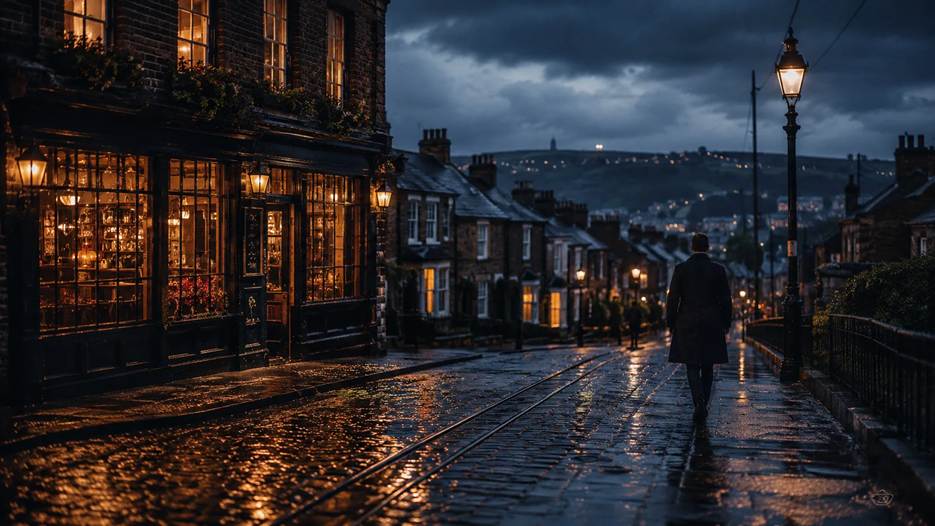
The city handed everyone the same backdrop
Sheffield is unusually generous with scenery. You are twenty minutes from the Peak District, ten from a stretch of restored industrial waterfront that photographs beautifully in low light, and about four from somewhere with exposed brick and Edison bulbs. If you want a decent photograph of yourself, the city makes it easy.
Which is precisely why everyone has one. When the backdrop is free and obvious, it stops carrying information. A photograph of you at Stanage tells a stranger that you live near Sheffield and own a coat. They had already assumed both.
Whatever separates you from the person swiped past eleven seconds ago has to come from somewhere. Sheffield’s most photogenic spots have been so thoroughly worked through that they no longer do that job. They read as wallpaper.
Sameness costs more than you would think
People sort faces before they finish thinking about them. You have done it yourself, on the bus, in a queue, halfway through a swipe. The sorting is crude and it happens in well under a second, and what it is sorting for is mostly one thing: have I seen this already?
A photograph that resembles nine others from the same evening gets filed under seen it. The person in the photograph never had a chance to be interesting, because the brain finished processing the image before it got that far.
There is a second cost that is less obvious. Most apps now rank profiles partly on whether people stop on them, which is a dry way of saying that profiles nobody pauses over get shown to fewer people. Blend in visually and your reach quietly shrinks. You never see it happen. You just notice things have gone a bit flat.
What a proper shoot actually costs here
Plenty of people reach the same conclusion, decide they need better photographs, and start ringing round.
The Sheffield market is reasonable by national standards. Booking sites list dating portrait photographers in the city from around £79. Independents advertise mini sessions at £135, and one local photographer’s published rate is £150 for two hours with five edited images. Event and portrait work generally starts near £160.
Five edited images. That is the number worth sitting with. A dating profile needs six slots filled with photographs that do not all look alike, and a two-hour session in one location, on one afternoon, in one jacket, produces five variations on a single theme. Good ones, usually. Still five photographs of the same person in the same light.
Then there is the weather, which in this part of Yorkshire is less a variable and more an antagonist. Book six weeks out, watch the forecast turn, rearrange, wait another three. By the time the photographs land, whatever prompted the exercise has usually passed.
The route most people take instead
The alternative that has grown fastest is generating the photographs from selfies you already have. Upload a handful, get back a set shot across different settings, keep the ones that hold up.
DatePhotos, an AI dating photo generator built specifically for Tinder, Bumble and Hinge, is one of the more established options here. A single upload returns between 80 and 180 images across scenes ranging from coffee shops to city streets to open countryside, and the process takes twenty to thirty minutes rather than a fortnight. Pricing runs $29 to $79 as a one-off, which lands near the cost of a mini session and returns considerably more usable frames. For anyone rebuilding a set of dating app photos rather than commissioning portraits, the arithmetic is difficult to argue with.
The honest caveat is that this route has its own version of the sameness trap. If everyone generates from the same tool on the same defaults, the output converges, and you are back where you started with better lighting. The tools that account for this score each image on how natural it looks. DatePhotos rates every frame from 0 to 100, which at least gives you something to sort by other than personal preference.
The test that actually matters
Whichever route you take, run one check before anything goes live.
Show the set to somebody who knows you reasonably well and ask a single question: does this look like me? Not does it look good. Whether it looks like you.
That question catches nearly everything. It catches the over-edited portrait where your jaw has quietly changed shape. It catches the generated image where the smile is technically correct and belongs to nobody. It catches the Stanage photograph too, because if your mate’s honest answer is “it looks like anyone”, you have your answer about the backdrop as well.
The photographs that work on dating apps are the ones where a stranger could pick you out of a room afterwards. Polish that goes past the point of recognition stops being an improvement and becomes a disguise, and people are considerably better at spotting that than they are at explaining why something felt off.
What to do with your six slots
If you are rebuilding a profile this month, the useful shift is to stop thinking about individual photographs and start thinking about the set.
Six slots, six different jobs. One clear shot of your face with nothing else competing for attention. One that puts you somewhere with a bit of context. One with actual movement in it, walking or cooking or mid-conversation, anything that is not a pose. One with other people, because it tells a stranger you have a life. One that gives them something to ask about. And one you simply like, whatever the reason.
Notice that not one of those slots specifies a location. That is deliberate. The point is not where you photograph yourself. It is that the six images do six different jobs instead of six variations on one.
Sheffield will still be there in the background, and it will still be the best-looking backdrop in the north. It just cannot be the whole argument.