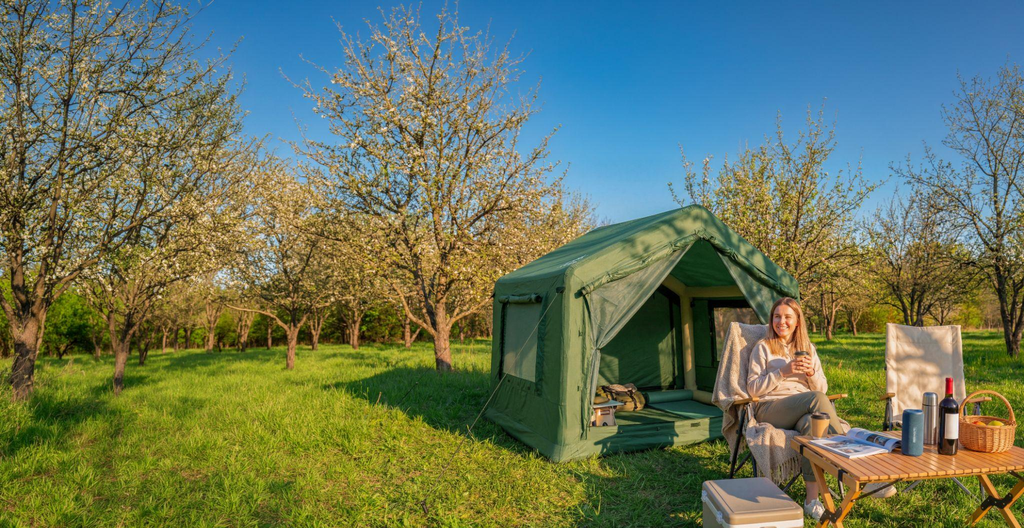
A weekend camping trip does not have to mean taking time off work, driving for hours, or packing as though you are going away for a week.
For Sheffielders, with the Peak District on the doorstep, a one-night trip can work particularly well after work on a Friday. There is no need to give up the whole weekend.
The catch is that a trip lasting around 24 hours leaves very little time to waste. A campsite that is too far away, setting up after dark, making an overcomplicated dinner, or spending half of Saturday morning packing can quickly turn an easy overnight break into a rushed one.
For a short trip like this, the point is not to squeeze more in. It is to make arriving, staying the night, and leaving the next day as straightforward as possible.
Start With When You Will Actually Reach the Campsite
After-work camping cannot be planned around the driving time on a map alone.
Leaving the city may mean Friday traffic, and once you arrive there is still a pitch to find, gear to unload, and a tent to put up. If the campsite has fixed check-in times or rules around late arrivals, those need checking too.
A more practical approach is to work backwards from the time you expect to arrive.
If you are likely to reach the campsite close to dusk, there is little point planning an elaborate meal, a long walk, or a full camp setup. Get the sleeping space ready, make a simple dinner, then spend the rest of the evening sitting down and chatting.
A short camping trip does not need to make the weekend busier.
Setup Time Feels Much Bigger on a One-Night Trip
On a three- or four-night stay, a little extra setup time may barely register. On a one-night trip, the same amount of time takes a much bigger chunk out of the evening.
When choosing an inflatable camping tent or a traditional tent, group size and interior space matter, but so does what needs to happen once you arrive. An inflatable structure can remove some of the pole assembly and threading involved with a conventional tent, although normal securing and campsite requirements still need to be followed.
For a one-night trip, getting the shelter ready should be one part of arriving, not the main event of the evening.
Pack Less and Saturday Morning Gets Easier Too
One night away does not require the most complete camping setup you own.
If two or three people are leaving after work on Friday and heading home on Saturday morning or around lunchtime, how easy the gear is to carry, how much needs sorting once you arrive, and how much has to go back into the car the next day matter more than bringing extra furniture.
Take small inflatable tents such as the zonkoo Lyra, which weighs 29 lbs and has a 3-minute setup time. For a one-night trip that starts after work and ends the following day, the weight affects how much you have to carry, while the setup time directly affects how much of Friday evening is left once you arrive.
One less thing to bring is usually one less thing to pack away the next morning. On a short trip, that difference is much more noticeable.
A One-Night Campsite Does Not Need to Become a Temporary Home
Even with the fuller interior space of an inflatable tent house, a one-night trip does not need the complete setup you might take for a longer stay.
A comfortable place to sleep, gear that is easy to find, somewhere to sit for a while in the evening, and a quick pack-up the next morning are enough.
There is no need to duplicate tables and chairs, and anything needed the following morning can stay within easy reach. The campsite does not need to look as though you are staying for a week; sleeping, gear, and everyday camp activity simply need to stay out of one another’s way.
Every item you do not set up is usually one less thing to take down in the morning.
Pack a Few Things Away Before Bed
One-night camping makes it easy to think, “There isn’t much here. We can sort it all out in the morning.”
Then morning arrives. There is breakfast, perhaps a short walk, and sometimes dew or damp gear to deal with. Leave everything until just before check-out and a relaxed morning can become rushed very quickly.
Before bed, put away any cooking gear you are finished with, gather the rubbish, and return anything you definitely will not need again to the car.
That leaves only the sleeping gear, tent, and a few personal items to deal with in the morning.
A Truly Spontaneous Trip Usually Starts With Earlier Preparation
One of the best things about a one-night camping trip is that it does not need months of planning. If Friday arrives with a good weekend forecast, you can leave after work, spend the night away, and still be back the next day.
But spontaneity works best when the gear you use regularly is already ready and familiar.
If you already know a tent, mattress, or another larger piece of kit needs replacing, black friday deals can give you a useful head start on the next season. That means no last-minute purchase before a trip, and enough time to pitch the new kit once, pack it away again, and make sure it works with your car and the rest of your setup.
Then, when the next good-weather Friday comes around, there is only one last-minute decision left to make: are you going tonight?
One night away does not need to take over the whole weekend. If the campsite is close enough, the gear is familiar, and both arrival and pack-up are simple, that is already enough reason to go.
You can finish the working week in Sheffield on Friday evening, wake up at a campsite near the Peak District the next morning, and still have most of the weekend ahead of you.