Plenty of people who swap London for Sheffield never look back. Lower living costs, the Peak District on the doorstep and a cultural calendar packed with events like Sensoria make the move an easy sell.
Yet many arrive with unfinished business: a London flat they have not sold. Whether you are waiting for prices to recover or want an income stream, letting it from South Yorkshire brings real challenges. That is why more owners are weighing up schemes that offer guaranteed rent in London, alongside more traditional letting routes.
This guide compares the numbers, explains this year’s legal changes and lists what to check before signing anything.
Key Takeaways
- London tenants paid £2,332 on average in August 2026, against £931 in Sheffield.
- Rents in Tower Hamlets averaged £2,453, roughly 2.6 times the Sheffield figure.
- Guaranteed rent schemes swap some income for a fixed monthly payment and fewer worries.
- England’s rental laws changed on 1 May 2026, adding new duties for landlords.
- Always check redress scheme membership, contract terms and mortgage consent first.
Why So Many Sheffield Movers Keep Their London Home
Selling a London flat is not always the obvious choice. Prices in parts of the capital have fallen over the past year, and many owners would rather wait than sell at a discount.
ONS figures show the average house price in Tower Hamlets dropped 14.4% in the year to July 2026, to £448,000. Sheffield prices, by contrast, rose 2.8% to £220,000 over the same period.
| The rent gap: Letting a London flat can produce far more income than a similar Sheffield home, which helps many owners cover a mortgage while they settle into life up north. |
Of course, the move is about more than money. Between book events at the Off the Shelf festival and independent businesses springing up in neighbourhoods like Broomhill, Sheffield gives plenty of reasons to stay put. Read more about the city’s creative scene in this guide to this year’s Sensoria festival.
Comparing Rents: London Versus Sheffield
The official Sheffield housing figures put the city’s average private rent at £931 a month in August 2026, up 4.3% on the year. London’s average stood at £2,332, while Tower Hamlets in East London reached £2,453.
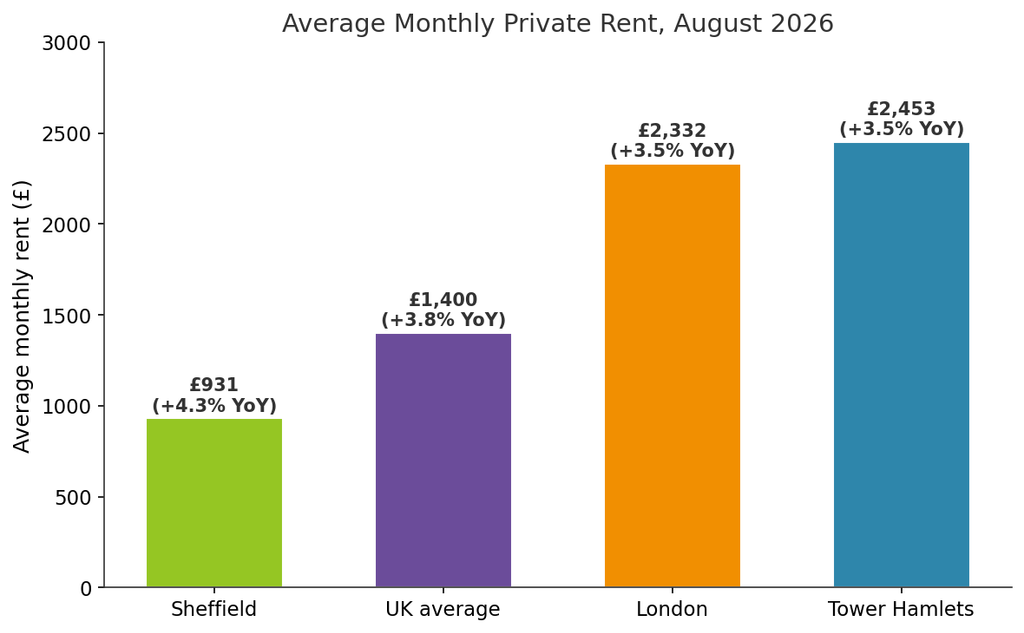
Figure 1: Average monthly private rent and annual change, August 2026. Source: Office for National Statistics.
The difference widens when you compare similar homes. A one-bedroom property averaged £690 in Sheffield but £1,992 in Tower Hamlets. Remember these are borough and city averages, so individual streets vary widely. Across London, Camden averaged £2,819, showing how much location within the capital matters.
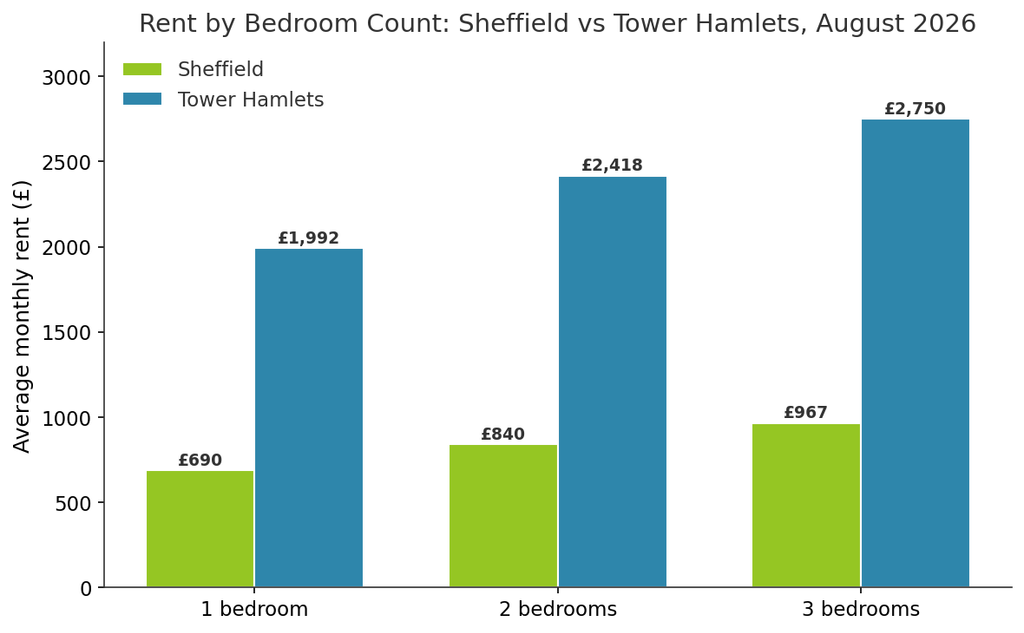
Figure 2: Average rent by number of bedrooms, August 2026. Source: ONS.
Your Three Main Letting Options
Distance changes how you should manage a rental. Living several hours away makes routine tasks such as viewings, inspections and emergency repairs difficult to handle yourself.
| Option | How it works | Best suited to |
|---|---|---|
| Self-managing | You find tenants and handle everything directly | Owners with time and a local contact |
| Fully managed letting | An agent finds tenants and runs the tenancy for a fee | Owners who want market rent with support |
| Guaranteed rent | A provider pays a fixed sum each month, occupied or not | Owners who value certainty above top income |
Self-management keeps costs lowest but is hard to sustain from Yorkshire. A fully managed service brings in market rent, minus fees, though you still carry the risk of empty months.
How Guaranteed Rent Works
Under a guaranteed rent arrangement, a company leases your property for a fixed term and pays you an agreed amount each month. The provider then sublets to tenants and takes on void periods, while usually handling maintenance.
Terms vary between providers. Some East London firms, for instance, offer three months’ rent upfront, lease terms of one to five years and full management including repairs and emergency callouts.
| Know the trade-off: Because the provider covers any months without a tenant, the guaranteed figure is usually lower than what you might achieve letting directly at full market rent. |
Weighing Up the Pros and Cons
| Advantages | Considerations |
|---|---|
| Fixed, predictable monthly income | Payment typically below full market rent |
| No void periods to fund | You depend on the provider’s financial strength |
| Day-to-day management handled for you | Contract terms and break clauses vary widely |
| Ideal for owners living far away | Mortgage lenders and insurers may need to approve the set-up |
The right answer depends on your priorities. If the flat must cover a mortgage every month without fail, certainty may matter more than squeezing out the last few pounds of rent.
What Changed for Landlords in 2026
The Renters’ Rights Act 2025 brought major changes from 1 May 2026. The government overview of the new rental rules explains that tenancies now run on a rolling basis, Section 21 no-fault evictions have ended, and rent can rise only once a year through a formal notice.
Standards are rising too. Private rented homes in England and Wales must reach an energy rating of EPC C by 1 October 2030, and the updated Decent Homes Standard will apply to private rentals from 2035.
| Pro Tip: Ask any provider exactly how they comply with the new rules, including tenancy paperwork, safety certificates and repair timescales. Clear answers are a good sign of a well-run operation. |
When Selling Might Make More Sense
Letting is not right for everyone. Selling may be the better option if:
- Your mortgage payments would exceed the rent after fees and tax.
- The flat needs major work to reach the EPC C requirement by 2030.
- You need the capital to buy a home in Sheffield without a large mortgage.
- You simply do not want the responsibility of being a landlord.
A local valuation and a conversation with an accountant will help you compare both routes on equal terms.
Practical Tips for Managing From Sheffield
Whichever route you choose, a few habits make long-distance ownership far easier:
- Keep documents digital. Store safety certificates, the tenancy agreement and inventories in one shared folder.
- Appoint a local contact. A trusted agent or friend can let in contractors at short notice.
- Use a separate bank account. Keeping rental income apart simplifies tax returns.
- Plan an annual visit. Combine an inspection with a trip to see friends or family in the capital.
- Diarise key dates. Gas safety checks fall due yearly and electrical inspections at least every five years.
Questions to Ask Before You Sign
- Is the company a member of a property redress scheme? Letting agents in England must belong to a government-approved scheme.
- Who holds the tenants’ deposits? Ask how they are protected and returned.
- What happens at the end of the lease? Confirm how the property is handed back and in what condition.
- Can either side end the agreement early? Read break clauses carefully.
- Does your mortgage lender consent? Some lenders have specific rules on leasing to companies.
Taking independent legal advice on the lease is worthwhile. A small fee upfront can prevent costly misunderstandings over a multi-year agreement.
Frequently Asked Questions
What is guaranteed rent?
It is an arrangement where a company pays you a fixed monthly sum for your property, regardless of whether it is occupied. The company then lets the property to tenants and usually manages it.
How much more does a London flat rent for than a Sheffield one?
In August 2026, average rent was £2,332 in London and £931 in Sheffield, according to ONS data. In Tower Hamlets the figure was £2,453.
Is guaranteed rent worth it if I live outside London?
It can be, especially if you value certainty and cannot easily visit the property. Compare the guaranteed figure with likely market rent minus management fees and voids.
Can I move back into my London flat later?
With a standard tenancy, you can use the landlord moving-in ground, but you must give at least four months’ notice, it cannot take effect in the tenancy’s first year, and you cannot relet for 12 months if you change your mind. Under guaranteed rent, timing depends on the lease and any break clause.
Do I still pay tax on guaranteed rent?
Yes. Rental income from a London property remains taxable, so keep records and seek advice from an accountant familiar with property income.
Did letting rules change in 2026?
Yes. Since May 2026, tenancies roll from month to month instead of ending on a set date, and landlords can no longer evict without giving a legal reason.
Making the Right Call From Up North
Keeping a London flat after moving to Sheffield can be a smart financial move, provided you choose the right way to let it. Compare the numbers honestly, understand the new rules and vet any provider carefully. Revisit the decision every year or two, because rents, prices and your own plans will keep changing. With the right arrangement in place, your London property can quietly support the life you are building in South Yorkshire.
References
Office for National Statistics, Housing prices in Sheffield, updated 16 September 2026: https://www.ons.gov.uk/visualisations/housingpriceslocal/E08000039/
Office for National Statistics, Housing prices in Tower Hamlets, updated 16 September 2026: https://www.ons.gov.uk/visualisations/housingpriceslocal/E09000030/
Office for National Statistics, Private rent and house prices, UK: September 2026: https://www.ons.gov.uk/economy/inflationandpriceindices/bulletins/privaterentandhousepricesuk/september2026
GOV.UK, Renters’ Rights Act: an overview for landlords: https://www.gov.uk/guidance/renting-out-your-property-guidance-for-landlords-and-letting-agents/renters-rights-act-an-overview-for-landlords
Property Industry Eye, Well-established estate agency unveils rebrand, 2026: https://propertyindustryeye.com/well-established-estate-agency-unveils-rebrand/
Fact Check: All statistics and data points in this article were verified against original sources as of 9 October 2026. Sources are listed in the References section. This article is general information, not financial or legal advice.