Disclaimer: This article is not intended to be a recommendation. The author is not responsible for any resulting actions of the company during your trading experience. The information provided in this article may not be accurate or up-to-date. Any trading or financial decision you make is your sole responsibility, and you must not rely on any information provided here. We do not provide any warranties regarding the information on this website and are not responsible for any losses or damages incurred as a result of trading or investing.
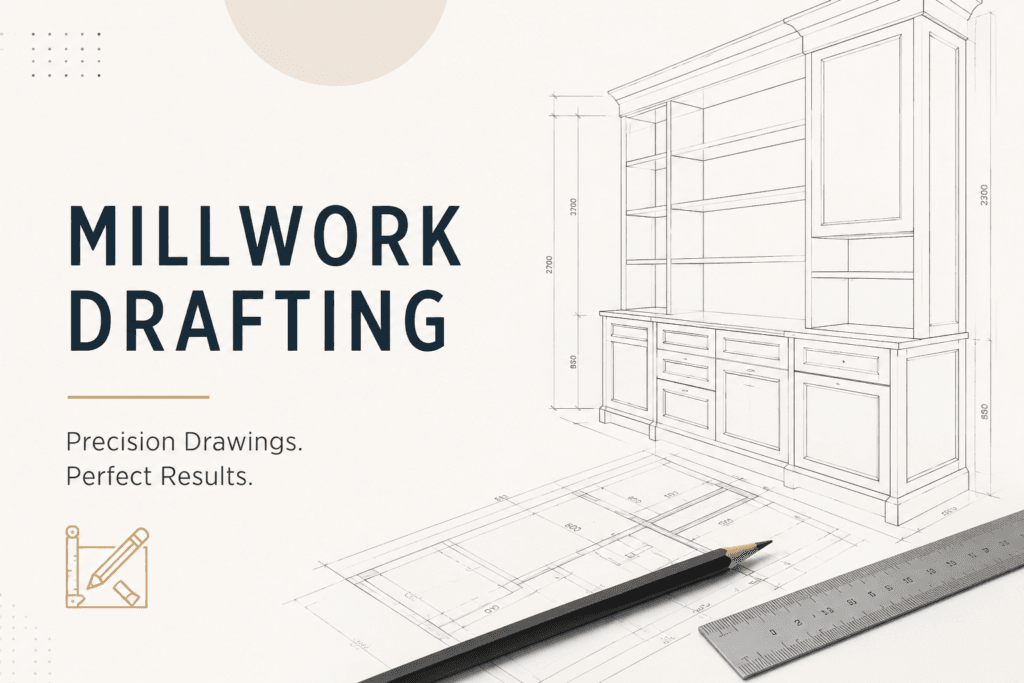
Millwork drafting plays a critical role in transforming architectural concepts into detailed manufacturing-ready drawings. From custom cabinetry and wall paneling to intricate trim work and commercial interiors, accurate drafting ensures that every component is designed, fabricated, and installed with precision.
As construction projects become increasingly complex, the demand for detailed millwork drawings continues to rise. Architects, contractors, and manufacturers rely on precise drafting to reduce errors, improve collaboration, and streamline production workflows.
Businesses seeking professional millwork drafting services often benefit from enhanced project accuracy, reduced material waste, and faster fabrication timelines. By converting design concepts into highly detailed technical drawings, drafting professionals help bridge the gap between design intent and successful project execution.
Why Millwork Drafting Is Essential in Modern Construction
Millwork drafting serves as the blueprint for custom woodworking elements used in residential, commercial, hospitality, healthcare, and retail projects. Detailed shop drawings provide manufacturers with exact specifications, dimensions, materials, and installation requirements.
Without accurate drafting, projects can face:
- Manufacturing errors
- Material wastage
- Cost overruns
- Installation conflicts
- Project delays
According to industry studies, construction rework can account for up to 5%–15% of total project costs, making detailed technical documentation a valuable investment for reducing costly mistakes.
Key Components Included in Millwork Drafting
A comprehensive millwork drafting package typically contains:
| Drawing Element | Purpose |
| Floor Plans | Define millwork locations |
| Elevations | Show vertical design details |
| Sections | Display internal construction |
| Joinery Details | Explain assembly methods |
| Material Specifications | Identify finishes and materials |
| Hardware Schedules | List fittings and accessories |
| Installation Details | Guide field installation |
These drawings help ensure consistency between design, manufacturing, and installation teams.
Benefits of Professional Millwork Drafting
Improved Accuracy
Detailed drafting minimizes ambiguities and provides clear instructions for fabrication. Accurate dimensions reduce production errors and improve overall project quality.
Enhanced Collaboration
Millwork drawings act as a communication tool between:
- Architects
- Interior designers
- Engineers
- Fabricators
- Contractors
This alignment helps all stakeholders work from a single source of truth throughout the project lifecycle.
Reduced Material Waste
The construction industry generates significant waste each year. Proper drafting helps optimize material usage by providing precise cut lists and fabrication details, reducing unnecessary waste and improving sustainability efforts.
Faster Manufacturing Process
When fabricators receive complete and accurate drawings, production workflows become more efficient. Clear documentation reduces the need for revisions and shop-floor clarifications.
The Growing Demand for Millwork Drafting
The global woodworking and millwork industry continues to expand due to increasing investments in commercial real estate, hospitality projects, luxury residential developments, and renovation work.
Industry Statistics
- The global woodworking machinery market is projected to exceed $7 billion by 2030, reflecting continued growth in custom wood manufacturing.
- Studies indicate that digital drafting and BIM integration can reduce design coordination errors by up to 30%.
- Construction professionals report that detailed shop drawings significantly improve installation efficiency and project coordination.
These trends highlight the importance of accurate millwork drafting in supporting modern construction demands.
How Technology Is Transforming Millwork Drafting
Modern drafting processes leverage advanced software solutions to improve accuracy and visualization.
Common Software Used
- AutoCAD
- Revit
- Microvellum
- Cabinet Vision
- SolidWorks
- Inventor
These tools enable drafters to create highly detailed 2D drawings and 3D models that support design validation before manufacturing begins.
Integration with BIM
Building Information Modeling (BIM) has become increasingly important in construction projects. Integrating millwork drafting with BIM allows teams to:
- Detect design clashes early
- Improve project coordination
- Enhance visualization
- Streamline construction planning
This integration contributes to better project outcomes and reduced construction risks.
Best Practices for Effective Millwork Drafting
To maximize project success, organizations should follow several drafting best practices:
Maintain Detailed Documentation
Every drawing should include:
- Accurate dimensions
- Material specifications
- Hardware information
- Assembly instructions
Follow Industry Standards
Consistent drafting standards improve communication and reduce interpretation errors during fabrication.
Review and Coordinate Early
Regular collaboration among architects, designers, and fabricators helps identify potential issues before production begins.
Utilize 3D Modeling
Three-dimensional modeling provides better visualization and allows stakeholders to verify designs before manufacturing starts.
Conclusion
Millwork drafting is a vital component of successful woodworking and construction projects. It provides the technical foundation needed to transform design concepts into precisely manufactured and installed millwork components. Through detailed drawings, improved coordination, and advanced digital tools, millwork drafting helps reduce errors, control costs, and enhance overall project quality.
As construction projects continue to demand greater precision and efficiency, investing in high-quality millwork drafting remains one of the most effective ways to ensure successful project execution from concept to completion.