Disclaimer: This article is not intended to be a recommendation. The author is not responsible for any resulting actions of the company during your trading experience. The information provided in this article may not be accurate or up-to-date. Any trading or financial decision you make is your sole responsibility, and you must not rely on any information provided here. We do not provide any warranties regarding the information on this website and are not responsible for any losses or damages incurred as a result of trading or investing.
You sent your favorite cards for grading, tracked every update—now those crystal-clear slabs sit unseen in a box. A graded-card wall display lets you enjoy them every day, but only if it blocks light, dust, and curious hands. The U.S. Library of Congress notes that visible light—not just UV—can fade paper, so “99 percent UV” glazing is no free pass. Beckett reports TCG grading submissions jumped 159 percent from July 2025 to July 2026, so more collectors face the same problem. This guide compares seven displays, covering capacity, protection, and true cost per slot.
Quick comparison: seven graded card wall displays at a glance
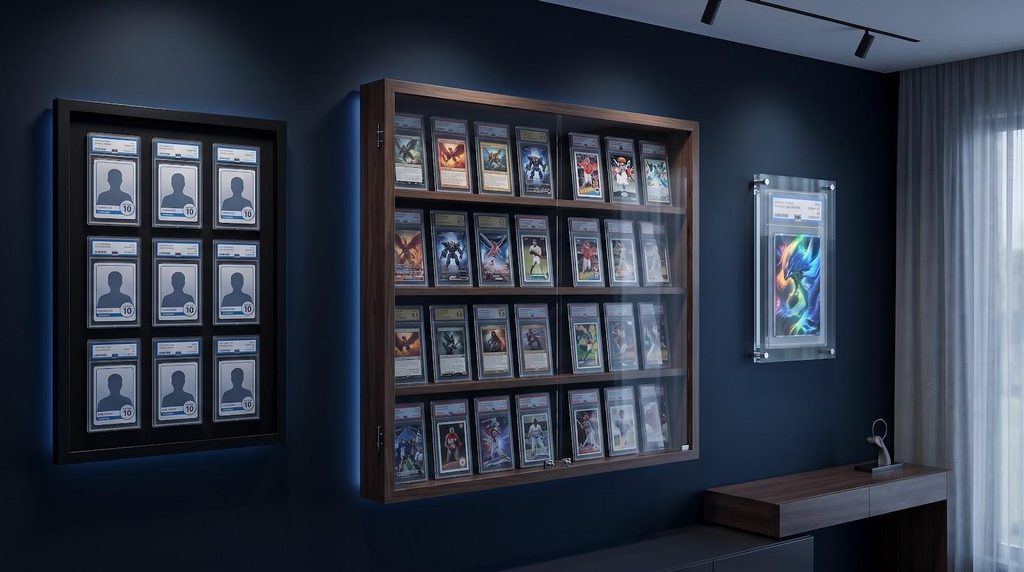
A side-by-side snapshot is the fastest way to see which graded card wall display fits your space, budget, and preservation priorities.
The grid below covers capacity, enclosure style, headline protection feature, and real-world cost per slot. Prices are frozen at the October 12, 2026 snapshot. Check current figures before you add anything to your cart.
| Rank | Display | Best for | Capacity | Enclosed? | UV claim* | Lock | Snapshot price | Approx. cost / slot |
| 1 | Vaulted Card Display | Clean nine-slab grid | 3 / 4 / 9 | No | None | No | $59.99 (9-slot) | $6.67 |
| 2 | sfDisplay 35-card cabinet | Lockable high capacity | 35 | Yes | 98 percent | Yes | $139.99 | $4.00 |
| 3 | Fabled Framing custom frame | Mixed graders, UK-made | 1–100 | Yes | 99 percent | Optional | from £11 | varies |
| 4 | Phantom Magneto (+ mount) | Single grail, magnetic | 1 | Yes | 99.6 percent | No | $80 bundle | $80 |
| 5 | Pennzoni 50-card cabinet | Full-set showcase | 50 | Yes | 100 percent | Yes | $194 | $3.88 |
| 6 | TFF Breaks acrylic frame | Affordable UK grid | 9 | No | None | No | £29.95 | £3.33 |
| 7 | Sparky modular 3D print | Budget, expandable | 2 / 3 / 6 | No | None | No | from $7.25 | varies |
UV percentages reflect manufacturer claims, not independent lab tests.
Need lock-and-key security? The sfDisplay and Pennzoni cabinets stand out. Prefer renter-friendly weight? Vaulted’s open frame and Sparky’s printed modules keep loads light. Want living-room aesthetics that mix PSA, BGS, and ACE slabs? Fabled’s custom frame raises its hand.
Now that the options are clear, we’ll explore how each display excels, where it falls short, and which real-world scenarios suit it best.
1. Vaulted Card Display: best overall for a clean nine-slab feature wall
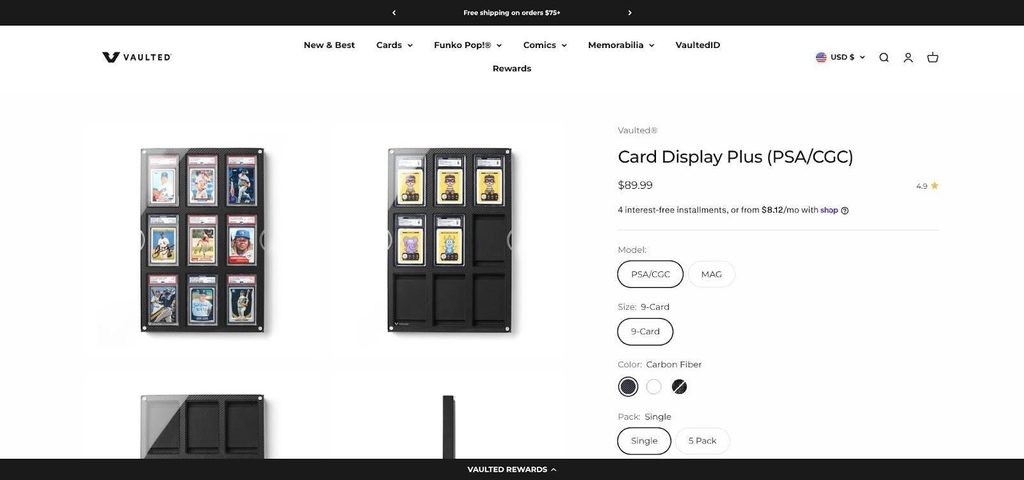
Vaulted nine-card graded card wall display product photo
Vaulted’s graded card display ships fully assembled. The 18.66 × 12.50 × 1.10-inch frame weighs a little over one kilogram when loaded. EVA foam grips each slab; press until you hear a soft click and the card stays put. Swapping takes seconds, perfect for collectors who rotate pulls after trade night.
Because the front is open, ordinary picture hooks can hold the frame, a relief for renters. The missing door also means zero acrylic glare, so artwork and autographs stay center stage. The trade-off is clear: no dust seal, lock, or published UV filter. If the wall receives direct sun, add a low-iron UV window film or choose an enclosed case later in this guide.
Finish is where Vaulted excels. Even spacing, a satin-black bezel, and dedicated PSA, CGC, BGS, and magnetic-holder versions make the grid feel like gallery art, not shop stock. At the October 12, 2026 snapshot price of $59.99 for nine cards (about $6.67 per slot), it undercuts most single-slab acrylic cases while looking far more intentional.
Display an evolution line, a Hall of Fame rookie run, or a rotating “card of the week.” Hang two side by side for an 18-slab backdrop that flatters a streaming setup without overpowering the wall.
2. sfDisplay 35-card cabinet: best lockable, high-capacity wall case

sfDisplay 35-card lockable graded card cabinet product photo
When nine slots no longer contain the hobby, sfDisplay’s 35-card hardwood cabinet delivers furniture-level storage in one enclosure. The case measures 31.5 × 23.5 × 1.75 inches yet projects less than two inches from the wall, so it looks more like a frame than a box. Swing the plexiglass door, slide slabs onto the grooved shelves, turn the key, and the soft click reassures parents and shop owners alike.
Loaded weight sits around nine kilograms. Drive two screws into studs or use fifty-pound toggle anchors; the supplied brass hooks work, but always match hardware to your wall type. sfDisplay states that the door blocks 98 percent of ultraviolet light and seals out dust. Treat that figure as mitigation, not immunity: indirect lighting and the occasional card rotation still matter for autographs and foils.
Value is strong. At the October 12, 2026 price of $139.99, capacity works out to roughly four dollars per displayed slab, and the lock is included. Downsides are bulk and style: dark wood and brass hardware flatter a hobby room, but can dominate a minimalist lounge.
Choose this cabinet when you need dense, lockable wall storage without stepping up to jumbo 50-slot furniture. It lacks the speed of an open acrylic grid, but for many collectors that solid door buys welcome peace of mind.
4.7 / 5 average from 139 owner reviews, sfDisplay store snapshot
3. Fabled Framing custom slab frame: best UK and mixed-grader display

Fabled Framing custom graded slab frame gallery-style display
Fabled Framing’s bespoke slab frame treats graded cards like artwork. A British craftsperson cuts acid-free mount board to your exact slab mix (PSA, BGS, CGC, ACE, or any combination), then sandwiches it behind glazing that the maker lists as 99 percent UV-filtering acrylic. Satin-black hardwood molding finishes the gallery look, so the frame feels at home in a living room, not just a card cave.
Flexibility is the draw. A single-card “grail” frame starts at £11 (October 12, 2026 snapshot), while multi-row layouts scale to 100 openings with the same D-ring-and-cord hardware pre-fitted. Per-slot cost stays competitive once you pass nine cards.
Trade-offs exist. Because the frame loads from the rear, you must lift it off the wall to swap cards, which is slow for weekly rotators. Lead times run one to two weeks, as every order is cut, painted, and assembled to spec.
For UK collectors avoiding import VAT, or anyone mixing different graders in one display, Fabled’s made-to-measure approach is hard to beat. More than 1,400 verified buyers rate the service 4.81 / 5, reinforcing its reputation for turning slabs into genuine wall art.
4. Phantom Magneto with wall mount: best single-grail magnetic display
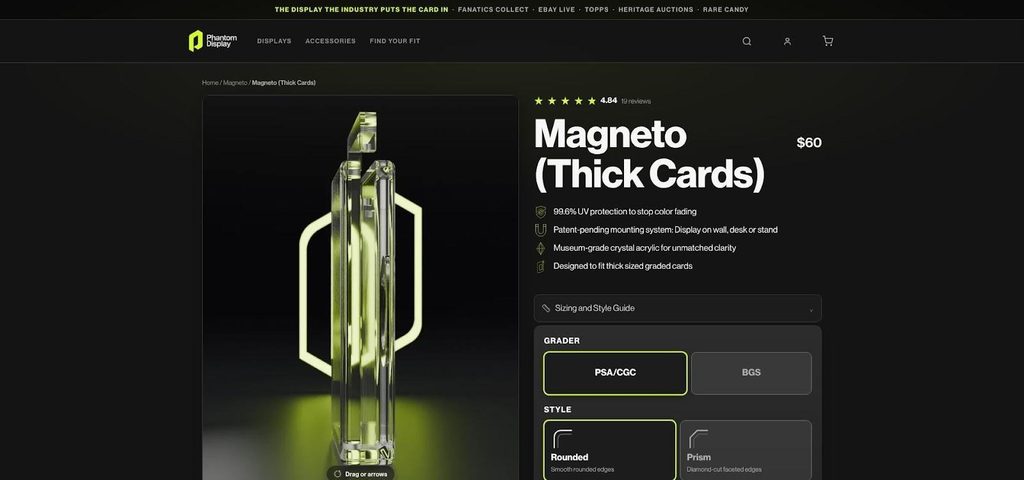
Phantom Magneto single graded card floating wall display product photo
Phantom’s Magneto case gives one standout slab the museum treatment. The optical-grade acrylic block encloses the holder with hidden neodymium magnets, then clicks onto a slim steel wall plate, so the card seems to float without visible brackets.
Protection reads like a lab sheet, not marketing fluff: the maker lists 99.6 percent UV rejection and 92.6 percent visible-light transmission. Those numbers slow fading but do not stop it, so indirect lighting is still wise. Sizes fit PSA, CGC, TAG, and BGS slabs, plus thicker versions that accept GradedGuard or Slabmags bumpers. Lift the block off the mount and it doubles as a desk or show-floor display.
Price is the only pinch. At the October 12, 2026 snapshot, the case cost $55 and the wall mount $25, roughly eighty dollars per card. That is steep next to multi-slot frames, yet collectors pay for tool-free access, clean lines, and true wall-to-desk mobility. With a 4.84 / 5 average across verified buyers, Magneto stays the go-to when one extraordinary slab deserves center stage.
5. Pennzoni 50-card cabinet: best furniture-style full-set display
Pennzoni’s 50-card hardwood cabinet is built for milestone collections. The frame spans 38 × 34.5 inches but projects only 2⅜ inches, so it hangs closer to the wall than many poster frames. Two brass locks secure the acrylic door, keeping dust and curious hands away from up to fifty standard slabs (some owners squeeze in a few extras by alternating thick and thin holders).
Mounting is manageable: a full-width rear cleat spreads weight across studs, and the rigid hardwood feels solid while you level and tighten screws. Enlist a friend for the lift; once seated, the cabinet sits flush with no wobble.
Protection is comprehensive. Pennzoni advertises 100 percent UV shielding, which we treat as high attenuation, not total immunity, and the enclosed design already blocks airborne grime and accidental knocks.
Value surprised us at the October 12, 2026 snapshot price of $194, or about $3.88 per slot, cheaper than many 24-slot imports yet finished in real hardwood, not painted MDF. The trade-off is footprint: in a small apartment the cabinet may dominate the room, so map its outline with painter’s tape before ordering.
For collectors ready to display a complete graded set, this cabinet delivers exhibition presence without gallery pricing. Verified buyers rate it 4.85 / 5, underscoring its reputation for durability and curb appeal.
6. TFF Breaks nine-card acrylic frame: best affordable UK ready-made option
Budget upgrades rarely look this tidy. The TFF Breaks nine-slot acrylic frame is a 32 × 48.5 cm clear plate drilled for nine PSA slabs. Four stainless screws and wall plugs come in the box, so installation feels as easy as hanging a picture.
At just under 0.5 kg empty, the frame is renter friendly; even drywall copes. Slide slabs into the top channel, tighten the cap screws, and each card stays secure without touching its face.
Protection is minimal: no door, dust seal, or published UV figure. Choose a wall that never sees direct sunlight and rotate foils every few months.
Value is the hook. At the October 12, 2026 snapshot price of £29.95, capacity works out to about £3.33 per card, cheaper than a booster pack sleeve for sleeve. Outside the UK, shipping can erase the saving, but for British collectors who want a clean nine-card grid without customs fees or DIY headaches, TFF Breaks fits the goal.
7. Sparky modular 3D-printed frame: best budget, build-as-you-go system
Sparky’s modular PSA frame lets you grow a display one STL at a time. Each PLA module holds two, three, or six slabs and snaps into its neighbor like building blocks, so you start small and expand whenever new grades arrive. Download the files and print locally, or order pre-printed parts in colors from stealth black to neon pink, perfect for matching GradedGuard bumpers.
A single six-slot panel weighs about 90 g and sticks up with a strip of heavy-duty tape: press for 30 seconds and you’re done. Test adhesion on spare paint first; heat and humidity can soften the bond, so re-press once a year.
Protection is minimal: no cover, dust seal, or UV claim, so think decor, not conservation. For dorm rooms, kids’ collections, or any budget wall that changes often, that trade-off is fine.
At the October 12, 2026 snapshot price of $7.25 for a six-slot print (about $1.21 per card) no other option comes close on cost. Add the fun of designing your own color grid and Sparky earns its place as the hobbyist’s flexible, low-risk entry point to slab walls.
How we scored and ranked every graded card wall display
We compared dozens of products using eight weighted criteria so you know exactly why each pick landed where it did. The weights add up to 100 percent.

Protection and preservation (20 percent)
How well does the display shield cards from visible light, ultraviolet radiation, dust, and handling? Enclosed doors, published UV figures, locks, and foam cushioning all score. Open frames can still rank, but they start with a handicap.
Fit and capacity (15 percent)
Slot height, width, and depth must suit multiple graders and bumpers. A fifty-card PSA cabinet scores lower if it can’t accept BGS or CGC slabs.
Materials and build quality (15 percent)
Solid hardwood, cast acrylic, and stainless hardware beat MDF, thin plexi, and soft screws. We also inspected hinge alignment, shelf grooves, and magnet strength.
Aesthetics (15 percent)
Clean lines, hidden fasteners, and balanced spacing matter, especially if the frame could hang in a living room rather than shout “card shop.”
Installation and access (15 percent)
Weight, included hardware, and swap speed influence day-to-day use. Lightweight frames earn renter points; heavy cabinets need solid cleats and clear instructions.
Value (10 percent)
We calculated price per displayed slab using the October 12, 2026 snapshot prices. Low sticker prices mean little if capacity is tiny.
Reviews and brand reputation (5 percent)
Hundreds of consistent four-plus-star ratings count more than a single five-star launch review.
UK and US availability (5 percent)
Products hidden behind import duties slide down the list.
This balanced rubric means a frame with stellar protection but poor fit can still lose to a well-rounded all-rounder. Use the weights to match your own priorities to the picks above.
Wall-safe display checklist
A frame is only half the battle. Light, heat, and gravity can ruin a slab long before the plastic case fails, so run through this quick safety audit before you hang anything.
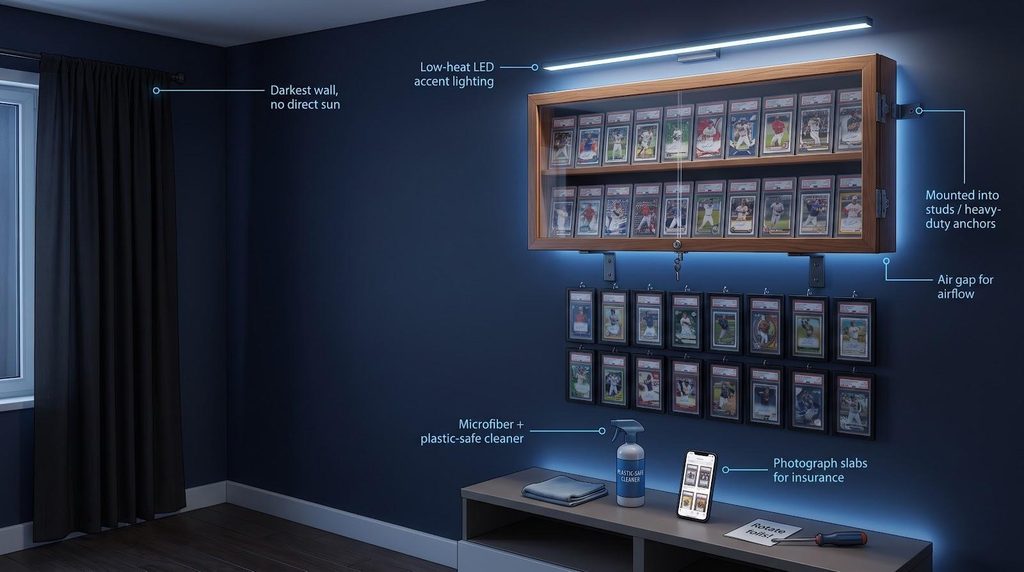
- Choose the darkest practical wall. Direct sun is the enemy; even visible light fades paper over time (see guidance from the U.S. Library of Congress).
- Add a low-heat LED strip for accent lighting, keeping bulbs outside enclosed cabinets to avoid heat buildup.
- Apply UV-blocking window film or close blackout shades during peak daylight.
- Mount heavy cabinets into studs or use anchors rated well above the loaded weight (at least 50 lb / 23 kg).
- Leave at least one centimeter of airflow behind enclosed cases to prevent moisture pockets.
- Clean acrylic fronts with a microfiber cloth and plastic-safe cleaner; never use ammonia glass spray.
- Rotate autographed or foil cards every few months to share the light burden across the collection.
- Photograph each slab in its slot and store the images off-site for insurance.
- Check and tighten mounting hardware every six months.
- Treat any “99 percent UV” claim as risk reduction, not immunity; limit overall light exposure whenever possible.