Disclaimer: This article is not intended to be a recommendation. The author is not responsible for any resulting actions of the company during your trading experience. The information provided in this article may not be accurate or up-to-date. Any trading or financial decision you make is your sole responsibility, and you must not rely on any information provided here. We do not provide any warranties regarding the information on this website and are not responsible for any losses or damages incurred as a result of trading or investing.
For many parks, visitor attractions and entertainment venues, the busiest part of the day ends when the sun goes down. The landscape, pathways, entrance plazas and visitor facilities may remain available, but their commercial value drops sharply once daytime guests leave.
A seasonal light attraction can change that pattern.
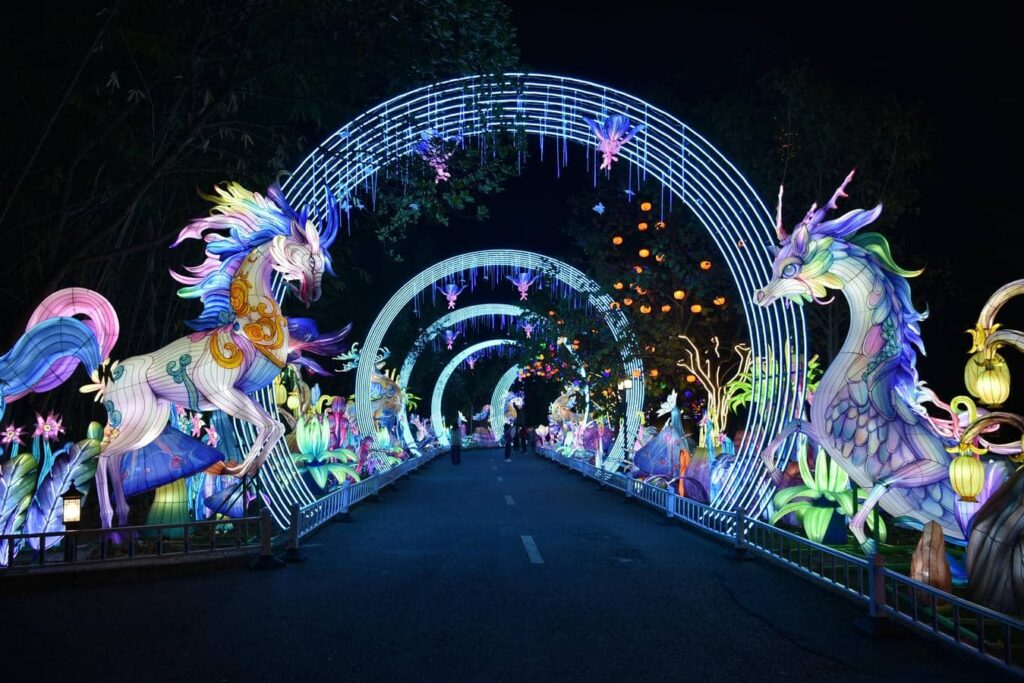
Rather than treating decorative lighting as an additional expense, operators are increasingly considering how illuminated routes, interactive installations and large-scale visual landmarks can extend opening hours and create a separate night-time experience. When properly planned, the result is not simply a collection of lights. It becomes a destination with its own ticket, visitor journey and revenue model.
This approach can work for public parks, theme parks, zoos, resorts, casino entertainment complexes, scenic areas, shopping districts and other venues with suitable outdoor space. The important question is not how many illuminated decorations can be installed. It is how the space can be transformed into an experience people are willing to visit, photograph and recommend.
The commercial value of the hours after sunset
Most established venues already have assets that are difficult and expensive to reproduce: accessible grounds, parking, toilets, food outlets, security systems, recognisable locations and an existing audience.
A night-time attraction allows these assets to be used for longer without replacing the venue’s normal daytime operation. A park can remain a recreational space during the day and become a ticketed light experience at night. A resort can use its entrance plaza and surrounding landscape to create an evening destination for guests. A commercial district can connect illuminated installations with restaurants, shops and live entertainment.
Seasonal light events can be particularly useful during periods when normal visitor numbers are lower. Winter evenings are an obvious example, but the same model can also be adapted for cultural festivals, school holidays, summer night programmes and destination events.
The opportunity is not limited to admission revenue. A well-structured evening programme may also increase:
- Visitor dwell time
- Food and beverage sales
- Retail activity
- Hotel or resort package bookings
- Corporate and private-event bookings
- Sponsorship opportunities
- Social-media visibility
- Return visits during future seasons
The lighting is therefore only one part of the proposition. The wider objective is to create a reason for people to travel to the venue after dark.
A night attraction is more than a collection of illuminated objects
One of the most common planning mistakes is to select individual displays before designing the overall visitor experience.
A successful route needs a recognisable beginning, moments of discovery, visual changes, comfortable pauses and a satisfying conclusion. Visitors should feel that they are progressing through an experience rather than walking past unrelated decorations.
The entrance establishes expectations. It should be visible, photographable and suitable for managing queues. Beyond the entrance, larger landmarks can help visitors understand the scale of the attraction, while smaller installations and interactive elements maintain interest between the major scenes.
Different areas may have different roles. One zone might be designed for families and children, another for photography, and another for food, music or live performance. Transitional sections are equally important because they control pace and prevent the experience from feeling visually repetitive.
The best routes are not always the longest. A carefully planned compact attraction can often generate more engagement than a large site filled with disconnected displays.
Start with the audience and business objective
Before approving designs, venue operators should define what the attraction is expected to achieve.
Is the priority to sell separate evening tickets? Increase winter footfall? Extend resort guest activity? Support restaurants and retail tenants? Introduce a new annual festival? Reposition a venue as a regional night-time destination?
The answer affects nearly every planning decision, including route length, operating dates, theme, ticket structure, capacity and the type of installations required.
Public parks may need to balance ticket income with community accessibility. Theme parks may want the light event to complement existing rides and seasonal programming. Zoos can use animal-themed installations and conservation storytelling. Shopping and hospitality destinations may focus more heavily on entrance landmarks, photography and connections with dining areas.
Casino resorts and entertainment complexes have another opportunity. Their exterior plazas, hotel entrances and pedestrian areas can be developed as inclusive attractions that connect restaurants, retail, live entertainment and accommodation. The experience does not need to promote gaming. It can instead create a welcoming visual destination for families, tourists, conference visitors and local residents.
Design the visitor journey before choosing the displays
When a venue begins planning a successful park light show, the route should be developed before the final production list is confirmed.
A practical visitor journey normally considers:
- Where guests arrive and how they find the entrance
- How ticket checking and queues will be organised
- Which installation creates the first major impression
- Where visitors are most likely to stop for photographs
- How people move between themed areas
- Where food, toilets and rest areas are located
- Which paths need additional functional lighting
- How emergency and accessible routes remain clear
- Where the experience reaches its visual finale
- How visitors move towards retail, dining or the exit
These decisions influence both satisfaction and operating capacity. A spectacular installation positioned in the wrong place can create congestion. A long, visually empty pathway may make the attraction feel unfinished. A popular photography point placed near a narrow entrance can slow the entire route.
Visitor flow is therefore both a creative and commercial consideration. The more comfortably people move through the experience, the easier it becomes to manage timed entry, maintain capacity and support spending in other parts of the venue.

Build revenue beyond the admission ticket
Ticket sales may be the main source of direct income, but they should not be the only commercial element considered.
Food and beverage areas can be placed near natural stopping points rather than hidden at the end of the route. Themed merchandise, professional photography, family packages and premium entry periods may add value without making the experience feel aggressively commercial.
Operators can also explore sponsorship from local businesses, hospitality partners or consumer brands. A sponsor may support an entrance installation, performance area or community programme, provided the branding does not overwhelm the visitor experience.
Resorts and hotels may combine admission with accommodation or dining. Entertainment complexes can link the attraction with live shows, restaurants or seasonal markets. Public venues can schedule quieter community sessions, school visits or private corporate evenings outside peak public hours.
The right model depends on the venue and audience. The objective is not to add every possible revenue stream, but to identify the ones that improve the experience while supporting the event’s financial sustainability.
Temporary does not have to mean disposable
Seasonal attractions are often temporary, but the equipment should be planned for repeated use.
Modular structures can make transportation, storage and future installation more practical. Individual installations may be repositioned, combined into new zones or refreshed with different lighting effects and scenic details in later seasons.
This gives operators several options. A successful first-year event can be expanded gradually. Existing landmark pieces can be retained while part of the route is replaced. A venue with multiple locations may rotate selected displays between sites.
Reusability should be discussed before manufacturing begins. Structural connections, electrical systems, packaging, labelling and installation instructions all affect whether the equipment can be used efficiently again.
Factory pre-installation is particularly valuable for custom projects. Assembling and illuminating major components before shipment allows the production team to check visual effects, frame connections, electrical systems and the intended installation sequence. It also gives the venue clearer information for planning its on-site work.
The operational work behind the spectacle
Visitors should see an effortless experience, but delivering it requires careful technical planning.
Outdoor installations must be appropriate for local weather, expected operating hours and site conditions. Electrical distribution, cable protection, anchoring, drainage, wind exposure and emergency access all need to be considered.
Venue operators should also confirm how the project will be delivered. Large displays may need to be divided into transportable modules. Components should be labelled clearly, and the installation team should have drawings, connection details and assembly guidance.
Questions to address before production include:
- Who is responsible for site measurement?
- What are the local structural and electrical requirements?
- How will vehicles and lifting equipment access the site?
- Which elements require foundations or additional anchoring?
- Will installation be handled locally or supported by specialist engineers?
- How much time is available for testing before opening?
- How will maintenance and replacement parts be handled during the event?
- What must be inspected before the attraction opens each evening?
Resolving these questions early reduces the risk of delays and last-minute changes.
Different venues require different attraction strategies
There is no single design that works equally well everywhere.
A public park may need a route that respects trees, existing pathways and surrounding neighbourhoods. A zoo may prefer themed scenes that support animal storytelling while keeping sensitive areas protected. A resort may want a visually strong entrance and a shorter route that encourages guests to continue towards restaurants and evening entertainment.
A city-centre or shopping district may not use ticketing at all. Its return may come from increased pedestrian activity, longer visits and stronger seasonal trading. Casino resorts and large entertainment complexes may combine free exterior landmarks with a controlled ticketed section deeper inside the property.
The visual theme should also respond to the audience. Cultural lanterns, wildlife, fantasy gardens, winter scenes, local stories and interactive photo installations can all be effective, but they should support a coherent identity rather than being selected simply because they are individually impressive.
Measure what happens after opening
Opening night is not the end of the project. It is the beginning of the operating phase.
Useful performance indicators include advance ticket conversion, attendance by time slot, visitor dwell time, queue duration, food and retail spending, route congestion and the popularity of individual scenes. Online reviews and social-media photographs can reveal which installations visitors remember most.
This information supports better decisions for the second season. Popular landmark pieces can be retained, weaker areas redesigned and new scenes added where the route needs more variety.
A light attraction becomes more sustainable when it develops as a repeatable event rather than a one-off display. Visitors need enough familiarity to recognise the event and enough change to justify returning.
From illuminated space to evening destination
A successful light attraction is not defined by brightness or the number of installations. Its value comes from the way design, visitor flow, operations and commercial planning work together.
For parks and public venues, it can turn quiet evening hours into a new reason to visit. For resorts and entertainment complexes, it can connect exterior spaces with hospitality, dining and live programming. For towns and commercial districts, it can create seasonal identity and encourage people to spend more time in the area.
The most effective projects begin with a clear purpose: who the visitors are, why they will attend, how they will move through the site and what will make the experience worth repeating.
When those questions are answered before production begins, light becomes more than decoration. It becomes part of a viable night-time destination.
Author bio: David Gao is the founder of HOYECHI and ParkLightShow, a manufacturer and project solution provider for custom lantern festivals, park light shows, Chinese lantern festival displays and outdoor night-tourism attractions.