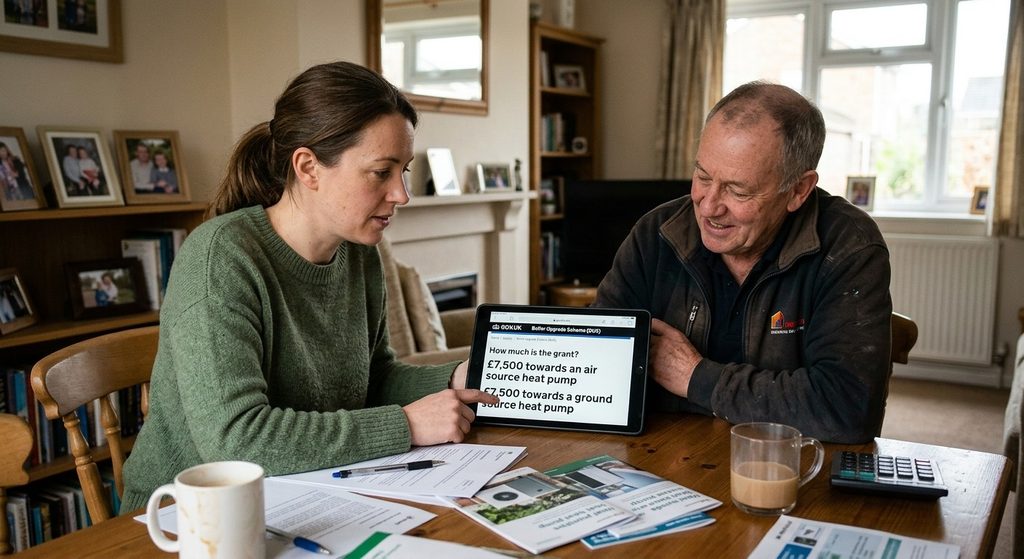
Most households will get £7,500. That’s what the boiler upgrade scheme pays toward an air source or ground source heat pump in England and Wales. It’s a fixed sum, not an “up to” figure that shrinks after assessment.
Three other rates exist, though, and yours depends on what you install and what fuel you burn now. Below you’ll find each rate, what it does to a real quote, and the details that change your final bill.
What Does Each Heating System Receive?
There are four rates, from highest to lowest:
- £9,000: an air or ground source heat pump in a home off the gas grid that currently burns oil or LPG. This rate runs only until 31 March 2027.
- £7,500: the same heat pumps for everyone else, including homes on mains gas or electric storage heaters.
- £5,000: biomass boilers, mainly for rural properties.
- £2,500: air-to-air heat pumps. Several 2026 guides say heat batteries now get £2,500 as well.
Hybrid setups, where a heat pump runs alongside a fossil fuel boiler, receive nothing.
How Much of a Typical Quote Does £7,500 Cover?
Government figures give the clearest answer. The median air source heat pump installed under the scheme cost £12,908 in April to June 2026, before the grant, and the middle half of jobs ranged from £11,128 to £15,627.
Subtract the grant and a typical household pays about £5,400. Most pay between roughly £3,600 and £8,100. In other words, the grant covers a little under 60% of a median job.
Ground source systems tell a different story. The average install costs nearly £24,000, which drops to around £16,500 after the grant. There, the same £7,500 covers under a third of the bill.
The lesson is that a flat grant favours smaller, simpler jobs. A well-insulated two-bed home needing few radiator changes might see half its bill or more disappear. A large, draughty farmhouse with a borehole won’t come close.
Why Do Oil and LPG Homes Get £9,000?
Off-grid homes face the toughest switch, because they pay a lot for fuel and often have little room to cut costs. The extra £1,500 aims to close that gap.
Nesta’s April 2026 analysis found that oil homes now pay about £2,500 to £3,600 upfront after the grant. A full oil boiler replacement typically costs £3,500 to £5,500.
That changes the decision for anyone with an ageing oil boiler. Upfront price no longer pushes them toward another fossil fuel system, and a heat pump can now cost the same or less on day one.
The deadline needs care. The higher rate is temporary, so ask your installer to submit your application well before March 2027, not in the final weeks.
Has The Grant Always Been This Generous?
No. When the scheme opened in 2022, air source heat pumps got £5,000 and ground source £6,000. Both rose to £7,500 in October 2023.
Funding grew too. The government set aside £400 million for 2026-27 and extended the scheme to March 2030.
If you held off in 2022, waiting has saved you £2,500. Waiting longer is a gamble, though. Nobody has promised further increases, and the £9,000 rate already has an end date.
Can You Get Less Than The Advertised Amount?
In practice, rarely. The scheme isn’t means-tested, so income, savings and property value don’t reduce it. Your installer applies the grant as an upfront discount, so you never pay the full price and wait for a refund.
Two limits apply. Each property can claim once, so a second heat pump later won’t attract another grant. And the grant can’t exceed the cost of the job, so you can’t pocket the difference on a very cheap install.
One more thing: an installer who quotes much higher than the going rate isn’t breaking any rule. The boiler upgrade grant stays the same whatever the price, so an inflated quote simply leaves you paying more. Compare your quote with the national median above before you accept it.
How Do You Work Out Your Cost After The Grant?
Take your installer’s total and subtract the rate that applies to you: £9,000 if you heat with oil or LPG off the gas grid, £7,500 if you’re on mains gas or electric, or £2,500 for an air-to-air unit. What’s left is your bill.
For example, a £12,000 quote leaves an oil-heated home paying £3,000 and a gas-heated home paying £4,500.
If your figure looks high, check the quote for VAT, which shouldn’t appear before March 2027. Then ask for the radiator and pipework costs to be shown separately, since that’s usually where you can save.