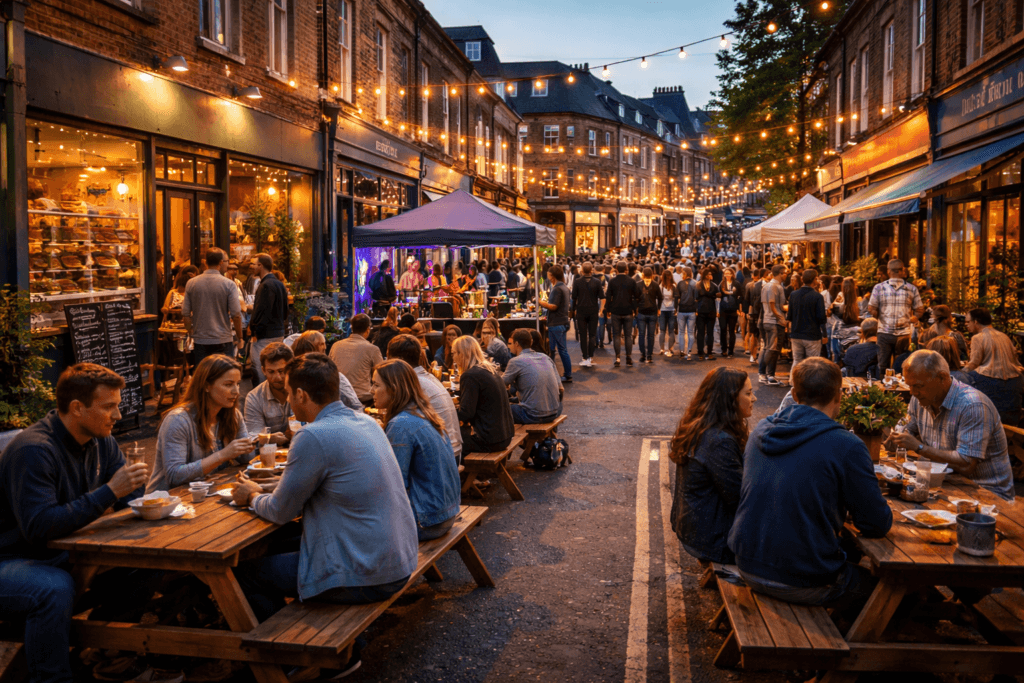
Life in Sheffield does not happen behind closed doors. It unfolds outside, in shared spaces, through habits people repeat without much thought. The city feels busy without being loud, active without trying to impress. Most days move at a steady pace, and when something pulls people together, it often happens naturally.
Weekdays feel practical. People focus on work, errands, and routine. Weekends loosen that structure. Time opens up. Streets feel different. Cafés stay full longer. Music drifts out of smaller venues. None of this needs much planning. It just happens.
Much of this comes from a local culture built around food, music, and small community events. Not headline events. Not large campaigns. Just regular moments that shape how people experience the city over time.
Online discussions about leisure and everyday entertainment, including those found on general-interest platforms like happyjokers, reflect similar habits. People talk about where they go, how long they stay, and why certain places feel comfortable. In Sheffield, those choices rarely stay abstract. They show up on the street.
A city that works through shared habits
Sheffield does not rely on big gestures to define itself. Instead, it runs on participation. People attend events because they want to, not because they feel invited or targeted. That difference matters.
Local festivals, neighbourhood gatherings, and informal events draw people in without pressure. Many residents decide to attend at the last minute. They hear about something nearby, check the weather, and head out. This spontaneity shapes how events grow and how organisers approach them.
There is no expectation to stay all night. No sense of obligation. People come, take part, and leave when it feels right.
Food as part of everyday movement
Food plays a steady role in how Sheffield moves. Independent cafés, street food spots, and weekend markets act as social anchors rather than destinations. People meet briefly. Sometimes they stay longer than planned.
Local food events tend to share a few common traits:
- simple menus
- informal seating
- affordable prices
These details matter. They make conversation easier. People talk to strangers. They recognise faces over time. Slowly, certain places become part of daily routine rather than special outings.
Markets that come and go
Temporary food markets appear across the city throughout the year. They use streets, small squares, or borrowed spaces. Their short lifespan encourages people to attend without hesitation.
The appeal usually comes from:
- limited timeframes
- rotating vendors
- relaxed layouts
People walk, stop, eat, and move on. Nothing feels fixed, and that keeps the experience light.
Music that fits into normal life
Music in Sheffield does not sit apart from daily life. It fits into it. Small gigs, open mic nights, and local performances often take place during the week. People stop by after work or drop in for a short set.
These events usually offer:
- modest entry prices
- relaxed environments
- mixed audiences
Some people come alone. Others arrive with friends. Many decide on the same day. Over time, this turns music into a habit rather than an occasion.
Spaces that change purpose
Many venues in Sheffield stay flexible. A room used for live music on Friday may host a community meeting or workshop on Sunday. This adaptability keeps spaces active.
It also supports:
- varied audiences
- regular foot traffic
- constant use
Places do not stay locked into one identity.
Community events without labels
Some of the most meaningful events in the city do not carry strong branding. Neighbourhood gatherings, seasonal celebrations, and informal meetups often spread by word of mouth.
They work because:
- expectations stay low
- attendance feels optional
- participation remains casual
People show up because it feels natural.
Streets that invite people to stop
Occasionally, streets close or change purpose for local events. Traffic steps aside. Walking slows down. People linger longer than planned.
These moments interrupt routine just enough to feel refreshing. Most people adjust quickly. They find new routes, pause for food, or stay out later than expected.
Seasonal changes and shifting habits
Seasonal shifts influence how people use the city. Summer brings outdoor events, longer evenings, and unplanned gatherings. Winter draws people indoors, favouring smaller spaces and familiar venues.
This rhythm feels expected:
- summer encourages exploration
- winter reinforces familiarity
Both support a sense of continuity.
The quiet role of volunteers
Many local events depend on volunteers rather than large teams. This changes the tone. Volunteers bring personal motivation rather than commercial focus.
Their involvement leads to:
- approachable organisation
- informal communication
- flexible planning
People feel welcome rather than managed.
Habits built through repetition
Regular attendance creates familiarity. People return to the same markets, venues, and events. Faces become recognisable. Small routines form.
Over time, people develop:
- preferred locations
- favourite days
- informal social circles
The city becomes familiar through repetition.
Accessibility over spectacle
Sheffield’s local culture often values ease over scale. Events stay accessible. Entry processes remain simple. Information spreads casually.
This encourages:
- mixed age groups
- spontaneous attendance
- wide participation
Nothing feels closed off.
Food and music crossing paths
Many events blend food and music without separating them into categories. A meal turns into a performance. A gig turns into a social evening.
These overlaps keep people engaged longer than expected.
Entertainment that fits real schedules
Residents tend to choose entertainment that fits into existing routines. Short events, early start times, and flexible formats support this.
Organisers respond by adjusting:
- timing
- length
- frequency
The result feels practical rather than demanding.
Identity shaped by use, not image
Sheffield’s identity grows from how people use the city, not how it presents itself. People talk about places they return to and events they recognise.
Shared memory builds slowly, through presence rather than promotion.
Smaller venues, closer connections
Smaller spaces allow closer interaction. Performers and audiences share the same room. Conversations happen easily.
This closeness strengthens local culture without requiring attention.
Pride without performance
Local pride shows quietly. People support events by attending regularly and bringing others. They do not need external validation.
The focus stays local.
Familiar habits, changing spaces
Venues open and close, but habits continue. People seek similar experiences in new locations. Organisers adapt. Audiences adjust.
The culture stays steady even when spaces change.
Why familiarity matters
Familiarity reduces hesitation. When people know what to expect, they attend more freely. Predictability supports spontaneity.
That balance keeps local life active.
How people hear about things
Information spreads through posters, social media, and personal messages. Details travel casually.
This keeps interest grounded.
Life shaped by showing up
Sheffield’s culture depends on people showing up. Attendance matters more than attention. Participation defines success.
Events exist because people choose to be there.
Closing thoughts
Local culture and community events shape Sheffield through small, repeated choices. People decide where to eat, which event to attend, and how long to stay. These decisions shape the city more than any formal plan.
Food, music, and shared spaces matter because they fit into daily life. They do not interrupt routines. They become part of them.