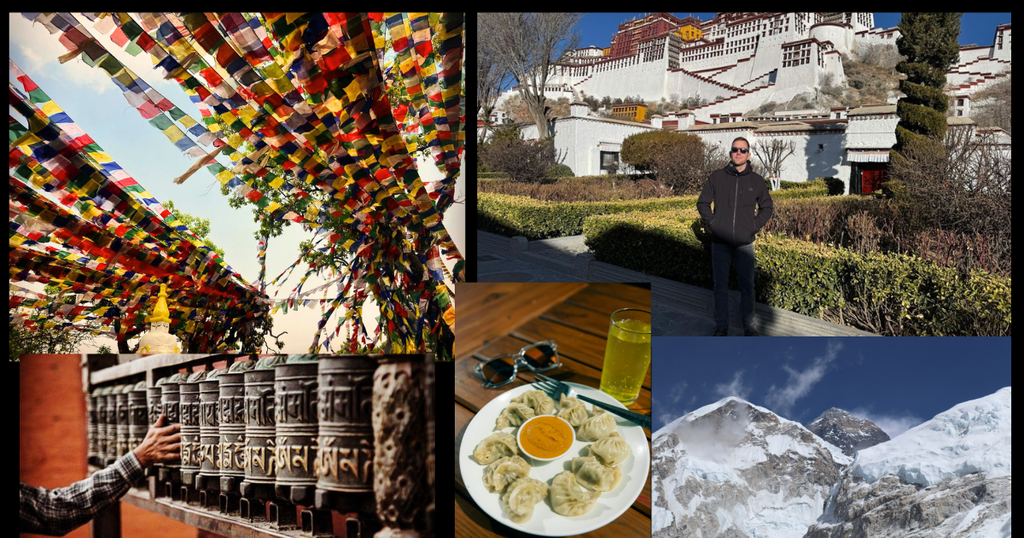
For many travelers, the dream of exploring the Himalayas begins with a journey such as the Everest Base Camp Trek, walking beneath some of the world’s highest peaks, crossing mountain trails, and experiencing landscapes that seem almost beyond imagination.
But the Himalayas offer far more than dramatic scenery and high-altitude adventure. Behind the famous mountains are centuries-old cultures, remote villages, ancient monasteries, distinctive architecture, local food, colorful festivals, and communities whose lives have been shaped by the mountains for generations.
For many travelers, this is the image of the Himalayas they have dreamed about for years.
But the mountains tell only part of the story.
Across Nepal, Tibet, and Bhutan, Himalayan travel is also about ancient cultures, remote communities, Buddhist monasteries, traditional architecture, local food, colorful festivals, and people whose lives have been shaped by the mountains for generations.
A Himalayan journey can therefore take many forms. It can be a demanding trek toward a famous base camp, a quiet walk through a traditional village, a visit to an ancient monastery, or a cultural journey across high-altitude landscapes.
The real adventure begins when travelers look beyond the peaks and start discovering the world that exists around them.
Himalayan Travel at a Glance
Beyond the Peaks: Discover the cultures and communities that give the Himalayas their character.
Everest Meets Sherpa Heritage: Experience mountain adventure alongside the traditions of the Khumbu.
Manaslu Offers a Quieter Adventure: Explore remote villages and Tibetan-influenced Himalayan culture.
Annapurna Brings Cultures Together: Travel through one of Nepal’s most diverse mountain regions.
Tibet on the High Plateau: Discover monasteries, pilgrimage traditions, food, and distinctive Tibetan heritage.
Bhutan’s Living Heritage: Experience Buddhist traditions, dzongs, festivals, and everyday mountain life.
A Taste of the Himalayas: Explore the flavors that have developed around altitude, climate, and local agriculture.
The People Behind the Journey: Meet guides, porters, farmers, monks, and teahouse families.
Adventure With a Cultural Connection: Learn how local knowledge can transform the way travelers experience the mountains.
Mountains That Became the World’s Greatest Adventure
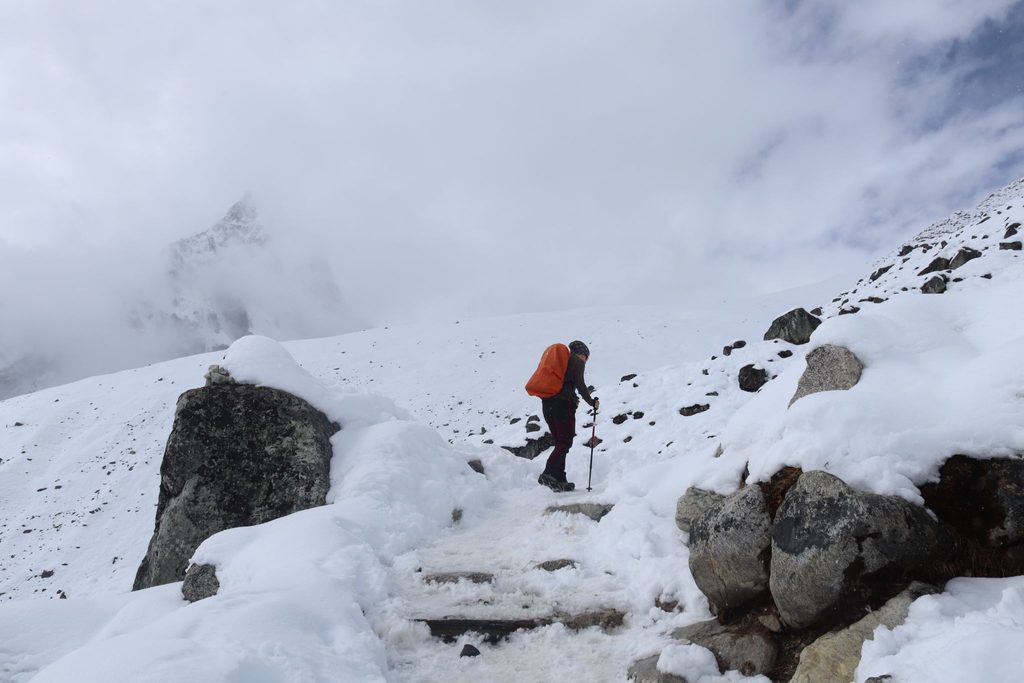
For generations, the Himalayas have attracted explorers, mountaineers, pilgrims, photographers, and trekkers.
The appeal is obvious.
Few places offer such a combination of dramatic altitude, changing landscapes, remote villages, and enormous mountain scenery.
Yet Himalayan adventure is not limited to climbing the world’s highest peaks.
Trekking has become one of the most accessible ways for international travelers to experience the region. Trails cross forests, rivers, farmland, mountain passes, and high valleys, creating a journey that changes almost every day.
One morning may begin among subtropical vegetation. A few days later, the landscape may be dominated by glaciers and snow-covered mountains.
Between those extremes are villages where local life continues much as it has for generations.
That mixture of adventure and everyday life is what makes Himalayan travel so different from a conventional sightseeing holiday.
Everest: Where Adventure Meets Sherpa Culture
For countless travelers, Everest remains the ultimate symbol of Himalayan adventure.
The Everest Base Camp Trek offers an opportunity to experience the mountain landscape while also entering the cultural world of the Khumbu and its Sherpa communities.
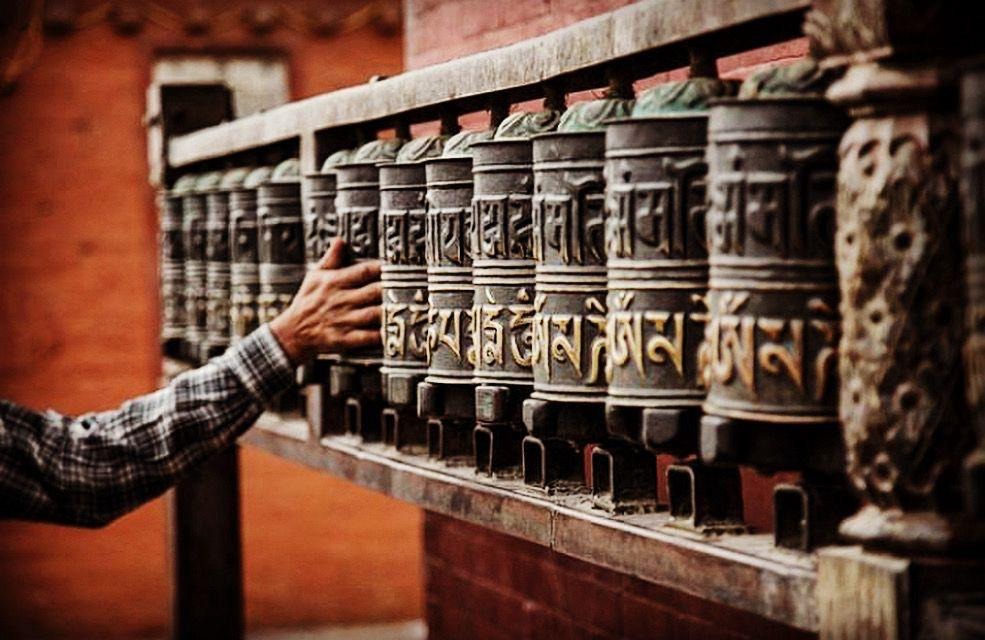
The trail passes through famous settlements such as Namche Bazaar and Tengboche, where the landscape is filled with prayer flags, mani stones, chortens, prayer wheels, and Buddhist monasteries.
Tengboche is particularly important.
The monastery stands in a spectacular mountain setting and remains an important center of Buddhist tradition in the region. For trekkers, it provides a natural opportunity to pause and look beyond the physical challenge of the trail.
But Sherpa culture cannot be reduced to mountaineering.
The region’s traditions are also expressed through language, food, festivals, architecture, family life, agriculture, and religious practices.
Travelers who spend time in the villages often discover that the most interesting part of the Everest journey is not simply seeing the world’s highest mountain but understanding the people who have made these valleys their home.
Manaslu: Adventure in a More Remote Himalayan World
Not every Himalayan adventure needs to follow the busiest trail.
The Manaslu region offers a quieter and more remote experience, combining dramatic mountain landscapes with communities strongly influenced by Tibetan Buddhist traditions.
The Manaslu Circuit Trek takes travelers through changing landscapes, from green hills and terraced farmland to high mountain valleys surrounded by enormous peaks.
Along the route, travelers encounter mani walls, chortens, prayer flags, monasteries, traditional homes, and villages that appear almost hidden among the mountains.
The cultural character of the region also changes with altitude.
Lower communities are closely connected to Nepal’s broader hill culture, while higher settlements show stronger Tibetan influences in architecture, religion, food, and everyday traditions.
This is one of the great strengths of Manaslu.
The journey is not simply about reaching a destination. It is about watching the landscape and culture change together as the trail climbs deeper into the mountains.
Annapurna: Where Landscapes and Cultures Meet
The Annapurna region offers another perspective on Himalayan travel.
Unlike some more culturally concentrated mountain areas, Annapurna is known for remarkable diversity. Different communities inhabit its valleys and slopes, bringing their own languages, traditions, religious practices, architecture, and food.
The Annapurna Base Camp Trek is therefore as much a cultural journey as it is a mountain adventure.
The trail moves through villages, forests, terraced fields, and mountain settlements before reaching the dramatic high-altitude sanctuary surrounded by towering peaks.
Along the way, travelers can observe how local communities have adapted to different elevations and environments.
In some areas, Hindu traditions are prominent. In others, Buddhist influences become more visible.
This changing cultural landscape is part of what makes Annapurna so rewarding.
The mountains may dominate the horizon, but the villages along the trail give the journey its human character.
The Villages Behind the Famous Trails
Some of the most memorable moments in the Himalayas happen far away from major landmarks.
A small village can reveal more about mountain life than an entire afternoon spent taking photographs from a viewpoint.
Traditional houses reflect local materials and climate. Terraced fields demonstrate generations of agricultural knowledge. Community spaces often reveal religious traditions and social relationships.
Tourism has also become an important part of life in many trekking communities.
Families operate teahouses and lodges. Local guides lead travelers through difficult terrain. Porters transport supplies. Small shops provide food and equipment.
For visitors, these communities offer a chance to experience everyday Himalayan life rather than simply passing through a scenic landscape.
A conversation over tea can sometimes be more memorable than a famous viewpoint.
Food: The Himalayas on a Plate
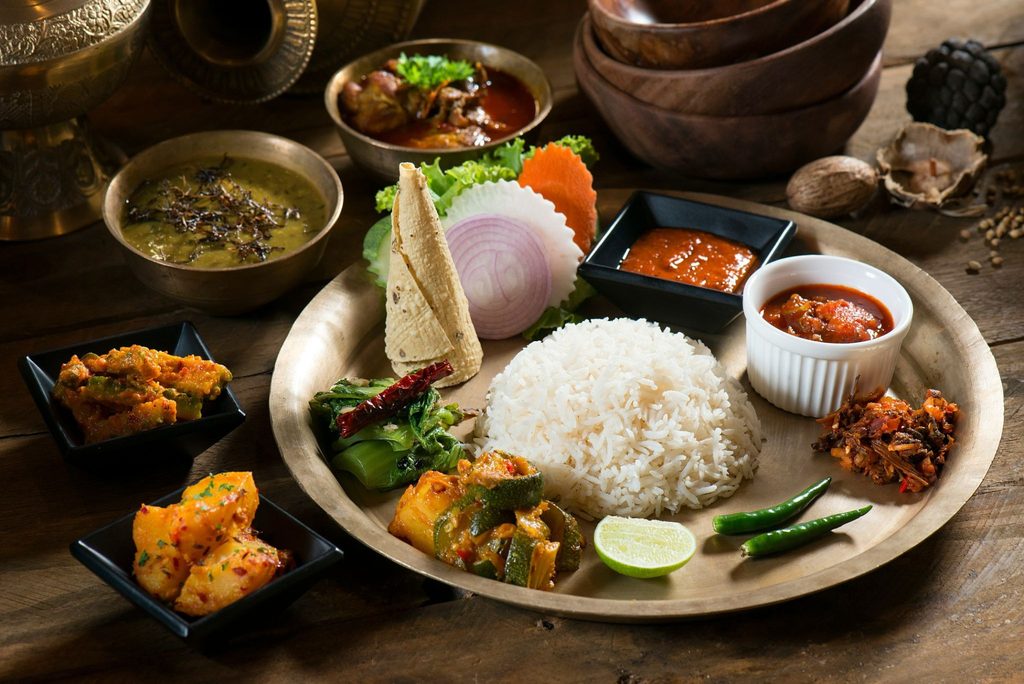
Food provides another way to understand the region.
In Nepal, dal bhat remains one of the most recognizable staples, while momo, thukpa, soups, breads, pickles, and regional dishes give travelers plenty of opportunities to explore local flavors.
Mountain cuisine is shaped by practical needs.
In cold and high-altitude environments, warm soups, noodles, bread, and hearty meals provide energy for daily life and long journeys.
Tibetan food reflects the environment of the high plateau, with traditional ingredients and preparation methods adapted to a demanding climate.
Bhutanese cuisine has its own distinctive character, with rice, vegetables, cheese, and chili playing important roles.
Food also connects travelers with people.
Eating a simple meal in a family-run teahouse can offer insight into local agriculture, trade, climate, and family traditions.
Sometimes the best culinary experience is not found in an expensive restaurant but at a small table in a mountain village.
Monasteries: The Spiritual Side of Himalayan Travel
Across the Himalayas, monasteries remain among the most recognizable symbols of the region’s cultural heritage.
But they are not simply beautiful buildings.
Many continue to function as active religious and community centers. They preserve ceremonies, artwork, religious texts, music, traditions, and knowledge passed between generations.
Inside, travelers may encounter colorful murals, statues, incense, prayer wheels, manuscripts, and intricate decorations.
Without context, these details can be difficult to understand.
A local guide can explain the meaning behind religious symbols, describe appropriate behavior, and help visitors understand the relationship between a monastery and the surrounding community.
This is especially important for responsible travelers.
A monastery is first and foremost a place of worship. Visiting with patience and respect allows travelers to experience its cultural importance without turning a sacred space into simply another tourist attraction.
Tibet: A Journey Across the High Plateau
Beyond Nepal, the character of Himalayan travel changes dramatically.
The Tibetan Plateau presents an enormous landscape of mountains, high-altitude lakes, open plains, monasteries, pilgrimage routes, and traditional settlements.
The scale can be difficult to comprehend.
But the cultural landscape is equally fascinating.
Tibetan Buddhist traditions remain visible in monasteries, temples, prayer wheels, religious artwork, and pilgrimage practices.
Yet Tibetan heritage extends far beyond religion.
Language, music, clothing, food, traditional crafts, family life, and nomadic traditions all contribute to the identity of the region.
Travelers interested in exploring this cultural dimension through Viajes al Tíbet can discover how communities have developed a distinctive way of life in one of the world’s highest inhabited regions.
The landscape itself also carries cultural meaning.
Mountains and lakes may hold spiritual significance, creating a relationship between geography and belief that is difficult to separate.
Bhutan: Another Expression of Himalayan Culture
Farther east, Bhutan offers a different interpretation of Himalayan travel.
The country is known for its Buddhist heritage, mountain valleys, monasteries, temples, dzongs, traditional architecture, and strong cultural identity.
The dzongs are among Bhutan’s most recognizable landmarks. These impressive fortress-like structures historically combined religious and administrative functions.
But Bhutanese culture is not confined to historic buildings.
Traditional clothing, village architecture, farming, music, food, and festivals remain visible in everyday life.
Travelers taking Viajes a Bután can experience a country where cultural heritage continues to influence ordinary routines rather than existing only as something preserved for visitors.
That living quality is one of Bhutan’s greatest attractions.
Festivals That Bring the Mountains to Life
Festivals provide some of the most colorful experiences in the Himalayas.
Across Nepal, Tibet, and Bhutan, communities gather for religious and seasonal celebrations involving music, food, prayers, dances, ceremonies, and family gatherings.
Buddhist festivals may include masked dances and elaborate performances in monastery courtyards.
Nepal’s cultural diversity creates an especially rich calendar of Hindu, Buddhist, and indigenous celebrations.
Bhutan is also renowned for traditional religious festivals that combine dance, music, costumes, and spiritual symbolism.
For travelers, these events offer an opportunity to witness traditions that have survived across generations.
But participation requires sensitivity.
Visitors should remember that these are community and religious events, not performances created exclusively for tourists. Asking before taking photographs and following local customs can make the experience more respectful for everyone.
The People Behind Himalayan Adventure
Every Himalayan trail depends on people.
Guides understand the routes and changing mountain conditions. Porters carry essential supplies. Farmers cultivate steep terraces. Families operate teahouses. Drivers connect remote settlements. Monks maintain religious institutions and traditions.
Their work often goes unnoticed behind the spectacular scenery.
Yet these people are central to the travel experience.
A guide may explain the history of a village. A teahouse owner may describe how tourism has changed the local economy. A farmer may explain how crops are grown on steep slopes.
These conversations give travelers a perspective that cannot be found on a map.
They also remind visitors that the Himalayas are not an empty wilderness.
They are home.
Traveling With Local Knowledge
The deeper side of Himalayan travel is often easier to understand with someone who knows the region personally.
A knowledgeable local guide can explain the meaning of a monastery, introduce travelers to regional food, describe village customs, and help visitors communicate with local communities.
This becomes especially valuable when travelers want more than a standard itinerary.
For Spanish-speaking visitors, language can make cultural experiences more accessible.
Viajes a Nepal can help travelers explore Nepal with a local perspective, connecting trekking, cultural experiences, and the wider Himalayan region.
The value of local knowledge is not simply convenience.
It is context.
A mountain trail becomes more meaningful when you understand the community beside it. A monastery becomes more interesting when you know its story. A local meal becomes memorable when you understand why it is prepared that way.
How to Experience the Himalayas Beyond the Ordinary
Traveling beyond the ordinary does not always mean going somewhere no one else has visited.
Sometimes it means traveling differently.
Spend more time in villages instead of rushing between attractions. Choose locally operated accommodation where possible. Eat regional food. Speak with guides and hosts. Visit monasteries respectfully.
And leave room in the itinerary for unexpected moments.
A mountain journey should not feel like a race from one checkpoint to another.
Some of the best experiences happen when travelers slow down.
It may be a quiet morning watching clouds move across a valley, a conversation with a shopkeeper, or an evening meal shared with other trekkers and local hosts.
These moments give a journey its personality.
A Region Connected by Mountains, But Rich in Differences
One of the most fascinating things about Himalayan travel is that the region feels connected while remaining remarkably diverse.
Nepal’s mountain communities have their own histories and traditions.
Tibetan cultural influence can be seen across parts of the northern Himalayas, but Nepal and Tibet remain distinct cultural worlds.
Bhutan has developed its own expression of Himalayan Buddhist heritage.
Even within Nepal, the cultural experience can change dramatically from one valley to another.
This diversity is precisely why travelers can return to the Himalayas more than once and still discover something new.
The mountains may look familiar.
The experience does not have to be.
Beyond the Checklist
The Himalayas attract travelers with their mountains.
Everest creates the dream. Annapurna offers extraordinary diversity. Manaslu provides a quieter sense of discovery. Tibet opens the door to a vast high-plateau culture, while Bhutan reveals another living expression of Himalayan heritage.
But the true richness of the region lies between these destinations.
It is in the villages, monasteries, kitchens, festivals, farms, trails, and conversations.
The best Himalayan journeys are not necessarily those with the longest itineraries or the highest viewpoints.
They are the journeys where travelers understand a little more about the places they visit.
A mountain can make you stop and look.
A culture can make you stay curious.
And the people you meet along the way are often what you remember long after the mountains have disappeared from view.
Frequently Asked Questions
1. What makes Himalayan travel different from other mountain destinations?
The Himalayas combine spectacular landscapes with living cultures, traditional villages, monasteries, festivals, local food, and communities whose lives are closely connected with the mountains.
2. Which trekking regions offer strong cultural experiences?
Everest, Manaslu, and Annapurna all offer opportunities to experience local communities, religious traditions, architecture, food, and mountain lifestyles.
3. Can I experience Sherpa culture during the Everest Base Camp Trek?
Yes. The trail passes through several important Sherpa settlements, including Namche Bazaar and Tengboche, where travelers can experience local traditions and Buddhist heritage.
4. What kind of food can travelers try in the Himalayas?
Popular options include dal bhat, momo, thukpa, soups, Tibetan-style breads, butter tea, and a wide range of regional specialties.
5. Can a Himalayan trip include Nepal, Tibet, and Bhutan?
Depending on travel requirements, routes, and available time, travelers can combine trekking in Nepal with cultural journeys in Tibet and Bhutan.
6. How can travelers experience Himalayan culture respectfully?
Travel slowly, support local businesses, listen to local guides, ask before photographing people or religious ceremonies, and treat monasteries and villages as living communities rather than tourist attractions.