Industrial sites now pour concrete, not lift steel frames. Today, factories, warehouses, and businesses are run leaner, with much less waste, and can adapt extra quickly to new needs. Owners need tools that reduce long-term operating costs but at the same time combine today’s environmental expectations with yesterday’s. This warning prompted engineers and architects to reconsider the entire course from application to fabric selection. The result is a new era of industrial buildings that could feel almost as versatile as electricity as a whole.
Rethinking the Foundations of Employment Growth
Every business task starts long before the principal capital goes up; the choice often determines website design plans, structural design decisions, and future flexibility. Getting this call right is a choice that businesses can scale without problems or, sooner or later, see the best refinement in a few years. A carefully selected Construction Company in Oman can provide valuable knowledge, which is critical to navigating the neighboring country, climate, and regulatory environment from day one.
- On-site testing to determine suitability for soils, drainage, and seismic potential
- Modular configuration, considering future development without major structural redesign
- Early collaboration with architects, engineers, and industry leaders
Getting those first picks right will pay off for many years. Built in a flexible, defined way, power can cross building volumes with new equipment flows, switch storage options, or tear down the perfect layout.
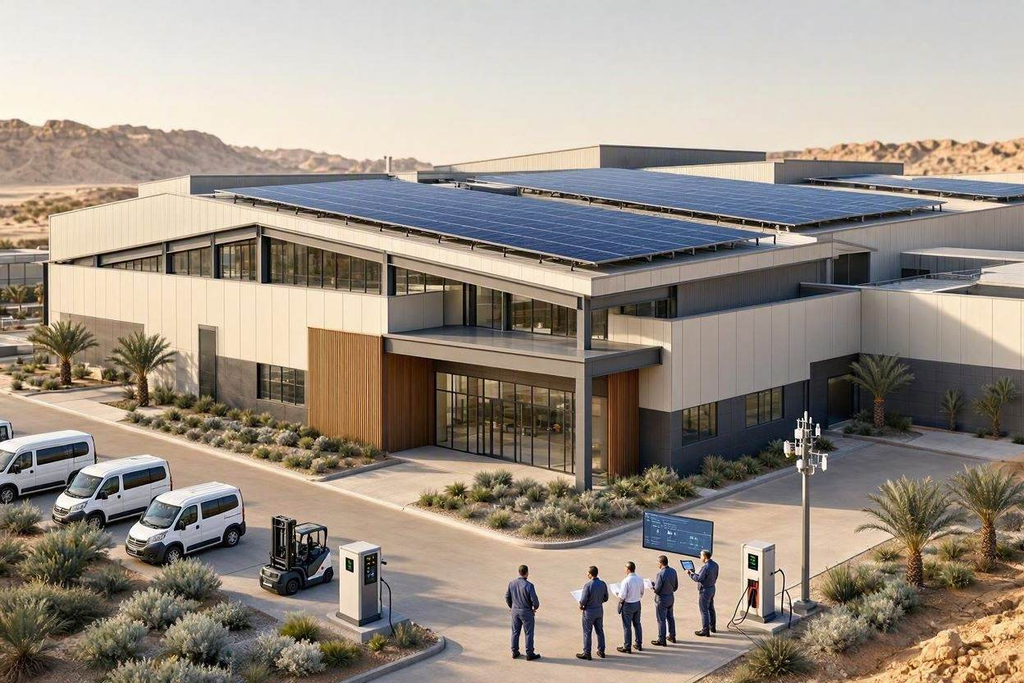
Materials That Work as Hard as the Facility Itself
Physical priorities are where sustainability meets daily overall performance, and business environments are awkward on both sides. Corrosive chemicals, regular temperature fluctuations, and heavy mechanical conditions require materials that will not degrade under stress. Therefore, cooperation with official Stainless Steel Manufacturers is heavily dependent on central food processing, prescribed medicine, or chemical storage.
- Corrosion-resistant alloys suitable for specific working contacts
- Sanitary surfaces simplify hygiene and compliance.
- Long service life that reduces replacement cycles and maintenance cycles
Beyond raw energy, choosing the right fabric also has an impact on electrical performance. Reflective roofs, insulated panel structures, and low-protection cladding are all part of the HVAC system.
Unsupervised Coordination of Complexity
Large plant builds have dozens of variable elements: subcontractors, timelines, maintenance audits, and procurement schedules that allow them all want to align. Without disciplined oversight, even a well-planned operation can lead to delays and overruns. This is where experienced Construction Management Companies earn their worth, holding each piece accountable to a unique plan. If you explore this topic this way, you might occasionally phrase the problem as “building smarter industrial plants through innovative engineering and sustainable construction practices,” an almost extra-accurate description of what modern plant construction plans truly entail.
- Focused scheduling that works with project objectives and continues business
- Transparent monitoring of price ranges to catch overages before they escalate
- Risk management protocols that proactively cope with protection and compliance
Strong coordination doesn’t just protect timelines; it is rather satisfactory. When every deputy understands how their job fits into the larger scheme, fewer mistakes slip through, and rework, one of the biggest hidden production costs, drops drastically.
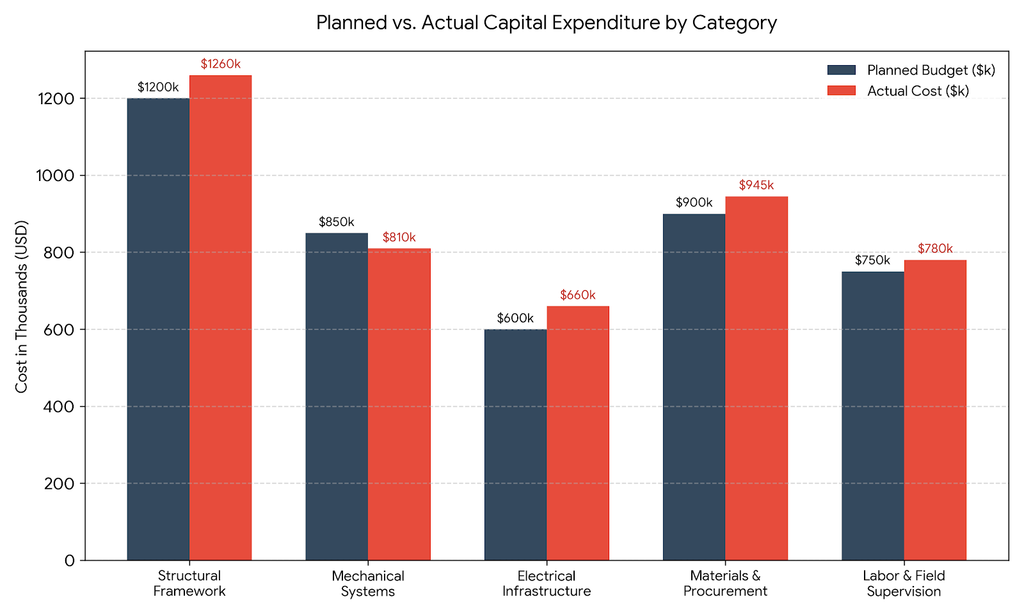
| Cost Category | Baseline Planned Budget | Final Actual Cost | Calculation Formula | Dollar Variance | Percentage Impact | Financial Status |
| Structural Framework | $1,200,000 | $1,260,000 | $1,260,000 − $1,200,000 | +$60,000 | +5.00% | Over Budget |
| Mechanical Systems | $850,000 | $810,000 | $810,000 − $850,000 | −$40,000 | −4.71% | Under Budget |
| Electrical Infrastructure | $600,000 | $660,000 | $660,000 − $600,000 | +$60,000 | +10.00% | Highest % Overrun |
| Materials & Procurement | $900,000 | $945,000 | $945,000 − $900,000 | +$45,000 | +5.00% | Over Budget |
| Labor & On-Site Workforce | $750,000 | $780,000 | $780,000 − $750,000 | +$30,000 | +4.00% | Over Budget |
| Total Project Capital | $4,300,000 | $4,455,000 | $4,455,000 − $4,300,000 | +$155,000 | +3.60% | Net Cost Overrun |
Designing for Energy and Environmental Efficiency
Sustainability in commercial design has gone from a nice-to-have necessity to a core design requirement. Facility owners have greater performance not only in rectangular drawings but also in electrical strength in accordance with the unit produced. Smart design choices made at the blue stage can shake off years of payback gaps in performance investments.
- Daylight tips that cut daylight installations by hundreds
- Rainwater harvesting and greywater recycling system
- Online renewable energy generation, from rooftop solar to waste heat recovery
These systems do quality work when they can be planned en masse with a preference for bolting one after another. A facility engineered with efficiency in mind from the start tends to perform better than one where sustainability capabilities were brought in as an afterthought, each one at a cost and with reliability.
| Energy Initiative | Current Annual Utility Expense | Target Reduction Rate | Breakdown Calculation | Expected Annual Savings |
| Smart HVAC System Upgrade | $120,000 | 18% | $120,000 × 0.18 | $21,600 |
| LED Lighting & Daylighting Controls | $75,000 | 25% | $75,000 × 0.25 | $18,750 |
| Rooftop Solar Installation | $150,000 | 20% | $150,000 × 0.20 | $30,000 |
| Waste-Heat Recovery Loop | $90,000 | 12% | $90,000 × 0.12 | $10,800 |
| Overall Facility Portfolio | $435,000 | 18.66% effective | $435,000 × 18.66% | $81,150 / year |
Technology as the Backbone of Smarter Operations
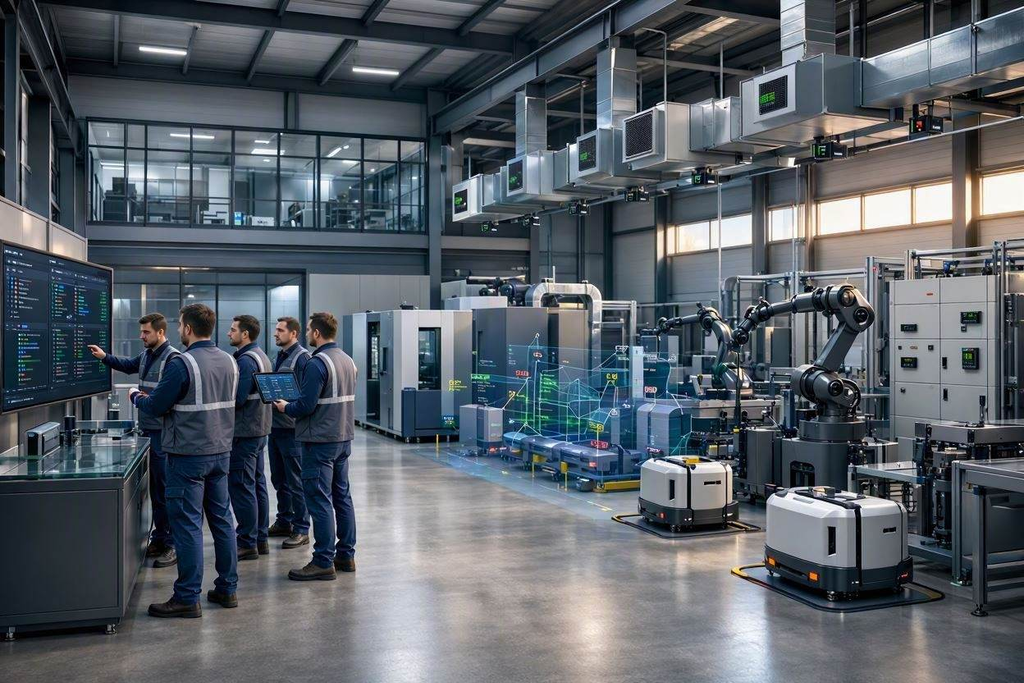
Modern business conveniences increasingly run on statistics in the form of favorable deals in the form of energy. Sensors embedded in structures, HVAC systems, and construction lines provide real-time information that allows operators to catch problems before they escalate into redundant failures. This shift towards connected infrastructure is transforming how facilities are designed, built, and maintained.
- Forecasting innovation systems that already flag problems with smart devices
- Creation of control systems that optimize power consumption for robots
- Digital Twins Simulating Changes Before Cluster Deployment
Its advantage is not always just operational efficiency; flexibility is. A facility with robust digital monitoring can respond to disruptions, whether delivery chain hiccups or equipment failures, much faster than simply calculating manual estimates.
Final Thoughts
Smarter industries are not created out of danger; They are products of deliberate choices made at every stage, from the initial site survey to the very last investment process. Engineering, fabric integrity, coordinated leadership, and a true commitment to sustainability should all be depicted together to facilitate the owners’ execution of a path they have counted on for decades to return. As industries evolve, the centers that stay ahead of the curve need to be built from day one and designed with adaptability and efficiency, not brought in occasionally as an afterthought.
FAQs
1. What makes a business smarter than just automation?
A smart plant integrates efficient design, long-lasting materials, and associated structures so that power consumption, maintenance, and production of all images are in bulk as opposed to being collectively isolated.
2. How early should sustainability design planning begin in a business project?
Probably in concept and on a site-start platform, considering that it is often more costly to retrofit energy and water structures later than to design them from the beginning.
3. Why does material selection matter so much, especially for commercial buildings?
Industrial environments are exposed to chemicals, heavy-load substances, and temperature extremes, which are rarely encountered in everyday commercial households, so sustainability immediately affects the long-term work values.
4. What role does construction management play in keeping major initiatives on budget?
Strong controls coordinate trades, monitor spending in real-time, and catch hazards early, which prevents small delays and errors that typically snowball into major breaches.
5. Can older industrial facilities be upgraded with these smarter design principles?
Yes, many of the efficiency and timing improvements, such as improved detection, sensor-based total tracking, and renewable energy improvements, can be reinstalled, although going back to the intended configuration is usually slower than the initial configuration.