Exposed meets Chum, the signwriter and muralist keeping traditional hand-painted craftsmanship alive in Sheffield.
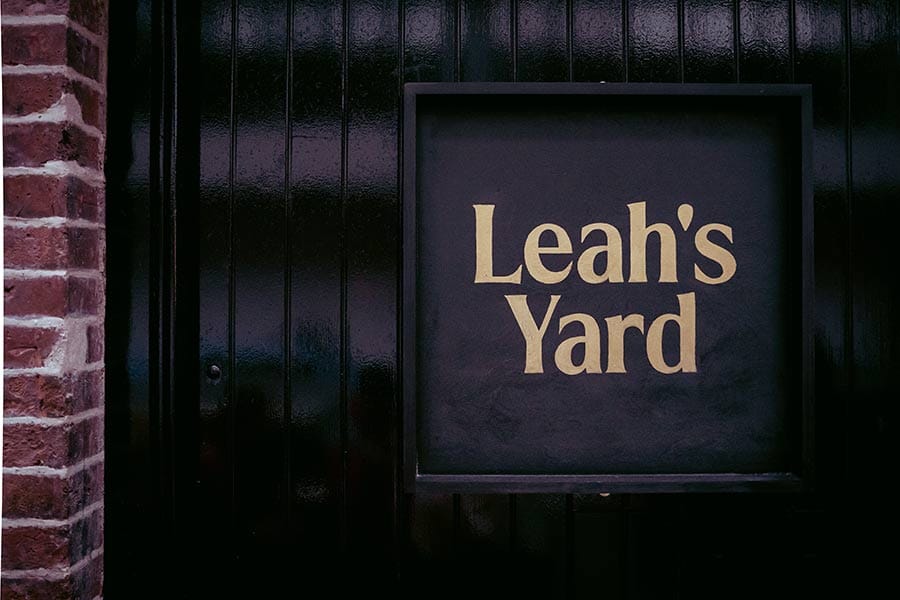
If you’re kicking back in a city centre watering hole and spot an eye-catching mural splashed across the side of the building or wrapped around its beer garden, there’s a fair chance Alex ‘Chum’ Thompson had something to do with it. The same goes for some of the distinctive lettering and signage found at local favourites like Leah’s Yard, Park Hill and The Fat Cat.
From shopfronts to menu boards, Chum’s paint-splattered fingerprints are all over central Sheffield right now, so we thought it was about time we grabbed him for a chat about his work and why, in a world increasingly filled with drab AI-generated design, he’s flying the flag for doing things the traditional way.
For Alex, now the founder of Chum’s Sign & Mural Co, it all began in the skate parks. Spending many of his younger years at The House in Neepsend, he was surrounded by graffiti culture from an early age. “I was always drawing from being a kid,” he tells Exposed. “Then growing up in that skating scene, graffiti’s just interlinked with it all. It had a huge impact.”
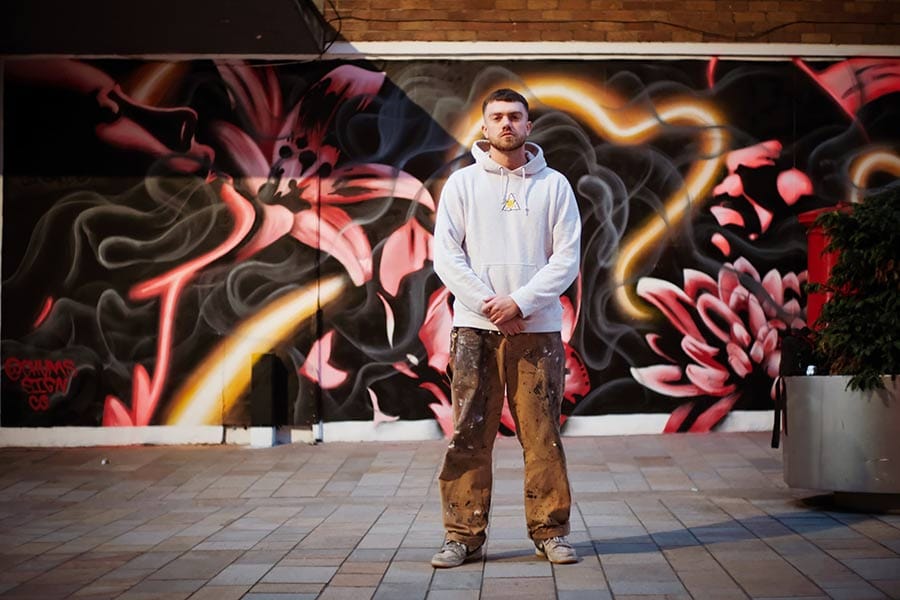
Alex in front of his mural on The Moor.
One of his earliest inspirations was celebrated street artist Phlegm, who back then worked at The House, and whose sprawling monochrome murals have become famous across the globe. Alex’s mum would buy him the artist’s homemade comics as a youngster (perhaps unwise given some of the more adult themes) and that exposure to striking, otherworldly illustration eventually pushed him towards studying art and graphic design, though the reality of sitting behind a screen quickly lost its appeal.
“I was still interested in it, I just didn’t like doing everything from behind a computer,” he explains. “I liked the physical activity of being out and painting.”
Alex later dropped out of university and began working in Sheffield bars – a move that accidentally set him on the path towards signwriting. While working at The Great Gatsby, he was asked to create chalkboards and signage for the venue and gladly seized the opportunity to get creative.
At the time, Alex was still painting graffiti and experimenting with lettering styles in his spare time, so transferring those skills came naturally. Before long, word spread across the city’s hospitality scene, and he found himself creating boards and signs for a number of different venues.
You’ve probably come across some of his work in Sheffield city centre.
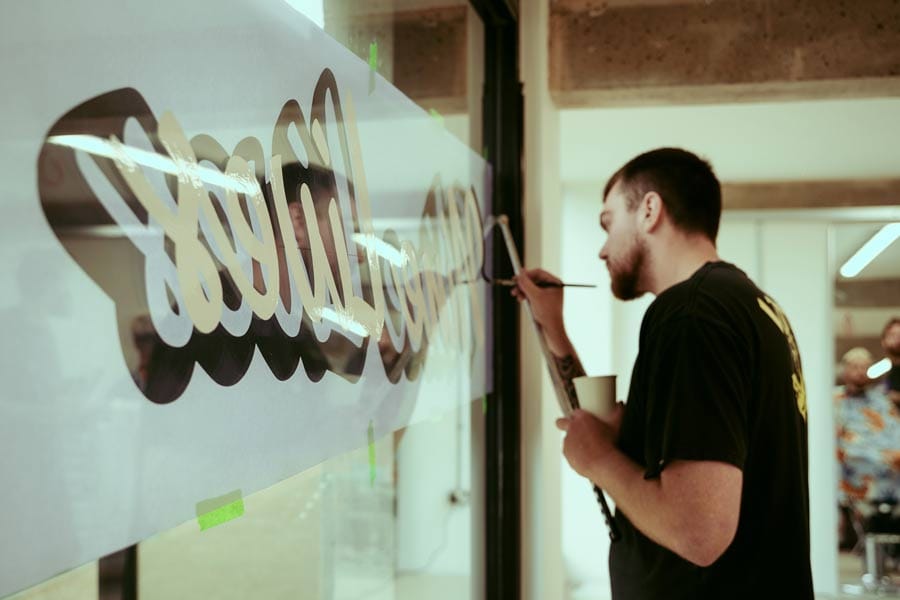
He now specialises in traditional hand-painted signwriting – a craft he’s deeply passionate about preserving. While vinyl signage and digital printing may be quicker and cheaper, he believes they lack the character and individuality that only come from paint applied by hand.
“There’s almost a beauty in the imperfections. You can see someone’s spent time on it. It’s got that human touch to it, which gives it something that a machine can’t.”
It’s a philosophy that feels especially relevant now, with AI-generated visuals and briefs becoming part of everyday design culture. Alex admits the rise of artificial intelligence within creative industries worries him – not because it can replace human creativity entirely, but because it risks flattening originality and undervaluing skilled craftsmanship.
“I’ll have clients now who generate something on AI and then ask me to paint it,” he says. “Then I have to try and explain why it doesn’t work as an actual sign or mural.”
For him, good signwriting is about more than simply producing an attractive image. It’s about understanding buildings, heritage and atmosphere.
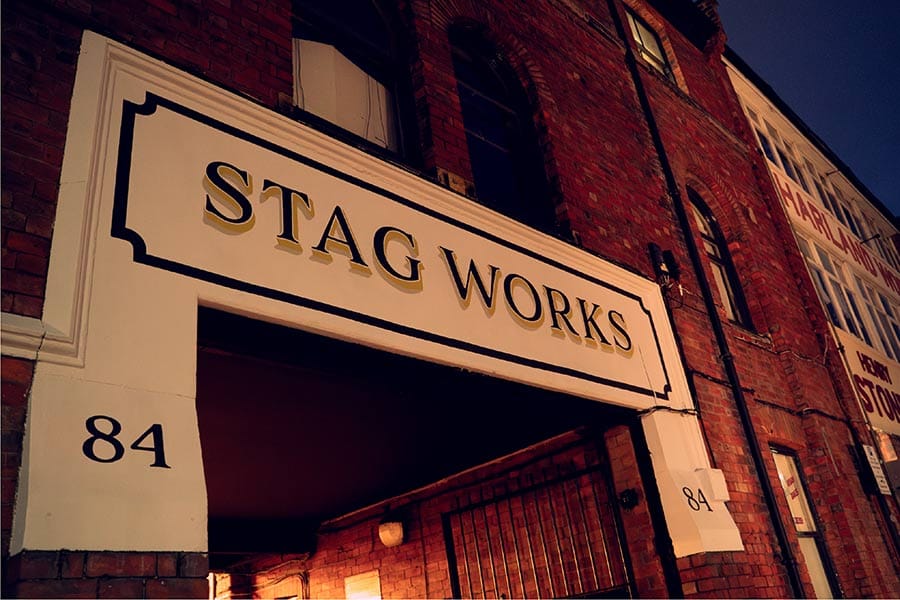
Look no further than the restored signage at the Grade II listed Stag Works on John Street. The building previously had a generic modern sign bolted onto its façade, but Alex replaced it with hand-painted lettering more in keeping with the site’s industrial history.
John Street’s Stag Works following the Chum’s Signs Co treatment.
“That’s probably the job I’m most proud of. It was nice to restore it back to what it should have looked like,” he says. “You can make things feel modern while still respecting the history. We’ve got so much history here in England – old buildings with real heritage, and I think it’s important to try and preserve that.”
Recently, he’s also been pushing harder to develop his own mural style rather than purely focusing on client commissions. A big step in that direction came with a large-scale artwork on The Moor, completed as part of a community project. Unlike many commissioned jobs, this one gave him creative freedom and the ability to flex his painting muscles.
“That was the first proper commission where I had free rein to do whatever I wanted. The dream would be to eventually just paint what I want to paint – that’s the goal. But I feel blessed to paint for a living regardless.”
“There’s almost a beauty in the imperfections… it’s got that human touch to it, which gives it something that a machine can’t.”
The wider future of street art in Sheffield looks bright. Between independent festivals, community mural projects and growing support for local artists coming from key decision-makers, Alex believes the city is beginning to embrace the role public art can play in transforming urban spaces.
“There’s definitely more happening. The amount of work going up recently has been phenomenal, and I think we’re starting to see a realisation of what street art can bring to a city. It can bring people in and improve a space hugely.”
And while trends, software and AI tools continue to reshape the creative industries, he remains adamant there’s no substitute for paint applied by hand. “For business owners, it shows you care. Real thought has gone into it, there are humans behind it and it’ll last longer. Vinyl cracks and falls off, but paint stands the test of time.”