Set entirely in a Sheffield living room, award-winning playwright Leo Butler’s ambitious new drama charts half a century of change – and brings it to the Tanya Moiseiwitsch Playhouse this month.
When I catch up with Leo Butler over Zoom, he’s in what he calls the ‘working shed’ – a small garden hideaway at his south-east London home. “I’ve got a record player in here, books and guitar, you know?” he says, the cigarette in hand and slightly ruffled hair entirely on brand with what you might expect from a playwright. “I’ve actually just been working on a few bits of the script to send through to the publisher.”
Leo may now be based in the capital, but Sheffield is never too far away. This month, he returns home with Living, a new state-of-the-nation drama opening at the Tanya Moiseiwitsch Playhouse as part of Sheffield Theatres’ spring season.
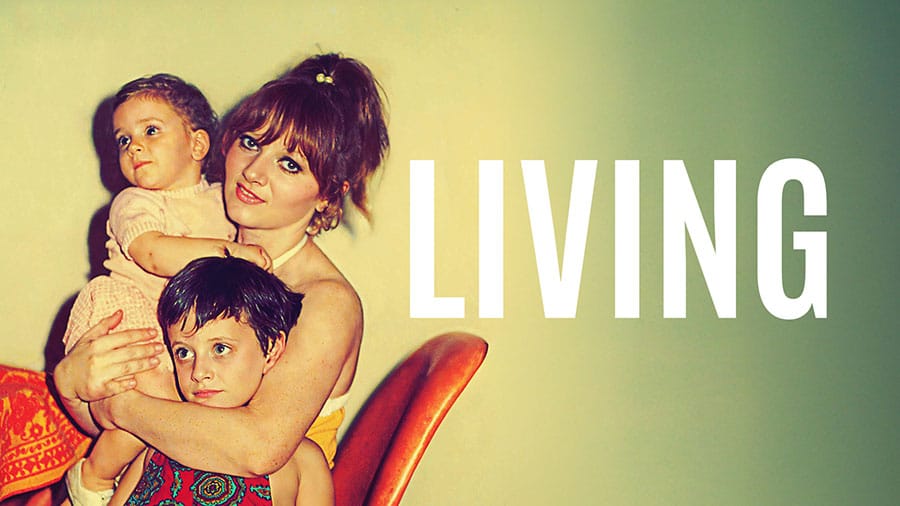
The vision for the play was sparked during a visit to his family home on Burngreave Road, where the Butler parents moved in the early 70s and where Leo grew up through the following three decades. “I was just sat in the living room with my parents and brother and our kids – nothing exciting was happening,” he recalls. “And then I just looked around the room and thought, God, all this – three different generations of people. All the different experiences, not just family experiences, personal experiences – and then the wider changes in the world, everything.”
Then came something of an eureka moment. “The idea was: wouldn’t it be great to have a play that was all set in the one room, like the one I’m sat in? You didn’t move, you didn’t leave.” With a framework in place, the concept grew bolder: “At some point, I thought, what if you had a scene for every single year from 1969 to the present day? I thought that would be a play I’d like to see, and in the writing of it, I could see what I discovered for myself.”
The result is an ambitious sweep through more than half a century of change – 55 years in 55 scenes – without ever leaving the same household, as history unfolds outside its four walls. “But it’s not a political collage,” he is keen to stress. “It’s a family story primarily. And then the politics comes after that.”
Still, political affairs – both domestic and nationwide – pulse through the play’s DNA. Debates around entering the Common Market echo alongside Brexit. The Vietnam War sits in uneasy conversation with the invasion of Iraq.
Yet amid the repeated conflict, there are glimmers of hope that feel pointedly contemporary. “We’ve been in volatile places before. It’s easy to forget that. And by remembering that, you realise what’s important. It’s the people in your life – whether that’s family or friends – no matter how many differences of opinion. At the base of things, if we look after and take care of each other, we can get through it.”
Living is based in Pitsmoor and Burngreave – areas Leo feels have not often been centred on Sheffield stages. “I’ve personally not seen anything that’s really rooted in that area and the diversity of that area,” he says. “Pitsmoor’s had a rough ride in terms of its reputation, but the community feels so strong. People band together and are proud of where they are from.”
While the play draws deeply on his own upbringing – “it started from a very personal place” – it isn’t a strict memoir. “There are elements of my own experience in lots of the character, but it’s not explicitly autobiographical. There’s always an element of personal experience, research and imagination involved.”
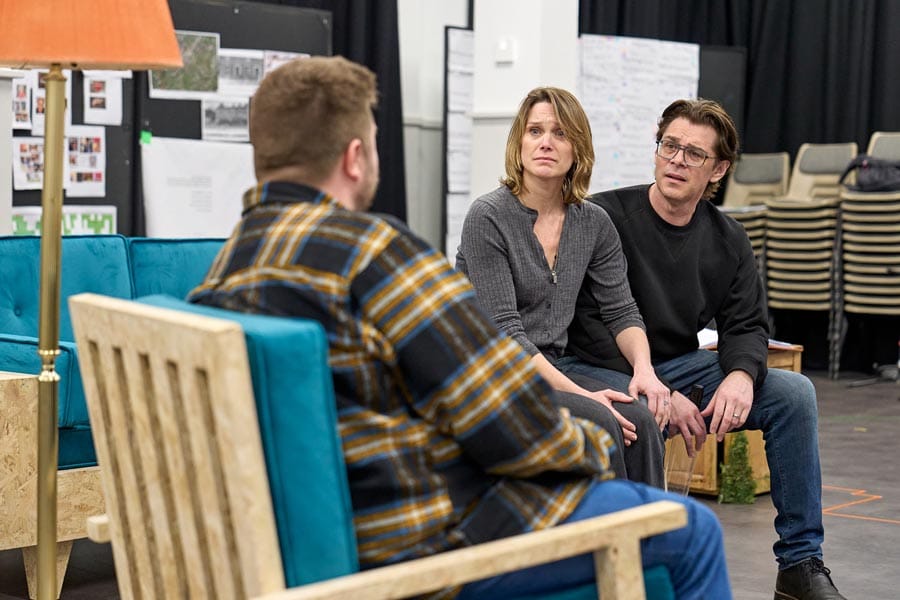
Technically, Living is as intricate as it is expansive. With a cast of eight playing multiple roles across five decades, the logistics were formidable. “There’s never a blackout. The scenes just sort of drop into each other,” he explains. “Sometimes there are scenes where eight characters are on stage, all talking at the same time. It’s like writing a dance, but we’ve got a great director in Abigail Graham and an absolutely fantastic cast.”
He says that bringing the play home feels both surreal and timely – it comes a neat 25 years after his debut, Redundant, another Sheffield-set work that premiered at the Royal Court Theatre. Butler grew up watching shows at the Crucible and performing at the Playhouse with Sheffield Youth Theatre, and reaching this point feels significant. “It’s magic,” he says of this milestone. “It’s always been a big ambition of mine to have something produced in my hometown and put it in front of audiences because – without it sounding eggy – they’re kind of my people.”
I just looked around the room and thought, God, all this – three different generations of people. All the different experiences, not just family experiences, personal experiences – and then the wider changes in the world, everything.”
The hope is that Living will move and unsettle in equal measure. More than anything, he wants audiences to find something that resonates, even if the play resists tidy conclusions. “It doesn’t necessarily leave you with easy answers. There are a lot of questions about where we’re going.”
And for any emerging local writers looking on? The advice is direct: “Be fearless and be bold. Don’t write the thing that you think people want to see. Just write the thing that you want to see… life is too short. Just get it on the page now. Your experience and your thoughts and your imagination are as valuable as anybody’s.”
Living runs at Tanya Moiseiwitsch Playhouse, 14 Mar-4 Apr. Tickets and more info here.