Conor Rogers’ studio at Bloc Projects is exactly the sort of place you’d hope to find the proudly working-class, Sheffield-based artist creating in. Dominating one wall is an oversized frame made from pebble dash, its centre deliberately left blank as he waits for the right idea to land. Opposite, monumental depictions of maisonette balconies hang on sheets of painstakingly layered Rizla paper, their flimsy surfaces at odds with the hard-edged architecture portrayed. On the edges of the room, scraps of smaller works and myriad painting materials spill across tables.
Conor has worked from Bloc since 2020, moving into a larger studio a couple of years ago after outgrowing his original space. The extra room has allowed his practice to shift beyond painting into increasingly ambitious work, while providing the distance needed to live with a piece in the periphery before deciding what’s needed next.
“As I’ve got this space, the work’s got bigger, more challenging, more sculptural,” he explains. “That’s the main reason I wanted somewhere larger – to see where the work can go.”
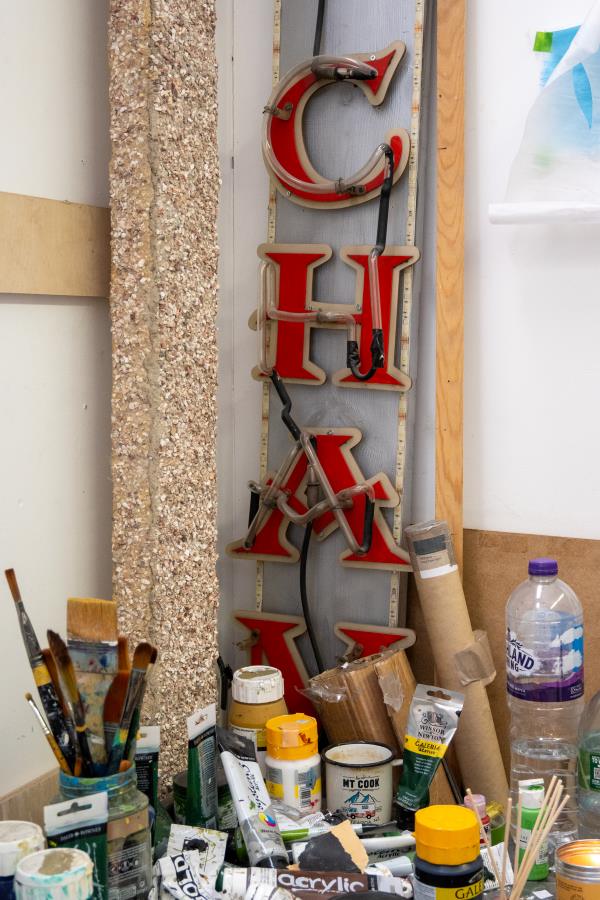
His multidisciplinary practice combines painting, sculpture and poetry to tell stories rooted in lived experience, often using everyday spaces and rituals as a way to explore class and identity in modern-day Britain.
A current body of work being compiled pushes that idea further. Council estate settings are reimagined through allegory and ancient myth, with one piece asking what Icarus’ balcony might look like if he lived in a flat on Winn Gardens. It’s a recurring theme of his practice: taking environments often dismissed as unsightly or unremarkable and gently uncovering the beauty within.
“I’m trying to rewrite narratives around these spaces, capture the poetry in them and give a sense of reverence to places that are often unrevered,” he says. “Why can’t the everyday be revered too?”
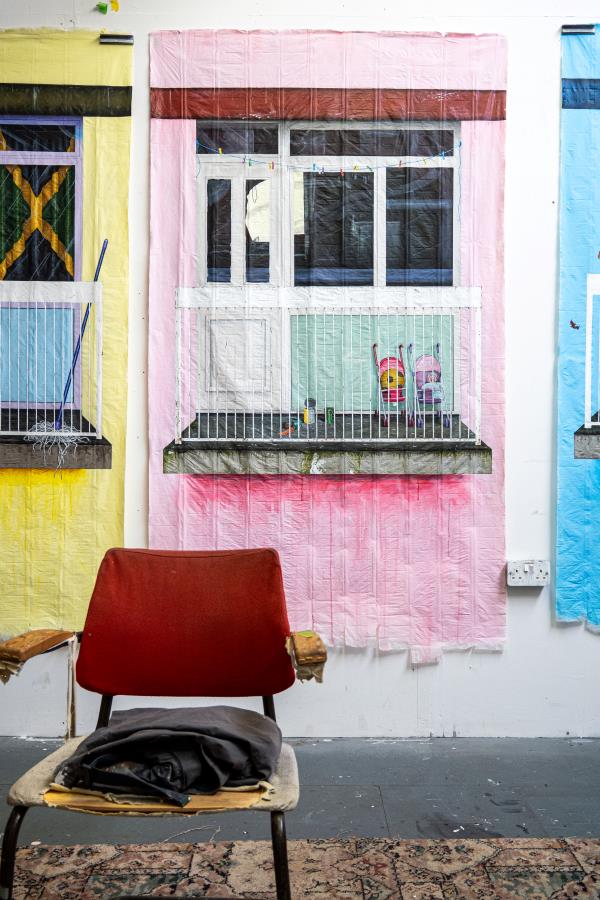
A sketchbook on a corner table is steadily filled with random thoughts, overheard conversations and fragments of ideas. Inspiration arrives from anywhere: a walk around the city, old BBC documentaries or even the triggered memory of an old friend can all spark something worth jotting down.
“Once I’m in a project, you become extremely observant. I’m always looking at the objects outside people’s homes or taking bits from conversations I’m having. As an artist, you’re engaging with your surroundings all the time.”
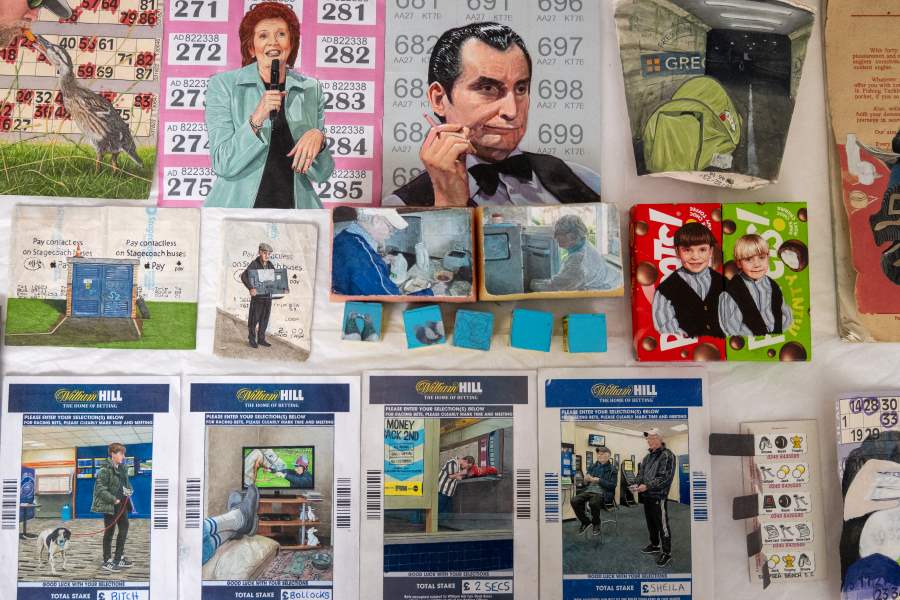
Rather than keeping the creative process hidden away, Conor regularly likes to welcome collectors and visitors into the space, offering the chance to see work in progress and understand how it develops. It strips away some of the distance that can exist between artist and audience, replacing it with conversation and personal connection.
Like many artists, he balances his practice with a part-time job to fund his studio, often spending 10 or 12 hours in the studio on the days he has free. The schedule can be relentless and frustrating at times, but he knows the danger of staying away too long.
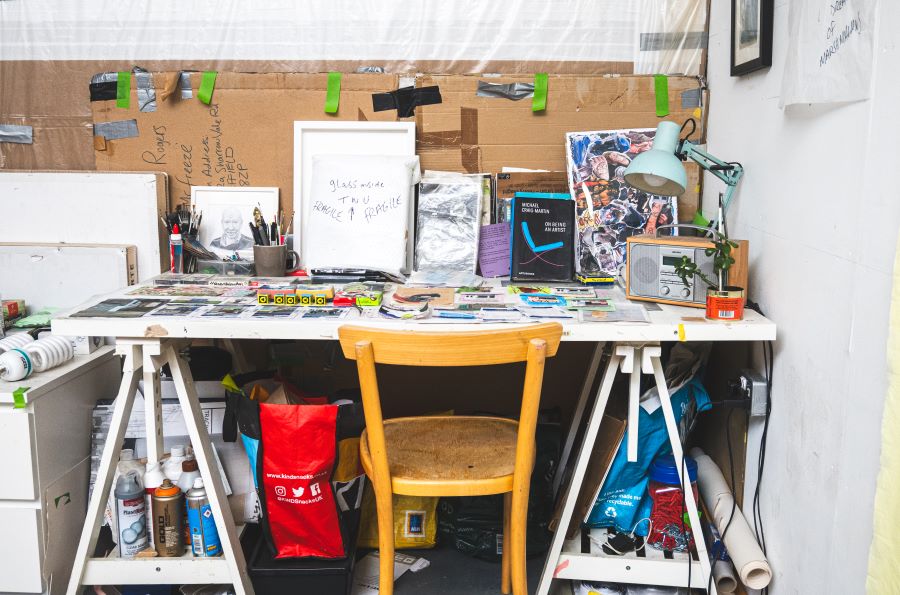
“As soon as you’re in here, you know you’re building on what you need to be doing. You’re keeping momentum going. One of the worst things is that sense of absence – knowing you should be here, creating, and not being in. That’s not a feeling I enjoy at all.”