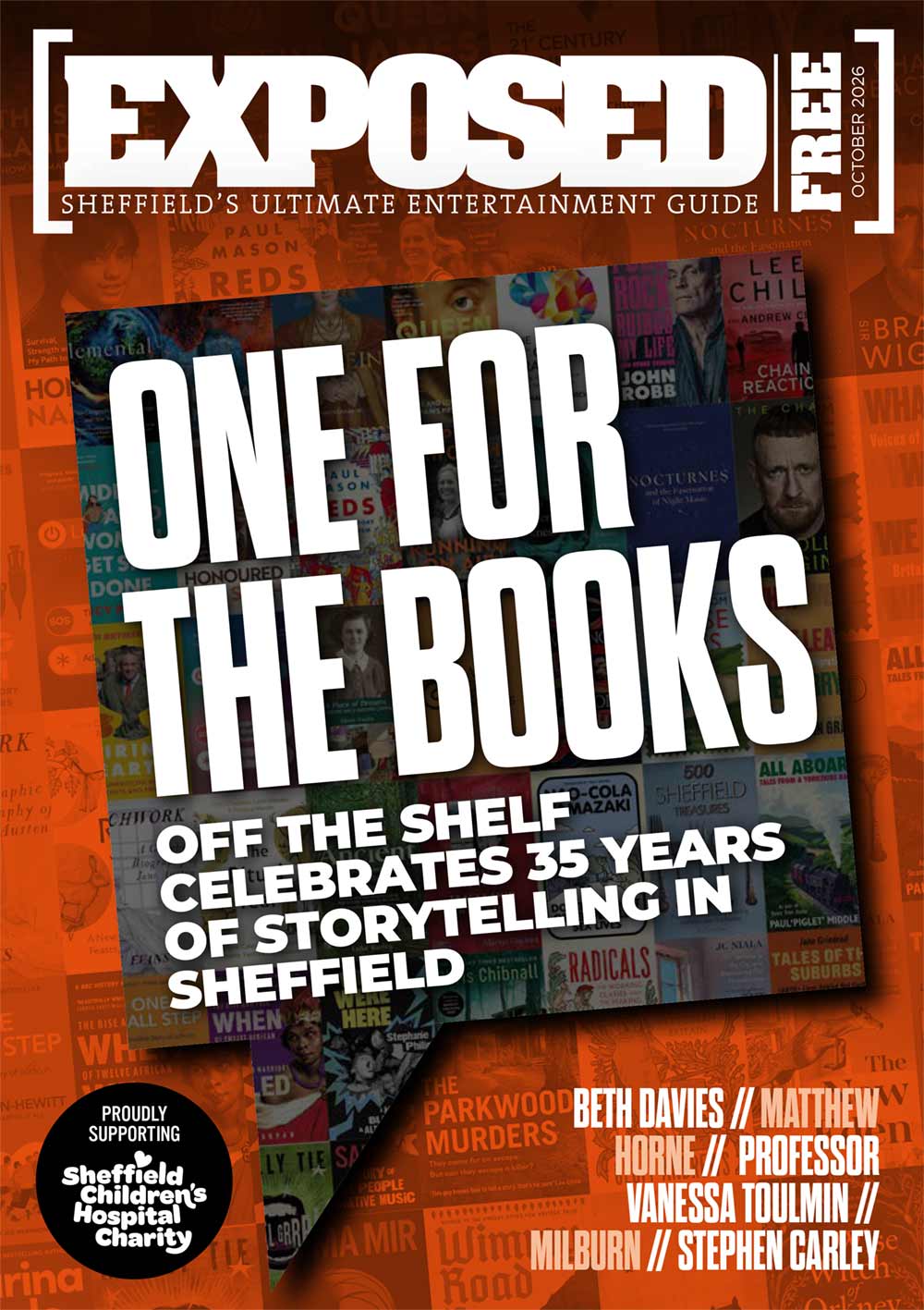
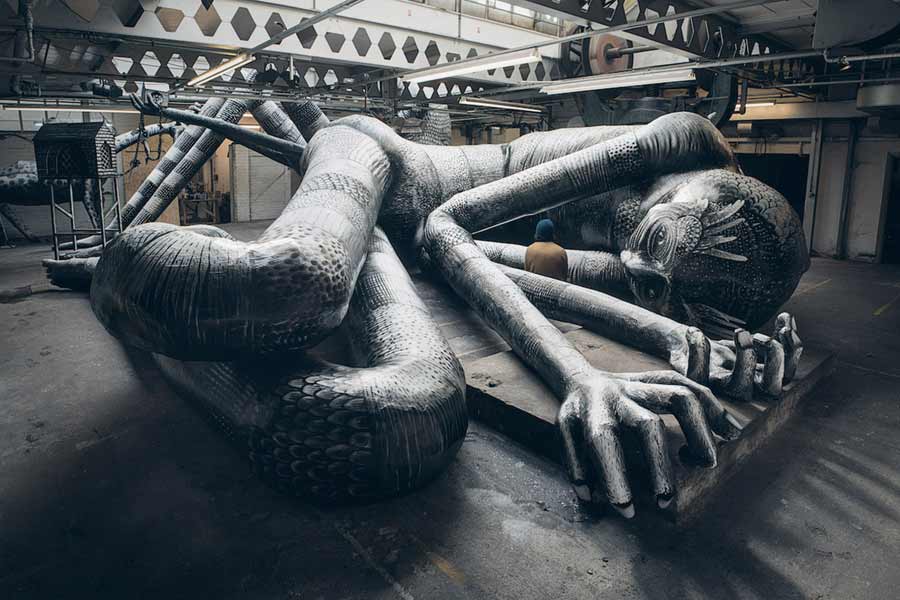
Professor Vanessa Toulmin has been behind some of Sheffield’s most ambitious cultural projects, from Festival of the Mind to Phlegm’s Mausoleum of the Giants. But another significant part of her contribution to the city has been helping secure the future of Off the Shelf – a festival she is now preparing to step back from after almost a decade at the helm.
The University of Sheffield took over the festival in 2016, at a point when its future was far from certain. Almost a decade later, as Professor Vanessa steps back from the role, we spoke to her about saving Off the Shelf, building a programme that reflects the city, the economics of running a literary festival and why she’s comfortable handing it over to a new generation.
How did the University of Sheffield end up taking on Off the Shelf?
In 2016, I was chair of the Sheffield Culture Consortium. Through my role, I was talking to directors at the council and Off the Shelf was going basically to be cut because it wasn’t making money. The festival had been going since 1991, so it wasn’t even going to reach its 25th anniversary.
We were already one of the sponsors, and ourselves and initially Sheffield Hallam put the money forward to keep it running.
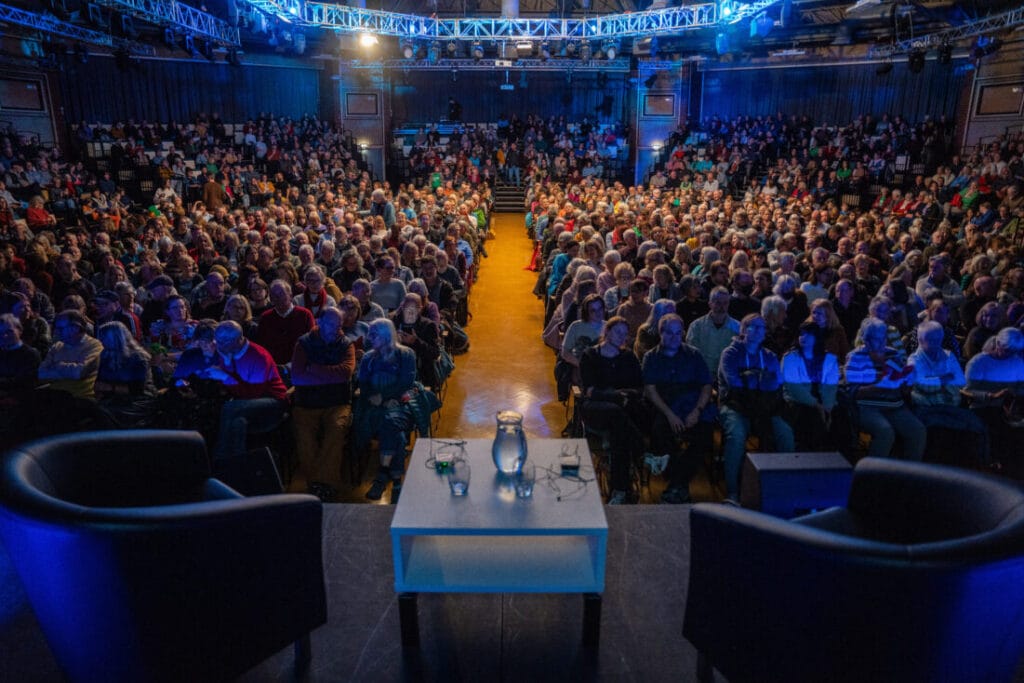
Was the initial goal simply to save it, or did you already have ideas about how it could change?
We had a two-year transition where we subsidised it and worked with the team. I knew we could expand it, but I think it had lost direction a little. It had been overtaken by other festivals and the curatorial aspect, the expertise of the team, had been lost or forgotten. What I wanted to give them back was that authority.
We put together a very rational business plan for the university, not just about money but about how it fitted with what a university does. For me, it was a no-brainer: the greatest fit for a literature festival is a university. It’s a natural fit.
Having Sheffield Hallam’s support in those first years was really important too. It gave us time to shape it, change it, increase revenue and increase the box office, but also ask: what really works in Sheffield?
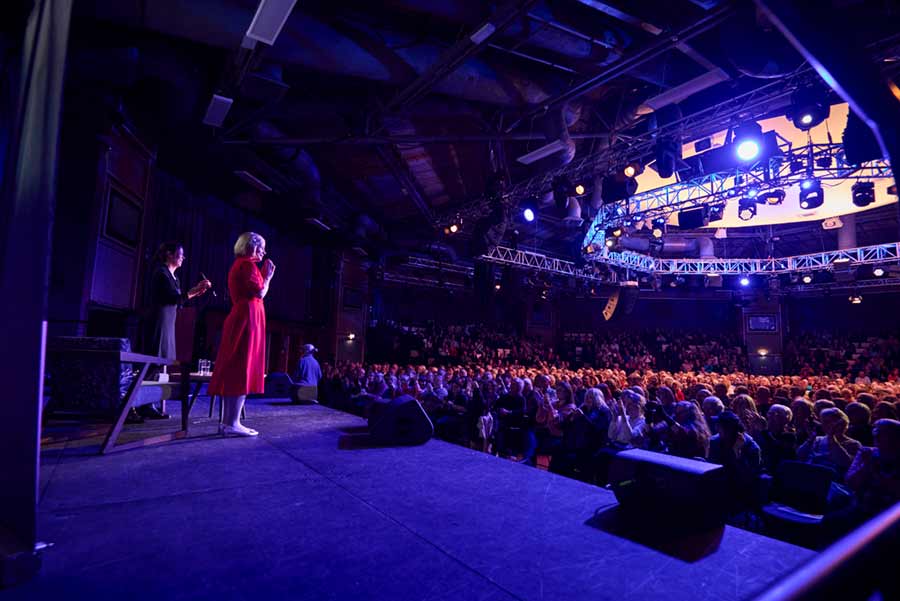
Looking back, what are you proudest of?
Widening the scope of people who come to it. I’m really proud of giving a voice to younger curators and people from diverse backgrounds.
We’ve had local authors like Akeem Balogun, who started as a volunteer and ended up programming, then showcasing his own book at the festival.
My plan from the very start was to increase the diversity of the audience, but also the speakers and presenters. Getting to around 35% diversity across different protected characteristics was really important to me. It had to be a festival that reflects Sheffield and we are a very diverse community.
Then there’s SlamBarz, which is really important, and Hive Young Writers. We worked with [Lord Mayor] Majid when Sheffield’s first Poet Laureate was named and that role is now associated with the festival.
One year we had Sheffield Poet Laureate Warda Yassin on the same platform as UK Poet Laureate Simon Armitage. How great is that?
So I’m really proud of the opportunities created for young people and young artists in Sheffield.
At the same time, you have your Lucy Worsleys, Marina Hydes and Chris Packhams regularly in attendance. How important are those bigger names?
You need both. The big names are a business decision because they subsidise other things. But they also have to reflect Sheffield.
You can’t programme a festival based only on what you personally like because what you like isn’t necessarily going to attract an audience.
Chris Packham, for example, chose Sheffield because he loves Sheffield. The likes of Lucy Worsley, Marina Hyde and Chris Packham are names people want to see and we’re proud of bringing them here too.
Off the Shelf is one of the oldest festivals in the country and has an amazing reputation with publishers. One of the reasons Hachette came to Sheffield is because of Off the Shelf. I think we’d forgotten how important the festival was outside Sheffield and wanted to restore that pride.
The way people consume books and engage with authors has changed enormously over the last decade. Have the principles behind Off the Shelf changed?
The core principles are there, whatever changes. They are a love of books, a love of words, a love of literature and inclusivity in arts and the creative industries.
The barriers are getting harder, though. Every year I try to keep the prices cheap. When Jeremy Deller was here with Jarvis Cocker, that event cost £15. When he was in Manchester on his own, it was £25. We try to keep it affordable for people, but it’s a challenge.
There’s also a particularly Sheffield flavour to parts of the programme. Is that deliberate?
Definitely. How many other festivals would do a history of brass bands? That’s very Sheffield, isn’t it?
The funny thing was that the publishers pitched that book to us, but they didn’t necessarily associate brass bands with Sheffield in the same way they would with West Yorkshire. But what about Brassed Off?! Those local threads are important.
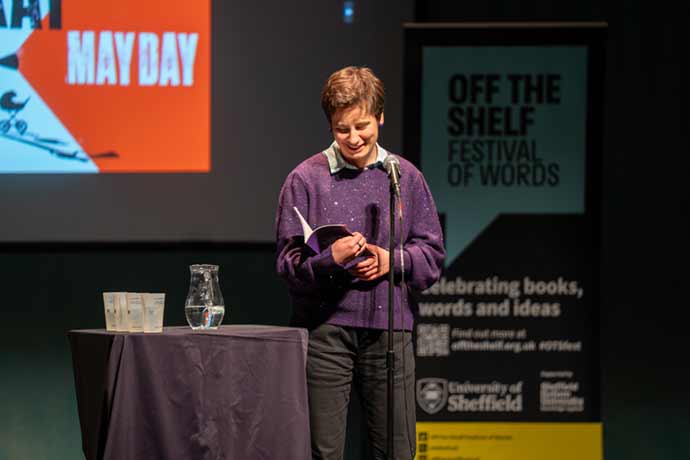
How does the programming process actually work? Are you looking at what’s topical and building from there?
You work with the publishers. We go down to London and have three days with them where they pitch to us – then we pitch back.
We go as a team and divide the publishers between us. You get the autumn catalogue, the winter catalogue, the spring catalogue, whatever is coming out, and they’ll say, ‘We’d like them at Off the Shelf because of X, Y and Z.’
It gives you an understanding of how much the publishers rate Off the Shelf. All the big publishers are involved.
We also pay authors a fee. A lot of festivals don’t.
So you’ll try to do things differently. With somebody like Lucy Worsley, rather than getting the standard talk she might do elsewhere, we commissioned her to do something around Bolsover Castle because it’s local.
Or there’s Susan Tomes, an international pianist who has written a book about sleep called Nocturnes. I said we’d choose her if she would come and play as part of it, because we’ve got a Steinway piano.
You’ve produced countless cultural events in Sheffield over the years, but the ones you’re perhaps most associated with are Off the Shelf, Festival of the Mind and Phlegm’s Mausoleum of the Giants. Is there a common thread between them?
Yes, because I’m a producer and each of them is about letting the artist speak. With Festival of the Mind, let the academic speak. With Off the Shelf, give authors a platform where they are comfortable and in control, then produce it.
I would never tell an academic or an artist what to say or do. I would just manage it. That’s my job as a producer.
The other festival I was really proud of was the street art festival I worked on in 2016, Feature Walls, with Kid Acne and Florence Blanchard. Again, they were the artists. I was the one who worked with the lovely late Sarah Nulty to schlepp around all the paint and all the ladders. I’m particularly proud of that, because a lot of that street art is still here.
Arts organisations have faced years of cuts and financial pressure. How do you keep a festival like Off the Shelf going?
Ultimately, Off the Shelf is funded by tickets and the university. We’ve also got a great relationship with Sheffield City Council, which supports our diverse programming and work around Black History Month.
But festivals are inherently vulnerable. Unless they’re huge multinational festivals, they need support.
If you don’t support Off the Shelf, you will lose it.
It also has to fit within the greater ecology of Sheffield rather than take over.
We’ve got brilliant festivals in this city and Off the Shelf has to coexist with them.
Being part of the festival network is something I’m really proud of too. I think that’s one of the best networks in Sheffield.
You’re stepping back now. After putting so much into it, are there mixed emotions about handing it over?
No, it’s not about one person; it’s about the structure you put in place so you can walk away. It needs different voices and different people.
The festival is strong enough now. The team is still the team and there’ll be new people joining, new people having ideas. The university will continue to support Off the Shelf, but it will be a different festival – not in a negative way, because it changes. It has to.
There’ll be different authors and different things. But I don’t think Sheffield will ever stop wanting history, politics, conservation, the environment, climbing, walking and running. You know what Sheffield audiences are interested in. That’s a big part of what’s so great about it.
What comes next once you’ve stepped away?
I’ve got a whole year of study leave and about five books to write. But I’ve also got a theatre to finish.
I’m chair of Morecambe Winter Gardens, which is a theatre I grew up around through the fairground. I’ve spent the last six years running it as a community theatre. We’ve won the King’s Award for Voluntary Service, have raised £5.2 million and we have 52 volunteers.
It first opened in 1897 and we’re in the middle of a £3.2 million redevelopment. We’ve restored the ceiling, the foyer, stained glass and the payboxes. Last year we had 50,000 people through the building.
I’m training young creatives there too. We’ve got 16 to 18-year-olds learning tech, sound and lighting who are now working with us.
So that’s where a lot of my creativity is going now. I’ve been working on it between everything else for years.
Now it’s time to do it.
Catch Professor Vanessa’s Tripping the Neon Fantastic on 25 October at Millenium Gallery, exploring the colourful, complicated history of neon – from Paris and LA to Sheffield and Wakefield. Tickets £12/£10.