Disclaimer: This article is not intended to be a recommendation. The author is not responsible for any resulting actions of the company during your trading experience. The information provided in this article may not be accurate or up-to-date. Any trading or financial decision you make is your sole responsibility, and you must not rely on any information provided here. We do not provide any warranties regarding the information on this website and are not responsible for any losses or damages incurred as a result of trading or investing.
The release of Counter-Strike 2 didn’t just upgrade gameplay and visuals – it reinforced one of the most complex and fascinating digital economies in gaming. Today, the CS2 skin economy rivals entire virtual marketplaces, with millions of transactions taking place every month. For players, traders, and collectors alike, understanding how this system works is the key to making smarter decisions, avoiding losses, and unlocking real opportunities.
Whether you’re casually swapping skins or actively trading for profit, learning how the CS2 skins market functions can dramatically improve your results. This guide breaks down the fundamentals of CS2 skin trading, explains what drives prices, and shares practical CS2 trading tips to help you succeed – including how to choose the best place to sell CS2 skins safely and efficiently.
What Is the CS2 Skin Economy?
At its core, the skin economy is a player-driven marketplace where cosmetic items gain value based on supply, demand, rarity, and perception. Unlike traditional in-game items that are locked to accounts, CS2 skins can be traded, sold, and collected across platforms, turning them into digital assets rather than simple cosmetics.
Every skin has characteristics that influence its position in the market. These include the weapon type, condition (float value), pattern index, rarity tier, and even cultural relevance. Over time, certain items become iconic, while others fade into obscurity. Understanding these dynamics is essential for navigating CS2 skin values effectively.
How CS2 Skin Values Are Determined
Unlike fixed-price items, CS2 skins fluctuate constantly. Prices move based on multiple factors working together rather than a single rule.
Scarcity is one of the most important elements. Skins from discontinued cases or collections naturally rise in value because no new supply enters the market. Demand plays an equally large role. A skin that looks great, appears frequently in professional matches, or gains popularity through social media can see rapid price growth.
Float value is another major influence. Two identical skins can differ dramatically in price depending on wear level. Factory New items often command a premium, while Battle-Scarred versions may be significantly cheaper despite sharing the same design.
Finally, timing matters. Major CS2 updates, esports tournaments, and case releases often cause short-term volatility across the CS2 skins market. Smart traders watch these moments closely.
Why CS2 Skin Trading Attracts So Many Players
Trading skins appeals to different types of players for different reasons. Some enjoy the thrill of flipping items for profit, others focus on long-term collecting, and many simply want to upgrade their inventory without spending additional money.
The appeal of skin trading lies in its accessibility. Unlike traditional investments, anyone can start with a small budget. Even inexpensive skins can be traded, upgraded, or combined into higher-value items over time.
At the same time, the market rewards knowledge. Players who understand trends, rarity, and timing tend to outperform those who trade impulsively, especially when deciding when to buy CS2 skins for long-term value rather than short-term hype. This balance between accessibility and strategy is what keeps the economy active and competitive.
Common Mistakes New Traders Make
Many beginners struggle not because the market is unfair, but because they rush decisions. One of the most common mistakes is chasing hype. When a skin suddenly spikes in popularity, prices are often already near their peak. Buying at that moment increases the risk of losses once interest cools down.
Another mistake is ignoring fees and liquidity. Some skins look profitable on paper but are difficult to resell quickly. Others lose value due to hidden marketplace fees that eat into margins. Understanding real-world resale conditions is crucial when evaluating CS2 skin values.
Finally, security mistakes can be costly. Falling for fake trade bots or phishing links remains one of the biggest risks in skin trading. Protecting your account is just as important as choosing the right items.
Proven CS2 Trading Tips for Long-Term Success
Successful traders tend to follow a few consistent principles rather than chasing quick wins. One key strategy is focusing on skins with stable demand. Items that are consistently popular may grow slowly, but they also carry less risk.
Another approach is diversification. Instead of investing heavily in a single item, spreading value across multiple skins reduces exposure to sudden price drops. Monitoring market data regularly also helps traders react before major shifts occur.
Perhaps the most important tip is patience. The best results in the skin economy often come from holding items over months rather than days. Long-term trends tend to reward disciplined traders.
How Skin.Land Fits into Successful Trading
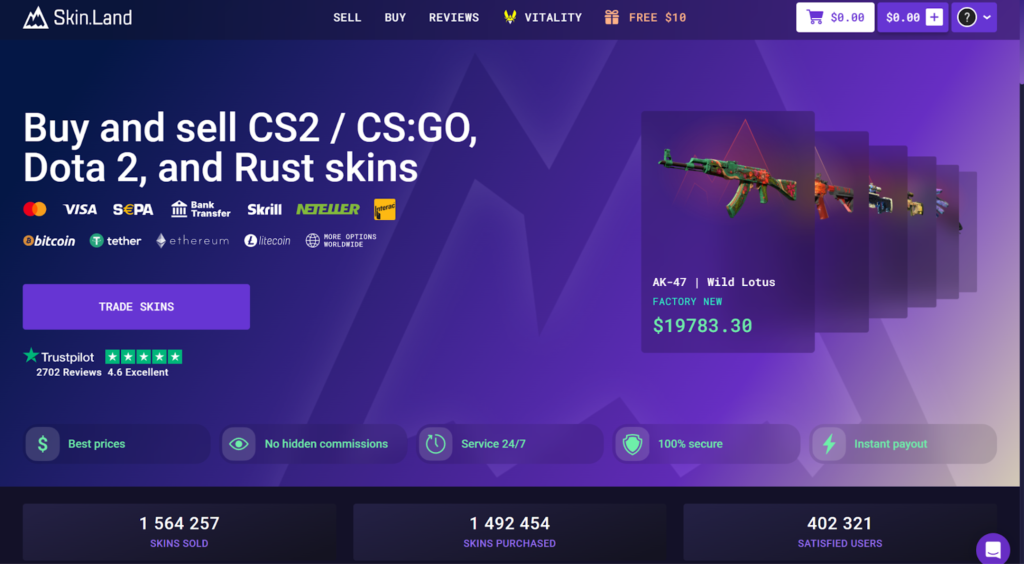
Navigating the CS2 marketplace efficiently requires reliable tools and secure platforms. This is where best CS2 skins site Skin.Land plays a valuable role for both new and experienced traders. The platform offers a streamlined environment where players can buy, sell, and manage skins with transparency and confidence.
Skin.Land provides real-time pricing data that reflects actual market conditions, helping users make informed decisions about CS2 skin trading. Its secure Steam integration reduces the risk of scams, while fast transactions eliminate unnecessary delays. For traders who want clarity, speed, and safety, Skin.Land simplifies participation in the CS2 skins market without adding complexity.
Whether you’re upgrading a loadout or adjusting your trading strategy, having a trusted marketplace makes a noticeable difference.
Understanding Market Cycles in CS2
Like any economy, the CS2 skin market moves in cycles. Prices often dip during large case releases or sales periods and rise when supply tightens or demand increases. Seasonal trends also play a role, with activity often increasing around major tournaments or updates.
Recognizing these cycles allows traders to buy during low points and sell during peaks. Over time, these small optimizations can significantly improve overall results. Tracking historical price data is one of the most underrated CS2 trading tips, yet it consistently separates casual traders from successful ones.
Are CS2 Skins a Long-Term Asset?
While skins should never replace traditional investments, many players treat them as alternative digital assets. Some skins have shown remarkable long-term growth, especially those tied to discontinued content or legendary designs.
However, the market is not guaranteed. Valve controls drop rates, cases, and game updates, meaning the ecosystem can change. The smartest traders understand that the skin economy rewards adaptability rather than blind confidence.