
An electric bike can seem like a good match for city life until you work out where to put it. The ride to work might be straightforward, but the final few metres involve a communal entrance, a tight turn and a staircase. Back inside, the space you imagined using is already occupied by shoes, bags and a drying rack.
Before buying an e-bike, look at the journey from the street to its storage place as carefully as the journey across town. How often will you lift it? Can you get through the doors without moving furniture? Is there a suitable place to keep and charge the battery? These questions can narrow the choice more usefully than a headline range figure.
A folding e-bike can reduce the space a bicycle occupies when it is parked. However, a smaller folded shape does not necessarily mean a lighter bike or an easier carry. For a small flat, the right choice depends on the available space, the route into the building and the handling you can comfortably repeat.
Measure the route from the street first
Start at the entrance you would use on an ordinary day. Measure the clear opening with the door in its normal position, including any obstruction from handles or a closer. Then follow the route to the proposed storage area. Look for narrow corners, steps, thresholds and doors that must be held open while you move the bike.
Check turns as well as door widths
A bicycle may fit through two doors individually but struggle with the turn between them. This matters in small entrance lobbies and on stair landings. Note where you would stand, how you would turn the bike and whether a pedal or handlebar would catch. Remember that you need room to move your own body alongside it.
If your building has a lift, measure the opening and usable interior rather than relying on the lift’s advertised capacity alone. Consider how the bicycle would enter and leave, including whether there is room to turn. Check the building’s rules before assuming bicycles can use a particular entrance, lift or shared area.
Decide when you would fold it
Some layouts suit wheeling a bicycle inside and folding it at the storage spot. Others might require folding before entering. These are different handling tasks. A compact folded package can still be awkward to lift through a door while keeping clear of the frame and chain. Ask the retailer to demonstrate the actual sequence you would use.
Compare folded dimensions with usable space
Measure the intended storage place in three dimensions. Width and depth tell you about the floor area, while height matters beneath shelves or other furniture. Use the bike’s complete folded dimensions, including protruding parts. If a product listing gives conflicting measurements, ask for clarification for the exact model and version before ordering.
Leave clearance around the bike
A space that precisely matches the quoted dimensions may not be practical. You need clearance to place the bike, reach its locking mechanism and take it out again. A cupboard can have a generous interior but a much smaller opening. Nearby furniture may prevent you from approaching from the direction you need.
Mark the proposed footprint with removable tape or use empty boxes to represent the folded shape. Live with that occupied space briefly. Can you still reach the things you use every day? Does the door open fully? This simple test is more informative than imagining an empty corner while looking at a product photograph.
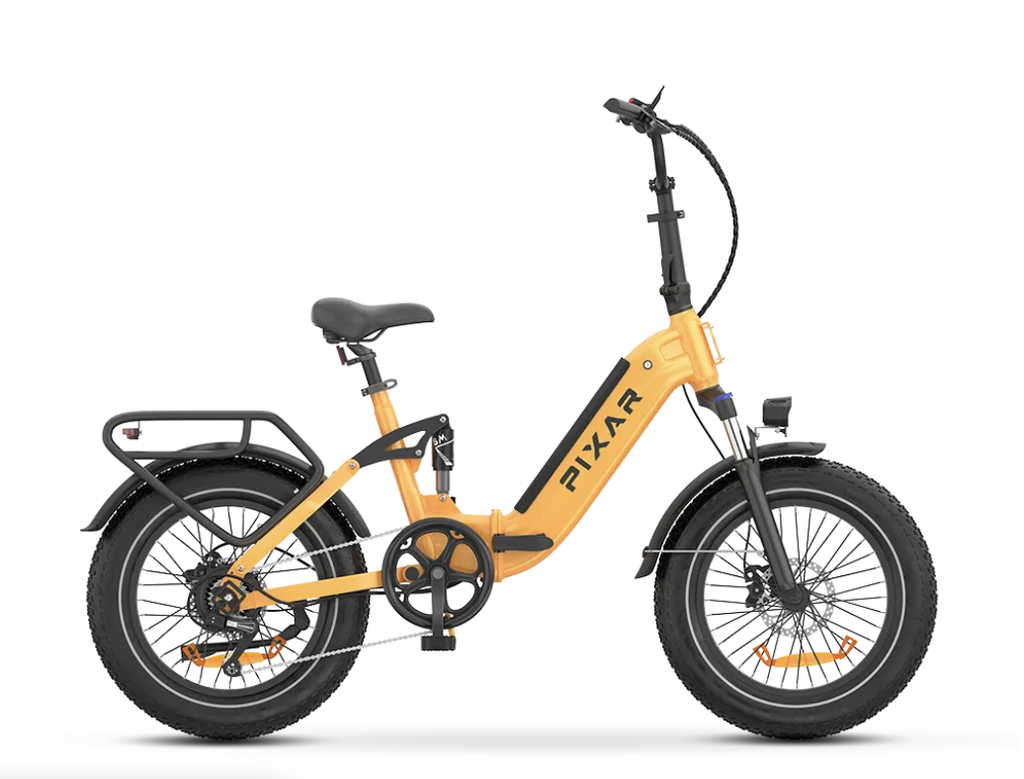
PIXAR Forge shown in its riding position. Check the separate folded measurements before judging whether a storage space will work.
Treat weight as a separate buying decision
Folding reduces dimensions; it does not remove the weight of the motor, frame, wheels or battery. Check what the quoted weight includes. A figure without the battery or accessories may not describe the bike you will actually handle. Ask for the total weight in your intended configuration and avoid assuming all folding models are easy to carry.
Test the lift you will repeat
Lifting a bike a few centimetres in a showroom is different from carrying it to an upstairs flat. The shape, available handholds and distance from your body all affect how manageable it feels. If possible, try the bike with help from the retailer and describe your staircase or doorway. Do not attempt a lift that feels beyond your ability.
Think about frequency as well. Occasional loading into a vehicle may be acceptable even when a daily staircase would be tiring. If the bike must go upstairs after every ride, handling deserves priority over features you would use only on occasional weekend trips.
Understand what a removable battery changes
Removing the battery may reduce the weight of one lift, provided the manufacturer permits it and you follow the instructions. It also creates another item to carry and store. Consider whether that means making two trips, where you would put the battery during handling and how you would keep its connections protected. It can help, but it does not make the remaining bicycle weightless.
Check how it behaves when folded
The folded dimensions cannot tell you whether a bike remains stable or how easy it is to move. Ask whether the folded sections are held together, how the bike rests and which parts touch the floor. A photograph of a folded bicycle does not show the whole routine.
Try folding without rushing
Follow the manufacturer’s sequence and check where cables, pedals and accessories sit. You should be able to operate the mechanism without forcing it or trapping a cable. Find out how to confirm that each latch is secured before riding again. If instructions are unclear, get a demonstration rather than guessing.
Consider the available working space too. You may need more room to perform the fold than the finished package occupies. A bike that fits beside a cabinet might still need to be unfolded elsewhere. Include that temporary working area in your home plan.

Loading a folded PIXAR Forge into a vehicle. The lifting height and surrounding space affect handling as well as the folded size.
Choose storage and charging locations together
Do not plan to leave the bike in a communal corridor simply because it folds. Check the building’s requirements and choose a location that keeps escape routes clear. The same consideration applies inside the flat: a folded bicycle still needs a suitable place, rather than becoming a permanent obstruction near the front door.
For charging, follow the battery manufacturer’s instructions and use the specified compatible charger. Keep the charging location away from escape routes and combustible materials, and do not charge while asleep or away from home. UK government battery safety guidance provides further advice. If your flat offers no suitable arrangement, resolve that before buying.
Make room for the rest of the equipment
The bicycle is only part of the storage requirement. A helmet, lock, charger and riding bag need somewhere to go too. Place frequently used items where you can reach them without unfolding the bike. Avoid a setup that requires unpacking a cupboard whenever you want to make a short trip.
After wet rides, follow the maker’s cleaning and drying instructions before storage. Consider how you would protect the floor without creating a trip hazard or an unsuitable charging surface. A practical routine should work on an ordinary rainy weekday, not only when the bicycle is clean and dry.
Make sure the bike still suits the ride
Once a model passes the storage checks, assess it as a bicycle. Confirm the rider fit, reach to the controls, braking feel and comfort over the kind of route you expect to use. A compact fold cannot compensate for a riding position that feels wrong. Try a representative ride if a demonstration is available.
Match battery capacity to your normal journeys with a reserve for variation. Treat advertised maximum range as a conditional estimate. For UK use, confirm the exact version’s suitability for local requirements; a link to a German-market catalogue does not establish UK availability or compliance. Public transport acceptance also depends on the operator, service and battery rules, rather than the folding frame alone.
Decide which constraint matters most
Before comparing prices, write down your non-negotiable requirements. They might be a particular cupboard opening, a daily lift or a route that requires a comfortable riding position over a longer distance. Eliminate models that fail those requirements before weighing up optional features.
If the main problem is floor space and the bike can be wheeled directly to storage, folding may solve a useful part of it. If the main problem is a demanding staircase, weight and handling may matter more. In some homes, a secure approved storage facility outside the flat could make a conventional bicycle more practical than carrying a folding model indoors.
The most useful choice is the bike you can ride, bring home and put away without an exhausting rearrangement. Measuring the space and trying the handling routine before purchase gives you a clearer answer than the word “compact” ever can.