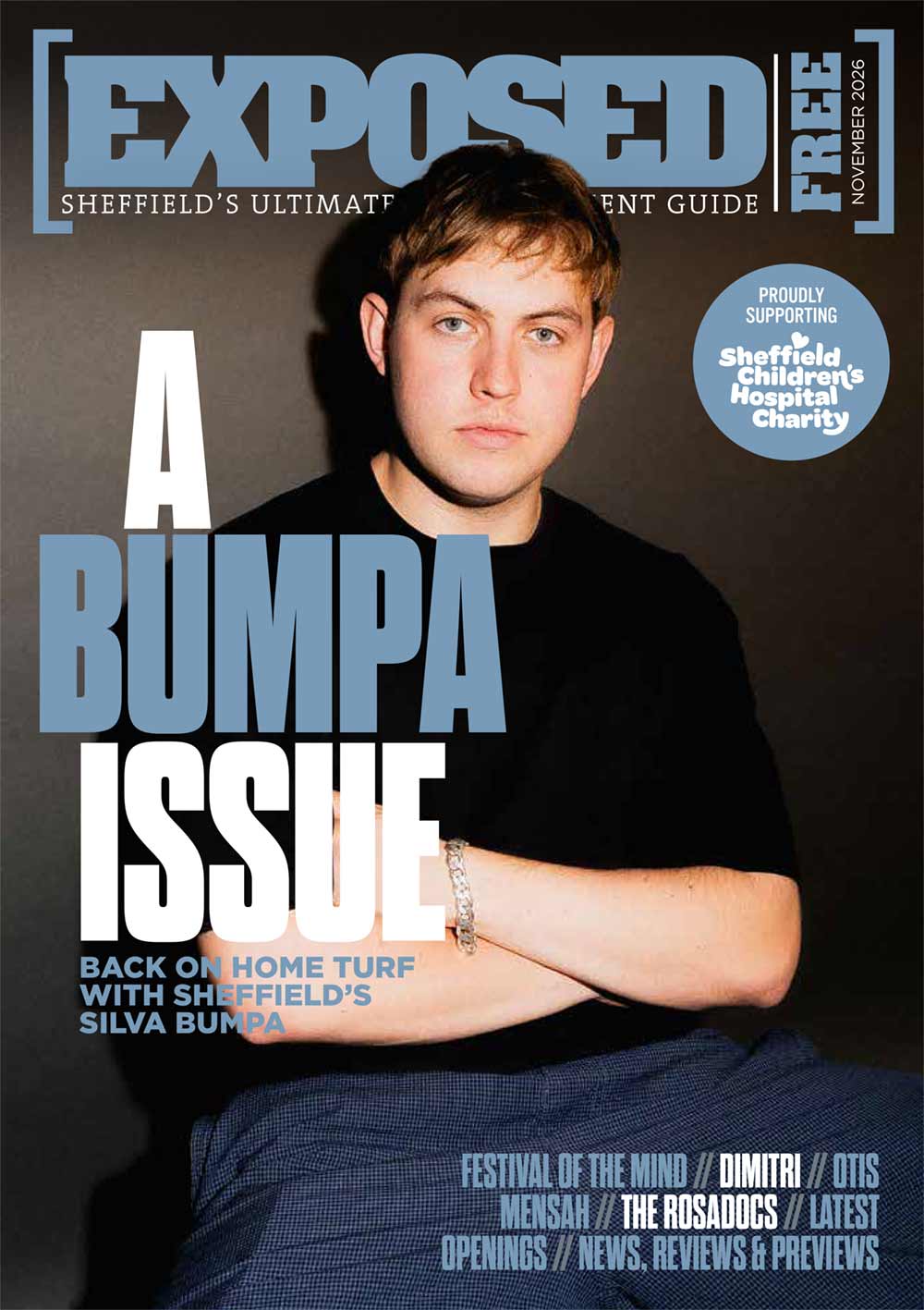
From Sheffield’s green spaces to Berlin’s experimental music scene, former city poet laureate Otis Mensah has found fresh inspiration in a change of surroundings. With a new album on the horizon, we catch up with the artist to talk jazz, creative freedom and the enduring pull of home.
First things first, welcome back! Does Sheffield still feel like home, or has your relationship with the city changed since moving away?
Thank you! It does feel as though I’m returning home when I travel back to Sheffield. I find myself craving slow moments that the city has always spared me. There’s a contentment in having that familial connection with the city’s landscape, feeling like you see yourself in the space and that its nooks and crannies hold intimate memories and experiences you’ve had, like little hiding places of self in plain sight. Berlin feels like home too but offers a different phenomenon of freedom and newness. Trying to find a bridge between those two states feels murky waters sometimes.
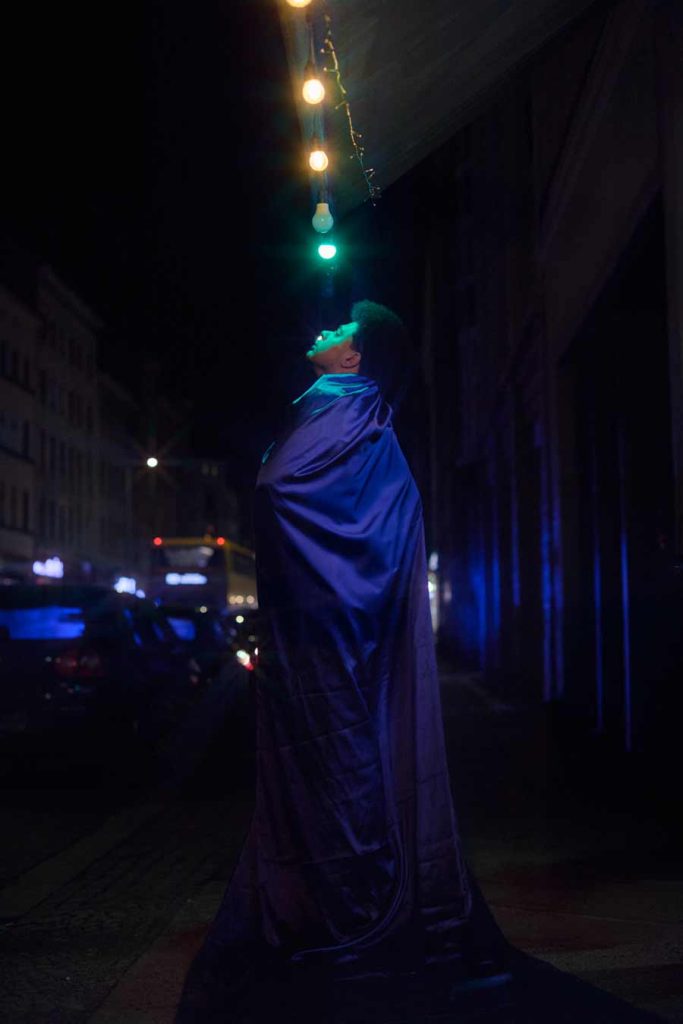
What do you miss most about home when you’re away? Any particular places, people or little quirks of the city that you find yourself getting nostalgic about?
I miss the pace and warmth of the city. I miss the opportunity to stumble on unoccupied green space. I always did a lot of creative reflection in Sheffield and found tranquillity in nature here. Being in an overstimulating metropolis with a constant influx of input will push you into a state of nostalgia around that, especially for an introvert like myself.
Sheffield and Berlin both have strong histories of experimental music and alternative culture. How has your artistry evolved since leaving South Yorkshire, and what has living in Berlin opened up for you that wasn’t possible before?
I feel like there’s a shared experimentality between the two cities. My music has found new shapes and Berlin opened me up to exploring a whole new sonic pool. The frequency and energy of the city has pushed my sound into a feeling of urgency and I find myself sonically teetering the lines between a pursuit of softness and agitation. Being surrounded by incredible and highly skilled musicians who are open to experimentation has been a godsend. There’s a DIY essence to musicianship here that has expanded my sound deeply, allowing me to delve further into realms of jazz and jazz fusion. I contextualise my work as jazz despite what genre shape it takes, whether alternative or more traditionally rap-leaning, because of my relationship to time, nonlinear time and unquantised rhythm. I envision my vocal delivery as percussive and the way I deliver cadence as instrument. Collaborating with live musicians here has allowed me to improvise further into that direction.
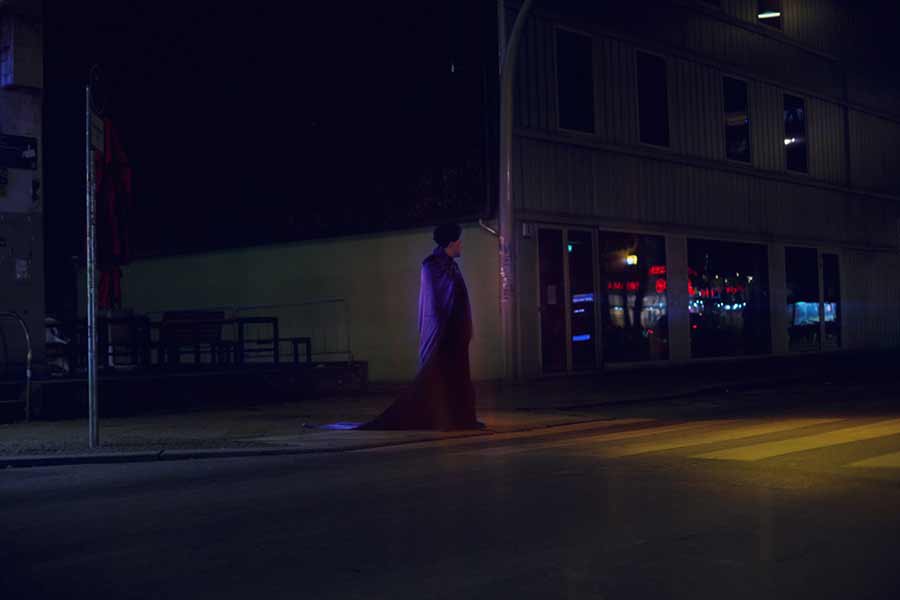
Your new album, Come Beautify the Night, began taking shape in the north of England before being completed in Berlin. Can you take us back to where the idea first emerged and how it developed into the record we’re about to hear?
Come Beautify the Night began with what I like to call ‘piano freestyles’. I was spending a lot of time at Hybrid 3 Studios in Sheffield with their acoustic pianos that have such a rich inspirited warmth. I was looking for new acoustic and analogue ways to express my musicality as someone creating contemporary hip-hop music. Minimalism and space are such defining factors of the music I love, like in I Need to Start a Garden by Haley Heynderickx. There’s such a presence and spatiality to the instruments that allow the depth of her songwriting and vocals to blaze through. This kind of work really influenced my approach to rap. I wanted to find a way to inject a feeling of ambience and free-form(ness) to the work, the way my artistic heroes do – Alice Coltrane’s Ptah, the El Daoud or Abdullah Ibrahim’s Solotude. I just hit record and started improvising on piano for hours on end. I began the process of sampling from myself and inviting artists like Adebola Oyekanmi (seigfried komidashi), foundational to the album’s creation, who then responded with saxophone, percussion and sometimes flute. This started a whole new improvise-sample-response process for me, a fire that grew in collaboration with the musicians I met in Berlin after my move.
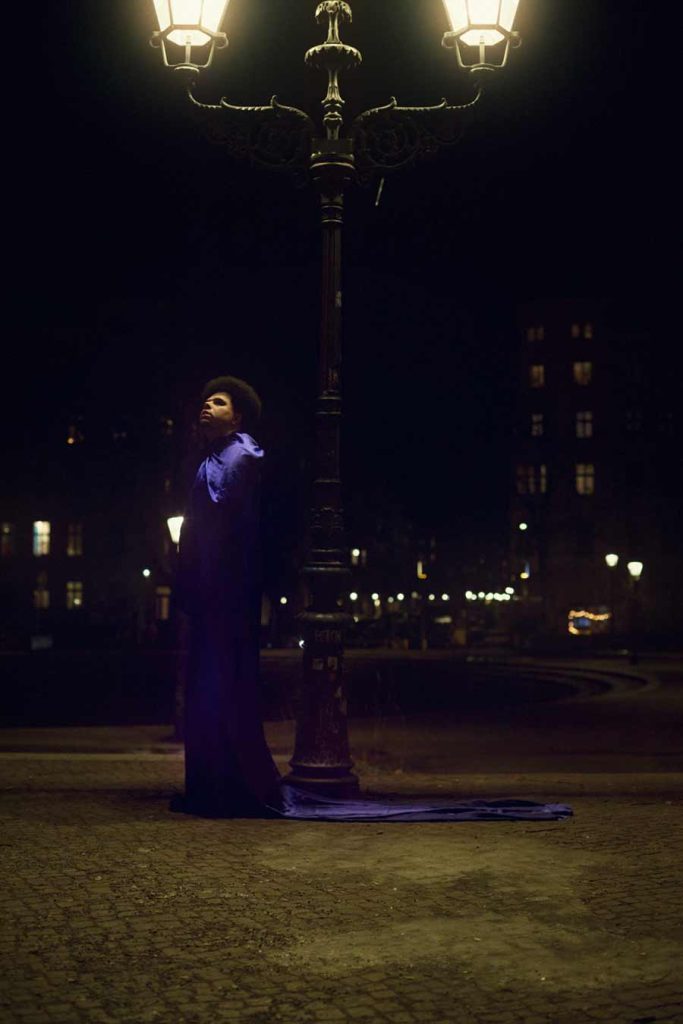
You’ve described the album as an ‘experimental rap sonata’ unfolding across seven movements. What does that mean in practice and what drew you towards that type of structure?
The rap sonata is a conceptual framework. I wanted to play with the idea of classical music form, bend it and break it. That idea and framing maybe encompass the punk and liberty of this jazz-rap fusion for me: to look at a musical structure, find holes in the way it functions, bend it and reshape its pockets of rhythm. There’s a freeness and defiance in trying to break form, I feel.
We’ve had our first taste through ‘prayerhands & headnods’, featuring Georgia Anne Muldrow. What’s the story behind that track?
‘prayerhands & headnods’ is the album’s closing track that I composed solely in Berlin on Fender Rhodes piano. I wanted to capture the slow moments one finds in a trail of light across a busy city or haze of nostalgia inside a pixelated television series. I wanted the song to land as a closing incantation or prayer, and inviting legendary artist-musician Georgia Anne Muldrow on this one felt like a perfect energy and a dream collaboration for me. The rich depth and jazz essence of her songwriting and vocals gave the piece a complete hymn-finish with such mesmerising atmosphere and beauty. This simply came about by being a fan of her work and humbly reaching out to see if she would offer something to the project. I felt honoured and blessed by this.
Come Beautify the Night is released 13 November on First Terrace Records.