Disclaimer: This article is not intended to be a recommendation. The author is not responsible for any resulting actions of the company during your trading experience. The information provided in this article may not be accurate or up-to-date. Any trading or financial decision you make is your sole responsibility, and you must not rely on any information provided here. We do not provide any warranties regarding the information on this website and are not responsible for any losses or damages incurred as a result of trading or investing.
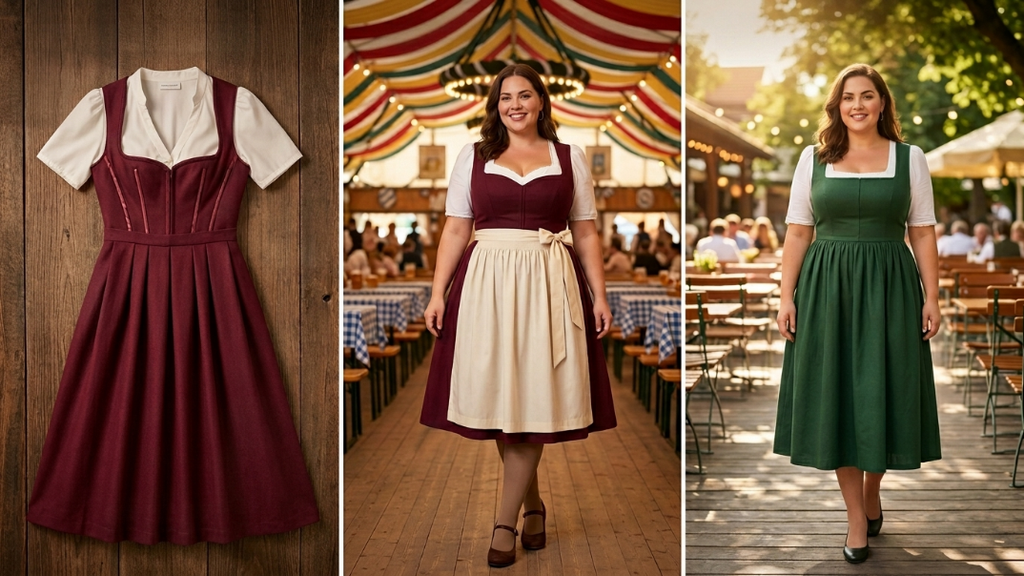
The dirndl was never a sample-size garment — it’s a structured dress built on centuries of dressing every figure a village held, and its architecture (the shaping bodice, the gathered skirt, the adjustable lacing) is precisely why it flatters across the whole size range when it’s actually cut for it. The plus size dirndl category exists because that last clause is the entire market: extended sizing done as real pattern grading serves the tradition’s promise at every size, while the relabeled-and-stretched tier breaks it — and the difference is checkable at purchase. This guide is the category done properly: what correct plus-size cutting actually changes, the fit standards by zone, the style choices that serve fuller figures best, the buying screen that separates graded from stretched, and the styling system that finishes the outfit with the confidence the dress was engineered to deliver.
What Correct Plus-Size Cutting Changes
The category’s quality line is pattern work, and real grading re-engineers rather than enlarges. The bodice: re-drafted through bust and torso — dart and seam placement moved, not just widened; cup room built into the structure; the front closure (lacing or hooks) engineered to close flat without gapping or strain at any point of the day. The proportions: waist placement kept at the natural waist across sizes (the enlarged-pattern tier’s classic failure is a waistline that drifts), straps and armholes scaled to actually fit shoulders, and the skirt’s gathering recalculated so fullness flatters rather than adds bulk at the hip. The blouse: graded in parallel — the cropped Dirndlbluse cut for fuller busts with necklines that frame rather than strain. The tell that summarizes it: real plus-size lines publish their own measurement charts with re-drafted size runs; the stretched tier publishes S-through-XXXL against one chart and lets elastane do the “fitting.”
The Fit Standards, Zone by Zone
The dirndl’s fit rules apply at every size — the plus category just deserves them stated. The bodice: structured and close without compression — closing fully with the lacing showing an even gap (the adjustment range working as designed), supporting through the bust the way the garment’s architecture intends, comfortable through a seated meal at hour one and hour ten alike. The waist: the seam at the natural waist — the dress’s entire silhouette logic hangs on this line landing correctly. The skirt: the midi length as the standard recommendation (at or just below the knee — proportion-flattering across figures), with the gathered fullness swinging clear. The blouse: framing the neckline inside the bodice’s edge without strain lines. And the sizing method that gets there: bust, waist and hip measured properly against the specific maker’s plus chart — with the between-sizes rule favoring the bodice fit (the skirt and lacing adjust; the bodice is the dress).
The Style Choices That Serve Best
Within the tradition’s range, some choices work harder for fuller figures — guidance, not rules. Necklines: the sweetheart and deeper square necklines frame and elongate beautifully (the category’s classic recommendation), with the balconette-style bodices built for support; high-neck styles serve where preferred, cut with real room. Colors and patterns: the deep classics — burgundy, forest, navy, plum — carry structure elegantly; smaller-scale patterns and solids let the bodice’s shaping lead; and the apron’s vertical-adjacent lines (long ties, clean bow) do quiet proportion work. Lengths: the midi standard first; the longer calf lengths as the elevated register — both over the mini for most figures’ proportions. And the dirndl dress plus size buyers should trust is the one applying these as options across a real graded range — the category’s quality tier offers the full style menu, not a “flattering” corner of it.
The Buying Screen: Graded or Stretched
The category’s screen extends the tradition’s with plus-specific checks. The universal inheritance: structured bodice with boning or real interfacing, substantial gathered skirt, separate blouse and apron, woven fabrics named — the same four-part authenticity screen every dirndl passes or fails. The plus-specific additions: a dedicated plus size run with its own measurement chart (the grading signature); bodice closure engineering visible (flat-closing lacing or hook systems, not strain-stretched panels); reviews or photos on fuller figures (the category where they’re most informative); and the elastane honesty check — stretch as comfort engineering in a woven structure passes; stretch as the sizing method fails. The price floor logic carries over: real grading is pattern work and costs like it — the suspiciously cheap extended-size listing is the stretched tier confessing.
The timing rule applies hardest here: plus ranges run shallower stock in popular colorways — the early-summer order isn’t just advice in this category; it’s the difference between choosing and settling.
The Styling System and the Confidence Finish
The outfit completes by the tradition’s standard system, worn fully. The ensemble: blouse framing clean, apron at the natural waist with the bow tied full on the code side (wearer’s left single, right taken), cream hosiery bridging, and the footwear engineering from the festival’s standing-day rules — supportive flats or low blocks, broken in. The styling notes that finish strongest: the two-color discipline (dress plus one statement — usually the apron), hair up or braided for the neckline’s framing, and jewelry minimal against the bodice’s own detailing. And the confidence layer the whole guide has been building: a correctly graded dirndl at the right size is the tradition’s best advertisement — structured, supported, swinging — and the wearer’s job reduces to the same one every register of Trachten assigns: wear it like it fits, because it does. The festival reads exactly that, and nothing else.
Frequently Asked Questions
What makes a real plus size dirndl different?
Actual pattern grading: re-drafted bodice with cup room and moved seams, waist kept at the natural line, scaled straps and recalculated gathering — not an enlarged or stretched standard pattern.
How should the bodice fit?
Structured and close without compression — closing fully with an even lacing gap, supportive through the bust, comfortable seated at any hour.
Which styles flatter fuller figures most?
Sweetheart and square necklines, deep classic colors, midi and calf lengths — offered as options across a real graded range, not rules.
How do I spot the stretched tier?
One chart serving S-XXXL, elastane doing the fitting, strain at the closure — against dedicated plus charts and flat-closing bodice engineering.
What length should a first plus size dirndl be?
The midi — at or just below the knee: the proportion-flattering modern standard, with calf lengths as the elevated second.
When should the dress be ordered?
Early summer — plus ranges run shallower stock in popular colorways, and the early order is the difference between choosing and settling.