Disclaimer: This article is not intended to be a recommendation. The author is not responsible for any resulting actions of the company during your trading experience. The information provided in this article may not be accurate or up-to-date. Any trading or financial decision you make is your sole responsibility, and you must not rely on any information provided here. We do not provide any warranties regarding the information on this website and are not responsible for any losses or damages incurred as a result of trading or investing.
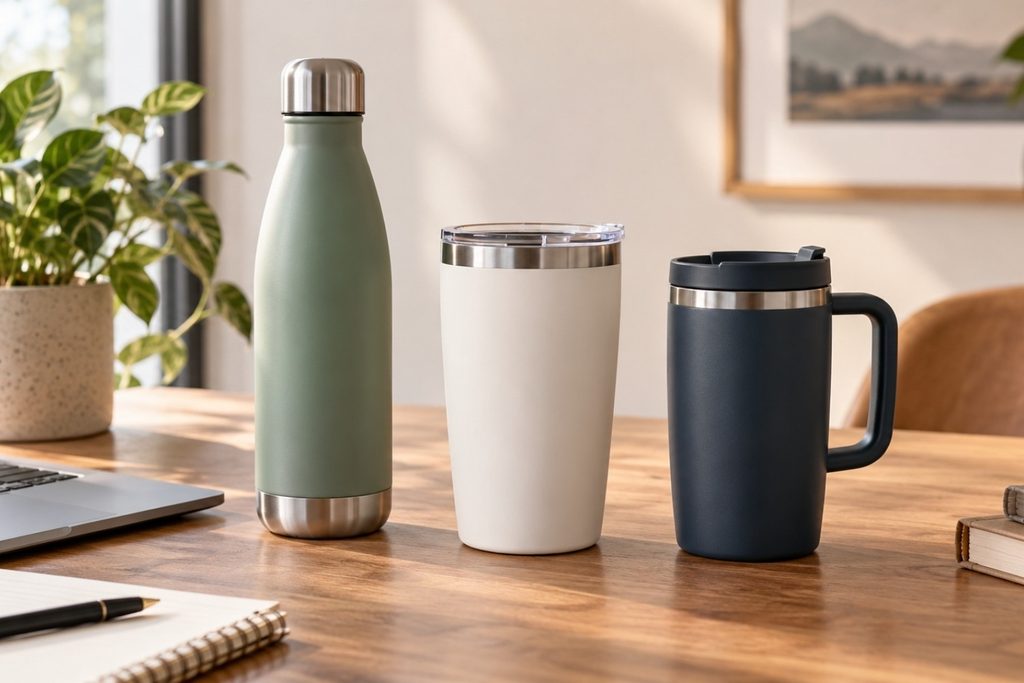
Custom drinkware can do much more than carry a logo. A good bottle may sit beside someone’s laptop every morning, travel in a gym bag after work, or stay in a car cup holder during the daily commute. That repeated use gives brands a chance to stay visible long after the first purchase or event.
For businesses sourcing from companies such as Xingcai, one of the leading custom drinkware manufacturers, choosing the right product means looking beyond appearance. The drinkware also needs to suit the customer, perform reliably, fit the brand, and make commercial sense at the required order quantity.
Start With the Customer and How They Will Use It
Before comparing colors, finishes, or logo options, think about the person who will actually use the product.
An office commuter may want a compact bottle that fits easily in a bag. Gym users may prefer a larger capacity and a lid that can be opened quickly. Travelers often care about weight, portability, and leak resistance, while corporate gift buyers may place more importance on presentation and perceived quality.
The sales channel matters too. Drinkware sold through retail needs to fit a clear price point and customer expectation. Corporate gifting may require simpler product selection but stronger packaging. A private label range may need more distinctive colors, finishes, or lid designs.
Once the intended user is clear, product decisions become much easier. Capacity, weight, cup-holder compatibility, carrying comfort, and lid style should all support how the product will be used in everyday life.
Pay Attention to Construction and Everyday Performance
A polished finish may create a strong first impression, but buyers should also look closely at what is underneath it.
With stainless steel vacuum insulated drinkware, double-wall construction with a vacuum layer helps reduce heat transfer. Buyers should confirm what stainless steel is used on food-contact surfaces and whether the product meets the relevant food-contact requirements for the market where it will be sold.
The lid deserves just as much attention. Threads, seals, straws, closures, and hinges all affect daily performance. A bottle can look premium but still create complaints if it leaks inside a work bag or is difficult to clean.
Exterior durability matters as well. Coatings and printed surfaces should hold up to regular handling without quickly scratching, peeling, or fading.
Manufacturers such as Xingcai also need to reproduce these details consistently across larger orders. For B2B buyers, one good sample is not enough. The full production run needs to match the approved product as closely as possible.
Make Customization Work With the Brand
Customization should make the drinkware feel like part of the brand rather than a standard bottle with a logo added afterward.
Some brands suit muted colors, matte finishes, and small logos. Others can carry brighter colors, larger graphics, or stronger visual contrast. The right approach depends on the target customer and how the product will be positioned.
Decoration methods also create different results. Laser engraving works well for a clean and durable appearance. Screen printing suits simpler graphics, while UV and other full-color printing methods can support more detailed artwork.
Packaging should be considered at the same time. Retail drinkware may need branded boxes, labels, barcodes, or instructions. Corporate gift programs may place more emphasis on presentation.
These decisions also affect cost and shipping, so it is better to include them early instead of treating packaging and decoration as last-minute additions.
Balance Quality, Quantity, and Total Cost
The lowest unit price is not always the best commercial choice.
Custom drinkware costs may include the product itself, decoration, packaging, setup charges, freight, inspection, and import costs. Larger orders can reduce the price per piece, but they also increase inventory risk.
If a brand is testing a new product, color, or capacity, starting with a manageable quantity may provide useful feedback before committing to a much larger run.
Distributors and retailers should also think about margin. A slightly more expensive bottle may make better business sense if it supports a stronger retail price, creates fewer complaints, and encourages repeat purchases.
The goal is not simply to find the cheapest product. It is to choose a specification that fits the expected selling price while still delivering the level of quality customers will expect.
Check Samples and Supplier Capabilities Before Ordering
Photos and digital mockups can help narrow the options, but a physical sample gives buyers a much clearer idea of what they are purchasing.
Check the weight, grip, lid function, finish, proportions, and overall feel. For customized orders, review logo placement, color, printing or engraving, and packaging before approving mass production.
It is also important to discuss minimum order quantities, lead times, quality-control procedures, and repeat-order consistency.
Ask how the supplier checks for leakage, lid fit, coating quality, decoration accuracy, and packaging damage. If the product performs well, you may later need the same model in additional colors, sizes, or packaging formats.
A supplier that can maintain the same specification across future orders can make it much easier to build a stable drinkware range.
Conclusion
Choosing custom drinkware is not only about finding a bottle that looks good. It needs to fit the customer, perform well in everyday use, support the brand, and make sense commercially.
By considering construction, customization, packaging, cost, sampling, and production consistency together, businesses can choose drinkware that feels less like generic merchandise and more like a product customers will genuinely want to keep and use.