Festival posters already tell Sheffield which night matters, and the trailer often arrives as a separate argument. The still has the lineup, the room, and the crop a designer defended. The moving cut then invents a new push-in, a new face, or a title that the poster never carried. Seedance 2.0 API is useful on that job only when the camera sentence is written before anyone generates, and when a reference clip, if you have one, is allowed to lead the move.
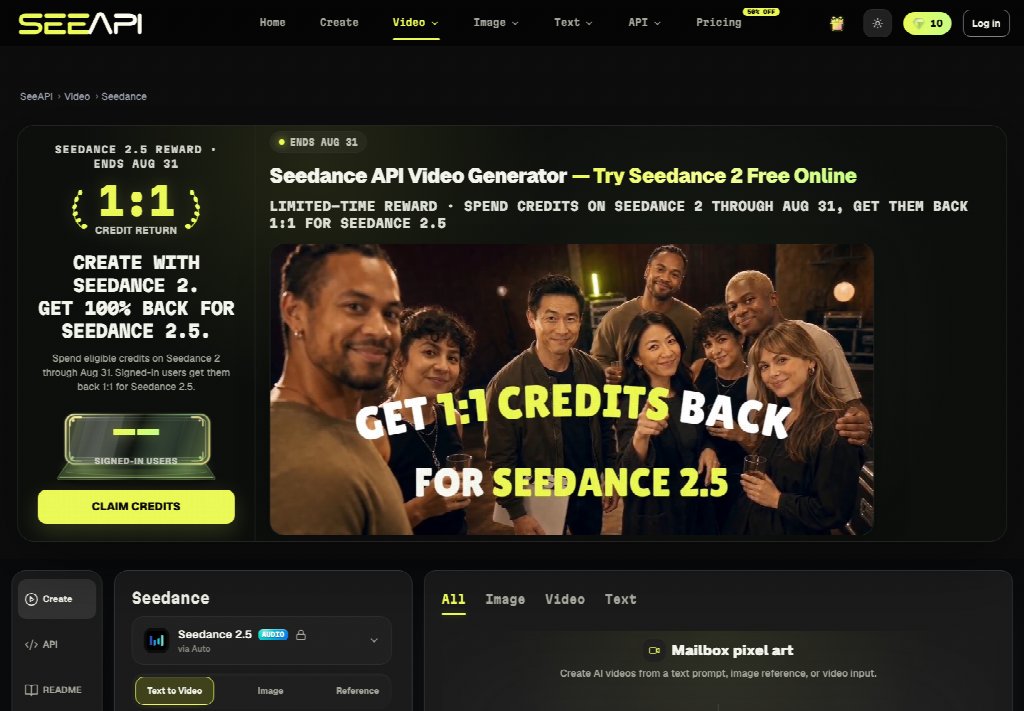
SeeAPI puts that choice on a create panel rather than in a slogan. Text can start a scene. An image can start from the poster or a still. A reference video can drive motion. The culture desk still has to decide which of those three is the source of truth for this trailer. If the poster is the contract with the night, motion does not get to redesign it.
How A Venue Trailer Gets A Camera Brief
A venue trailer is not a mood film that happens to mention the gig. It has to survive a phone in a queue and a screen in the foyer. People need the night, the room, and one move they can follow. The page’s own prompt guide is built around that kind of direction: scene, camera, light, action, and mood, with samples that already talk like shots. One of those samples is framed as a fifteen-second travel sequence. That is a brief in the guide, not a promise that every export will last fifteen seconds. It does tell the desk to put duration in the sentence instead of hoping the picture will choose a length.
The create panel has its own duration control beside resolution. Leave both untouched and the trailer inherits whatever the panel was showing. For a foyer master, set the higher 1080p option when that control is the one on screen, then make a shorter social cut as a separate pass. One setting should not pretend to be both the door screen and the story frame.
A still from this year’s stage and a reference clip from last year’s festival are not interchangeable, even when the room looks familiar. Last year’s lights, last year’s crop, and last year’s headliner will ride along inside the motion. If the only trusted picture is a still, start there and write the move in words. Reach for reference footage only when someone on the desk can name the night it was shot. Sheffield crowds notice a recycled stage faster than they notice a slightly plain grade. The trailer can be simple. It cannot be last year.
Name the export before it leaves the desk. “Foyer master” and “phone cut” are different files, with different durations, even when they share a poster. A single download passed around in chat becomes the version that plays, because nobody has time to ask which one was checked. Put the duration and the 1080p note in the filename. The door team should not have to open the prompt to learn what they are screening.
What Must Be Ready Before Generate
Generate is the late step. The early step is a pile that a producer can point at: the locked poster, one sentence for the camera, and a note about whether a reference clip exists. If any of those three is still being argued in chat, the panel will only make the argument louder. Text will invent a room. An old still will invent a lineup. A reference clip from last year’s stage will drag last year’s lights into this year’s night.
Lock The Poster Crop Before Motion
Crop the poster to the frame the trailer must respect, and treat that crop as the image reference. Names, dates, and the venue wordmark have to stay readable. If type melts, or a second headliner appears beside the one on the poster, that export is wrong for the door. Do not “fix” it by cropping the mistake out in the edit if the mistake is a person who was never on the bill. Reject the pass and return to the still.
Put The Camera Move In The Prompt
Write the move the way a director would say it to a camera assistant. Slow push toward the stage lip. Hold on the sign. No orbit around a face the poster only showed in profile. The panel’s prompt box is where that sentence lives, next to the image. A pretty line that never mentions the camera leaves the move to chance, and chance is how a quiet jazz still becomes a whip pan. The guide on the page keeps repeating camera direction for the same reason.
Reference Footage Beside A Still Frame
Two inputs get confused because both are “pictures of the night.” A still is a fact about identity: this face, this type, this room. A reference video is a fact about motion: this push, this handheld wobble, this pace. The page separates them. Image-to-video animates the still. Reference-to-video can transfer motion and restyle footage while the copy asks the picture to keep the character. Use the reference when you already trust a camera move and want that move on a new still. Use the still alone when you do not have a move worth keeping.
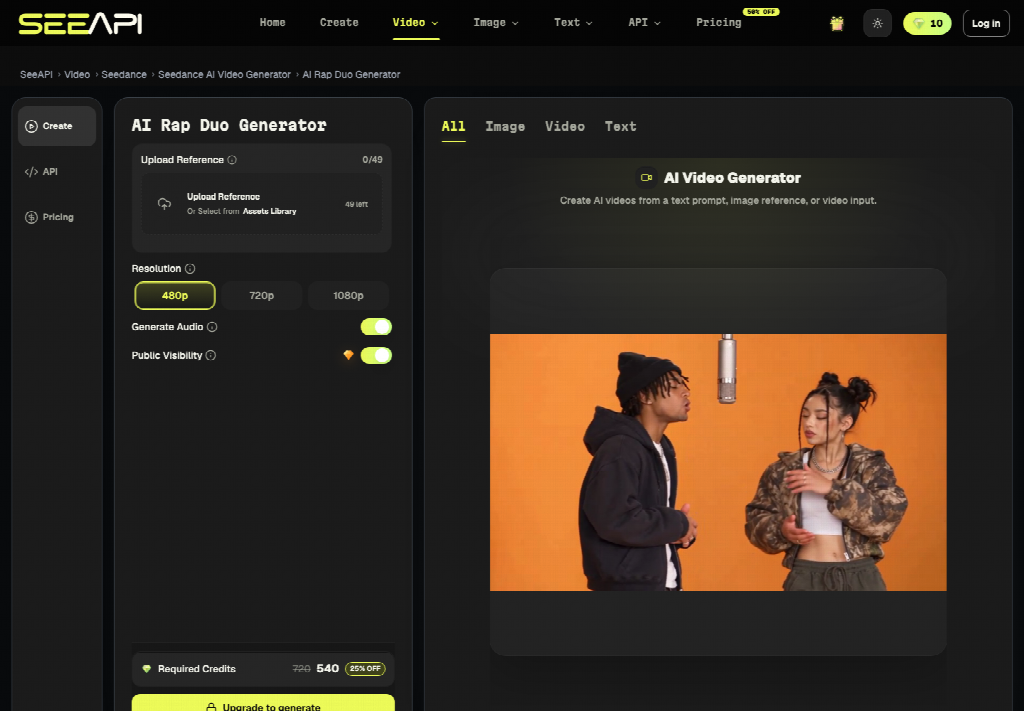
Seedance API does not decide which file is the boss. The desk does, before the button. If both are attached with no note, the result can look lively and still fail the poster. Lively is not the check. The check is whether the night on the export is the night on the print.
When A Face Drifts Off The Poster
Watch the face against the still, not against the excitement of the move. If the jaw changes, if hair becomes a different cut, or if the singer gains a feature the poster does not have, the clip cannot go on the venue screens. That drift is the failure mode for a festival trailer, more than a slightly dull grade. Send it back. The time you lose is the rework of one pass, which is cheaper than a door team pulling a screen down at six because the face is wrong.
Check The Cut Against The Door Time
Before anyone calls the trailer done, run the same four checks the foyer will run without mercy. They take minutes. They save a queue of complaints.

- Read every name and the date out loud from the export. If a word is unreadable, the cut fails.
- Compare the face and the room to the locked poster, not to memory.
- Confirm the camera sentence in the prompt is the move you actually see.
- Confirm duration and the 1080p master are the ones the door screen was promised, and that the social cut is a second export.
A fail on any line means the file does not ship. SeeAPI can show you another pass. It cannot attend the doors. The producer who owns the poster owns the reject, and the reject should happen in the afternoon, not when the queue is already on the pavement.
What The Culture Desk Should Keep
Keep the tool when a night already has a still you trust and a move you can say in one sentence. SeeAPI’s panel is built for that order: prompt, image or reference, duration, resolution, then generate. Leave the cinematic ask alone when the bill, the room, or the crop is still moving. Motion will paper over the gap for a few seconds and then betray it on a large screen.
A festival trailer is a promise about a specific door. Write the camera first, lock the poster, and let reference footage lead only when that footage is actually this year’s move. The rest is a check a human still has to sign.