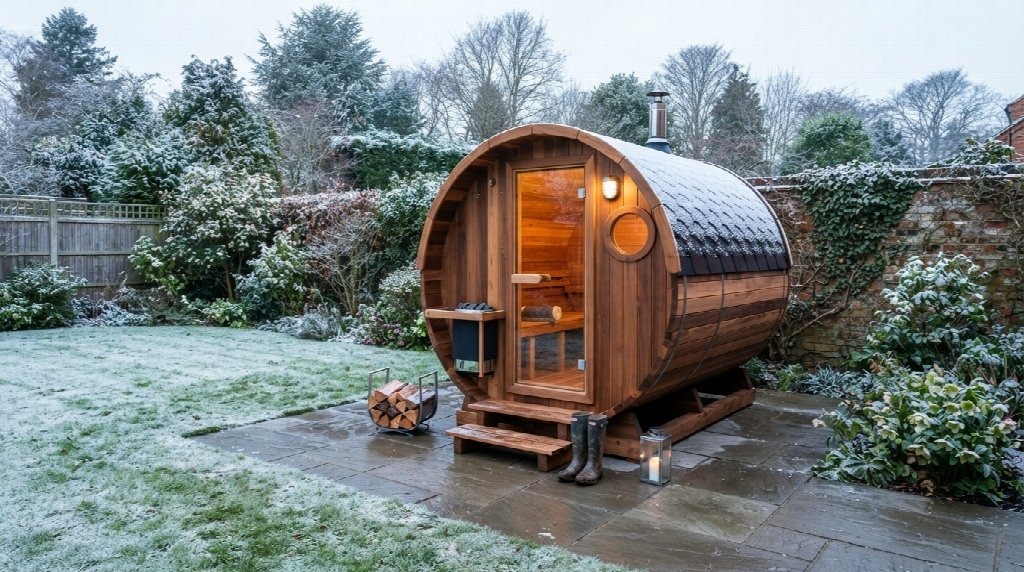
Garden saunas have gone from a Scandinavian curiosity to a regular sight in British back gardens in the space of a few years. After “Where would it go?” the first question most people ask is how much it will add to their electricity bill. The honest answer is less than you probably fear, but the figure swings a lot depending on the heater, the cabin and how often you use it. Here’s how the maths works this winter.
Running Costs by Heater Size
Most home saunas use heaters between 4.5kW and 10.5kW, sized to the cabin. The table below assumes 45 minutes at full power to warm up, then a 45-minute session with the heater cycling about half the time, at 26.32p per unit.
| Heater size | Units per session | Cost per session | Monthly cost (3x a week) | Yearly cost (3x a week) |
| 4.5kW | 5.1 | £1.33 | £17 | £208 |
| 6kW | 6.8 | £1.78 | £23 | £277 |
| 8kW | 9.0 | £2.37 | £31 | £370 |
| 9kW | 10.1 | £2.66 | £35 | £416 |
| 10.5kW | 11.8 | £3.11 | £40 | £485 |
A bigger heater isn’t automatically pricier to own, and a smaller one isn’t automatically cheaper. An undersized heater in a large cabin runs at full power for much longer before it gets anywhere near bathing temperature, which can wipe out the cost advantage. A common guideline is about 1kW per cubic metre of cabin for a solidly built sauna, with extra capacity needed for large glass areas. A two- to three-person cabin usually sits in the 4.5 to 6kW range, while family-size cabins for six or more need 9kW or above.
What a Garden Sauna Actually Costs Per Session
Electricity is priced per kilowatt-hour (kWh), which your bill calls a unit. Under the current Ofgem energy price cap, the average unit rate for Direct Debit customers from 1 October to 31 December 2026 is 26.32p. There’s also no VAT on domestic electricity from October until the end of March 2027. That rate is used for every calculation below. If you’re on a fixed deal, swap in your own rate.
Running costs depend on the energy needed to heat the cabin and the smaller amount needed to maintain the temperature. A 6kW heater in a thick-walled thermowood cabin like Polar Recovery’s outdoor saunas pulls roughly 4.5 units getting up to 80°C, then settles to around 3 units an hour once the stones are hot. At the current price cap, a typical 45-minute warm-up and 45-minute session costs about £1.78. Three sessions a week would therefore cost roughly £23 a month.
The reason the second number is smaller is the thermostat. Once the cabin reaches your chosen temperature, the heater switches on and off to hold it rather than running flat out. In a reasonably well-built sauna, it’s typically drawing power for around half the time during the bathing phase. That’s why multiplying the heater’s kW rating by the total time it’s switched on overstates the real cost.
Why Two Saunas With the Same Heater Cost Different Amounts
Heater wattage is just one factor. The cabin decides how hard that heater has to work.
Volume comes first. Every extra cubic metre of air, bench and wall has to be heated, so a cabin built for six people costs more per session than a compact two-person unit, even if only two people are using it.
Wall construction is next. Thick thermally modified timber or a properly insulated wall build holds heat far better than thin cladding. Draughty door seals and gaps around the roof line quietly push the bill up session after session.
Glass is the one thing most people underestimate. A full-glass front looks stunning in a garden, but glazing loses heat faster than a solid wall, so it can lengthen warm-up and nudge the heater sizing up. That doesn’t mean avoiding glass, just costing it in.
Target temperature matters too. Many regular users find 70 to 80°C perfectly comfortable, and holding that rather than pushing towards 100°C trims both the warm-up and the holding draw.
Winter vs Summer: How the Seasons Change the Bill
An outdoor sauna heated on a mild September evening and the same cabin heated on a frosty January morning are two very different jobs. The bigger the gap between the outside air and your target temperature, the more energy the heater needs to close it, and wind across the walls makes that worse.
Sauna suppliers commonly estimate that outdoor units use around 20 to 30% more energy in cold weather. On the 6kW example above, a 25% uplift takes a session from about £1.78 to around £2.22. That’s worth budgeting for, because winter is exactly when most people want to use a garden sauna the most.
Good siting helps. A spot sheltered from prevailing wind, a cabin raised slightly off cold, wet ground and a door that closes properly all cut the winter penalty.
Electric vs Wood-Fired vs Infrared
The type of sauna changes the running cost as much as the heater size does. Here’s how the three main options compare:
- Traditional electric: The default for most UK gardens. It’s predictable, quick to start and easy to cost, with a 6kW heater coming in at around £1.78 a session at the current cap.
- Infrared: Warms the body directly rather than heating the air to 80°C or more. Panels typically draw between 1.5kW and 3.5kW, which often keeps the cost well under £1 an hour, though the heat is gentler and there’s no steam.
- Wood-fired: The most atmospheric option, but rarely the cheapest unless you have free or very cheap firewood. Kiln-dried logs bought in retail bags commonly cost around £4 to £6 a bag, and a session can easily get through one or more.
Many UK cities, Sheffield included, also have large smoke control areas, so check your local authority’s rules before setting your heart on a wood burner.
The Setup Costs Nobody Puts in the Running-Cost Maths
The electricity per session is the smallest number in the whole project. The bigger outlay comes before you ever switch the heater on.
Most traditional heaters of 6kW and above can’t run from a standard 13-amp socket. They typically need a dedicated 32-amp supply, correctly sized armoured cable from the house and a suitable isolator. Running a new circuit to a garden building is notifiable work under Approved Document P of the Building Regulations, so it needs a registered electrician who can certify it. Prices vary with the length of the cable run, but several hundred pounds up to around £1,000 is a common range. Lower-powered compact models can reduce the electrical work, so check the heater’s supply requirement before you price it up.
The base is the other early cost. A loaded sauna can weigh close to a tonne once people are inside, so it needs a firm, level surface such as concrete, paving slabs or a reinforced deck that won’t hold standing water.
There are a few rules to check first. In planning, the Planning Portal’s outbuildings guidance names sauna cabins among the garden structures that usually count as permitted development in England. The key limits are a maximum height of 2.5 metres if it sits within two metres of a boundary, and outbuildings covering no more than half the land around the original house. Listed buildings, conservation areas and National Parks have tighter rules.
When deciding whether a sauna suits your house, you should consider the same access, drainage, and power questions covered when choosing a garden room, so it pays to answer them before ordering. Ongoing upkeep is modest. Expect a breathable timber treatment every year or so, and fresh sauna stones every year or two, depending on how hard you use it.
How to Work Out Your Own Number
You don’t need a calculator app. Take your heater’s kW rating and multiply it by your warm-up time in hours. Then add half the heater rating multiplied by how long you actually sit in it. Multiply the total by your unit rate.
For an 8kW heater with a one-hour warm-up and a 30-minute session: 8 units to warm up, plus 2 units to hold, gives 10 units. At 26.32p, that’s £2.63.
A few habits bring that down without spoiling anything. Get in as soon as it reaches the temperature rather than letting it idle. Keep the door shut during warm-up. Settle on 70 to 80°C if that works for you. If you’re on a time-of-use or Economy 7 tariff, scheduling sessions in cheaper off-peak windows can cut the cost per unit sharply, and a smart controller makes that easy.
If the sauna is part of a wider plan to turn the garden into a fitness space, it’s worth costing everything together. A budget-friendly outdoor gym in the garden can share the same level base, power run and lighting, spreading the setup costs across more than one use.
Frequently Asked Questions
How much does it cost to run a sauna for one hour in the UK?
At 26.32p per unit, a 6kW heater running flat out for an hour costs about £1.58. In practice, it cycles once hot, so an hour of bathing after the warm-up costs less. A typical full session on a 6kW heater, including warm-up, comes to roughly £1.78.
Is a garden sauna more expensive to run in winter?
Yes. Colder outside air means a longer warm-up and more heat loss through the walls, so outdoor saunas commonly use around 20 to 30% more energy in winter. A sheltered location and a well-sealed cabin can reduce the difference.
Can I plug a garden sauna into a normal socket?
Usually not. Most traditional heaters of 6kW and above need a dedicated 32-amp circuit wired in by a registered electrician. Some lower-powered compact and infrared models have lighter supply requirements, so always check the heater specification first.
Do I need planning permission for a garden sauna?
In England, most garden saunas fall under permitted development as outbuildings. It must be single-storey, no taller than 2.5 metres if within two metres of a boundary, and outbuildings can’t cover more than half the land around the original house. Listed properties, conservation areas and protected landscapes have stricter rules.
Is an infrared sauna cheaper to run than a traditional one?
Generally, yes. Infrared panels usually draw between 1.5kW and 3.5kW and don’t need to heat the whole cabin to 80°C or more. That often puts the running cost well under £1 an hour, though the heat feels gentler and there’s no steam.
Is a wood-fired sauna cheaper than an electric one?
Not usually, unless you have access to free or very cheap firewood. Retail bags of kiln-dried logs commonly cost £4 to £6 each, and a session can use one or more. Smoke control rules in many towns and cities can also rule out wood-burning.
How long does an outdoor sauna take to heat up?
Most electric outdoor saunas reach bathing temperature in roughly 30 to 60 minutes. Cabin size, wall construction, glazing and the weather all affect it. Expect the longer end of that range on cold winter evenings.
What size sauna heater do I need?
A rough guide is about 1kW per cubic metre of cabin for a solidly built sauna, with more needed for large glass areas. Two- to three-person cabins typically use 4.5 to 6kW, while larger family cabins need 9kW or more. Always follow the sauna and heater manufacturer’s sizing.
Does running a sauna at a lower temperature save money?
It does. Holding 70 to 80°C rather than pushing towards 100°C shortens the warm-up and reduces how often the heater cycles on. Many regular users find the lower range more comfortable for longer sessions anyway.
How much does a garden sauna cost to run per year?
Using a 6kW heater three times a week at the current price cap costs roughly £277 a year in electricity. A 9kW heater on the same routine comes to around £416. Winter use, higher temperatures and longer sessions push those figures up.
The Bottom Line
For most households, the electricity is the easy part. A typical 6kW garden sauna used three times a week costs a little over £20 a month at the current price cap, a touch more in deep winter. The figures that deserve more of your attention are the one-off ones: the electrical work, the base and making sure the cabin itself holds heat well. Get those right, and the running cost stays modest year after year.