Disclaimer: This article is not intended to be a recommendation. The author is not responsible for any resulting actions of the company during your trading experience. The information provided in this article may not be accurate or up-to-date. Any trading or financial decision you make is your sole responsibility, and you must not rely on any information provided here. We do not provide any warranties regarding the information on this website and are not responsible for any losses or damages incurred as a result of trading or investing.
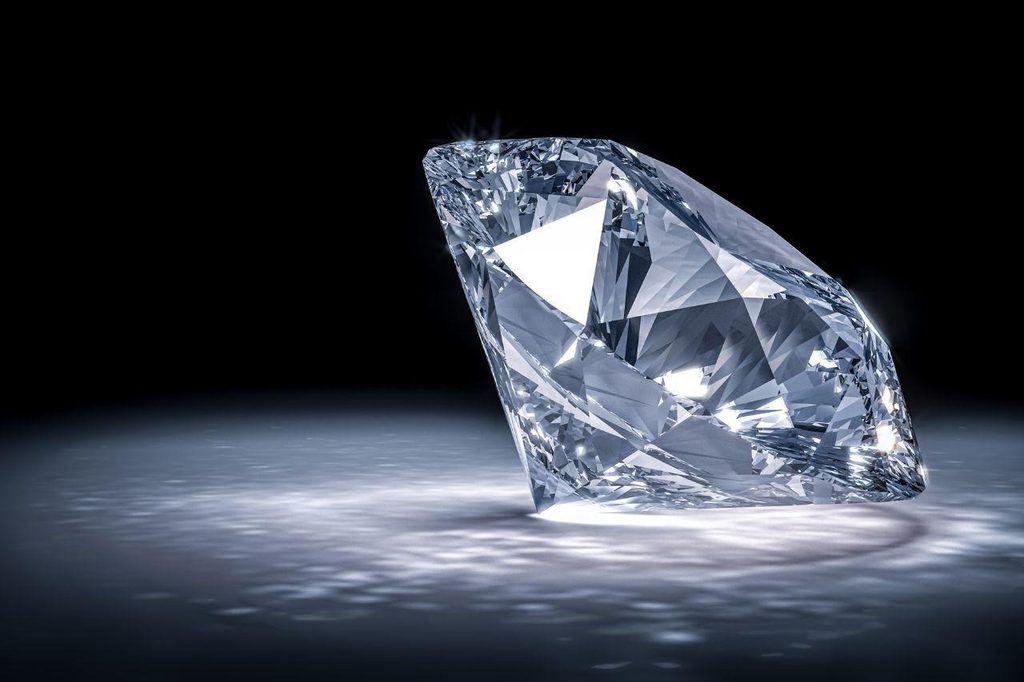
A diamond can carry substantial financial and sentimental value, so testing one should never put the stone or its setting at unnecessary risk. Fortunately, you can look for several useful clues without scratching the gem, exposing it to sudden temperature changes, or using harsh chemicals. The safest approach combines careful observation, simple non-destructive checks, documentation, and professional testing when certainty matters.
It is also important to understand what “real” means. A natural diamond and a laboratory-grown diamond are both genuine diamonds with essentially the same fundamental material properties. Diamond simulants, such as cubic zirconia and moissanite, are different materials designed to resemble diamonds. Many home checks can help separate some simulants from diamonds, but they generally cannot prove whether a genuine diamond is natural or lab-grown.
Start With a Clean, Well-Lit Inspection
Before testing anything, gently clean the jewelry using a method appropriate for the setting and inspect it under bright, neutral light. Oil, lotion, dust, and soap film can change how a stone reflects light and may make an authentic diamond look dull. If the piece is antique, fragile, or contains other gemstones, avoid aggressive cleaning and ask a jeweler for guidance.
Look at the stone from several angles. Diamonds are known for strong brilliance, which is the return of white light, along with flashes of spectral color called fire. Appearance alone is not proof, however. High-quality moissanite can be extremely lively, and lighting conditions can make different stones appear more similar than they really are.
Use the Fog Test as a Quick Screening Check
One of the simplest non-destructive checks is the fog test. Hold the stone securely and breathe gently onto its surface as though you were fogging a mirror. Diamond conducts heat efficiently, so condensation generally clears quickly. Some simulants may stay fogged a little longer.
Treat this only as a clue. The result can be influenced by surface dirt, room conditions, the size of the stone, and how it is mounted. A stone that clears quickly should not automatically be declared a diamond, and a questionable result should lead to additional testing rather than a firm conclusion.
Examine the Stone With a Loupe
A 10x jeweler’s loupe lets you inspect the stone and setting without harming either. Look for tiny internal features, facet edges, surface wear, and the overall quality of the cut. Natural diamonds often contain inclusions, although some genuine diamonds can be extremely clean. Conversely, the absence of visible inclusions does not mean a stone is fake.
Magnification can also reveal clues associated with certain simulants, but interpreting them takes experience. Rather than trying to diagnose the stone from one microscopic feature, use the loupe to decide whether professional examination is warranted.
Check the Setting and Hallmarks
If the diamond is mounted in a ring, pendant, or earrings, inspect the jewelry itself. Fine diamonds are often set in gold or platinum, so markings such as 10K, 14K, 18K, PT, PLAT, or 950 may provide useful context. A CZ marking can indicate cubic zirconia.
Hallmarks are not proof of the center stone’s identity. Settings can be changed, stamps can wear away, and imitation stones can be mounted in precious metal. Still, the quality of the prongs, symmetry of the setting, and presence of appropriate metal marks can contribute to the overall assessment.
Try a Paper Test Only With a Loose Stone
For an unmounted stone, a simple dot or line test may provide another clue. Place a small black dot or line on white paper and position the loose stone table-side down over it. Because of the way a properly cut diamond bends and returns light, the mark generally should not appear as a clear, easily traceable image through the stone.
This test has limitations because cut, proportions, viewing angle, and the type of simulant can affect what you see. Never remove a diamond from its setting just to perform this test; doing so risks damaging the jewelry and should be left to a professional.
Understand the Real vs. Fake Diamond Differences
Home observations become more useful when you understand what they are actually comparing. For a more detailed explanation of real vs fake diamond, it helps to compare how diamonds and common simulants differ in heat conductivity, refraction, inclusions, fluorescence, and other characteristics. Using several clues together is more sensible than trusting one visual trick.
Do Not Rely on the Water Test for Valuable Jewelry
You may see advice suggesting that a loose diamond should be dropped into a glass of water because diamonds are dense and normally sink. While this does not involve scratching the stone, it is not especially useful for identification: other dense simulants can also sink. There is also no reason to handle a valuable loose stone over a glass when safer observational methods are available.
Avoid Scratch and Thermal-Shock Tests
Older DIY advice sometimes recommends scratching glass with the stone or heating the gem and dropping it into cold water. Skip both methods. A scratch test can damage a non-diamond stone, the mounting, or another surface, and hardness alone does not provide a reliable home authentication. Sudden heating and cooling can also damage some gemstones and may create unnecessary risk for jewelry with inclusions, treatments, or delicate settings.
The goal is identification without damage, so any test that depends on seeing whether the object scratches, cracks, or survives abuse defeats the purpose.
Use a Diamond Tester Carefully
A handheld thermal conductivity tester can be a useful next step. Diamonds conduct heat very efficiently, and many testers are designed to distinguish diamond from materials such as cubic zirconia. However, moissanite can complicate testing because its thermal behavior can resemble diamond. Combination instruments that measure both thermal and electrical properties can provide more information.
Consumer testers are screening tools, not substitutes for gemological analysis. Incorrect probe placement, a dirty stone, contact with the metal setting, or an inexpensive device can produce misleading results.
Check the Grading Report and Inscription
If the diamond was sold with a grading report, review the document carefully. Reputable gemological laboratories record characteristics such as carat weight, color, clarity, cut information, measurements, and identifying features. Some graded diamonds also carry a microscopic laser inscription on the girdle that can be compared with the report number.
A report is particularly important when you need to know whether a diamond is natural or laboratory-grown. Standard home tests generally cannot make that distinction reliably because lab-grown diamonds are diamonds, not imitation stones.
When Professional Verification Is the Best Choice
If you are considering a major purchase, evaluating an inherited stone, preparing jewelry for insurance, or planning to resell a diamond, professional verification is the safest route. A qualified jeweler or gemologist can use magnification and specialized instruments without subjecting the stone to destructive testing.
For high-value diamonds, an independent grading report from a recognized gemological laboratory provides much stronger evidence than any collection of home tests. It can also document quality characteristics that simple authenticity checks cannot measure.
Final Thoughts
Identifying a diamond safely is less about finding one magical home test and more about building evidence. Start with visual inspection, try the fog test, examine the setting and hallmarks, and use magnification if available. For a loose stone, a paper test may offer another clue. Avoid scratching, extreme heat, harsh chemicals, and any procedure that could damage the stone or jewelry.
Most importantly, remember the limits of DIY testing. A convincing result may help you decide whether a stone deserves professional attention, but valuable jewelry should be authenticated with appropriate instruments and documentation. That approach protects both the diamond and your confidence in what you own.