There are some photos in Shaun Bloodworth’s work documenting underground club culture where you can really feel the room you’re looking at. Shadows and light, bodies caught mid-movement, gunfingers slicing through condensation in the air – the skill of making a fraction of a second stand out amid hours of frenetic dancefloor action.
It’s this side of the late Sheffield-based photographer’s work that many will know best. Bloodworth became closely associated with the UK’s electronic music scene, photographing figures including Skream, Benga, Mary Anne Hobbs, Toddla T, Skepta, Four Tet, Ben UFO and Flying Lotus, as well as documenting club culture at venues including London bass temple Plastic People. But a new exhibition at Memory Dance on Chapel Walk sets those images within a much wider career.
Shaun Bloodworth: Photographs & Films & Things brings together around 40 prints alongside his film work and other material, tracing a photographic life that began in editorial work in 1989 and took him considerably further afield than Sheffield’s clubs and concrete. He also covered the after-effects of the Chernobyl disaster in Ukraine, war in the Balkans and landscapes from the Queen Charlotte Islands to the West Coast.
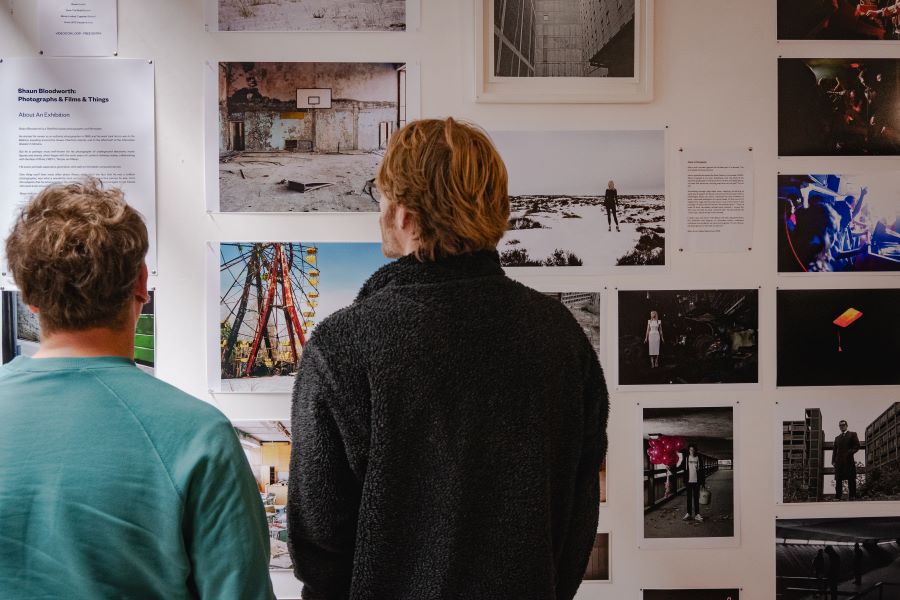
For Memory Dance founder and audio-visual archivist Alex Wilson, who worked with Bloodworth years earlier, that range is an important part of the exhibition. His work shifted between landscape, portraiture and music photography while retaining a recognisable eye – particularly in his use of space, backgrounds and symmetry.
In the nightlife photographs lining one section of the wall, Alex sees something particularly difficult to replicate.
“The way he captures the energy in the dance is something that’s really hard to do. You can kind of sense the sweat off the ceilings in those images. When he started going into the clubs and people saw the work, it was like, “Christ, this guy’s good.”’
That ability to place people within their surroundings runs throughout the show. A portrait of friend and regular collaborator Mary Anne Hobbs in the Peak District pushes its subject away from the centre of the frame. Other locals sights include Park Hill, Forgemasters and the mix of greenery and concrete familiar to anyone who has spent much time in South Yorkshire.
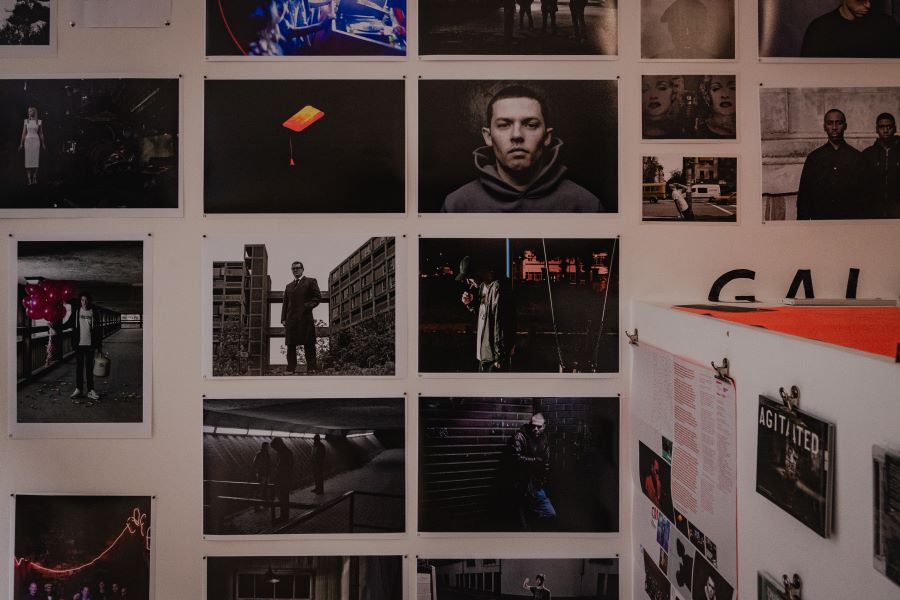
Bloodworth’s relationship with sound fed into that visual language too. Alex points to the “abrasive and industrial” character of some of the music documented and the way those qualities reappear in the photographs – artists often surrounded by hard architecture and stark landscapes. At the other extreme are portraits taken of producers in Los Angeles, where the palette suddenly changes into something much warmer.
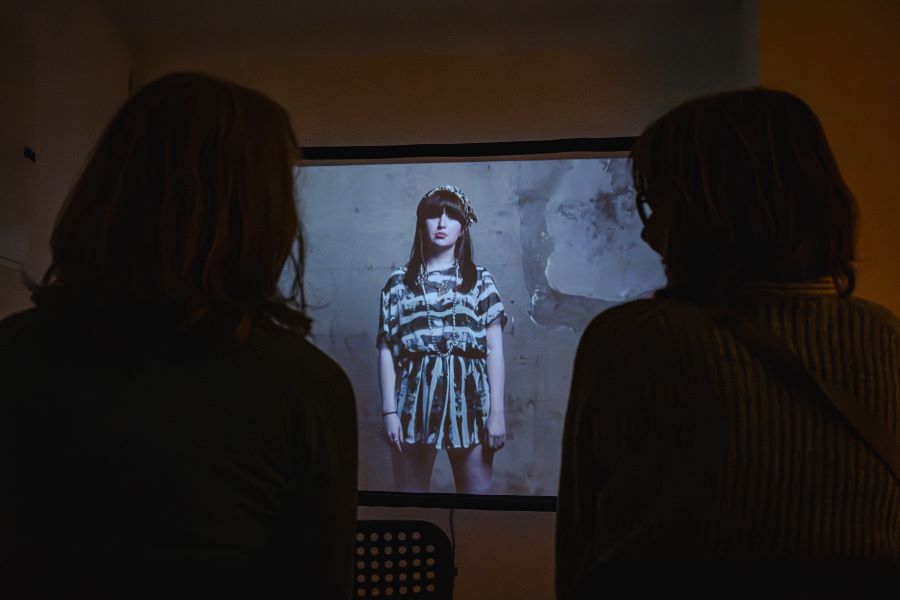
There’s another strand to the exhibition downstairs, where Bloodworth’s films are being screened. A selection of shorts captures little mesters crafting in near-hypnotic flow states, youthful reckless abandon in nightclubs heaving to dubstep and a chorus of songbirds slowly serenading a waking city. It’s a less familiar part of his output and one that was still developing at the time of his passing.
Memory Dance itself is part record shop, part exhibition space (with a small subterranean cinema) and part archive project. This is its third exhibition, following shows exploring the history of Sheffield record shops and the short-lived 1970s local television experiment Sheffield Cablevision.
This exhibition runs until 4 October, forming part of a run planned at the space through to Christmas. Next up is a show connected to writer Daniel Dylan Wray’s chronicle of Steel City music culture, Groovy, Laidback and Nasty, before the festive season kicks off with Merry Folkin’ Christmas – an exhibition focused on pagan rituals, complete with hobby horses and Morris dancers.
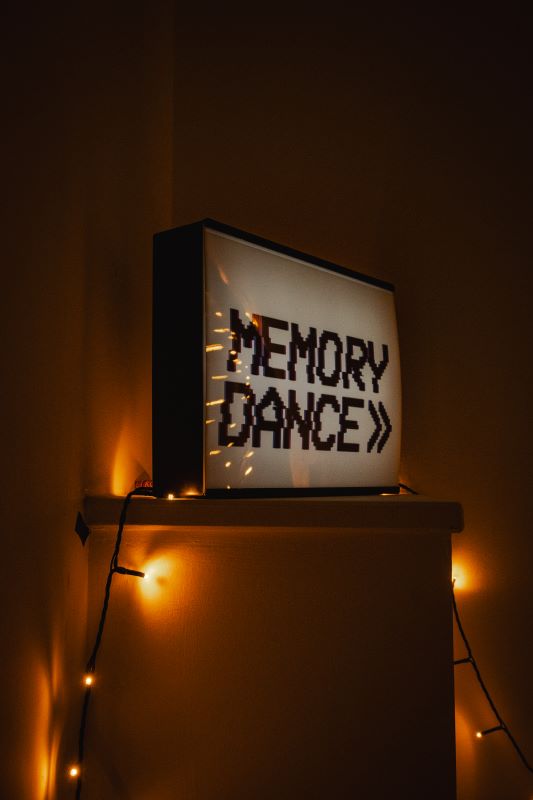
Alex has spent around 20 years working as an archivist across film, television and music collections and describes the space as a way of drawing on “characters, stories, platforms” rather rather than reaching for easy nostalgia.
“You know, this is not going to be a space that’s just going to be cosy and nostalgic about Sheffield. That exists elsewhere,” he says. “Shaun was proudly Sheffield-based. He was keen on celebrating the grit and the grime and the music, supporting young photographers and I’m told he helped lots of people. But he was also internationalist, right? Of course, he spread far, both his work and the people who look up to him from all corners of the world. I think that’s really important to show.”
Shaun Bloodworth: Photographs & Films & Things is on at Memory Dance, Chapel Walk until 4 October 2026. Follow @memorydance on socials for more information.