Disclaimer: This article is not intended to be a recommendation. The author is not responsible for any resulting actions of the company during your trading experience. The information provided in this article may not be accurate or up-to-date. Any trading or financial decision you make is your sole responsibility, and you must not rely on any information provided here. We do not provide any warranties regarding the information on this website and are not responsible for any losses or damages incurred as a result of trading or investing.
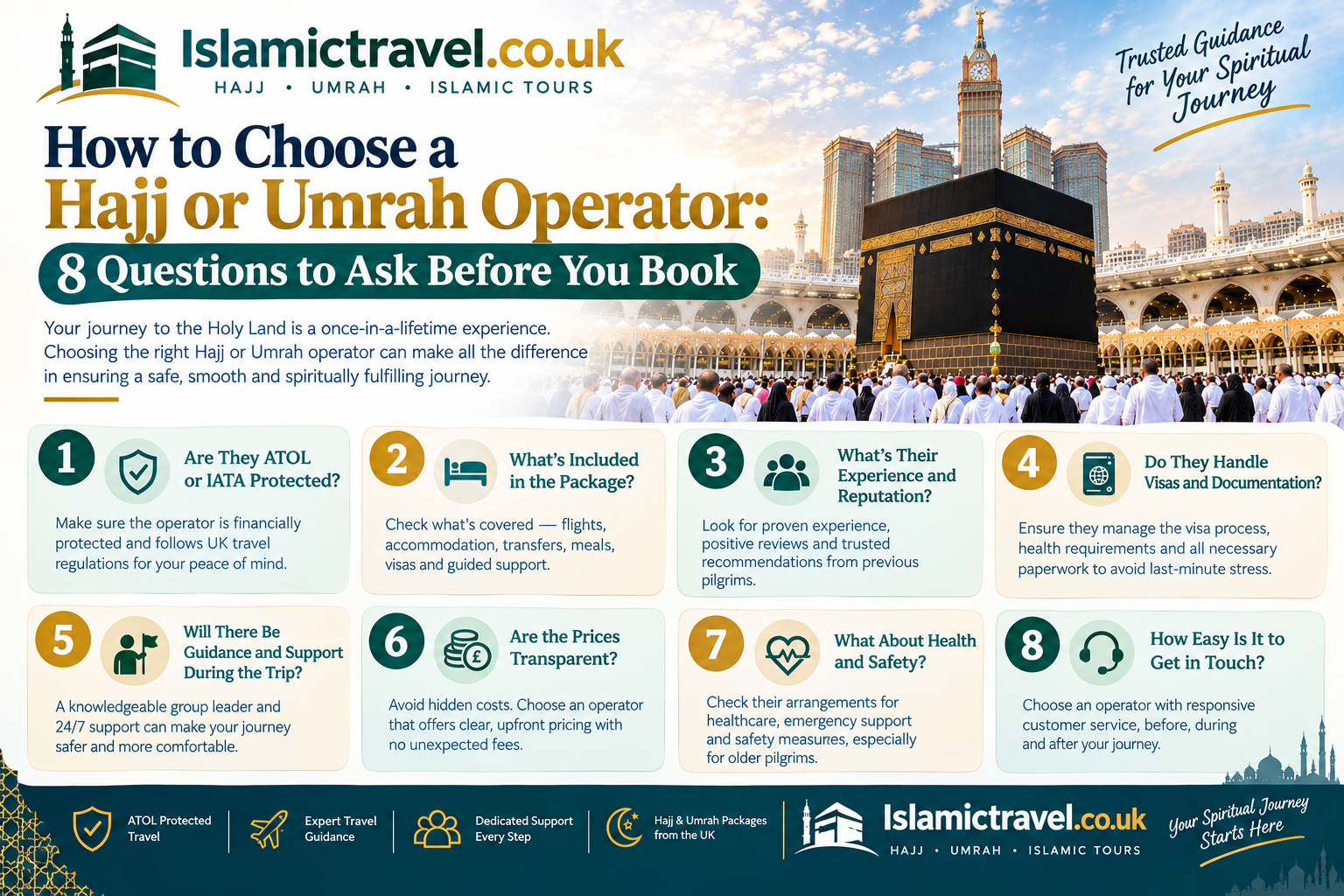
Booking a pilgrimage is not like booking an ordinary holiday. For most British Muslims it is a once-in-a-lifetime journey, paid for with money saved over years, and there is very little room for things to go wrong. Get the operator right and the trip runs smoothly from the moment you leave home. Get it wrong and you can find yourself stranded at an airport, staying miles from the mosque, or chasing a company that has stopped answering the phone.
The UK market is busy and competitive, which is good news for travellers but does make choosing harder. Adverts for Cheap Umrah Packages appear everywhere from Facebook groups to shop windows, and on the surface many look much alike. The differences that matter are rarely the ones in the headline price. Here are eight questions worth asking before you hand over any money.
1. Are they properly licensed and accredited?
This is the single most important check, and the quickest. Operators arranging pilgrimages must be approved by the Saudi Ministry of Hajj and Umrah, and reputable UK agencies will also hold ATOL protection for flight-inclusive packages, which safeguards your money and your journey home if the company fails. Ask for the licence and ATOL details, then verify them independently rather than taking a logo on a website at face value.
2. How long have they been trading?
Longevity is not everything, but in this sector it counts for a lot. An operator that has run trips for a decade or more has dealt with delayed flights, hotel overbookings and unwell travellers many times over. Look for a real trading history, a proper UK address and a team you can actually speak to on the telephone.
3. Exactly which hotel are you booking, and how far is it?
Phrases such as “close to the Haram” and “walking distance” mean very different things to different companies. Insist on the hotel name and, ideally, the distance in metres. A room two hundred metres from the mosque and one two kilometres away are not remotely the same experience, particularly if you are travelling with elderly relatives or young children, and the price difference should reflect that.
4. What is genuinely included?
Read the inclusions closely. Does the price cover the visa, permits, airport transfers, the journey between Makkah and Madinah, and meals, or are those extras that appear later? This matters most at the premium end: Hajj Packages from UK operators are working within strict national quotas and fixed dates, so the details of accommodation, transport and guidance make an enormous difference to the experience. Established agencies such as Islamic Travel set out what is covered in writing before you commit, which is exactly what you should expect. A quote that cannot be itemised is a quote to be cautious about.
5. Will someone be with you on the ground?
For first-time pilgrims especially, this can be the difference between a calm trip and a stressful one. Ask whether the group is accompanied by a guide, whether there is someone reachable locally if something goes wrong, and what the ratio of staff to travellers is. Ask, too, what happens if you fall ill or become separated from your group.
6. How do they handle payments and cancellations?
Pay by credit card or bank transfer to a company account, never in cash to an individual, and never to a personal account. Get a written breakdown of the deposit, the balance date and the cancellation terms before you pay anything. Any reluctance to put those terms in writing is a serious warning sign.
7. What do independent reviews actually say?
Testimonials on a company’s own website are chosen by the company. Look instead at independent review platforms and, better still, ask around your local mosque or community, where word of mouth about pilgrimage operators tends to be both plentiful and blunt. Pay particular attention to how a firm responded when something went wrong, as that tells you more than a row of five-star ratings.
8. Does the price make sense?
A quote well below everything else on the market usually explains itself sooner or later, in a hotel much further out, a long indirect flight, or costs that surface after booking. That does not mean expensive is better; it means the price should be explainable. If an operator can tell you exactly why theirs is lower, fine. If they cannot, be wary.
A few final warning signs
Be cautious of any company that pressures you to pay immediately, refuses to put details in writing, has no verifiable UK address, communicates only through social media, or cannot produce licensing details on request. Every year a handful of travellers lose money to operators like these, and the loss is rarely just financial.
Ask first, book second
None of these questions is difficult, and a good operator will be happy to answer all eight without hesitation. Spending an hour on them before you book is a small price for the confidence that, once you arrive, the only thing you need to think about is the reason you went.


