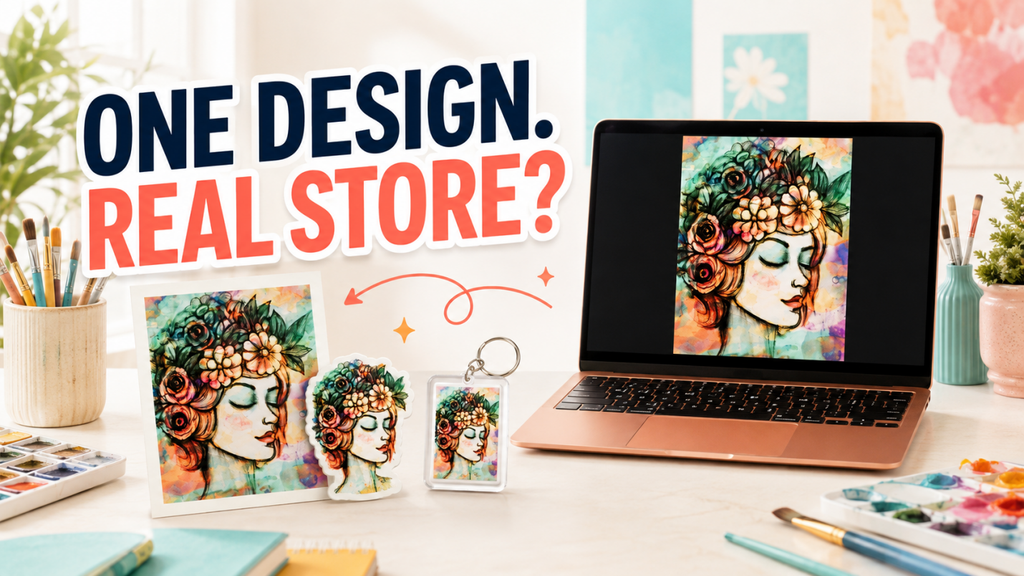
One floral illustration transformed into a print, sticker, and acrylic keychain beside the question “One Design. Real Store?”
Many artists treat the “Open Store” button like a finish line they can reach only after completing a large collection. Until then, every new idea delays the launch.
But is a large collection really required? Short answer: no. One strong design can launch an online art store if you treat it as a focused test, not a finished empire. Think of it as the pilot episode, not the complete season.
Yes, One Design Can Be a Real Launch!
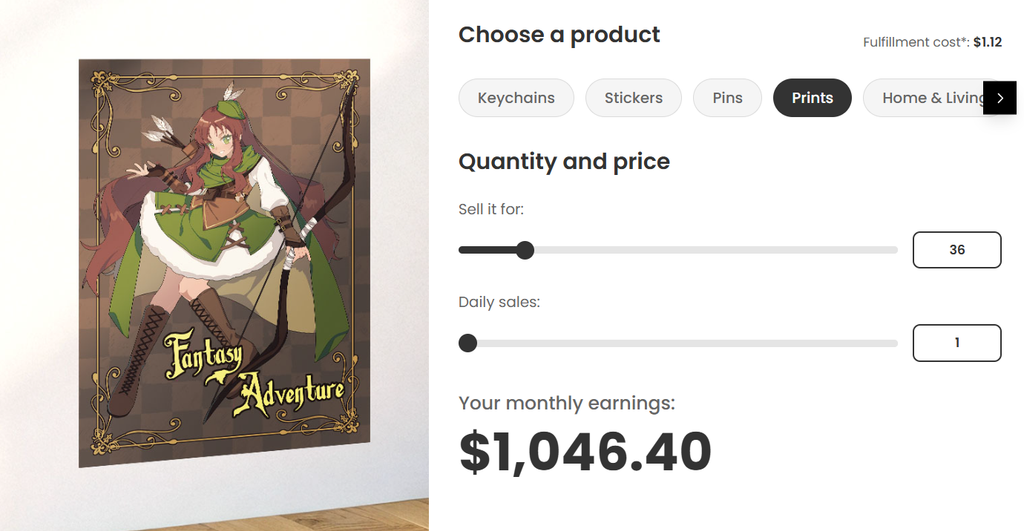
Artiststore interface displaying a fantasy art print, product options, price settings, daily sales, and estimated monthly earnings.
A traditional launch may require paying for a batch before knowing whether anyone wants it. With print-on-demand, products are made after orders are placed.
When comparing platforms to find the best merch store for creators, look for one that lets you test demand before investing in inventory. Artiststore produces items on demand and handles production, fulfillment, shipping, and customer service, leaving creators to focus on design and promotion.
This does not guarantee sales. It makes a small, evidence-led launch possible without filling a room with unsold products.
Is Your One Design Strong Enough?
“I love this illustration” is a good start, but the product must also make sense to someone discovering it for the first time.
Before building the store, check whether the design has:
- A clear focal point: The character, symbol, or joke is understandable at a glance.
- A specific audience: You can describe who would enjoy it and why.
- Useful adaptability: Important details survive cropping or reduction.
- Commercial rights: You own the work or have permission to sell merchandise featuring it.
- Physical appeal: The product adds usefulness, display value, or collectability.
If you cannot explain its appeal in one sentence, refine the concept before multiplying it across products.
One Design Does Not Mean One Unchanged File
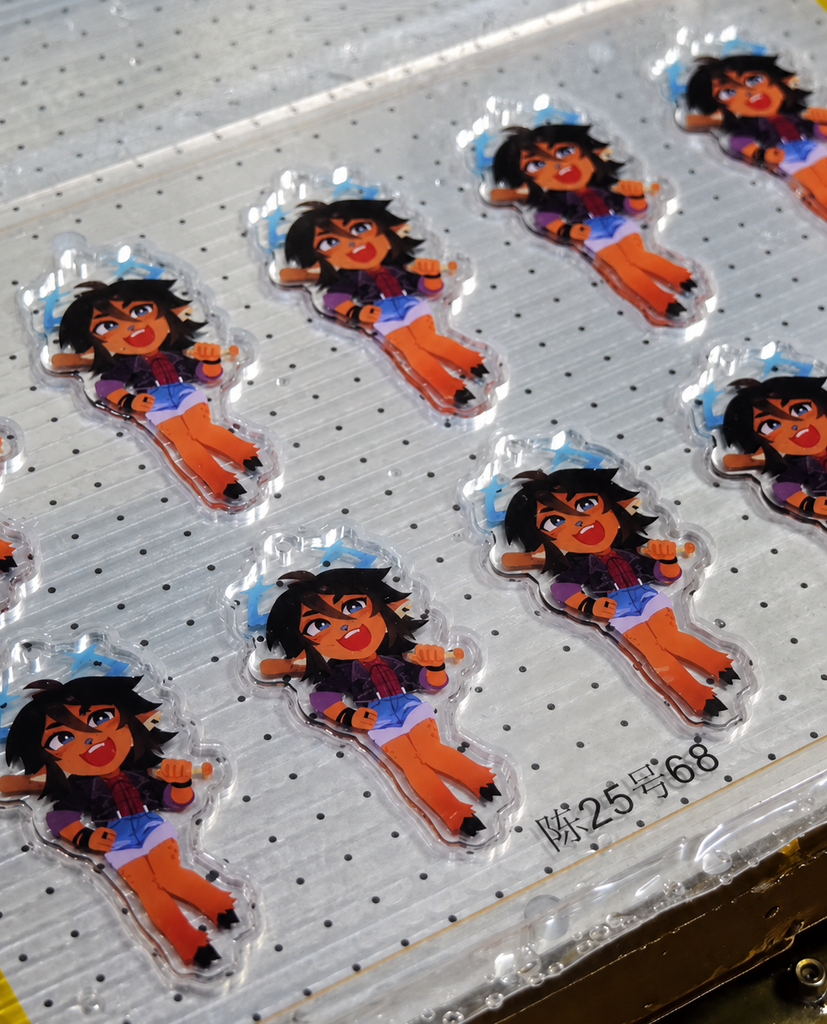
Anime-style girl acrylic charms arranged on an Artiststore production tray.
One illustration can provide several related assets, but each needs product-specific preparation. Do not squeeze a rectangular scene onto every object just to make the store look larger.
| Asset taken from the illustration | Possible product | Adaptation to consider |
| Complete composition | Print or standee | Preserve the focal point and intended crop |
| Isolated character | Keychain or sticker | Create a clean silhouette and remove background clutter |
| Recognizable symbol or prop | Pin or small sticker | Simplify fine lines so the motif remains readable |
| Character expression or detail | Companion sticker | Reframe it intentionally instead of using an accidental crop |
The result is a coherent collection built from one idea—not the same file pasted onto unrelated objects.
Make a Small Store Feel Complete
A one-design store feels unfinished only when its presentation is unfinished. Help visitors understand the artwork, picture the product, and decide whether it suits them.
Your first listing should include:
- A clear main image showing the complete product.
- Close-ups that reveal printing, color, surface, or finish.
- Accurate dimensions and material information.
- A short explanation of the character, concept, or inspiration.
- Honest notes about production and expected delivery.
- Consistent colors and typography across the banner, listing, and social posts.
Do not invent a dramatic backstory. A simple explanation—“This character came from my daily sketch challenge”—feels more personal than generic sales language.
Choose a Hero Product, Then Add Carefully
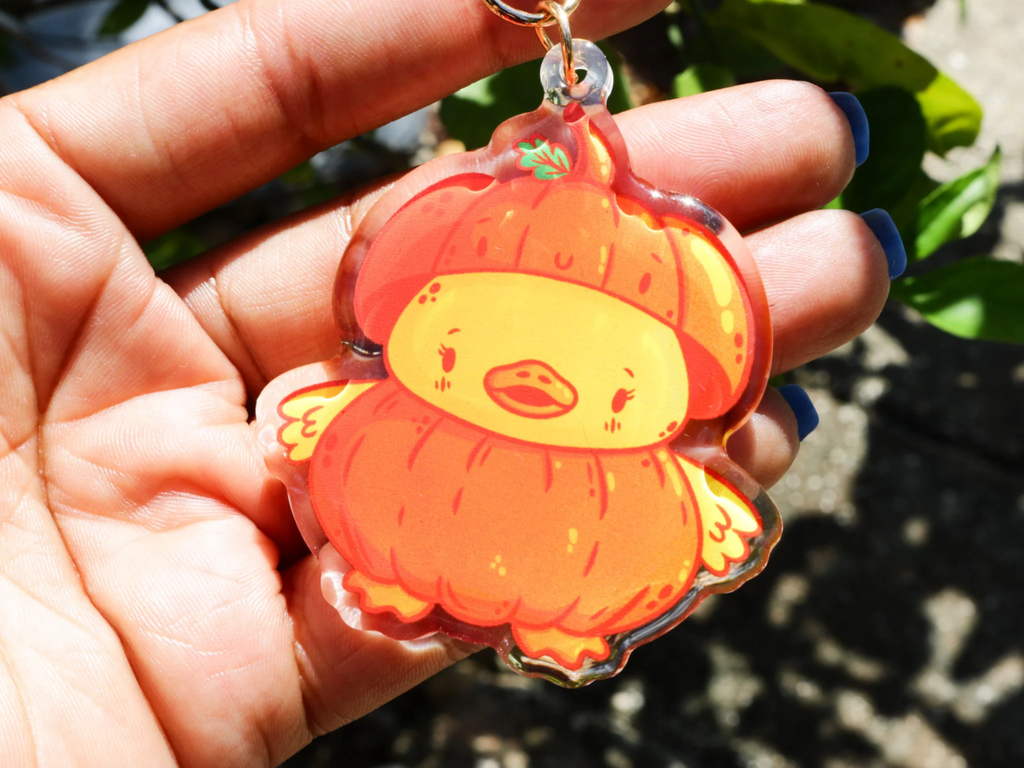
Pumpkin Duck double-sided epoxy keychain by Believably Me Designs, featuring a yellow duck in an orange pumpkin costume, available on Artiststore.
Start with the strongest format. A detailed environment may suit a print; a distinctive character may work as a standee or keychain; and a bold mascot may remain readable as a sticker or pin.
Give any second format a different purpose. Pair a display-focused standee with a portable sticker instead of listing products that offer nearly the same experience.
- Sample Before You Announce: It is always smart to order a sample before launching. Check the colors, placement, material, finish, packaging, and delivery. Is the text readable? Does the scale match the listing? Would you be happy to receive it?
Launch to Learn, Not to Look Established
A small launch provides something speculation cannot: behavior. Show realistic mockups and ask, “Would you display this as a standee or use it as a sticker?” Then compare that enthusiasm with actual orders.
Likes, poll votes, and compliments suggest interest, but they are not purchases. Prioritize orders, repeat requests, and the formats buyers choose. These signals can guide your second release better than random filler.
Fans may request another expression, prefer a smaller item, or respond to the full illustration rather than its mascot. Each outcome gives the next release direction.
When Should You Wait?
Wait if the design becomes unreadable at product size, uses artwork you cannot legally sell, or has not been checked through a sample. More preparation is also needed when you cannot identify the audience or explain the product accurately.
That is quality control, not procrastination. Improve the design, listing, or sample instead of creating filler to increase the product count.
Final Thoughts: Can You Start an Online Art Store With One Design?
Yes, you can start an online art store with just one design. The goal is to present one idea confidently, adapt it thoughtfully, and learn whether customers want more.
Choose a hero product, build a complete listing, order a sample, and launch with honest expectations. If the design earns genuine interest, let that evidence shape the next release. One memorable idea can teach you more than a crowded shop built on guesses.