Sheffield Miniaturist Lee Smithson shares five things he’s learned from years spent recreating the world on a much smaller scale.
THERE’S ALWAYS SOMETHING NEW TO LEARN
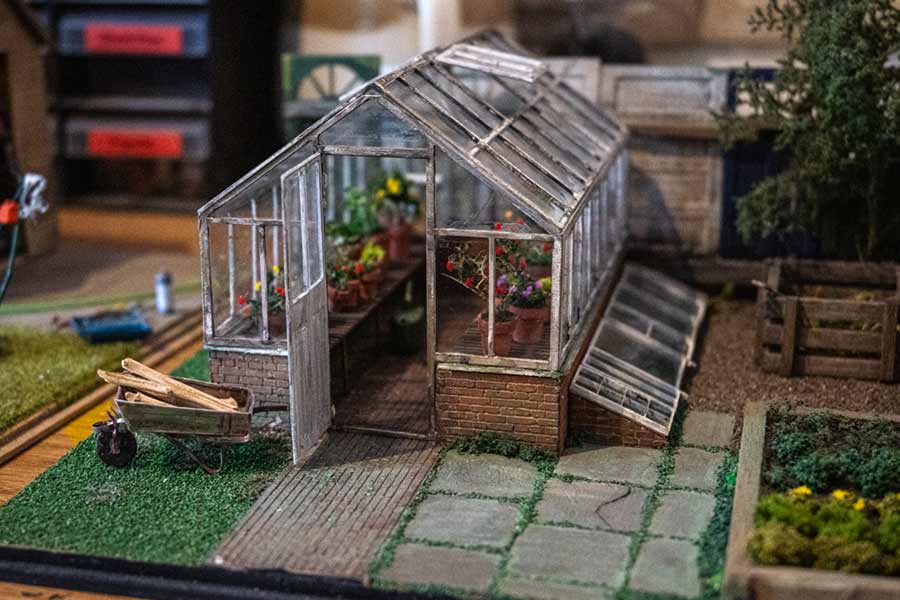
There’s always a new way to make a scenic effect or a skill to learn in order to create unique objects. I use a wide variety of materials, from resin or clear silicone for water to metal film for a lead roof, plywood for walls, doors and windows, plastic for windows or gutters and wooden dowel to make a barrel or flower pot. I’ve had to learn how to use polymer clay, 3D printers and laser cutters, as well as the programs needed to run these tools.
OCCASIONALLY, THE FIRST BUILD GETS BINNED
I do a lot of bespoke builds for people and, although I try to avoid this at the design stage, occasionally I can build something up to the point of painting and realise, now that all the components are together, that it looks off in some way. The dimensions might be wrong, the proportions might not look like the real thing or a window on a house might be out of line. Unfortunately, however frustrating it is, if it can’t be rectified with a simple modification, the whole miniature has been known to get binned and the build starts all over again. Thankfully this is a rare occurrence, but it has happened a few times.
THE BIGGER THE MINIATURE, THE BETTER THE DETAIL
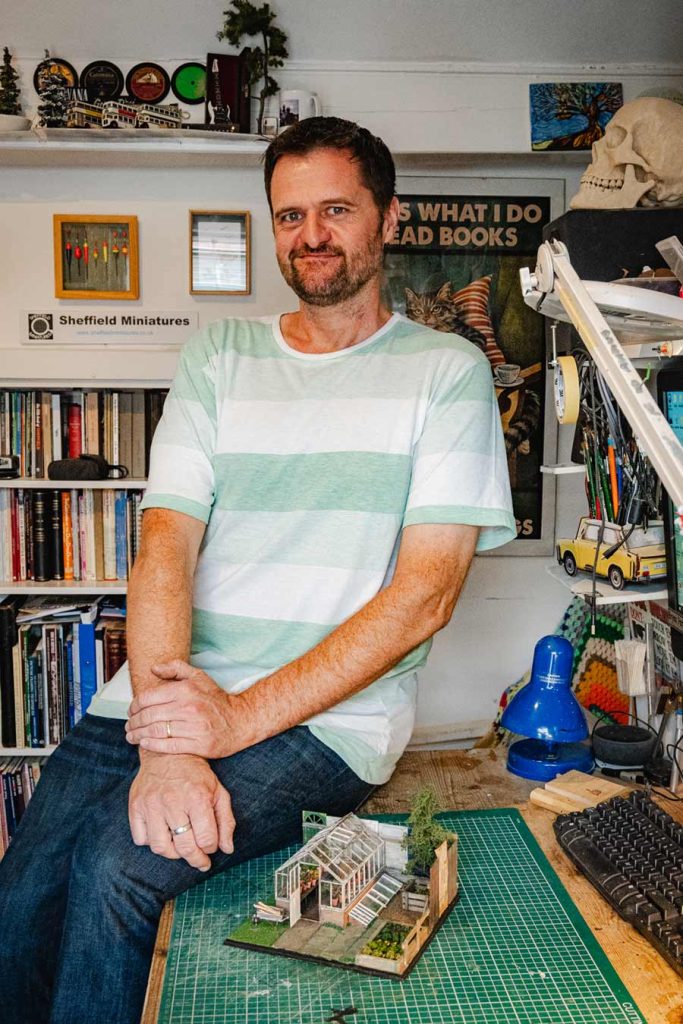
Well, that sounds wrong when you say it out loud, but it’s true. I’ve discovered after years of making miniatures that the larger the scale, the better the detail. This might be obvious to some, but it does throw people when you mention it. Basically, if I build the facade of a house and the whole frontage measures 10cm wide, that makes the front door a maximum of 2cm wide. Then, when you’re getting down to smaller details like the house number on the front door, for example, the number is going to be 2–3mm in height. When you’re getting down to things that small, it’s not possible to make them unless you’re going to look at the miniature through a microscope.
DROPPING SOMETHING CAN BE CATASTROPHIC
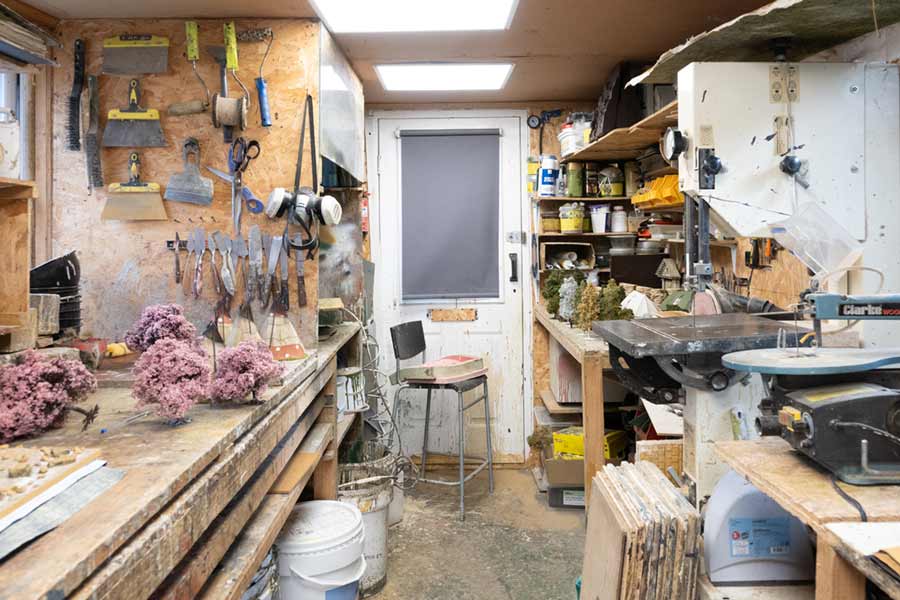
Typically, it’s something that has taken a good amount of time to make and that I’m really pleased with. You’re just holding it with the tweezers to glue it in place when it pings off in a random direction and on to the floor. At this point, after a bit of muttering, the torch comes out and the search begins on hands and knees. This can be hampered further if the floor is messy with offcuts. There are many times when I have to give up searching and simply resign myself to starting again, only to occasionally find it months later under a cupboard.
MINIATURES CAN MEAN A LOT TO PEOPLE
I’ve built childhood homes as they were at the time, family-owned shops that are now long gone, a narrowboat that someone’s father used to own and live on, a favourite fairground ride that was run by the owner’s family, a wedding venue and even a D-Day landing scene made in memory of the owner’s father, who was a landing craft operator. When discussing a commission, it always comes across how much the build means to someone. Their positive and emotional reactions when they receive the miniatures make it all feel incredibly worthwhile.
You can see more of Lee Smithson’s work by heading to sheffieldminiatures.co.uk or following @sheffieldminiatures on Instagram.
