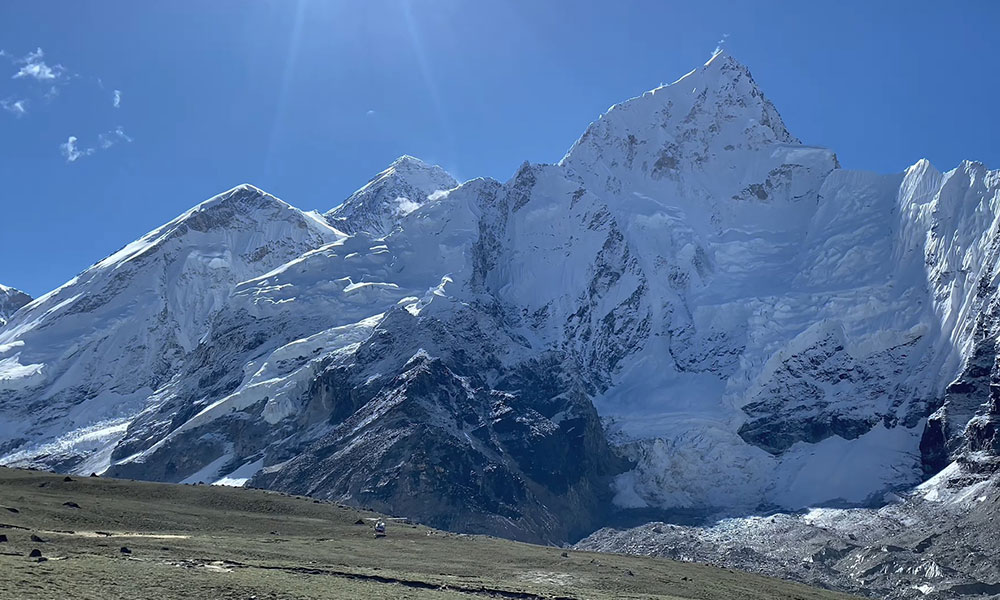
The Everest region is not one experience. It means choosing an approach that matches your fitness, time, budget, and tolerance for altitude. A scenic mountain flight, a lodge-to-lodge trek, and an expedition climb all reveal the Himalayas differently, but they demand very different levels of preparation.
For most visitors, the right Everest trip is not the most extreme option. It is the one that gives you enough time to acclimatize, recover, and enjoy the landscape without turning every day into a physical test.
Walking Through the Everest Region
Trekking is the most practical way for active travelers to experience Everest. The classic Everest Base Camp Trek usually takes 12 to 14 days from Kathmandu, including acclimatization days. It follows established trails through Sherpa villages, forests, river valleys and high alpine terrain before reaching Base Camp at roughly 17,600 feet.
You do not need technical climbing experience for this route, but you do need endurance. Expect several consecutive days of hiking, often five to seven hours at a time, with long uphill sections and uneven stone trails. The real challenge is altitude, not speed. Even fit hikers can develop symptoms of acute mountain sickness when they ascend too quickly or ignore a worsening headache, nausea, dizziness, or unusual fatigue.
Trekkers who want a broader view of the region should consider the Gokyo Lakes and Cho La Pass route. It is longer and more demanding than the standard Base Camp itinerary, but Gokyo Ri offers one of the clearest panoramic views of Everest, Lhotse, Makalu, and Cho Oyu. A slower itinerary is especially valuable here because the pass crosses above 17,500 feet and weather can delay travel.
The best trekking windows are generally spring, from March through May, and fall, from late September through November. Fall often has clearer skies after the monsoon, while spring brings warmer temperatures at lower elevations and busier trails. Winter can suit experienced trekkers who accept colder conditions and possible snow while the monsoon is usually a poor choice for high mountain visibility and dependable flights.
Climbing Everest Is a Demanding Expedition
Climbing Everest requires a completely different level of commitment. Reaching the summit involves weeks of acclimatization, specialized equipment, fixed-rope travel, glacier hazards and the ability to function in extreme cold with limited oxygen. Even before summit day, climbers must manage the Khumbu Icefall, high winds, freezing temperatures, and the physical effects of prolonged exposure above 26,000 feet.
A successful Everest climber is not simply a strong hiker. They need previous high-altitude mountaineering experience, technical training, a credible expedition operator, evacuation and rescue coverage and the judgment to turn around when conditions are unsafe. The summit is never guaranteed, regardless of training or investment.
For travelers who want a climbing objective without Everest-level exposure, trekking peaks such as Island Peak climbing or Mera Peak may be more realistic. They still require acclimatization and mountaineering skills, but they can provide a structured introduction to crampons, harnesses, fixed lines and high-altitude decision-making. These climbs should still be treated seriously, particularly by first-time climbers.
Flying Through the Himalayas
A mountain flight is the best option for travelers with limited time, mobility constraints, or no interest in multi-day trekking. Flights from Kathmandu can provide views of the Himalayan chain, including Everest on clear mornings, without the physical strain of trail travel. Helicopter sightseeing trips may also reach high viewpoints or Everest Base Camp, depending on weather, aviation rules and operational conditions.
Flying offers perspective but it does not replace the experience of walking through the Khumbu. You will see the scale of the mountains, yet miss the gradual transition from terraced hills to Sherpa settlements and high glacial valleys. Flights are also weather-dependent. Morning departures offer the best chance of clear conditions but delays and cancellations are common during unsettled weather.
The Everest Base Camp Helicopter Tour landings at high elevations can create a misleading sense of safety. A short stop does not allow the same acclimatization demand as trekking and you can still feel breathless, cold, or unwell. Follow crew instructions, avoid unnecessary exertion, and remember that aviation plans can change quickly in the Himalayas.
Choosing the Right Everest Experience
Choose a trek if you have at least two weeks, enjoy sustained hiking, and want a meaningful cultural and landscape experience. Choose a mountain flight if your schedule is short or your goal is a visual introduction to the Himalayas. Consider a climbing objective only after building high-altitude and technical experience on smaller peaks. Opt for the Everest Base Camp Trek with Helicopter Return if you want to explore the region both by ground and air.
Whichever route you choose, plan around altitude rather than ambition. Build in extra days, carry appropriate layers, arrange travel insurance that covers the activities you will actually do, and keep your itinerary flexible around mountain weather.