Disclaimer: This article is not intended to be a recommendation. The author is not responsible for any resulting actions of the company during your trading experience. The information provided in this article may not be accurate or up-to-date. Any trading or financial decision you make is your sole responsibility, and you must not rely on any information provided here. We do not provide any warranties regarding the information on this website and are not responsible for any losses or damages incurred as a result of trading or investing.
Augmented reality has moved far beyond being a futuristic concept. Today, brands, educators, retailers, artists, and content creators are using augmented reality to create interactive experiences that connect digital content with the physical world. One of the most accessible developments in this space is WebAR, which allows users to experience augmented reality directly through a web browser without downloading a dedicated mobile application.
This shift is making AR easier to access and easier to create with WabAR platforms such as Kivicube. Instead of asking audiences to install an app before they can interact with an experience, businesses can simply provide a link or QR code. Users can then open the experience on a compatible smartphone and interact with digital content in their real-world surroundings.
What Is WebAR?
WebAR, or Web-based Augmented Reality, refers to augmented reality experiences that operate through a web browser. Traditional AR applications often require users to download an app, create an account, or complete additional setup before accessing an experience. WebAR reduces this friction by bringing the experience directly to the browser.
A user might scan a QR code on product packaging, open a link from a social media post, or visit a website and immediately access an AR experience. This makes the technology particularly useful for marketing campaigns, e-commerce, education, events, tourism, entertainment, and interactive product demonstrations.
The simplicity of browser-based access is one of WebAR’s biggest advantages. When users can reach an experience within seconds, businesses have a better opportunity to encourage interaction and engagement.
Why WebAR Matters for Businesses
Digital marketing is becoming increasingly competitive. Static advertisements, product images, and conventional promotional content can struggle to capture attention. WebAR provides another way to make digital campaigns more interactive.
For example, a furniture company can allow customers to visualize a virtual piece of furniture in their room. A cosmetics brand could create an interactive try-on experience, while a product manufacturer could use 3D models to let customers examine an item from different angles.
WebAR can also turn ordinary physical materials into digital touchpoints. Packaging, posters, brochures, business cards, exhibition displays, and printed advertisements can include QR codes or visual triggers that lead customers to interactive AR content.
Because the experience is accessed through the browser, WebAR can also be incorporated into websites and e-commerce journeys. This creates an opportunity to connect traditional marketing materials with digital experiences in a seamless way.
Creating WebAR Without Advanced Coding
One of the biggest barriers to AR adoption has traditionally been technical complexity. Creating interactive 3D experiences often required specialist developers, designers, and knowledge of AR development tools.
Modern no-code platforms are changing this process. Kivicube provides a web-based platform where creators can build and publish AR experiences without requiring extensive programming knowledge. Its workflow supports drag-and-drop creation, templates, digital assets, interactive elements, and browser-based publishing.
The platform supports different AR formats, including image AR, world AR, face AR, body AR, landmark AR, and more. This gives creators flexibility when designing experiences for different campaigns and audiences.
For beginners, a no-code approach can significantly shorten the distance between an idea and a working AR experience. Instead of spending time downloading a specialized AR application, creators can focus on the concept, visual assets, interactions, and user experience directly on browsers.
The Growing Role of AI in AR
Artificial intelligence is another technology influencing the future of augmented reality. Creating AR content can require visual assets, 3D models, animations, and interactive elements. AI can help simplify some of these creative processes.
AI-powered AR, often referred to as AI AR, combines generative artificial intelligence with augmented reality workflows. The goal is to make it easier for creators to produce digital assets and immersive experiences using simple prompts, without relying entirely on traditional design or 3D modeling skills.
Kivicube AI AR demonstrates how AI can be incorporated into AR creation. AI-assisted tools can help creators explore ideas, generate visual content, and develop assets that can become part of an interactive AR experience.
This combination of AI and AR has the potential to make immersive content more accessible to smaller businesses, independent creators, educators, and marketing teams that may not have dedicated technical resources.
WebAR Applications Across Different Industries
The potential applications for WebAR extend across many industries.
In retail and e-commerce, customers can use AR to preview products, visualize furniture, explore 3D objects, or interact with virtual try-on experiences. These tools can help customers understand products before making purchasing decisions.
In education, AR can transform traditional learning materials into interactive experiences. A textbook could contain a QR code that launches a 3D educational model, allowing students to explore subjects visually rather than relying solely on written descriptions.
In marketing, brands can create interactive campaigns around product launches, events, packaging, and promotional materials. Instead of simply displaying information, marketers can invite audiences to actively participate.
In tourism and culture, WebAR can add digital layers to physical locations. Visitors could scan signs, landmarks, or exhibits to access additional information, animations, historical reconstructions, or interactive guides.
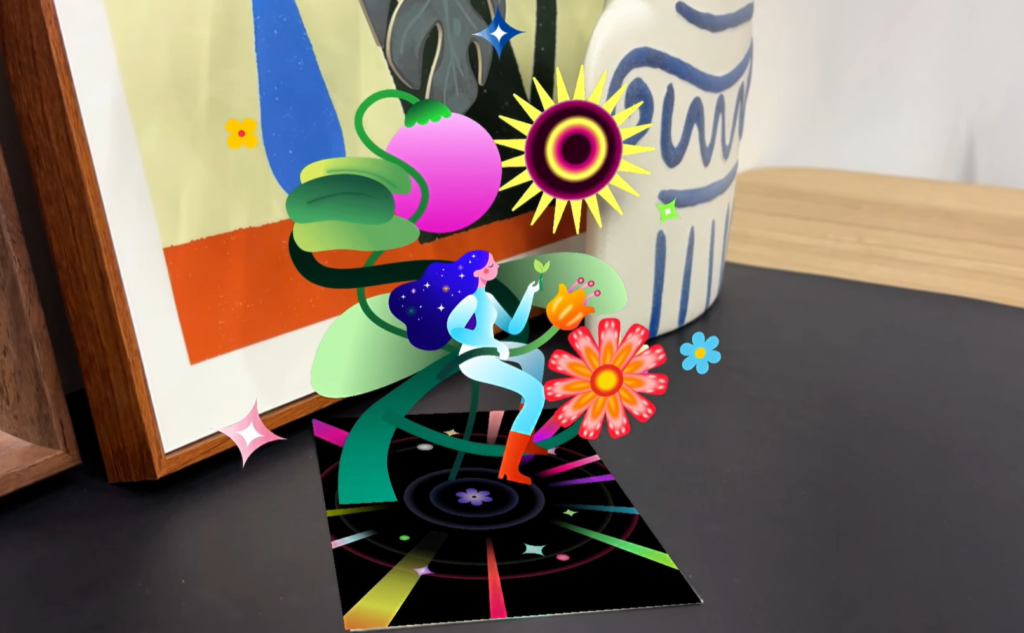
Artists and designers can also use WebAR to transform physical artwork into dynamic digital experiences. A static illustration, installation, or poster can become an entry point into animation, sound, 3D content, or interactive storytelling.
The Future of Browser-Based AR
As smartphones become more capable and browser-based technologies continue to improve, WebAR is positioned to become an increasingly important part of digital experiences. Its greatest strength is accessibility: users do not necessarily need to download a dedicated application before interacting with AR content.
At the same time, AI is helping reduce the creative and technical barriers associated with producing immersive experiences. The combination of browser-based accessibility, no-code creation, 3D content, and AI-assisted workflows could make AR practical for a much broader range of creators.
For businesses, the opportunity is not simply to use AR because it is innovative. The real value comes from creating experiences that solve a problem, communicate information more effectively, encourage interaction, or make a product and brand more memorable.
WebAR therefore represents more than another digital marketing trend. It is becoming a practical way to connect physical environments with digital content. As WebAR and AI continue to evolve together, creating immersive experiences may become as accessible as building a conventional web page—opening the door to new forms of marketing, education, entertainment, and communication.