Local music scenes run on unfinished things: a chorus shared after a gig, a beat sent between friends, or an event idea that still needs its own sound. These fragments matter because they invite people into the process, but they can be difficult to discuss when only one person can hear the arrangement in their head.
For a band, workshop group, promoter, or first-time songwriter, an ai song generator can turn that private sketch into a temporary demo. The point is not to imitate Sheffield’s musicians or replace the people who make the scene distinctive. It is to create an audible starting place that makes the next rehearsal or conversation more productive.
A Demo Should Open the Conversation
A rough demo is successful when it helps a group identify what the song needs. It might show that a lyric wants more space, that a hook is strong enough to repeat, or that the planned energy does not suit the event. A highly polished surface can actually get in the way if people assume the arrangement is already fixed.
Label the file honestly and present it with one or two questions. Asking “Does the chorus arrive too soon?” gives bandmates a useful task. Asking whether they “like the AI track” makes the technology the subject and encourages a vague reaction. The demo should keep attention on the music people want to make together.
Shape the First Draft in Three Moves
- Start With the Room in Mind
Describe the setting before choosing decorative style words. A quiet café performance, a crowded community stage, and a rehearsal-room singalong each demand a different relationship between voice, rhythm, and space. If the idea belongs to an event, note when the music will be heard and what the audience will be doing. This gives the generation a function rather than a loose genre label. It also helps performers judge whether the piece needs a strong entrance, a flexible middle, or an ending that can accommodate applause and stage movement.
- Protect the Part That Matters Most
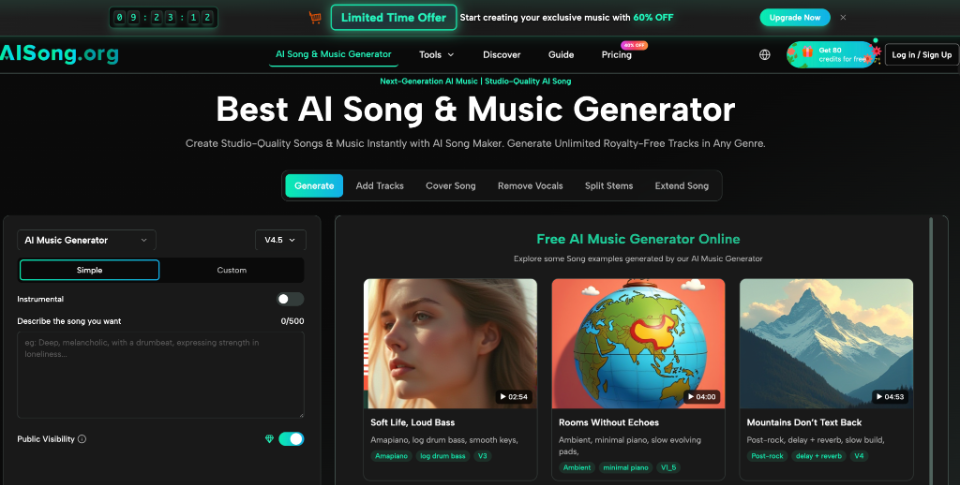
Decide which element cannot be lost: a lyric, a rhythmic phrase, an instrumental mood, or the contrast between two sections. AI Song allows a user to begin in Simple Mode with a description or in Custom Mode with written lyrics. Choose the route that protects the core material. A songwriter with carefully phrased verses should not hand that structure over accidentally, while a promoter testing an instrumental cue may not need lyrics at all. Mark any words whose pronunciation or local meaning requires special attention before others hear the demo.
- Bring Choices Into Rehearsal
Generate a small number of contrasting interpretations and stop before options become noise. Play them to collaborators as references, then try the strongest idea with real instruments, voices, and room acoustics. People may keep a tempo from one version, reject the vocal approach of another, and invent a better bridge on the spot. That outcome is not a failure of the demo; it is evidence that the sketch has done its job. Record the rehearsal once, even on a phone, so the group can compare its live decisions with the original reference rather than relying on memory. That recording may reveal a spontaneous change worth developing at the next session.
Leave Space for Local Character
The identity of a scene comes from relationships, venues, accents, histories, and habits that a general-purpose system cannot fully know. Avoid asking a tool to manufacture “the Sheffield sound” as if the city had one fixed musical formula. A more respectful brief describes the emotional and practical needs of this particular song while leaving cultural authority with the people involved.
The same principle applies to voices. Do not treat a recognisable artist’s identity as a preset. Direct the performance with qualities such as restrained, conversational, raw, bright, or close-miked, then let a real singer decide how the words should live. Specific intention is useful; synthetic impersonation rarely strengthens a local project.
Turn Generated Material Into Group Material
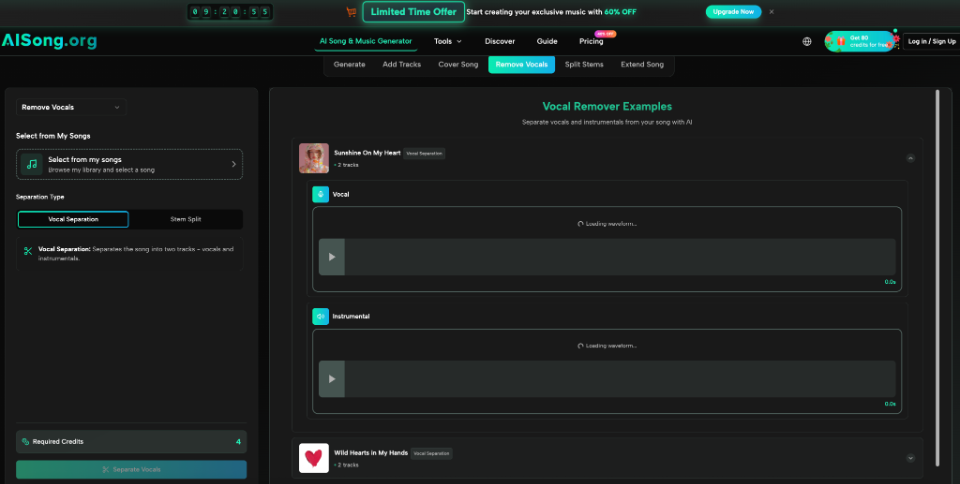
An ai song draft can be taken apart as well as played back. AI Song includes options such as vocal removal, stem splitting, adding vocals or instruments, and extending a track. A rehearsal group might use an instrumental version to test a live melody, or extend a short section so performers have enough room to explore a transition. Use only the operation that answers the current musical question.
Keep a note of what changed once people began working with the demo. New chords, altered lyrics, live dynamics, and instrumental mistakes may become the most distinctive parts of the final piece. Saving those decisions makes authorship visible and prevents the generated first pass from receiving more credit than the collaborative work that transformed it.
Community Music Grows Through Shared Decisions
Fast generation is valuable when it helps an idea enter the room sooner. It gives people something to challenge, rearrange, perform, or abandon together, and it can lower the barrier for someone who has words and feeling but lacks production experience.
The finished music should still carry the judgment of the people and place behind it. A draft can provide momentum, but local character emerges through listening, disagreement, rehearsal, and trust. Those human exchanges are not extra steps around creativity; they are where a scene’s music becomes its own.