Hands-free breast pumps can make a car routine more workable, but the boundary is clear: use them when you are parked, riding as a passenger, or setting up before or after a commute, not while driving, and not while adjusting the app at the wheel. The real value is protecting a feeding schedule when traffic, school drop-off, work shifts, or long travel would otherwise erase a session.
Safety note: This article is general education, not medical advice or legal advice. Follow your pump manual, your clinician’s guidance, local driving laws, and current CDC milk handling guidance.
Why car pumping is a buying problem
Many parents start looking at wearable pumps when a normal pump schedule collides with a normal commute. Daycare drop-off, traffic, badge access, and back-to-back meetings can turn one skipped session into leaking, discomfort, or a supply routine that feels harder to protect.
The core need is straightforward: fewer skipped sessions and a way to pump without unpacking a whole kit in a public restroom or cramped office corner. A wearable pump helps most when the car becomes a planned pause in the day, not a place to multitask through unsafe moments.
Most hands-free pump guides emphasize mobility, but car use needs a stricter checklist. A pump can be hands free and still be distracting if it leaks, pinches, sends app alerts, or needs milk poured mid-drive.
| Common promise | Car routine reality |
| Pump while doing anything | Driving needs full attention, so setup and changes belong before driving, after parking, or with another driver |
| Wear it under clothes | Seat belt angle, bra pressure, and cup shape still affect comfort |
| Use the app for easy control | App control is useful only when you are not operating the vehicle |
| Pour and store milk anywhere | Transfer needs a stable surface, clean hands, caps, and a cooler plan |
| Travel without stress | Long trips still need charging, cleaning, and backup timing |
The more useful question is which parts of the routine fit a parked or passenger setup, and which parts need to stay outside the driving task.
What works in the car and what does not
Where it makes practical sense
The most practical car scenarios are boring in the best way. As a passenger, a wearable pump can work on a commute, road trip, or ride to an appointment because you can check alignment, change suction, and stop without watching the road.
Parked before work is another strong use case. Put the pump in place after daycare drop-off, sit upright, transfer milk, pack used parts, and walk in with the first session done. Parked after work can also help when the evening drive is long and your body is already telling you the next session is overdue.
For long-distance travel, build pumping stops into the trip the same way you plan meals, fuel, and diaper changes. Rest areas and hotel parking lots are better places to start, adjust, and finish than the moving lane.
Where the risks are
Operating a pump while driving is the wrong trade. NHTSA defines distracted driving as any activity that diverts attention from driving, and pumping can pull your eyes, hands, and focus off the road if you are checking milk flow, adjusting settings, handling a leak, or reaching into your bra.
App control does not remove that concern. It may be easier than buttons on the pump, but it is still phone interaction. Set the mode, suction, and timer before you drive, or wait until you are parked. If something feels wrong, stop in a safe legal place.
Pouring milk while the car is moving is also a poor fit. Collector cups can spill, storage bags can collapse, and milk needs clean hands and a stable surface. Save transfer and labeling for a parked moment.
Setting up the routine
What to pack
A car pumping kit should reduce decisions. The goal is to arrive at each stop knowing exactly where everything is, without searching through a bag or improvising on a front seat.
- Charge the pump and case before the day starts.
- Pack clean pump parts in a sealed bag or container.
- Add milk storage bags or clean food-grade containers with tight lids.
- Keep a small cooler with frozen ice packs ready for expressed milk.
- Bring hand sanitizer, paper towels, nursing pads, and a dark layer.
- Carry a separate bag for used parts so clean and used pieces never mix.
Five minutes of prep the night before removes most of the reasons a parked session gets skipped.
Seat belt fit and comfort
Wearable pumps add shape inside the bra, and a seat belt adds diagonal pressure across the chest. Test the combination while parked before you rely on it for a real commute.
The shoulder belt should still sit where it belongs, not behind your back or under your arm to avoid the pump. If the belt presses directly into the shell, use a parked session or pump as a passenger instead. A structured pumping bra can reduce cup tilt. If pain, pinching, swelling, or repeated leaking develops, stop and reassess fit, suction, or timing before the next session.
Where the eufy S2 Pro fits commute pumping
For a parent comparing models around car use, the useful question is not “Can I pump anywhere?” It is “Can I align quickly, run quietly, store power, and clean up without turning the car into a sink?”
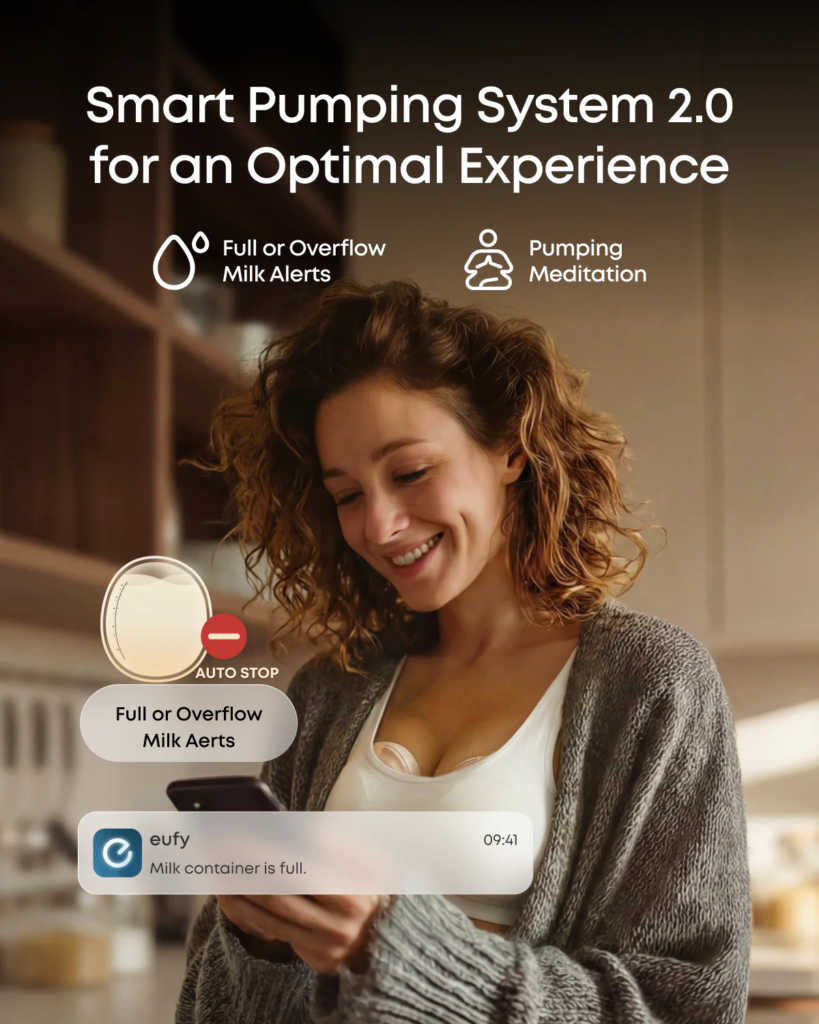
The eufy Wearable Breast Pump S2 Pro fits that commute-first checklist because it is wearable, app-controlled, and designed for quiet 46 dB operation. Its in-bra shape supports passenger-seat or parked sessions without tubes across the console. The 360° see-through design and built-in nipple light help with alignment in a dim garage or parked car.
The S2 Pro pairs HeatFlow™ 2.0 warmth and VibraPump™ massage with up to 300 mmHg suction. In a car routine, warmth and massage serve as comfort aids and letdown support, not as permission to push through an unsafe or painful setup. eufy cites internal lab results for shorter sessions and higher milk output, but real results still vary.
Two commute details stand out. The wireless charging case is rated for up to 7 days based on three 20-minute sessions per day without heat or massage, so frequent warming and massage call for more charging. Only 5 parts need cleaning, which keeps the used-parts bag manageable. If you are still comparing shapes and accessories, the eufy Breast Pump collection is the better place to browse.
Milk storage and cleaning after a car session
Get the milk cold first. CDC guidance puts freshly expressed milk at up to 4 hours at room temperature or up to 24 hours in an insulated cooler with frozen ice packs while traveling. Move it into the cooler as soon as the session ends, and do not leave it sitting in a warm car while you run errands.
For cleaning, bag used parts separately and wash them with soap and water when you reach a sink. CDC pump hygiene guidance is clear that wipes are a convenience, not a substitute for proper washing, and that milk-contact parts need to be rinsed and cleaned as soon as possible after each session.
Conclusion
A wearable pump can take real pressure off a commute that keeps pushing sessions late. The version that works is simple: set up before you drive, pump as a passenger or while parked, get the milk cold, and wash parts when you reach a sink. Choose a pump for what it can genuinely improve: quiet operation, clear alignment, a charging case, and a short cleanup list. With those in place, the car stops being a gap in the day.