One of the UK’s most influential and celebrated landscape architects and gardeners is bringing her award-winning Chelsea Flower Show garden to a new home in Sheffield. Sarah Eberle’s ‘On the Edge’, which won 2026’s Garden of the Year, is taking root at Park Hill flats to illustrate the necessity of greenery and connecting with nature in busy urban spaces. Exposed’s Ruby Deakin sat down with Sarah to discuss the new project and the importance of preserving nature on our doorstep.
‘On the Edge’, commissioned for the 100th anniversary of the Campaign to Protect Rural England (CRPE), invites visitors to envelop themselves in nature, cherish its beauty and healing power, and confront what is at stake if these spaces become overlooked and neglected.
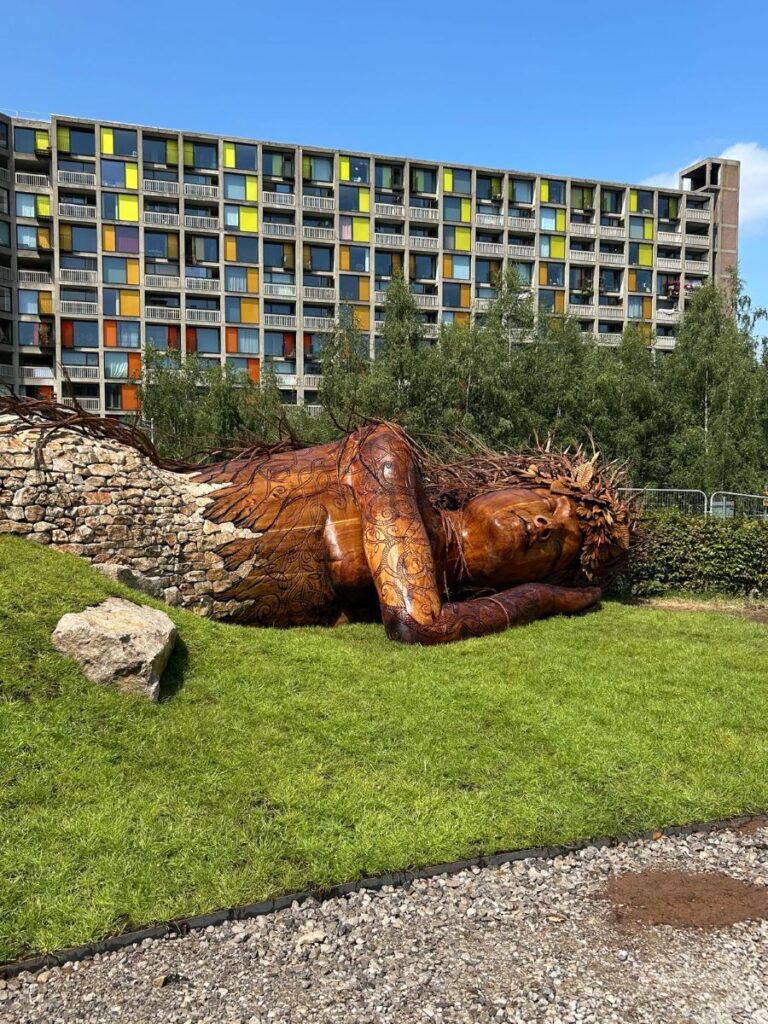
Inspired by the fields, paths, parks, woods, and scrublands that provide a vital, everyday encounter with nature, Sarah’s garden illuminates the ‘edgelands’ of towns and cities where fragile land can become eroded by development. She draws on her upbringing on the edge of her hometown and a childhood fascination with local nature, creating a poignant space that offers a sense of hope for a greener future.
“This land is the first touchstone of nature that people who live in towns and cities have. It’s where we walk our dogs, it’s where our children play, and that access to land is important,” Sarah explains. “We wanted to call the garden ‘On the Edge’ because it describes both the location and the threat. It’s on the edge of towns and cities, but it’s also on the edge of development, it’s on the edge of climate change.”
At the centre of the garden lies the breathtaking Gaia sculpture who flows seamlessly through the landscape. As a guardian of nature, she represents the necessity of preserving the countryside surrounding every town and city and protecting the wild spaces that are at risk of being lost.
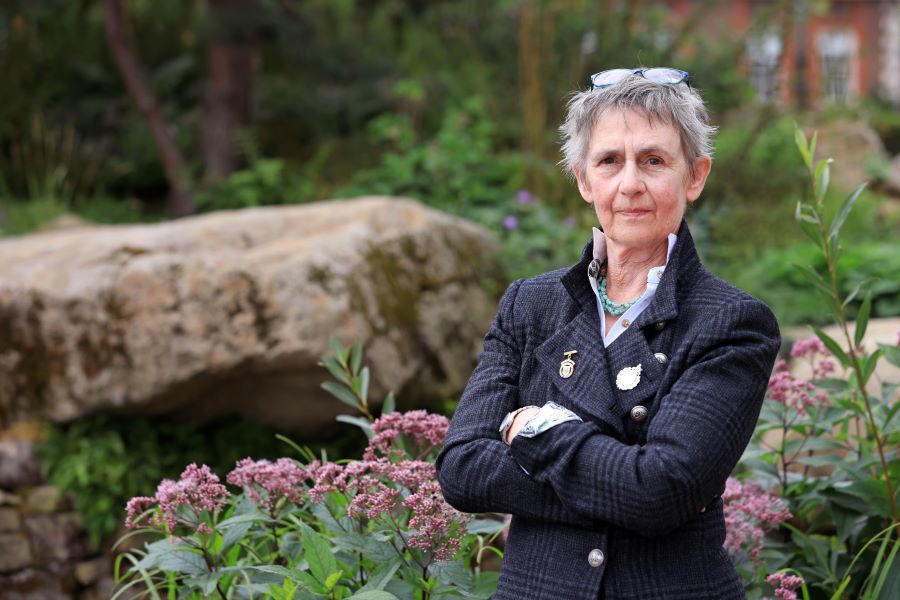
“Nature is a sanctuary,” says Sarah. “Of course, Gaia, although a Greek God, is well known as being Mother Nature, and so I knew creating her would really hold the place and explain the garden to people. And so, she needed to be big, as a symbol of protection of nature and sanctuary.
“Along the way, we had a couple of scenarios where things didn’t go as planned,” she continues, “but it worked for the better. I actually felt like Gaia herself was just guiding us along, and the whole thing came together.”
Following its enormous success at this year’s Chelsea Flower Show, the garden has been rebuilt and reimagined for a new life at Park Hill Flats in Sheffield. After first visiting Park Hill in the 1970s as a landscape architectural student, Sarah says she had confidence that the luscious grounds would provide the perfect second home for Gaia.
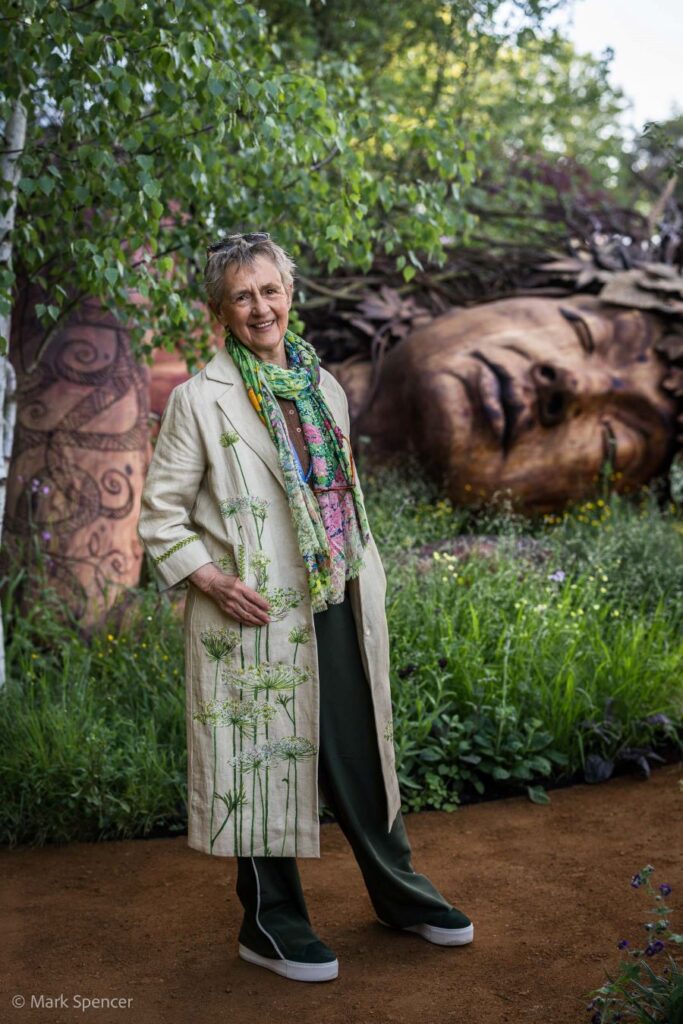
“I knew immediately that this was the place for her. I’m almost more excited about her being there than I was at Chelsea, because I really think she belongs there. There’s something about the balance between her spirituality and her softness and the buildings, which are so brutal. It brings it together in a really nice way.”
The project has been an immense joint effort between so many artisan crafters and makers, who have seen the garden grow and bloom over many months. Collaborating with Sarah is the aptly named chainsaw artist Chris Wood, who conjured and carved the Gaia sculpture from fallen mature trees, and Tom Hare, who weaved the figure’s hair from willow branches.
The team also includes Lydia and Cuthbert Noble, fifth-generation stonewallers from West Yorkshire, alongside steel workers, structural engineers, and so many others that have each brought their own unique ideas to the project.
“I love working with them. I said right from that start that this is a major collaboration, and I’m more like a conductor of an orchestra than anything,” she says. “We all feed off each other’s energy; we fire each other up and create something that’s braver and bolder than what you’d be able to do on your own.”
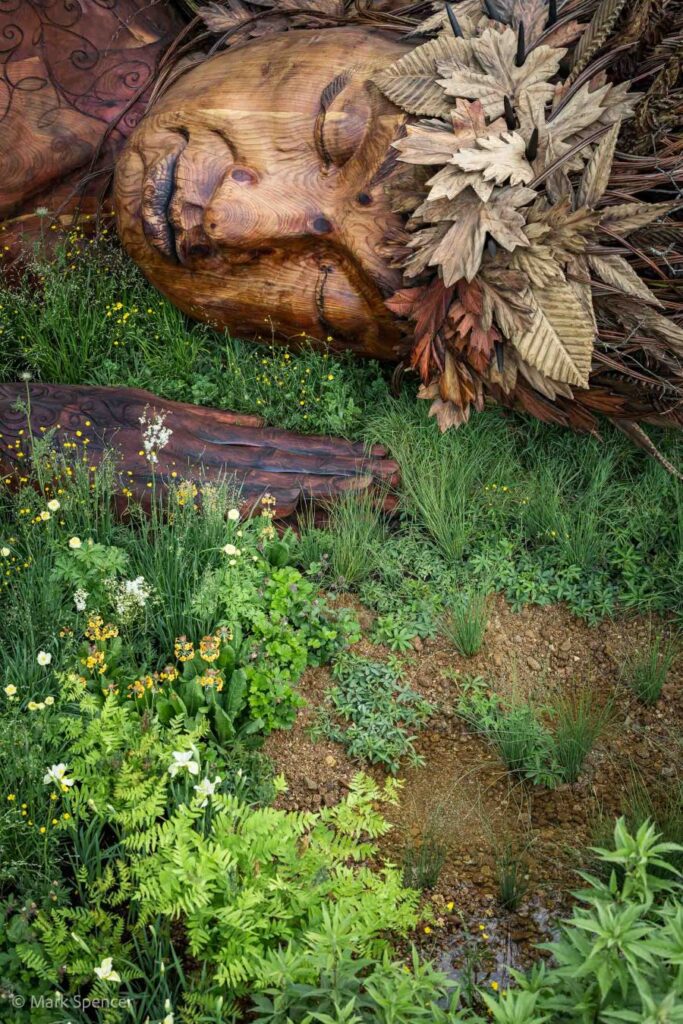
For Park Hill, the team have transformed the garden into a more streamlined space that will organically evolve over time amongst the shapes and curves of the site’s green spaces. Sarah explains how the plant varieties seen at the original Chelsea garden have been adapted, with the new ground supporting naturally growing flora and hedgerows tailored to Park Hill’s unique landscape.
“There is now wildflower turf, which marries to the banks around it. The simplified form for me is enough; it shows off her glory, and actually what the plants were doing at Chelsea, the surroundings are doing here.”
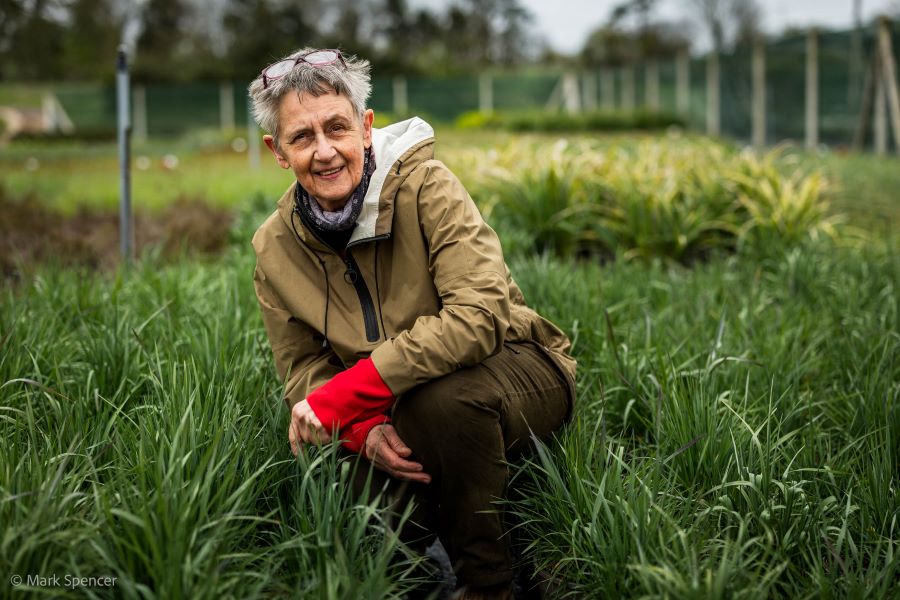
It is her hope that locals and visitors will find joy and strength in the garden, connecting through shared experiences in the space to slowly heal our relationship with the natural world.
“Connecting to nature is critical, and I think our population has become very divorced from nature and what it means. It’s our natural habitat, and I think every single person has an inbuilt genetic response to nature. You might have to dig it out of some people, but I’m hoping that she will do that to a degree; that sense of what the benefit is to people’s peace of mind and their sense of self, and the sense of community pride of something shared, will grow, hopefully.”
She adds: “For the residents, I want them to have ownership, it’s theirs and it’s for them. It’s there to interact with, and if it gives anybody half the pleasure it gave us making her and seeing her come to life, then that’s job done.”