Sheffield composer Christopher Hawkins has swapped last album’s widescreen electro-rock for something far more intimate on Where the World Can’t Find You. He spoke to Ruby Deakin about finding comfort in silence, capturing the city’s contrasts and teaming up with brutalist artist Mandy Payne for an album rooted in Sheffield from first note to final image.
The album focuses on exploring personal, inner spaces of healing and sanctuary. What encouraged you to delve into these experiences of self-reflection?
I just wanted to capture those quiet moments that nobody else ever really sees. Whether that’s sitting somewhere in total isolation or simply getting lost inside your own head. When you stop and think about it, so much of what we actually go through – all the highs and the really heavy lows – happens completely out of sight. It’s entirely private. I wanted the music to feel like a space where you can just sit with that for a while.
You mention that the tracks are inspired by the urban spaces of Sheffield. What drew you to this and how is it reflected in your music?
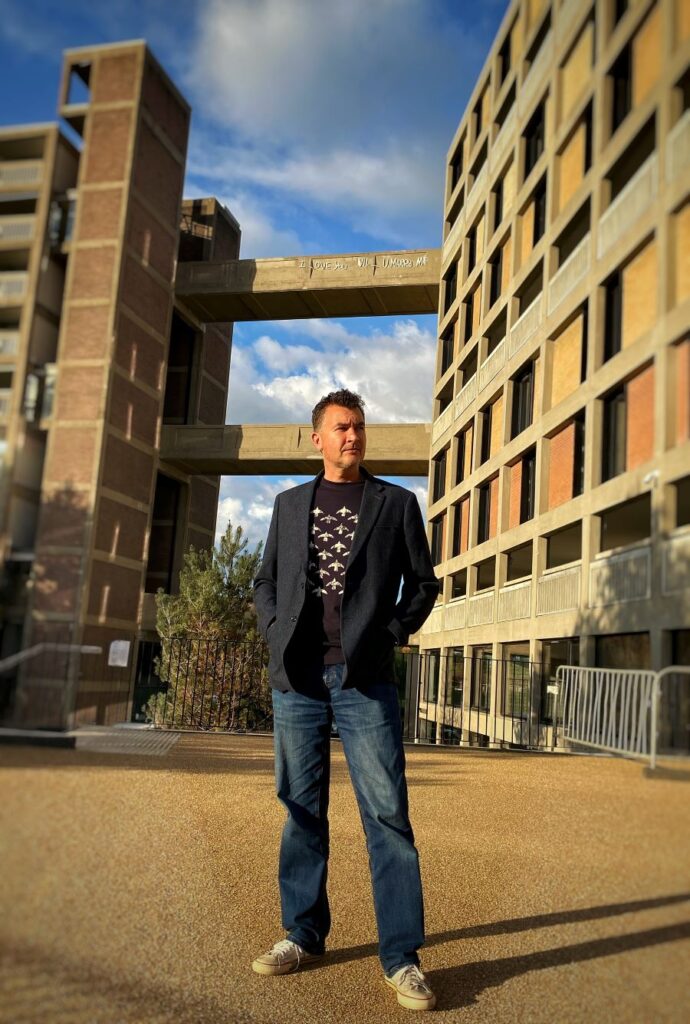
I was born in Sheffield, and growing up here means living in this constant state of contrast. You’ve got all this sprawling concrete and industrial soul, but then you look up and you’re totally surrounded by the green hills, rocks and wild moorland of the Peak District. I love that tension. In the music, I try to find sounds that mirror that in some way. It’s the same with the city’s character today; you have this heavy industrial history sitting right next to indie pop-up bars and creative spaces buzzing with energy. I love it!
That’s actually why collaborating with Mandy Payne felt so right for the cover. She’s a brilliant local artist who explores brutalist architecture – she even paints directly onto physical slabs of concrete. She let me use one of her pieces featuring the Park Hill estate, and there’s a perfect parallel there. Park Hill is this iconic, raw concrete structure, but it’s full of human stories, warmth and history. She captures that exact balance visually, and that’s something I’m trying to do with the textures and sounds on this record.
Tell us a bit about your DIY recording process. Where do you start, and how do the tracks evolve from there?
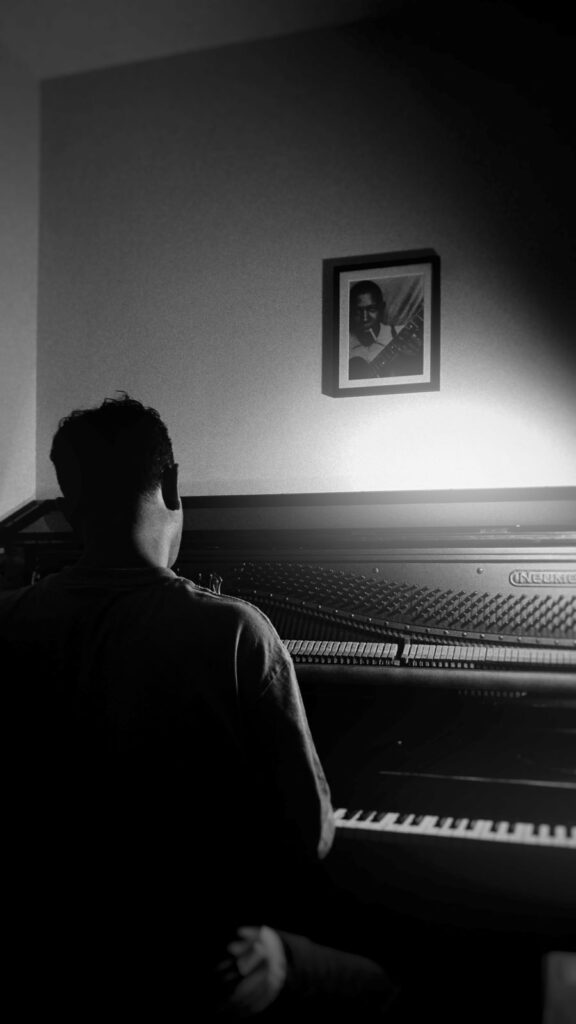
It always starts with a feeling. I’ll sit at the piano trying to find a couple of chords or a melody that matches the emotional residue of an experience. Once that spark is there, my main rule is to leave space. The silence between the notes is just as important as the music itself – it lets the track breathe and invites the listener in.
From there, I just play around with colouring in the sketch, whether that’s layering up strings or keeping it completely stripped back. Because it’s a DIY setup, I always chase the raw mood over perfection. If a take captures the right feeling, I keep it – even if there are tiny flaws, or a bit of background noise from my dog, Alfie. It just keeps it real.
How does this album follow on or diverge from your previous releases? Did you want to try out anything new with this project?
This record is a massive contrast to my last one. That project was a full-on, collaborative electro-rock album inspired by the local poet Rowan Blair Colver. I got to work with the brilliant James Bacon on guitars and production, and featured amazing musicians like Sheffield’s own Jody Davies from Fargo Railroad Co., and even rock legend Wayne Hussey of The Mission. It was an incredible, high-energy experience, but after something that loud and collaborative, I felt a natural pull to swing the pendulum completely the other way.
Where the World Can’t Find You is a deliberate retreat into a quieter space. I wanted to see what happened if I stripped everything back and looked for solitude instead. Instead of the shared energy of working with other people, this project was just me, sitting alone at the piano trying to find sounds that felt deeply reflective. It’s definitely a more ambient, cinematic departure for me, but it felt like the exact sanctuary I needed to create right now.
Your tracks feature a diverse range of instruments and sounds. What draws you to these particular tones?
My musical taste is pretty broad – it spans classical, jazz, blues, folk, rock and electronic music. On any given night before going to sleep, I might be listening to anything from a Beethoven string quartet to Brian Eno. I’ve always loved how you can blend elements from completely different worlds to create specific tensions or emotions.
When I’m working on a track, I just explore whatever texture feels right for that specific mood. Sometimes that means adding some really restrained, atmospheric guitar lines, and other times it means layering in a sweeping synth pad to lift the piano. There’s always a new sonic combination to discover, and for me, that’s the most exciting part of making music. It keeps the process fresh.
The album’s title track has a noticeably darker vibe than a lot of the album. Was there a specific mood you wanted to convey through this piece?
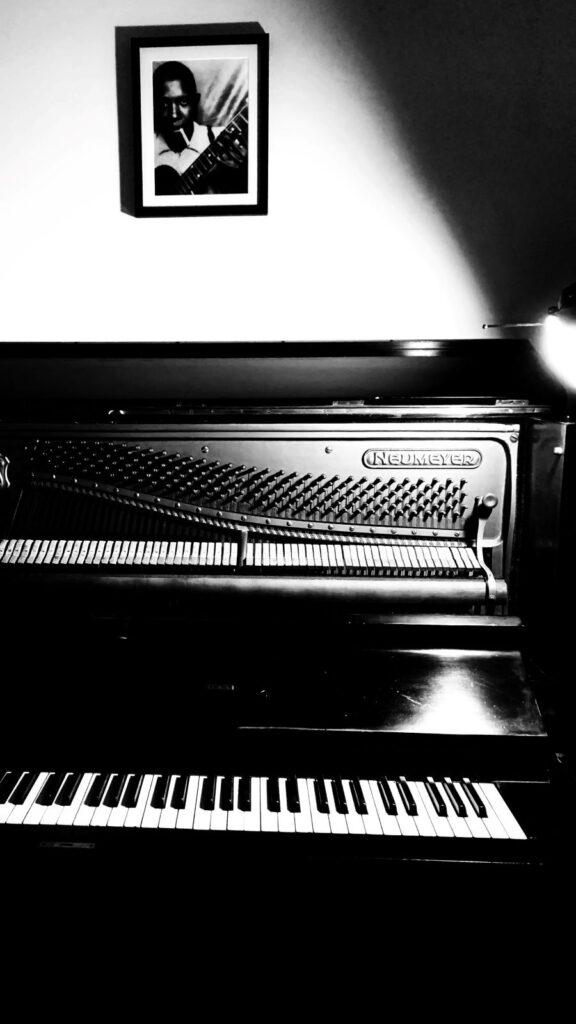
It’s funny, I actually remember dropping a microphone inside the piano to capture the sound of me plucking the high strings for the intro, and thinking to myself, ‘Right, this is going a bit haunted house now!’
But it felt right because the track touches on those darker, heavier mental spaces that we all go through completely out of sight. It starts in that isolated place, but when the drums and guitars finally kick in, it completely shifts the energy. To me, that moment signals a sense of healing and relief – almost like being lifted up out of your own head by the people around you. It captures that cycle we all experience, where you fall into the dark for a bit, but then find your way back to the light. It’s heavy, but it ends with hope.
Where the World Can’t Find You is available to stream now across all major platforms