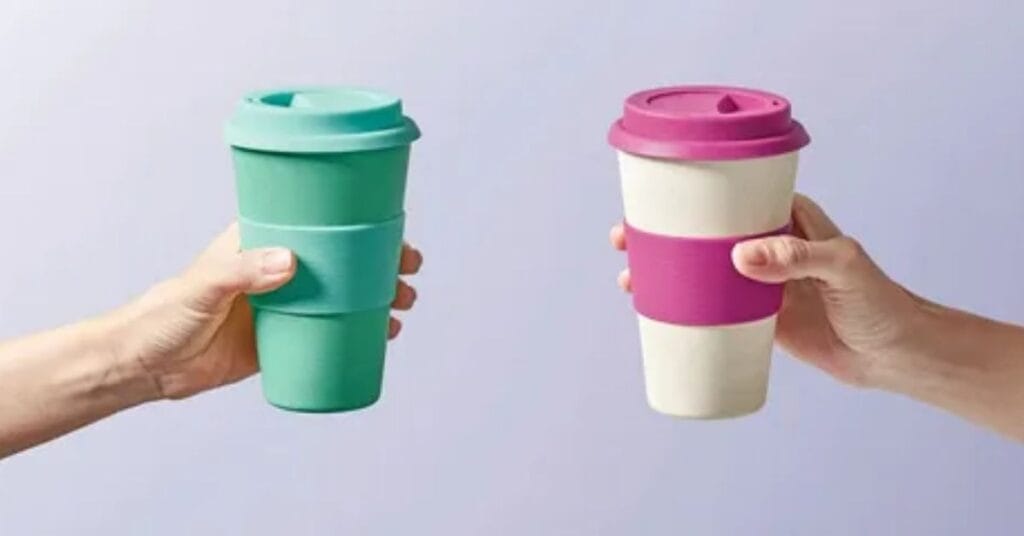
Walk past any bin near a train station and you will likely spot a pile of disposable coffee cups poking out the top. Britain gets through billions of them every year, and most cannot be recycled the way people assume. That plastic lining inside, the bit that stops your coffee leaking through the cardboard, causes the whole problem.
Reusable coffee cups fix this without asking much of you. You bring your own cup, hand it over at the counter, and walk away with your usual drink minus the waste. Cafes across the country have got used to the idea now, and plenty even reward you for doing it.
What Exactly Is a Reusable Coffee Cup?
Reusable coffee cups are built to replace the disposable cup you would normally get handed at the till. Unlike a travel mug, which focuses on keeping a drink hot for hours during a long commute, a reusable cup is designed more for a quick coffee that you drink fairly soon after buying it. Most are made from materials such as stainless steel, glass, or plant based fibres, all of which can handle daily washing without breaking down.
A silicone band often wraps around the middle, both for grip and to stop your hand getting burnt by a hot cup on a cold morning. The shape tends to copy the classic paper cup you already know from your local café, which makes baristas comfortable using them behind the counter. This familiar shape also means the cup slots neatly under most coffee machine spouts without any awkward fiddling.
The Real Impact of Disposable Cups
It is easy to underestimate how much waste one small cup creates when you multiply it by millions of daily coffee orders across the country. Local councils rarely have the specialist facilities needed strip the inner plastic coating away from the outer paper, so almost all disposable cups end up in general waste rather than recycling.
Choosing a reusable coffee cup instead removes you from that cycle entirely. It also tends to reward you directly, since a growing number of coffee shops knock a small amount off your bill when you bring your own cup rather than take a fresh one.
- Fewer cups sent to landfill or incineration each year
- Regular savings on your daily coffee through café discounts
- Less plastic lining and packaging waste created overall
- A sturdier cup that survives being dropped or knocked
- No flimsy cardboard sleeve needed to protect your hand
- A cup that suits both hot drinks and cold ones
Multiply those savings across a whole year of coffee runs and the difference becomes hard to ignore, both for your wallet and for the bin at the end of your street.
How to Choose the Right Reusable Coffee Cup
Now that the market is flooded with reusable options, picking one can feel more complicated than it needs to be. A few practical details matter far more than the colour or pattern printed on the outside.
Your daily routine should guide your choice. Some people finish their coffee before they even reach work, while others keep the same cup beside them until lunchtime. Choosing a reusable cup that matches the way you drink makes it far more likely that you’ll use it every day.
Size and Capacity
Most reusable coffee cups come in a small handful of standard sizes, usually matching what you would order at a typical café counter. Buying one that matches your usual order means you get a proper refill rather than an awkward half empty cup. Some ranges offer a couple of sizes side by side, which suits households where one person drinks a strong small coffee and another prefers a larger, milkier one.
Lid Design and Spill Protection
A good lid stops your coffee from splashing about while you walk, cycle, or catch a bus. Many modern designs include a small sliding cover over the drinking hole, which keeps dust and pocket fluff out when the cup is not in use. Some lids also let you drink from any angle around the rim, rather than forcing you to sip from one fixed spot, which is genuinely useful when you are holding a bag in your other hand.
Material and Everyday Durability
Stainless steel cups tend to survive years of daily use, resisting the dents and cracks that plastic often picks up over time. Glass options offer a cleaner taste with no risk of flavours lingering from yesterday’s coffee, though they do need a little more care around drops. Whichever material you pick, check that it is dishwasher safe, since a cup that needs careful hand washing every single day quickly becomes a chore rather than a habit worth keeping.
Making the Switch Stick
Buying a reusable coffee cup is the easy part. The harder bit is actually remembering to bring it with you every morning, especially in the early weeks before it becomes second nature. Leaving it by your front door or clipped to your bag solves most of that problem within a week or two.
Brands such as Circular&Co have built their reusable coffee cups from recycled materials with exactly this everyday habit in mind, aiming for a product that lasts years rather than ending up forgotten in a drawer after a few uses. That focus on genuine, long term use is what separates a cup you actually rely on from one that becomes a novelty gift.
It also helps to check which local cafes offer a discount, since that small reward acts as a helpful nudge on mornings when you are tempted to leave the cup at home. Many chains display their reusable cup policy near the till or on a small sign by the counter, so it is always worth a quick glance before you order.
Final Thoughts
One small cup, carried each morning, quietly chips away at a much bigger problem than it looks like it should. Over time, though, it becomes one of those simple habits that fits naturally into your day. Pick a cup that holds the amount of coffee you usually buy, has a lid that stays firmly in place, and is made to last through regular use. Give it a fortnight of habit and you will stop thinking about it at all, it will just be part of leaving the house.