Graphic designer, illustrator and tubthumper for local psych-rockers Sister Wives, Lisa O’Hara has become a familiar name on the city’s creative circuit. Her distinctive style channels a trippy, Brothers Grimm-inspired energy, blending folklore, musical influences and a playful touch of the macabre. Lisa’s work can often be seen adorning city walls and social feeds, advertising the latest cultural happenings at DIY spots across Sheffield and further afield.
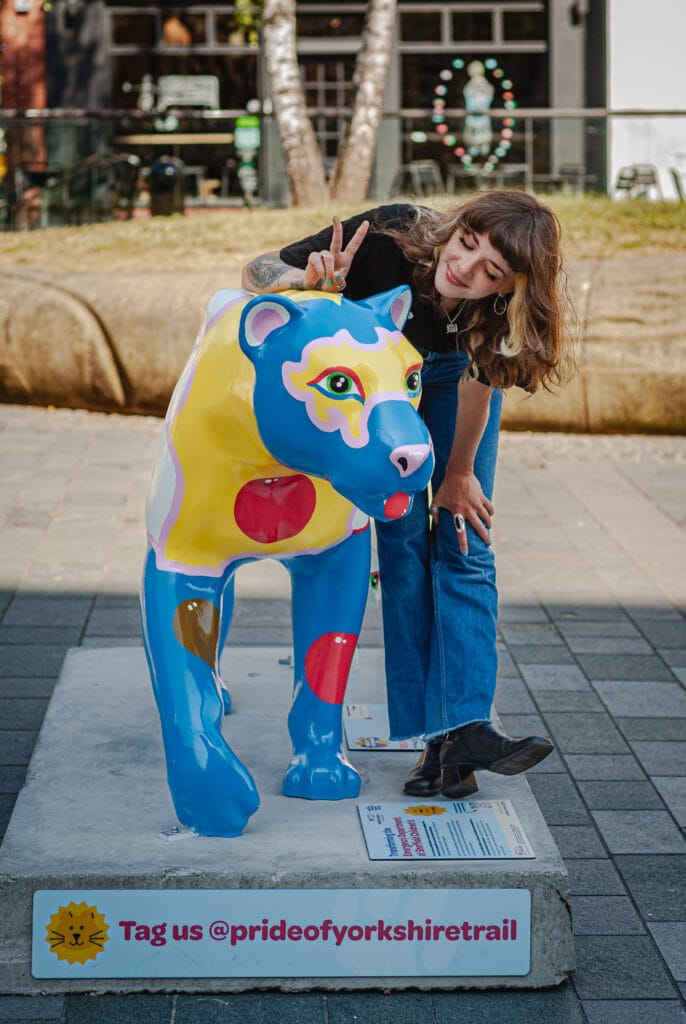
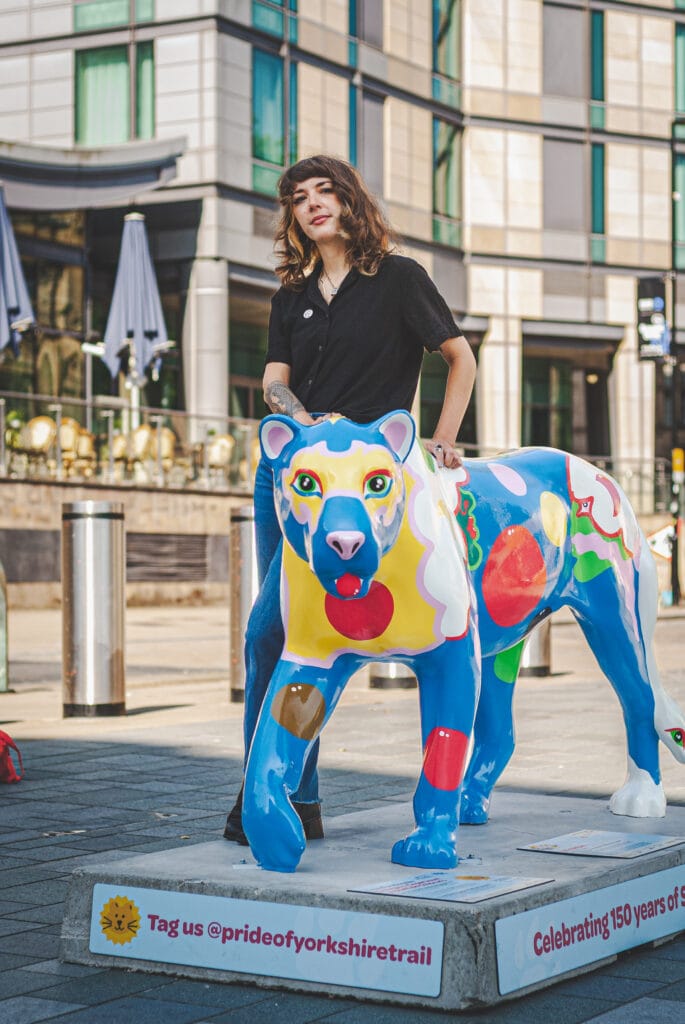
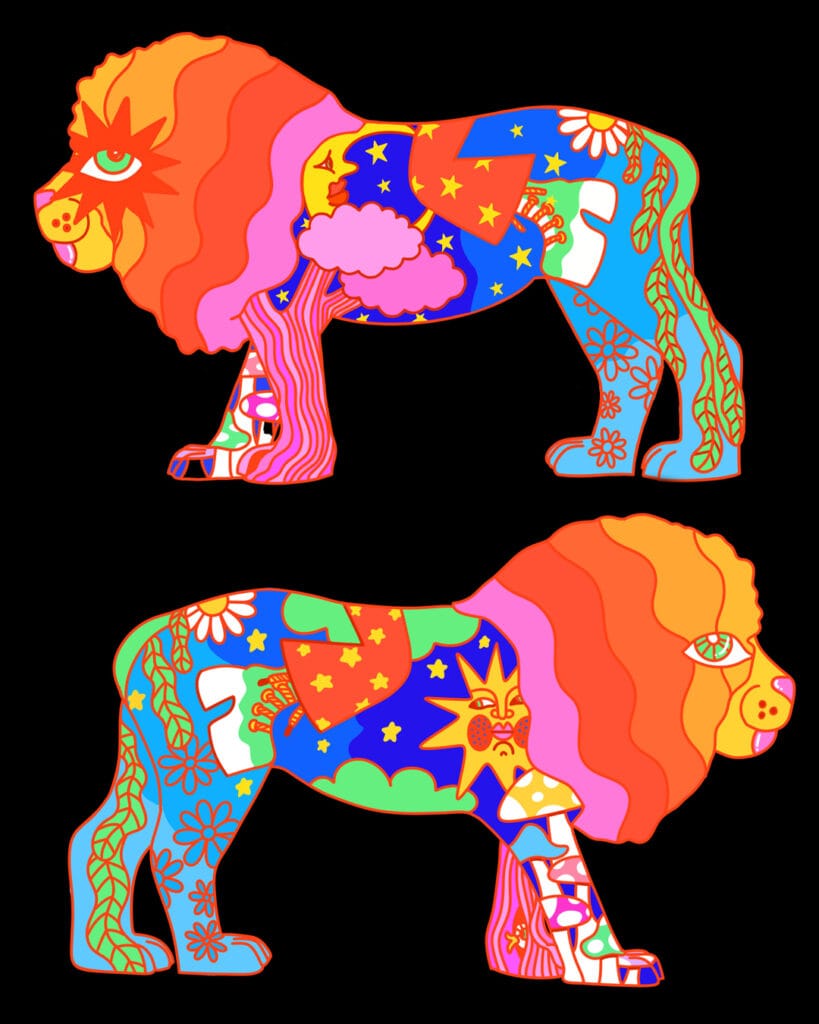
More recently, the artist’s creations have been turning heads as part of the Pride of Yorkshire trail. Her pair of lions – a vibrant collision of Crucible snooker and the prog-soaked world of Steve Davis’s Spotify playlists – have proved some of the trail’s most talked-about additions since they arrived last month.
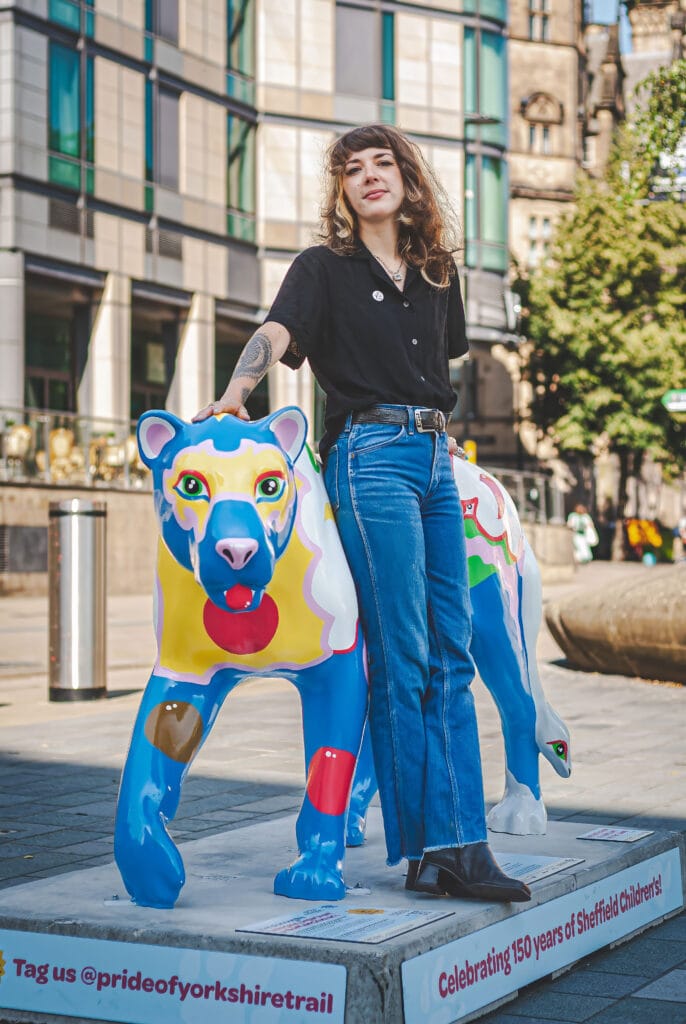
With the region’s biggest sculpture event fully up and running, we grabbed a natter with Lisa to chat about her creative journey, finding a home in Sheffield, the joys of painting big cats and the folk tales, spaces and communities that continue to inspire.
Let’s start at the beginning and growing up in Scunthorpe. Were you creative from an early age?
I was. I’d say it was my dad and my grandma who really got me into painting and stuff like that. My parents came from nursing and steelwork backgrounds, but because my dad was creative as well, he really encouraged me. I learned to draw with him.
How did that creativity develop as you got older?
I’ve always been into music as well, so whenever there was an opportunity to do a poster for something, I’d be doing those things for mates, usually for free entry into gigs and things like that. That was my first way into that sort of work in Sheffield following university.
How did Sheffield become home?
I went to Leeds for uni and then spent my final year living here with some pals. I found my people and I stayed. It’s one of those things where suddenly you realise it’s been 15 years. I came here in 2010 and just never left. So I started out doing gig posters and other things like that, and it’s something I’ve consistently kept on doing ever since.
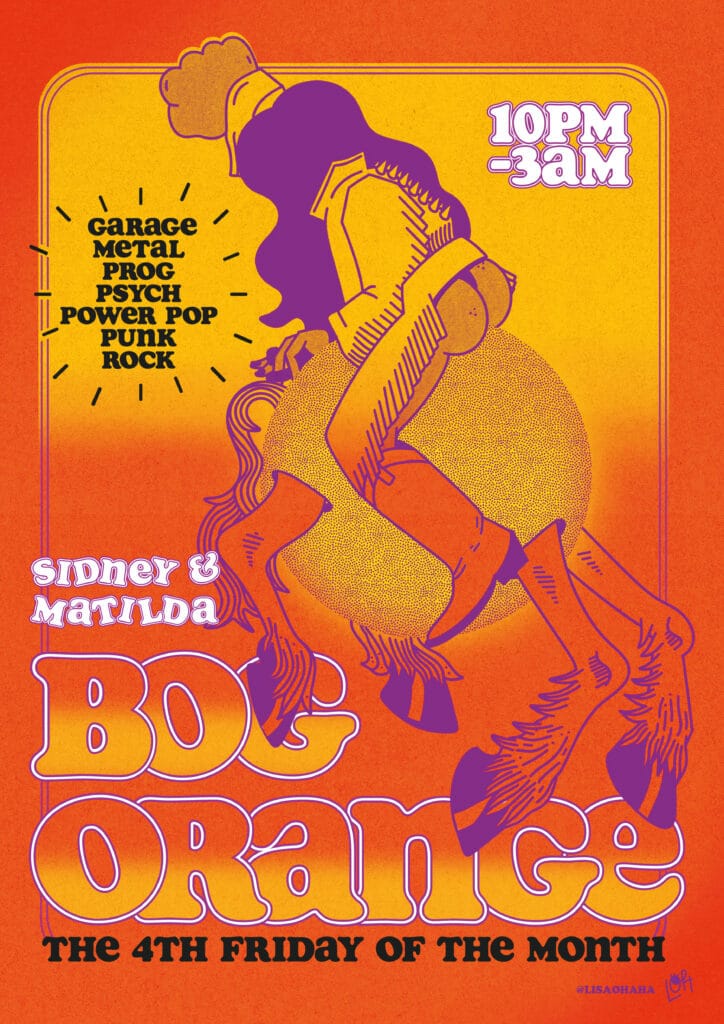
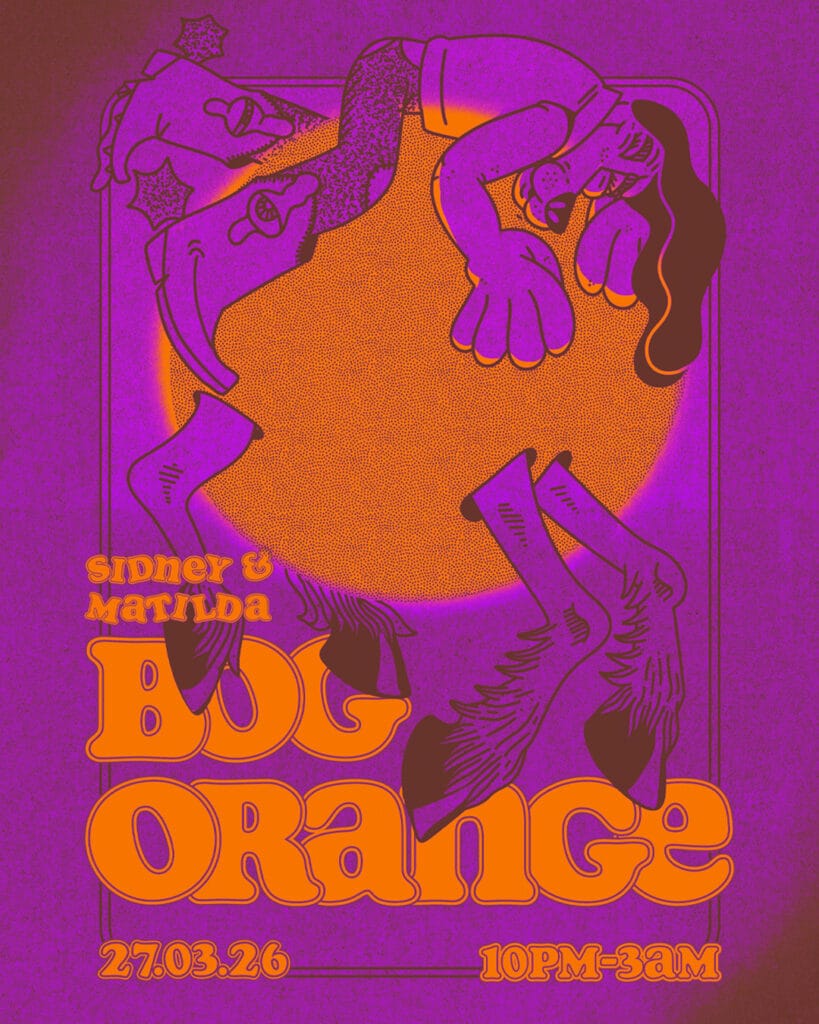
Gig poster art is very much a subculture in its own right. Who were the artists you looked up to in that sphere?
I’m honestly not sure whose work I was looking at back then. It always comes back to Bonnie MacLean, Robert Crumb and Aubrey Beardsley. They’re not specifically Sheffield contemporaries, but of course, Martin Bedford’s a really big name in that world. There’s this amazing poster for Magazine from 1980 that I can’t get enough of. That whole world has always been aligned with DIY; it’s a massive draw for me.
This year, you’ve been part of the Pride of Yorkshire sculpture trail. How was that experience?
Oh my God, I’ve been banging on about it since the first day I went in to paint. I’ve loved every minute. It honestly has been my favourite job to work on. I was eking out the process because I didn’t want it to end. I’d tell myself, “I’ll just do a little bit more,” or “I’ll definitely varnish this week,” and then I’d go in and spot another little thing I wanted to perfect.
Being in that creative environment was the most joyful thing. All the artists would be working together in a space off the Moor, I was constantly meeting new people and seeing familiar faces. I got to hang out with people I hadn’t seen in ages, including Rob Lee, who used to be my manager at the Showroom Cinema. But I also got to meet so many new artists who I could speak with and learn from.
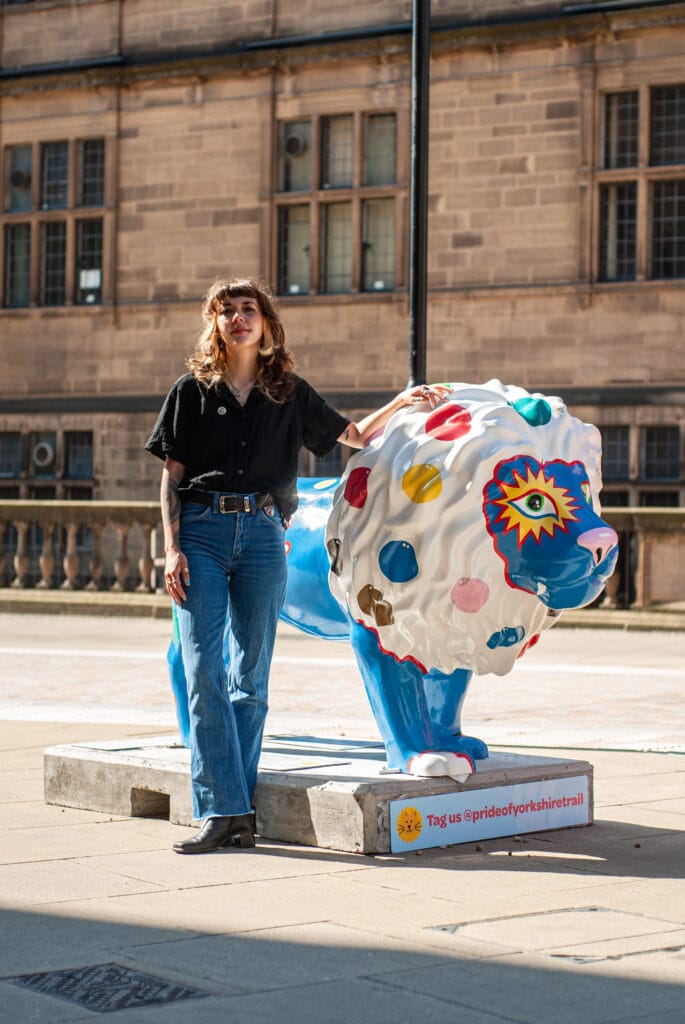
It’s the polar opposite of the way I normally work. If my housemate’s away, I’ll sometimes realise I haven’t spoken to someone for 12 hours or something mad like that. It’s often very solitary. The difference with working on the Pride was amazing in that respect. I absolutely loved it.
Your snooker-themed lions have had a fantastic response from people doing the trail. How did the design come together?
After submitting my designs, I got a phone call asking whether I’d be interested in directing it into something more snooker-inspired. When I used to work in town, I absolutely loved it when the snooker came to Sheffield. I’d sit on the steps by the Winter Garden and watch the crowds of people going in and out – it was always such a positive atmosphere. I’ve also got a lovely pal, Simon, who used to come to the snooker every year with his sister.
At first, I wasn’t sure where I’d take it, but then I started thinking about the connection between the things I’m interested in and snooker. As mentioned, I’m really into music and there’s a strange link there with Steve Davis being a big prog DJ.
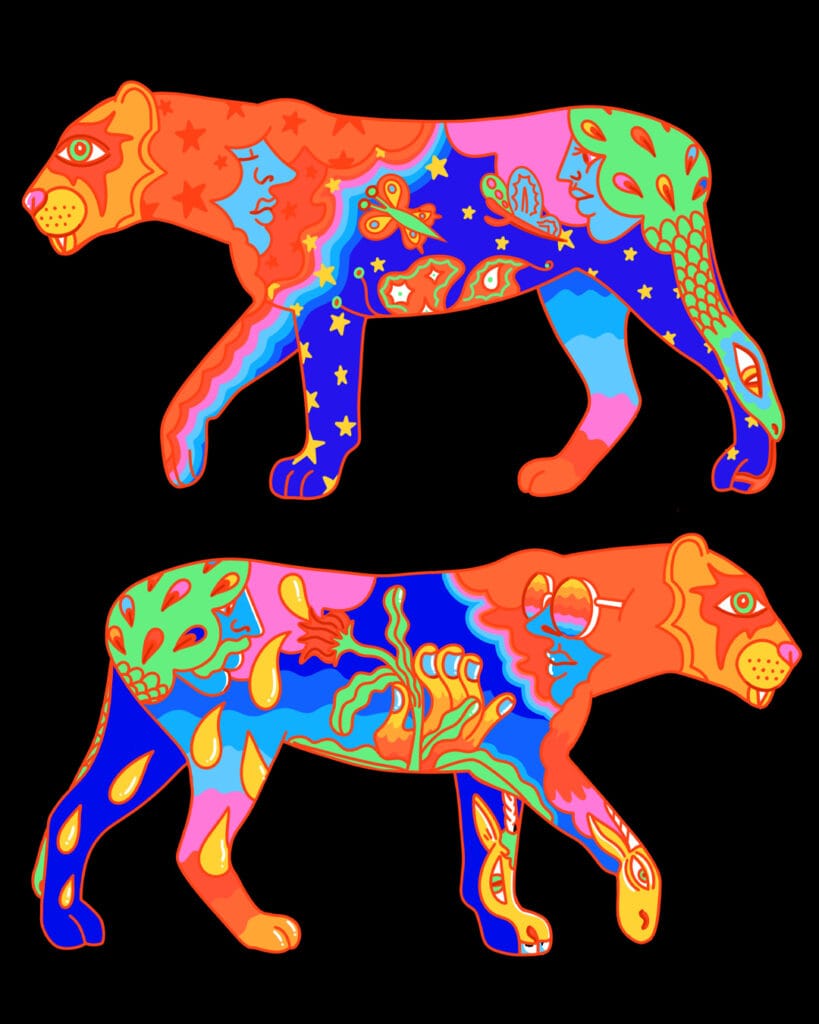
So mine is very music-inspired; I was listening to loads of 1970s prog while working on it. I kept thinking about Steve Davis being a prog DJ and in a band with Kavus Torabi from Gong – and suddenly it all started making sense.
Do you know if Steve has seen it?
I don’t think so! I think they tried unsuccessfully to get it in front of him. I was very hopeful, but he’s a busy man. Maybe one day, if I ever meet him, I’ll show him myself.
Was working on a sculpture a completely new experience?
In this way, totally. I’ve painted walls before, but there’s nothing like painting a big cat. It’s completely different and a bit mad. You spend all day getting into ridiculous positions. You think you’ve done loads and then you step back and realise you’ve missed the whole underbelly. There was a lot of crawling underneath lions and contorting yourself into strange angles.
At the varnishing stage, Zoe [Genders] and Sian [Ellis] helped me think through the practical side of things. We found some pallets and the volunteers helped lift the lions onto them so I could get underneath properly. It made everything much easier. The funny thing is I only discovered that right at the end. I’d spent weeks twisting myself into impossible positions before realising I could have had them on pallets the whole time!
This will be the third event of its kind by the Children’s Hospital Charity. What do you think makes these sculpture trails so successful?
You can’t really pass the sculptures and not feel some kind of response. There are so many of them around that you’re bound to encounter one somewhere. It automatically makes you feel part of something.
Even if people don’t know anything about the project, they’ll go away and look it up. Then they’ll start asking other questions: “What’s going on here? What’s it for? How can I take part?” The trail inspires curiosity and it makes people feel part of a community, which is powerful. I’ve had photos and messages from people I don’t know, showing me their kids with the lions. It’s been really sweet.
Your work has a very distinctive visual identity. How has your style evolved over the years?
It’s always been developing. When I first started, I was very black and white. That was partly down to the means I had available. I was making zines all the time, using pen and ink, photocopying things and occasionally adding colour through pastel paper. Colour has become much more important in recent years. With the lions, for example, I limited myself to the colours of the snooker balls. Every colour on there came from that palette.
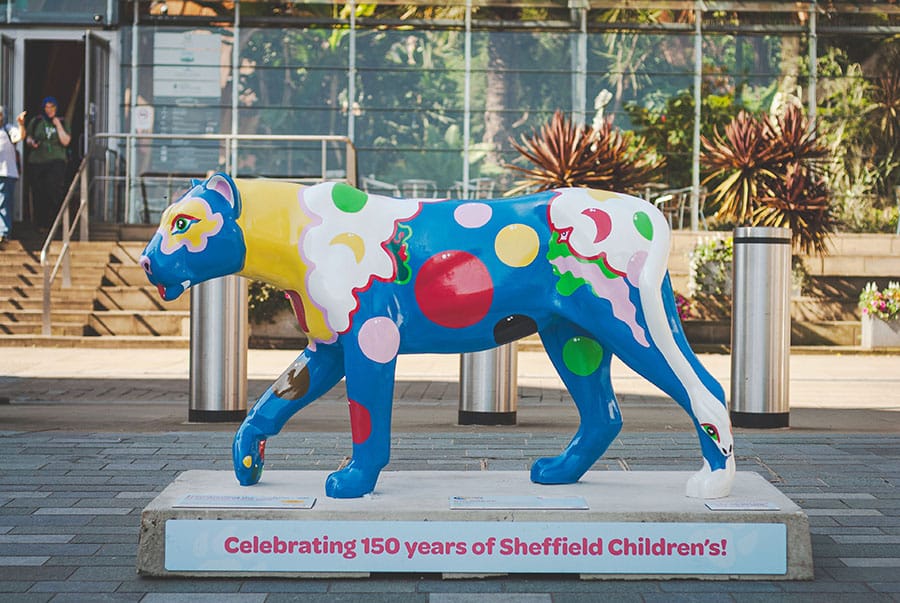
That was really useful because I often get choice paralysis. If I’ve got a huge palette available, I’ll spend forever tweaking colours and adjusting things. If I’ve only got a specific set of paints, then those are the colours I use and I get on with it. That’s one of the things I love about murals and large paintings – I’m limited by what I’ve got and can’t endlessly fiddle. I am noticing patterns in the colours I choose now, which means my style is becoming more consistent.
There’s often a folkloric, slightly creepy quality to your work, which is also mirrored in the music you create as part of Sister Wives. Where does that come from?
My brothers were both into really creepy stuff and I was always watching along. I watched every episode of The X-Files and The Outer Limits. I also spent a lot of time reading myths and legends from their books. I got handed all sorts of things I wasn’t initially interested in, but then became completely fascinated by. I was always making myself feel uncomfortable.
I love folk horror – there must be some kind of macabre fascination there. Watching The Evil Dead at a very young age was probably quite life-changing. What I love about that film is it’s silly as well as unsettling. Sometimes something is so scary that it becomes funny, and I think that’s what really appeals to me.
My creative ideas nearly always tie back to music. Even when I’m away from my desk, music makes me think of things I want to draw. If I’m actually sat down working, it often starts with lines. I tend to gravitate towards certain kinds of marks and shapes. The storytelling and inspiration side is there, but it’s probably happening slightly further back in the process. The beginning is often quite physical and line-based.
As a supporter of and contributor to Sheffield’s DIY arts scene, what does that community mean to you?
Honestly, it’s the reason I live in Sheffield. There’s just so much going on. I’ve always played in bands and historically I’ve often found myself in spaces that were dominated by men. When I came to Sheffield, it suddenly opened up. Through things like Sister Wives and the wider scene, I met loads of women who were involved in the same things I was interested in.
Once you’re part of that community, you start feeling more comfortable. I’ve met so many amazing people through it. I’m part of Delicious Clam and we practise there. They’ve let me loose on the walls to do some painting as well. If you want to put a gig on or help a touring band, there are always people here willing to get involved.
Outside those creative spaces, are there other places around Sheffield that inspire you?
I do a lot of running through Cat Lane Woods. I love it because it’s a bit mad. It’s like every time you go through it you can take a different route. There are still parts where I find myself thinking, “Have I been here before?” You don’t really appreciate the scale of it until you’re inside it. I love that about Norfolk Park too, and the woods around there. You’ve got views, you’ve got wildlife, you’ve got everything you need.
A lot of the time I’ll be wandering through the woods listening to music and suddenly think, “That would be a fun thing to draw.” It helps that the light is usually amazing whatever the weather. Also, the fact it’s called ‘Cat Lane Woods’ is great.
You work across graphic design, illustration and murals. Do you have a favourite medium?
I love to be covered in paint all the time. That would be the dream. My bread-and-butter process is still sitting with a tablet or a pen and paper because it’s practical and it’s the easiest way to get work done. If I’m designing a logo, that’s usually how I’ll approach it.
But I’m happiest when I’m painting. I’d love to just be let loose on a huge wall somewhere. If I could do one big painting a month, that would be ideal.
Finally, what’s the best creative advice you’ve ever received?
There was an artist called Matthew the Horse who came in for a talk when I was studying in Leeds. He shared some advice he’d been given himself, which was that you have to define success for yourself rather than measuring it against anybody else.
If you can get that straight in your head, you’ll feel much more confident. Set your own goals and be really clear about what you want. Although, having said that, my favourite piece of advice is probably still theTroy McClure quote from The Simpsons: “Get confident, stupid.”