From hot meals and healthcare to counselling and housing support, the Archer Project helps more than 1,200 people a year. But can it continue to do so from a building that no longer meets the needs of those who rely on it?
“The main problem is that this building was opened over 20 years ago,” says Joe Logan, Head of Fundraising at the Archer Project, “but our service and approach have entirely changed in that time. The quality and breadth of support we offer is simply not in sync with the space we’re in.”
Joe has buzzed Exposed through the front door of their Campo Lane centre, a vital hub for the thousands of people in Sheffield affected by homelessness. In 2025 alone, the charity supported 1,201 individuals – and they’re certainly not expecting that number to drop anytime soon.
While the building provides a temporary haven for beneficiaries, a place where they offer what Joe describes as “a wide-ranging service that understands the root causes of homelessness”, the immediate surroundings feel anything but compassionate.
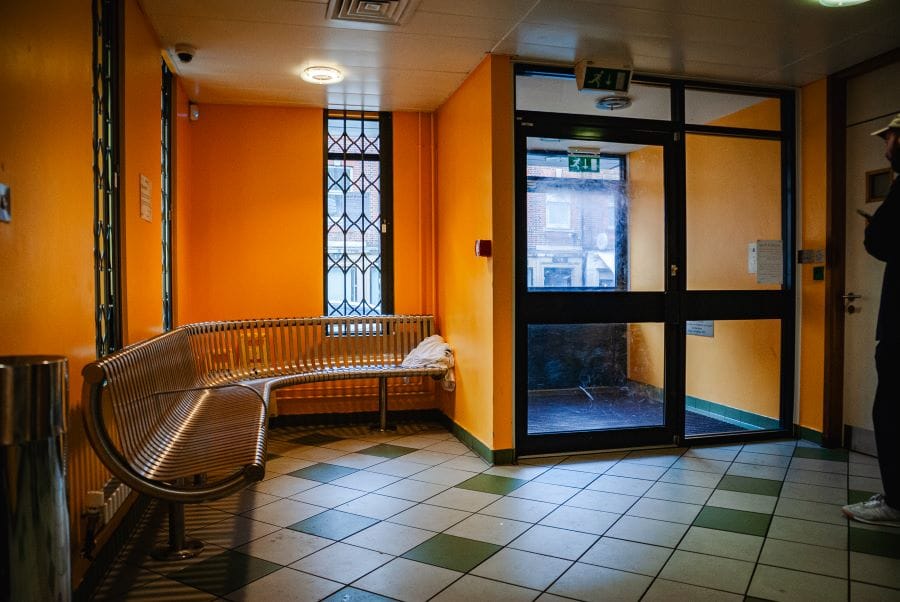
A tight entranceway pens you in before leading to a cramped reception room. Cracked walls, peeling paint and a very uninviting fixed metal bench greet between 100 to 120 individuals at lunchtime. It’s a narrow squeeze from there to an equally tired lounge room, and space remains at a premium through to the canteen area, where last year they served over 23,000 free meals. A 2017 survey confirmed what many already suspected: the centre was operating above capacity – and by some distance.
A lack of room and strained facilities are difficult to navigate for any organisation. But when you’re dealing with an issue as complex as street homelessness, such challenges are magnified tenfold. “The people who come through our doors are often experiencing the effects of trauma and all have unique experiences,” says Joe. “For example, one person might be loud, distressed and highly agitated, while another struggles to make eye contact or feel comfortable around others. We’re trying to help both of those people, but we don’t have the private areas needed to provide that level of support.”
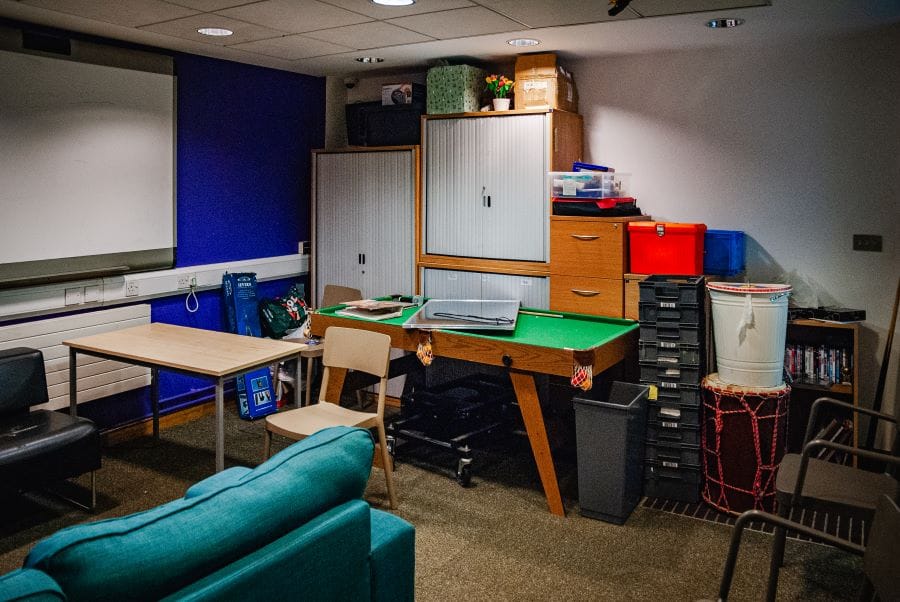
He explains that the redesigned building will include dedicated spaces for private conversations, therapeutic assistance and de-escalation when someone is experiencing a mental health crisis. Ageing shower facilities will be modernised, while an expanded canteen will replace the warehouse space that still bears the scars of a 2020 arson attack. Additional areas for activities, skills development and one-to-one support will also be created.
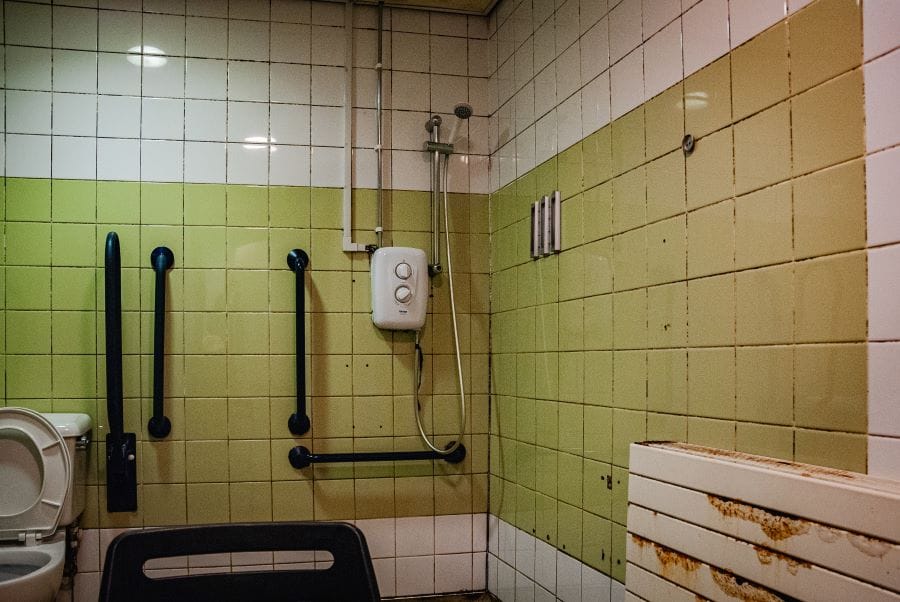
All together, the changes will allow the Archer Project to better address individual needs and help more people progress away from what Joe describes as “entrenched homelessness”.
But, as ever, there is a catch. And it’s a big one. To get to where they need to be, the Archer Project have launched their largest fundraising campaign to date: £2m to rebuild the entire centre.
For a charity whose annual running costs already exceed £1m, it’s an ambitious target. Yet Joe and the team know that standing still is no longer an option.
“The reality is that homelessness is one of the most complex issues in society,” he says. “The only thing a lot of the people who come through our doors have in common is that they don’t have a house. Beyond that, you might be dealing with abusive relationships, undiagnosed neurodivergence, addiction, acquired brain injuries and all sorts of different life experiences. It takes time and the right environment to help people move forward.”
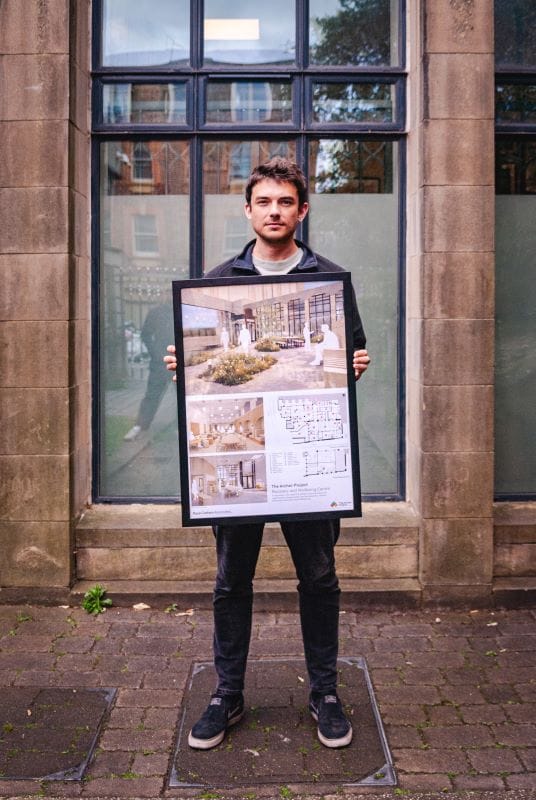
Rather than a traditional public appeal, the campaign is focused on securing support from businesses, particularly those involved in construction, plumbing, electrical work, fixtures and fittings. They are also seeking donations of materials and expertise to help reduce costs. Encouragingly, a number of local firms have already stepped in to lend a big hand. Forgemasters has joined the steering group and is helping connect the project with suppliers, McLaughlin & Harvey is providing pro bono project management and headline sponsor Homes by Honey has committed £100,000 towards the appeal.
However, there remains a long way to go before the vision can be realised.
Whereas some charities can appeal directly to people’s lived experience, the difficult fact remains that homelessness is still a deeply stigmatised and often misunderstood issue. Seen by some as an eyesore, the Archer Project has even faced questions over why its centre should remain in the heart of central Sheffield rather than using the money to relocate to the fringes or away from higher-footfall areas altogether.
I put this to Joe and he’s happy to tackle it head-on. “Yes, we have had some comments asking why spend this money here rather than move somewhere else. But we’re in the city centre because people experiencing homelessness are in the city centre. If we moved elsewhere, homelessness wouldn’t disappear in town. The people would still be here, but they’d be further away from the support they need.”
“We also have a hugely important relationship with Sheffield Cathedral,” he adds, “without whom we wouldn’t be able to do what we do.”
Another response to such views is explaining how the redevelopment is not solely about helping those who access the service. In fact, data shows that an improved Archer Project hub will benefit the city as a whole, reducing pressure on public services from healthcare to policing and creating more opportunities for people to rebuild their lives.
“Research suggests that every pound donated to us returns four pounds to the public purse,” says Joe. “If we weren’t here, that’s money the council would be spending. A new building will further help alleviate pressure on healthcare services, probation services and other public organisations.”
That sentiment is echoed by Mark*, a former Archer Project beneficiary who now volunteers at the centre after finding stable housing.
When he first arrived, Mark recalls having “basically shut down” and largely keeping to himself as a result. “Luckily, it wasn’t quite as busy then as it is now,” he tells me. “I’d just come in and sit quietly at the start. People probably thought I was doing nothing, but actually I was healing. I don’t think I’d be able to do the same now because it’s that busy. I wouldn’t be able to get that bit of peace.
“I originally came because I needed food, but it turned out to be much more than that. Everything was here – medical services, support for drugs and alcohol issues, help in contacting the council. It brings it all into one space.”
With lived experience of using the centre and seeing today’s increased demand first-hand as a volunteer, he believes that redevelopment is essential.
“It’s really important. Something’s got to happen because there are more and more people becoming homeless. They just won’t be able to cope otherwise.”
A new building will further help alleviate pressure on healthcare services, probation services and other public organisations
Mark is one of many examples of what can happen when people are given the time and space to recover before engaging further with the support available. Continuing our tour of the centre, we’re met with evidence of wear and tear at almost every turn. But beyond the aesthetics lies a more structural issue: a multitude of services and activities competing for the same cramped spaces and, all too often, getting in each other’s way.
As we’re shown back out onto Campo Lane by Joe, he explains that much of it ultimately comes down to dignity.
“A huge part of what we try to do is centred around helping people believe they’re worthy of something better. Our staff are saying, ‘You’re worth more than this,’ but the building at the moment is saying, ‘No, this is what you’re worth.’ That needs to change, and we can’t bridge this gap without Sheffield getting behind us.”
Businesses interested in supporting the appeal through financial contributions, construction services or gifts in kind can email [email protected].
*Name changed at the interviewee’s request.