There’s been something of a mini league running across these pages over the past 20 years. In third place sits Jarvis Cocker, with a respectable four cover appearances. Just ahead is his old mucker Richard Hawley, who’s graced the front of Exposed five times. But leading the pack, with six in the bank, is Reverend and the Makers frontman Jon McClure – and if you ask me, he might take some catching.
I’ll list a few reasons why. First and foremost, the Rev is always generous with his time – no need to navigate complicated PR schedules or book a phone slot months in advance; he’ll just invite you round for a brew. Secondly, he’s a Sheffield journalist’s dream: a walking pull quote, full of sharp one-liners, amusing anecdotes and passionate takes on all things South Yorkshire. And thirdly, the larger-than-life 44-year-old is showing absolutely no signs of slowing down, whether that’s in music or local affairs.
The singles from his latest album, Is This How Happiness Feels?, have seen him in sparkling form – from jiving with Vicky McClure on the soulful earworm ‘Haircut’ to reflective duets with a bloke called Robbie Williams on ‘Fucked Up’ after delivering the big-hearted Christmas anthem ‘Late Night Phone Call’. Album number eight has landed and the band are still reinventing, still adapting and still packing out live shows across the country.
He’s upped his game as Sheffield’s biggest cheerleader, too. Entering what he’s dubbed his “Elton John phase”, Jon was announced as Sheffield FC’s chairman in March and immediately embarked on a media drive to raise the profile of the world’s oldest football club. He’s also used that platform to champion the city itself – bigging up its arts, sports and culture while issuing a rallying cry to its denizens: enough with the modesty, it’s time to get loud and proud about what we’ve got.
That’s where we start, over coffee in his living room, chatting about where Sheffield’s currently at – and how it gets to where it needs to be.
“We need to get better at telling our story,” he says, with a sigh. “Simple as. So instead of gobbing off from the sidelines, I’ve decided I’m going to be a bit more actively involved in trying to make things happen.”
Do we have a problem with self-deprecation in Sheffield?
Yeah, definitely. It almost feels like an 80s hangover. To be honest, I don’t even know where it comes from anymore. We’ve got this thing where we always downplay ourselves, like we’re trying to act chilled and humble. It’s like – who are you trying to be cool for? Nobody’s watching. So that needs to stop, and I’m now much more like, nah – Sheffield’s mega. And we should just say that from the start. There’s nothing wrong with being proud of where you’re from. I think sometimes people think if you say something positive about Sheffield you’re showing off, but you’re not. You’re just telling the truth.
What’s the gameplan, then?
We need outside investment. We need jobs. And if the way to do that is by amplifying our culture and our sporting legacy, for example, then let’s go and do it. I’m not saying let’s copy Manchester or Leeds. It’s not about that. It’s about backing what we’ve already got. We’ve got to stop doing that performative negativity where things tend to get dismissed or downplayed straight away.
Is that part of the reason it often gets overlooked nationally?
Yeah, I think so. Because if you don’t shout about yourself, someone else will shout louder. Look at when TV studios moved north – Sheffield was in the conversation, but Manchester got it. Channel 4 went to Leeds. We never really had a proper look in. And part of that is on us. For a creative city, we’re bad at storytelling. Robin Hood’s from here – he’s ended up in Nottingham. We invented football. We’ve got snooker. We birthed electronic music. But we don’t package it up and present it properly. We’ve got to be better at that, because the assets are there. It’s just about how you frame them.
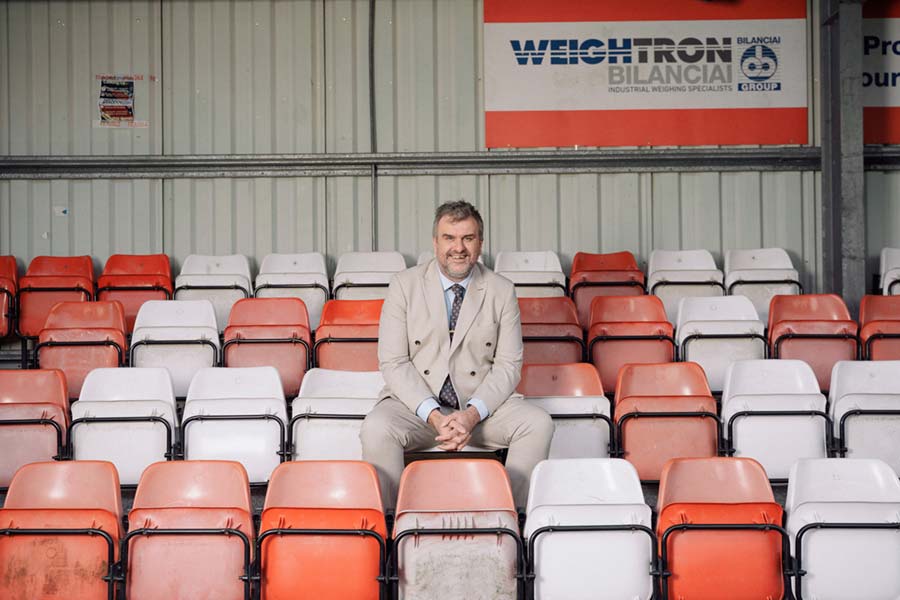
That brings us nicely onto Sheffield FC. You’re a few weeks into the role now – how’s it been?
It’s been exhausting, to be honest. Absolutely full-on. But I knew it would be. There are very entrenched ways of doing things and structural issues – not buildings, but internal systems, how decisions get made and how things move forward. You can’t just walk in and flip a switch. But we can change it, and we will. We’ve already generated huge amounts of press and record gates, which shows there’s interest there. And our connectivity outside the city is strong, which is important. It feels like we’ve got momentum now, which is just what you need at the start.
What’s your approach been to the role so far?
The biggest shift is how I’m working with others. In the past, when I’ve done things in Sheffield, I’ve often found myself butting heads with people. You’re in the same space, trying to do similar things, and it creates friction. This time I’ve deliberately gone the other way. I’ve built a team of people who are good at the things I’m not good at. We’ve set up a company called IAV, and the idea is to develop large-scale cultural projects in Sheffield in a proper, structured way. It’s about being a bit more grown-up about it, if I’m honest.
What do you mean by that – “grown-up”?
I mean thinking about delivery, not just ideas. It’s easy to have ideas; I’ve got loads of ideas. But if you don’t have the structure and the people around you to actually make them happen, then they just stay as that – ideas. So this is about combining creativity with people who understand planning, finance and delivery. Because otherwise you’re just talking.
Who else is involved in that setup?
People who’ve all got experience in areas I don’t – business, property, strategy. And what I’ve realised is you can’t have ten blokes all trying to play centre forward. Some people have to do different roles. I’m probably the one up front, but I need people around me who can do the other stuff. To put it another way, I need some grown-ups around me holding me on a bit. It’s something I’ve learned from music as well.
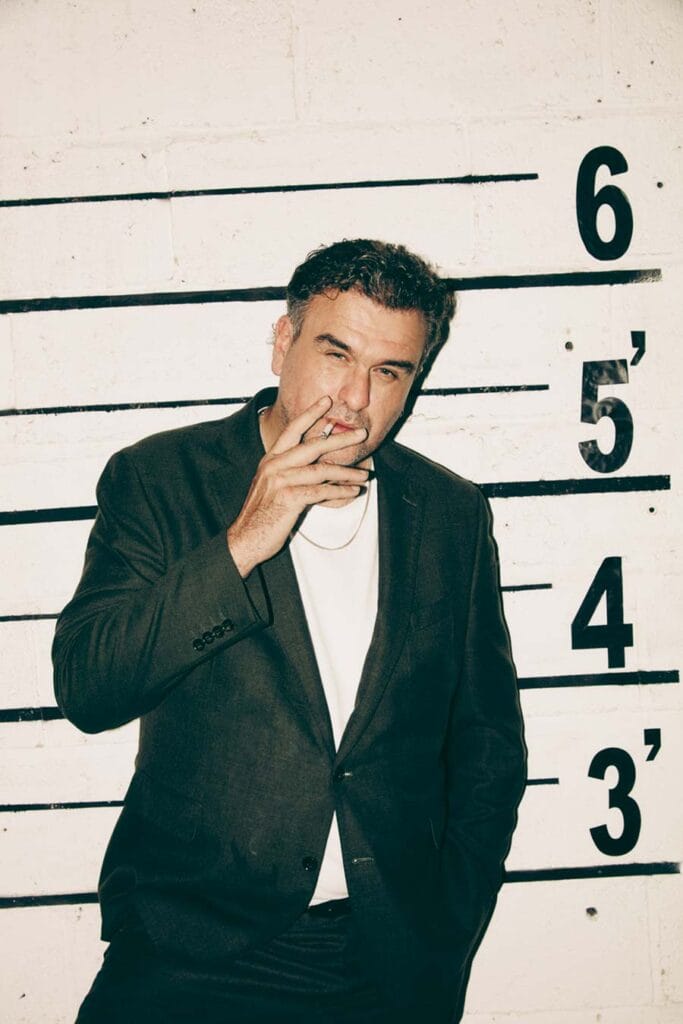
How has your music career shaped that way of thinking?
A few years back, someone asked me what I was bad at, and I realised my melodies were getting a bit repetitive. You can only do so many indie melodies before you start repeating yourself. So I worked with someone who’s brilliant at that, and it made my music better straight away. That’s when I thought – right, apply that to everything else. Focus on what you’re good at, and build a team around you for the rest.
What skills transfer from being the frontman of a band to chairman of a football club?
Storytelling, definitely. That’s the biggest one. As I mentioned, what Sheffield struggles with is storytelling. We’ve got an incredible history, but we don’t present it properly. So whether it’s music, football, arts or the city itself, it’s about telling a story that people connect with.
Almost 1,200 turned up to watch Sheffield FC play Tadcaster recently, so the appetite’s clearly there. In your opinion, what does non-league football offer punters that the professional game doesn’t?
It feels closer. You’re more connected to it. It’s cheaper, it’s more accessible and you genuinely feel part of something rather than just watching from a distance. But just as importantly, Sheffield FC offers a direct link to the invention of the game. That’s not something any other football club can say. We need to modernise how we present that – make it something people want to engage with now, not just look at in a museum. And then you’ve got Hallam [FC] with the oldest ground in the same city. The two go together – they need each other.
There’s also that neutral element of it – in a city strongly divided across football lines, it’s something people can come together on.
Yeah, that’s a big part of it. It doesn’t matter if you’re Wednesday or United. You can come together and just enjoy football. It’s like the World Cup – one of the only times people from both sides celebrate the same thing. That’s powerful, and it’s something we can build on.
What would success look like for you in this role?
Full houses. That’s the starting point. Then profitability, and the next step is building something that contributes to the city – a proper tourist industry, events and engagement. It’s about creating value. If it’s not creating value, then what are you doing?
Switching chairman’s hat for musician’s hat for a second – we’ve got studio album number 8 out in May. Tell me about Is This How Happiness Feels? – it’s been a long process getting it out.
There’s been a lot going on personally, so it took longer than planned. But now it’s almost out, I feel really good about it. We’ve sold a lot of copies already, so there’s a chance it could do well in the charts, but more than that, I’m proud of it. The title is what it says on the tin: it’s about how happiness works. You grow up thinking it’s simple – you’re either happy or you’re not. But life doesn’t work like that. You can be having a great time and not realise it until later, or think everything’s terrible and then look back and realise it wasn’t. So it’s about that in-between space, that constant shift.
There’s definitely a lot of light and shade across the record.
Yeah, that’s deliberate to fit with the overall theme. There are upbeat tracks, more soulful stuff and reflective moments. I like mixing it up. But the key thing for me is consistency. I think people will be surprised that there isn’t really a drop-off. It’s not just a couple of singles – it’s a full album that stands up.
You mentioned it might surprise people – in what way?
Well, just that really. I think people expect a few good tunes and then filler from my stuff, but I don’t think there’s any filler on this. It feels mature. It feels consistent. And I’m at a point now where I’m 20 years in, still making new music that people care about. That’s something I’m really proud of.
You’ve also managed to get Robbie Williams on a Reverend and the Makers album – which sounds a bit surreal to say out loud.
It is surreal. But it came about naturally. He heard one of my songs, posted the lyrics, and we got introduced. Then I’m making a brew in my kitchen and he FaceTimes me – it was like, “Ay up, Robbie!” It just snowballed from there and next thing we’re hanging out in Switzerland. We’ve got similar personalities, me and Robbie – both ADHD central and love the creative chaos. We’ve also had similar experiences, albeit his on a much grander scale!
The track’s called ‘Fucked Up’. Tell us a bit about it.
It’s about the journey – chasing something big, getting on that rollercoaster, and what happens as a result. For every band that makes it, there are loads that don’t. And some people end up in a bad way because of it. So it’s me acknowledging that, really, and saying I’m lucky to still be here.
You seem a much more reflective person now. Has that changed how you write?
Yeah, definitely. I’ve looked back on things I’ve said and done and thought I could have handled that better. So I’ve apologised to people – not for them, but for me. It’s about trying to be a better person. I think that comes with getting older and understanding things a bit more, and that naturally feeds into the writing as well.
I’m making a brew in my kitchen and he FaceTimes me – it was like, “Ay up, Robbie!” It just snowballed from there and next thing we’re hanging out in Switzerland.
I was at the Rock N Roll Circus headline gig last year, and the atmosphere felt really special. What struck me is how much you were clearly loving every second of it, especially when playing the new material.
That’s right, because I know the songs are strong. When you’ve got songs that you believe in, it changes everything. You go on stage differently. People can feel it as well. They know when you’re backing what you’re doing and it’s infectious. This album means a lot to me – I genuinely think it’s one of the best things I’ve ever done.
You’ve said there’s a song on the album you think is the best you’ve ever written?
I won’t hype it too much, but yeah – there’s one on there where I listen back and think, that’s it. That’s the best I’ve done. And as a songwriter, that’s what you’re always chasing, isn’t it? That moment where you feel like you’ve nailed it.
It was recorded in Sheffield as well, back at your old stomping ground of Yellow Arch Studios. What was that process like?
Originally, I was meant to go to Brussels, but my dad got ill, so I stayed in Sheffield and tried to record it quickly here. That didn’t really work, because my head wasn’t in the right place. So I ended up doing it again properly at Yellow Arch. And actually, that felt right. It’s where everything started for us. There’s history there.
Did that personal side of losing your dad feed into the record?
Definitely. You can’t go through something like that and it not come out in the music – the track ‘Twenty-Seven Past Midnight’ is the most direct example. But I don’t sit there thinking, right, I’m going to write a sad song now. It just comes out how it comes out. Sometimes you just need to get things out – that’s what songwriting is for me.
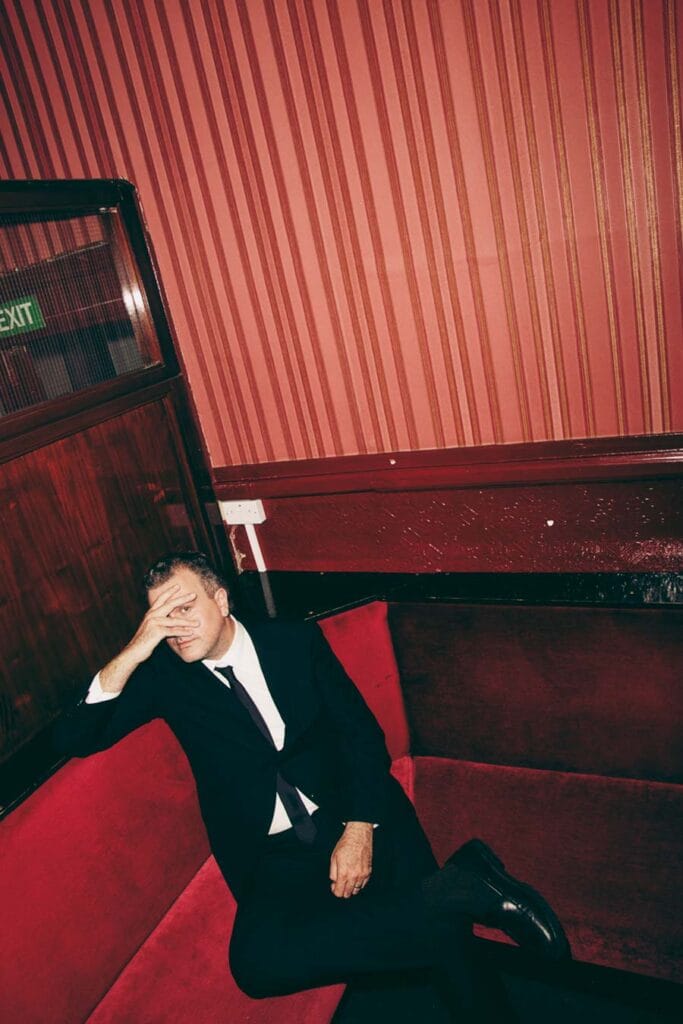
What does success look like for you now?
Just being able to keep doing it. Taking ideas out of my head, putting them out there, and having people connect with them. That’s it, really. Going back to the album title, that’s what happiness actually feels like.
And finally – where do you think Sheffield is heading? It feels on the cusp of something at the minute. Do you agree?
I think we’re close. You can see it in different parts of the city – things are improving, changing, evolving. A lot of the people running the city now understand culture and its importance, which is a big shift. Steel was the old story. Now it’s culture and sport for me. We’ve just got to embrace that and push it forward properly.
Basically, we’ve got to tell a new story. So let’s stop talking about it and go and do it.
Is This How Happiness Feels is released 8 May. You can pre-order now from reverendandthemakers.co.uk.